

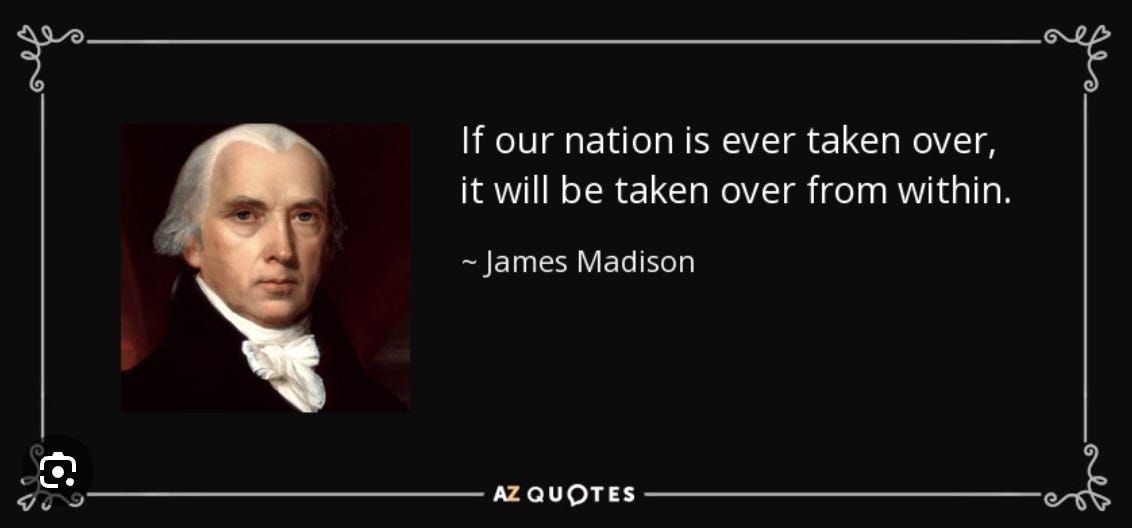
As the United States approaches its 250th birthday, a familiar chorus has emerged. We are told that the celebration must be “reimagined,” “broadened,” “corrected,” or “fixed.” The argument is that America’s history has too often been viewed through the lens of its achievements, with insufficient focus on its failures. Left-leaning media and academics argue that the nation’s anniversary should become an exercise in national self-flagellation rather than national celebration.
I disagree.
A quarter millennium is not the moment for a nation to apologize for its existence. It is the moment to remember why that nation exists at all.
A USA Today article published yesterday, titled “A growing movement aims to fix America’s big birthday celebration,” tells the story before the argument even begins. We are informed that “a growing movement aims to fix America’s big birthday” and that activists are “pushing back” against “splashy celebrations” of America’s 250th anniversary.
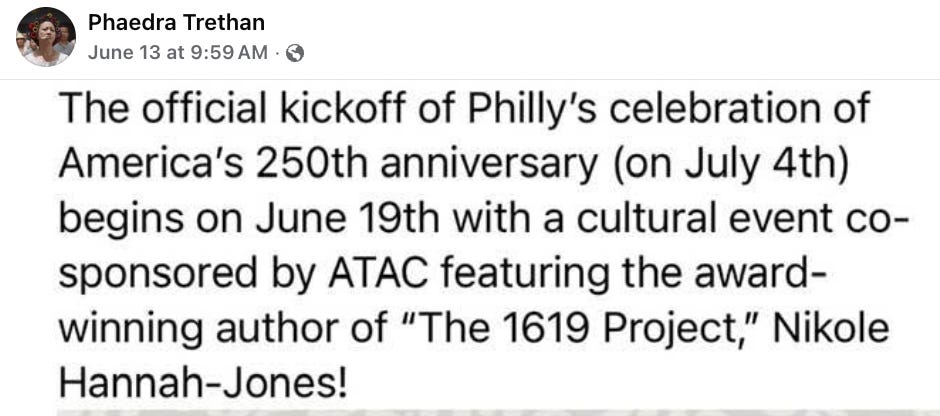
Of course <sarcasm>, Phaedra Trethan, the author of the article, had this to say about the 250th celebration on her Facebook page this week:
Cultural Marxism
The 1619 Project, launched by The New York Times Magazine in 2019, seeks to reframe American history by arguing that the arrival of the first African slaves in Virginia in 1619 should be regarded as the nation’s true founding. The project contends that slavery and its legacy are not peripheral features of American history but are central to understanding the country’s institutions, economy, culture, and politics. The thesis is that the founding of the nation was actually when the first slave was imported into the British colonies in 1619.
The project represents a revisionist interpretation of American history. It elevates America’s “original sin” above its founding ideals and presents a distorted picture of the nation. It minimizes the significance of 1776, the Declaration of Independence, and the constitutional principles of liberty, self-government, and individual rights that have inspired reform movements throughout post-Enlightenment history. In this view, the project seeks to teach younger generations that the United States is fundamentally defined by oppression rather than by the continual expansion of freedom and opportunity. A twisted example of progressive activist evil.
So, evidently, the USA Today article was written from the perspective of a true believer of the 1619 Project. USA Today argues that we need to “fix” our history.
Fix it?
America’s birthday does not need fixing. It needs remembering.
There is something revealing about a class of people who look at the 250th anniversary of the Declaration of Independence and see, not a miracle of human liberty, but another opportunity for correction, scolding, and grievance management.
This is the exhausted tone of the modern managerial left: America as a problem set, the Founders as suspects, patriotism as embarrassment, and the celebration as something requiring adult supervision. Well, because someone might actually believe that the history of our nation is worth defending. And clearly, that can’t be allowed to happen <sarcasm again, for those that missed it>.

But the next generation deserves better than this sour inheritance.
The Founding Fathers pledged their lives, their fortunes, and their sacred honor against the greatest empire on earth. They created a republic based on the radical proposition that rights come from God, not government. They built a constitutional system designed to restrain power because they understood, better than today’s experts, that human beings are fallen and governments are dangerous.
That is not something to “fix.” That is something to celebrate and teach.
The Founding Fathers themselves understood human imperfection better than most. That is why they built a constitutional system designed not around the fantasy of perfect rulers, but around the reality of flawed human beings. They assumed power would be abused. They assumed governments would overreach. They assumed liberty would always be under pressure. Their genius was not in creating a perfect country. Their genius was that they created a government structured to enable self-correction through a system of checks and balances.
The American Revolution was one of the most extraordinary political achievements in human history. A group of farmers, merchants, lawyers, printers, and soldiers challenged the most powerful empire on earth and won. Then, instead of crowning a king, they wrote a Constitution. That was the miracle.
The men who signed the Declaration of Independence were not mere attention-seeking influencers. They were not activists. They were not seeking social approval. They risked hanging from a British gallows. Many lost property. Some lost family members. Several died in hardship. And out of their sacrifices, they built a nation whose principles would inspire abolitionists, suffragists, civil-rights leaders, dissidents behind the Iron Curtain, and freedom movements around the world.
That is worth celebrating.
Increasingly, young Americans are taught to view their inheritance primarily through the lens of grievance. They learn about the sins but not the achievements. They learn about the failures but not the courage.
The result is predictable. A generation raised to believe its country is fundamentally oppressive will not feel much obligation to preserve it.
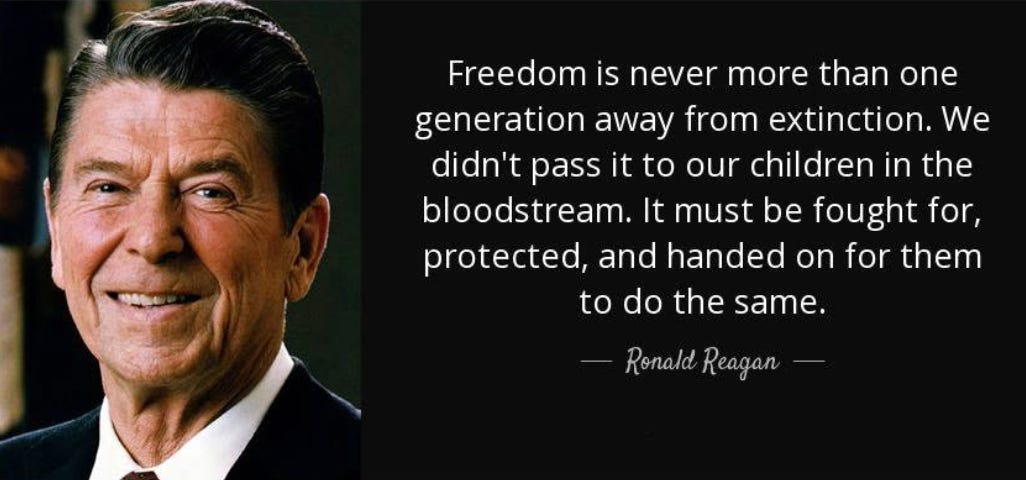
Patriotism is not blind worship of government. In fact, America’s founders would have been deeply suspicious of that idea. Patriotism is gratitude for an inheritance received and stewardship of that inheritance for those who come after us.
Every nation has dark chapters. What makes America remarkable is not that it escaped them. What makes America remarkable is that its founding principles contained the tools needed to overcome them.
One of the oddities of modern America is that we increasingly seem determined to teach our children to view their national inheritance with suspicion. Travel across Europe, and you will find statues of kings, generals, emperors, explorers, and statesmen standing largely where they have stood for generations. Their histories are debated, their failures acknowledged, but the monuments remain because those nations understand that a civilization cannot survive if it treats its own past as a crime scene.
Yet in the United States, a movement has emerged that views nearly every founder, monument, symbol, and national celebration as an opportunity for indictment and special interest self-promotion.
The same impulse is now reaching across the Atlantic, where activists demand apologies and reparations from the British Crown, aristocratic families, and European governments for historical involvement in the slave trade that occurred hundreds of years ago. But there is a profound difference between studying history and putting an entire civilization perpetually on trial. A nation that teaches each generation to regard its founders as villains should not be surprised when fewer citizens feel any obligation to preserve what those founders built.
The question facing the next generation is not whether America has flaws. The question is whether the principles of 1776 remain worth defending.
The answer is self-evident.
A nation that recognizes rights as coming from God rather than government is worth defending.
A nation built on individual liberty, free speech, due process, private property, and limited government is worth defending.
A nation that has done more than any other in history to advance the cause of human freedom and dignity is worth defending.
America’s 250th birthday should not be a seminar on national guilt. It should be a celebration of an extraordinary experiment in self-government that, despite every prediction of failure, remains standing two and a half centuries later.
That is an achievement worth defending and celebrating.
The republic stands. Let’s keep it that way.
JGM/RWM
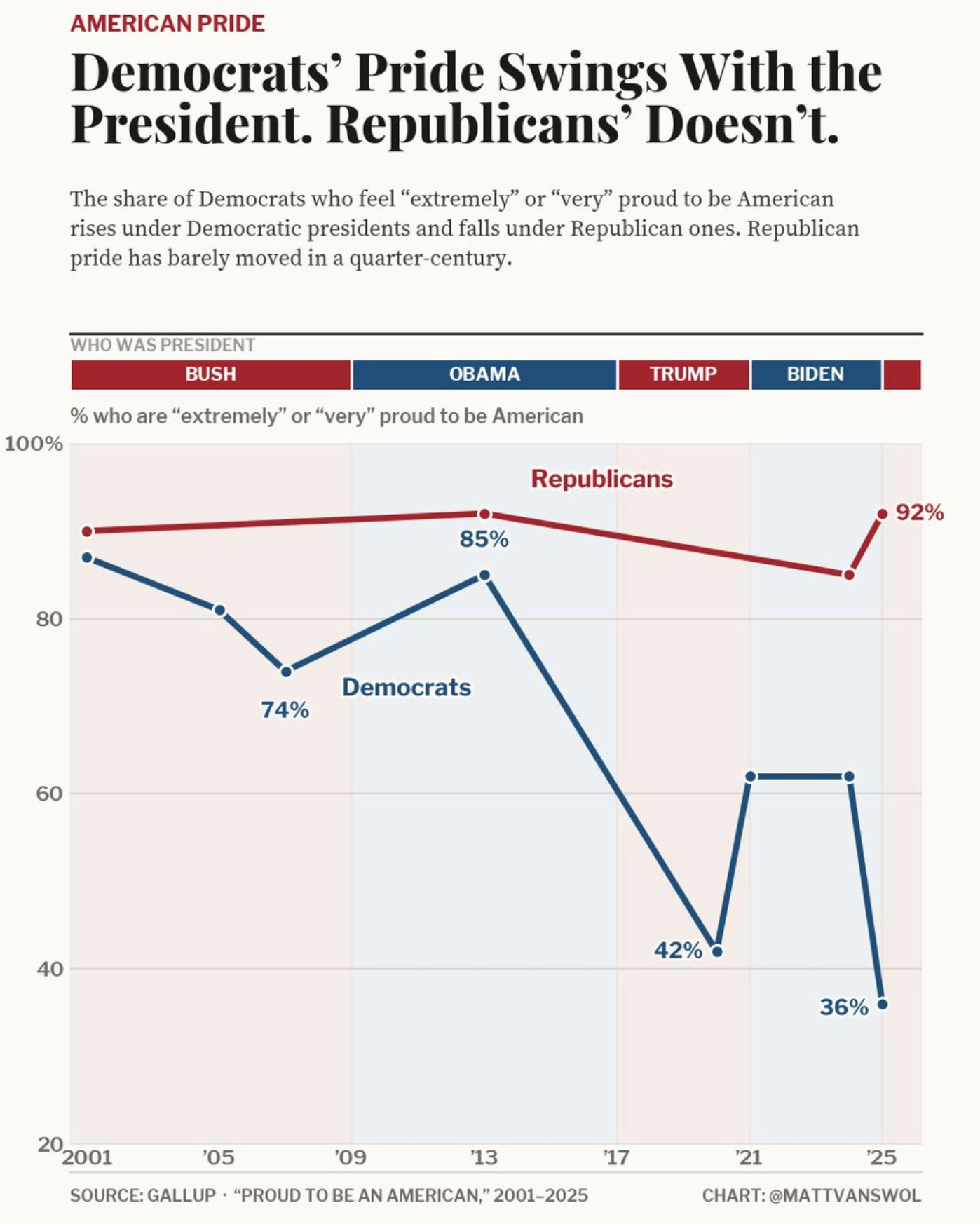
When I looked at the CNN graph about being a proud American, I can see the percentages of how well propaganda works and with which group it is so successful with. This extends out over many subjects and issues that have confronted our society for decades, take Covid for instance. Those percentages probably parallel people that believe the media and the lefts lies about the pandemic and the vaccine.
In my opinion we all should look at things with a critical eye. I personally don’t idolize anyone. We all should learn from our mistakes. And we all should take what we learn, keep moving forward, and not repeat those same mistakes. There’s a reason why a windshield on a car is larger than the rear window.
I’m going to go out of my way this year on the 250th 4th of July and extra enjoy Americas founding. The world would have been lost many times over without America and Patriotic Americans! The American Founders blessed the world with their brilliance.
Fix it? Why? We are the envy of the world. Time to tell off these America-hating Democrats. Don't like America? Fine. Leave. We have no more patience or tolerance for your stupid bullshit Let's be honest. They are not "the loyal opposition." They are a fifth column of traitors. Treat them accordingly.