


Audio Version:
Drs. Robert Malone and Jill Glasspool Malone · Washington, DC · October 27, 2026
If you raise cows and a feed mill sells you a contaminated batch, you can take the mill to court. The same holds for the dealer who sold you a mower with a faulty blade guard, the maker of a trailer hitch that shears on the highway, or the manufacturer of any other defective product. Product liability law is straightforward. Most people who farm understand it without a lawyer.
Now take your daughter to the pediatrician for a routine childhood shot. If that shot injures her, federal law sends you first to a special claims court in Washington. The Department of Justice defends HHS against your claim, while the vaccine manufacturer is not even a party to the case. The Supreme Court has held that you cannot later sue the manufacturer over the design of its product (Bruesewitz v. Wyeth, 2011). For a COVID-19 shot, the path narrows further. Your claim goes to an administrative office inside the Department of Health and Human Services (HHS), with no judge, no jury, and a one-year filing deadline.
The pediatrician, for whom 75% of his or her income is derived from routine vaccinations, can’t be sued either. Their financial conflicts of interest, as the American Academy of Pediatrics, are huge. They are not neutral arbitrators in the vaccine or medical freedom debate.
Medical freedom means having the legal right to refuse a medical product, recover from its maker if it harms you, and hear honest disagreement from your own physician. Congress, HHS, and state licensing boards have narrowed each of those rights over the past forty years, mostly by statute and regulation. Legislatures can restore them by the same means.
An Old Right with a Long Pedigree
The right to refuse a medical intervention predates the modern drug industry by centuries. John Locke wrote in 1689 that “every man has a property in his own person”. American courts carried that principle into medicine. In 1914, Judge Benjamin Cardozo wrote for the New York Court of Appeals that every adult of sound mind “has a right to determine what shall be done with his own body” (Schloendorff v. Society of New York Hospital, 1914). The Nuremberg Code of 1947 made voluntary consent the first condition of any experiment on human beings. The Belmont Report of 1979 wrote respect for persons into federal research ethics.
There is also a long history of government imposing public health requirements. In Jacobson v. Massachusetts (1905), the Supreme Court upheld a five-dollar fine against a Cambridge pastor who refused smallpox vaccination during an outbreak. Public health officials still cite the case as authority for mandates. We read Jacobson more narrowly. The penalty was a fine. Nothing in the case involved loss of a job, exclusion from school, or a bar on buying and selling. The Court also warned that a state could exercise its police power so arbitrarily that the courts would have to intervene.
How the Courthouse Door Closed
Congress passed the National Childhood Vaccine Injury Act in 1986 after a wave of lawsuits drove manufacturers out of the vaccine market. The Act created the Vaccine Injury Compensation Program (VICP), a no-fault system funded by an excise tax on each dose. It did what its authors intended. Supply has stabilized, and the program has paid about $5.4 billion to roughly 12,000 vaccine-injury victims. Its caps on death benefits and on pain and suffering still stand at $250,000, unchanged since 1986.
But the consequences go beyond the compensation system. When companies can be sued for injuries caused by their products, they have a financial incentive to make those products as safe as possible. Take away that liability, and the company no longer has to bear the full cost when something goes wrong. Instead, injured families are left paying the price. Economists call this moral hazard.
The 2005 Public Readiness and Emergency Preparedness (PREP) Act went further. Once the HHS Secretary declares a public health threat, makers, distributors, and administrators of covered countermeasures become immune from nearly every claim short of willful misconduct. The COVID-19 declaration, first issued in early 2020, was amended in December 2024 to extend that immunity for COVID-19 vaccines through December 31, 2029.
People injured by a covered product must instead seek compensation through the Countermeasures Injury Compensation Program (CICP). As of October 1, 2026, the program had decided 8,369 COVID-19 claims, found just 120 eligible for compensation, and actually paid only 66. That means fewer than one percent of decided claims have resulted in payment. Although the number of payments has increased under Secretary Kennedy, the basic system remains unchanged. Claims must generally be filed within one year of receiving the covered product, compared with three years for injury claims under the VICP. Claimants have no right to a judge or jury, and while they can request administrative reconsideration, they cannot appeal to a federal court. As of October 2026, 2,730 COVID-19 claims had been rejected for missing the filing deadline alone.
Secretary Kennedy ended the COVID-19 emergency use authorization declarations on June 30, 2026, with those for drugs and biologics expiring on June 29, 2027. The PREP Act declaration that shields the manufacturers remains in force through 2029. In May 2026, the Secretary also signed a new PREP Act declaration for a hantavirus countermeasure, limited to one drug, favipiravir, and written to run only until July 18, 2026. We found no notice that it has been extended.
Who Writes the Standard of Care
Liability is only part of the problem. Federal recommendations can also become state requirements. Many state school-entry rules, insurance coverage mandates, and pharmacist scope-of-practice statutes point back to the CDC’s Advisory Committee on Immunization Practices (ACIP) by reference. A vote by an appointed federal committee in Atlanta can therefore reach a kindergarten registration desk in any of those states without a single state legislator casting a vote.
We have firsthand experience with this dispute. Robert served on the ACIP and on its COVID-19 vaccine workgroup. On March 16, 2026, Judge Brian Murphy of the federal district court in Massachusetts stayed thirteen ACIP appointments, and every vote those members had cast, in a suit led by the American Academy of Pediatrics (AAP). That ruling invalidated the committee on which Robert served, and his appointment with it. He has since told the Secretary he will not serve on a reconstituted ACIP. The First Circuit heard argument on the government’s appeal on October 6 and has not yet ruled. Earlier this year, Stefanie Spear, Secretary Kennedy’s principal deputy chief of staff, told Robert that President Trump and his West Wing advisors did not want the ACIP meeting again until after the midterm election.
Some states responded by replacing one authority with another. In 2026, New York removed direct references to the ACIP from its vaccine statutes and pointed instead to the state health commissioner and to medical societies such as the AAP. The AAP is a private professional association of pediatricians and the lead plaintiff in the suit that froze the federal committee. A New Yorker who disagrees with its guidance has no ballot to cast against it.
A recommendation from any advisory body should remain a recommendation. When a state wants a requirement, its legislature should write one by name, debate it in public, and answer for it at the next election.
The Financial Interests Behind the AAP Lawsuit Deserve Scrutiny
The American Academy of Pediatrics presents its lawsuit against HHS Secretary Robert F. Kennedy Jr. as a defense of children’s health and established vaccine policy. Yet there is another dimension to this litigation that deserves serious examination: the financial interests of the pediatric practices represented by the AAP.
Routine childhood vaccinations are deeply integrated into the business of American pediatrics. Vaccination appointments frequently coincide with reimbursable well-child examinations, while vaccine administration generates additional payments. Depending on the insurance contract, practices may also receive performance incentives linked to immunization rates.
These financial relationships are not merely theoretical. Published research has demonstrated that recalling children for overdue vaccinations generates additional appointments and practice revenue.
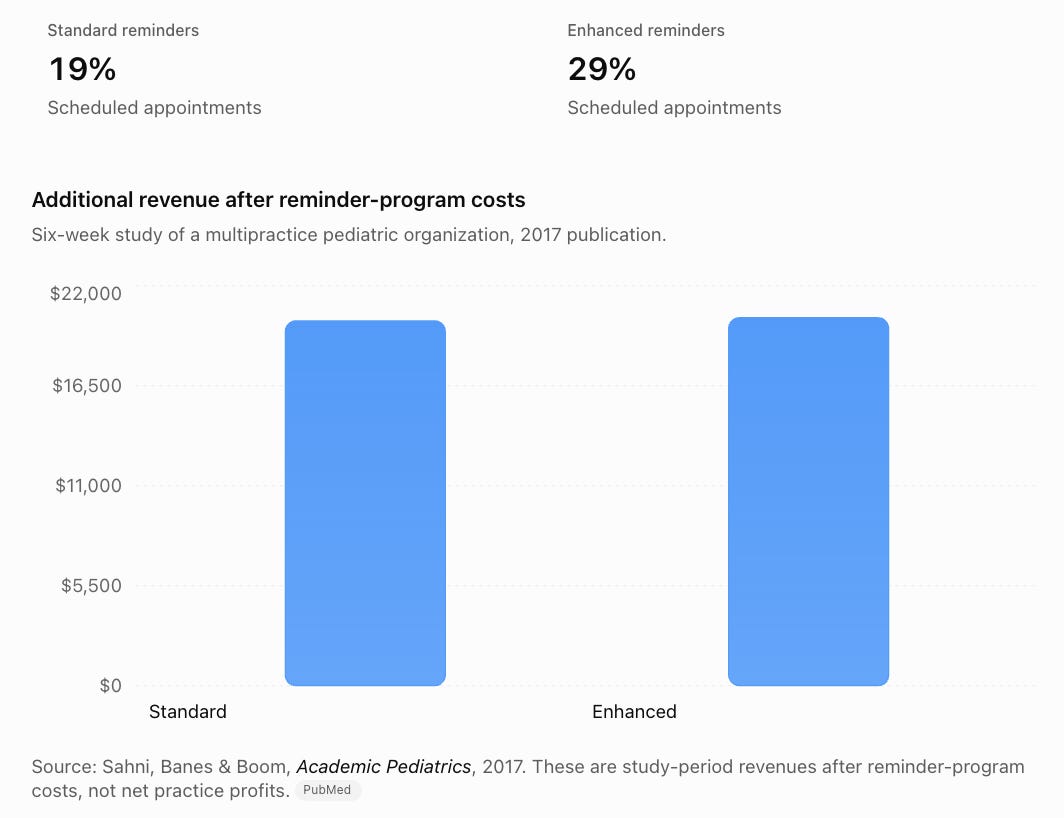
The AAP is therefore not simply an outside scientific observer of federal vaccination policy. It is a professional association representing physicians whose practices participate financially in the vaccination system.
Furthermore, there is a more concerning finding regarding the AAP and undisclosed financial relationships:
The September 2025 Undark investigation reported that:
At least 9 of 16 members of an AAP committee responsible for immunization recommendations had received some form of financial support from vaccine manufacturers.
Five had financial relationships with manufacturers marketing COVID-19 vaccines in the United States.
The AAP did not routinely disclose its own corporate sponsorship relationships within the guidelines reviewed by the investigators.
The AAP said it had a rigorous conflict-of-interest review process and that corporate funding did not influence policy development.
Changes to federal recommendations could affect vaccination volumes, reimbursement arrangements, and the economics of pediatric practice as well as impact the personal financial landscape of AAP’s leadership and AAP’s corporate sponsorship. Therefore, the financial interests of the organization and its members need to be examined closely.
The public deserves to know whether the AAP has assessed the potential financial consequences of the federal policy changes it is fighting, and whether those interests have been fully disclosed.
Below is a video obtained from the Children’s Health Defense X account. In it, a pediatrician discusses the substantial revenue that routine vaccinations generate for physicians.
“If we stop vaccinating, we basically don't have a practice anymore… We have a strong financial incentive to believe what we're told about the vaccine program being safe, effective, and necessary.”
-Pediatrician in the CHD video
Your Physician’s Right to Disagree
There is also the question of what your doctor is allowed to say, both to you and in public. During the pandemic, the Federation of State Medical Boards (FSMB), a private nonprofit that advises state licensing boards, warned that physicians who spread COVID-19 “misinformation” risked suspension or revocation of their licenses. At least fifteen state boards adopted its language. California went further in 2022 and wrote a misinformation offense into its medical practice act. A federal court enjoined enforcement of that law in January 2023 (Høeg v. Newsom, 2023), and the legislature repealed it effective January 2024.
In October 2025, four physicians disciplined by boards in six states sued the FSMB in federal court in Texas, alleging that they had been punished for conveying valid medical information that departed from the organization’s view of the scientific consensus.
Physicians and others who criticized pandemic policy online faced similar pressure. In Missouri v. Biden, a federal district court found in July 2023 that federal officials had likely coerced social media platforms into suppressing disfavored speech. The Supreme Court reversed in 2024 for lack of standing and did not reach the merits of that finding (Murthy v. Missouri, 2024).
These episodes raise a fundamental question about medical freedom: Who decides what a physician is permitted to say? Patients benefit from hearing physicians who question prevailing medical recommendations, and scientific institutions benefit from having their conclusions challenged. Professional discipline should address demonstrable misconduct, not merely a physician’s disagreement with government policy or an evolving scientific consensus.
When Medical Dissent Became a Homeland Security Concern
The pressure to conform did not stop with medical licensing boards or social media censorship. During the pandemic, disputes over public-health policy also entered the federal government’s domestic counterterrorism framework.
On February 7, 2022, the Department of Homeland Security issued a National Terrorism Advisory System bulletin warning about misinformation, disinformation, and malinformation surrounding COVID-19. The bulletin identified false or misleading narratives that undermined public trust in government institutions as contributing factors in the domestic terrorism threat environment.
DHS also connected opposition to COVID-19 vaccine and mask mandates with domestic violent extremism, asserting that extremists had used those policies to justify violence against government, healthcare, and academic institutions.
The bulletin’s inclusion of public-health controversies in a domestic terrorism advisory raised serious civil-liberties concerns. Physicians, scientists, and ordinary citizens were already facing professional and social consequences for questioning government medical policies. Now those same controversies were appearing in federal national-security warnings.
Taken together, these episodes illustrate a troubling pattern that we documented at greater length in PsyWar: the use of professional discipline, government pressure on communications platforms, and national-security rhetoric in ways that risk suppressing legitimate scientific and medical dissent.
Medical freedom cannot exist without the freedom to question medical authorities, challenge government recommendations, and refuse unwanted medical interventions. Nor can informed consent have much meaning if physicians fear professional retaliation for offering patients an independent medical opinion.
New State and Federal Legislation
Legislation to restore legal accountability for vaccine manufacturers has already been introduced in Congress, but neither proposal has advanced beyond the committee stage. The PREP Repeal Act (H.R. 4388), introduced by Representatives Thomas Massie and Paul Gosar in July 2025, would eliminate the PREP Act’s immunity and compensation provisions. Gosar’s End the Vaccine Carveout Act (H.R. 4668) would allow people alleging vaccine injuries to choose between pursuing a manufacturer in court and filing a claim through the Vaccine Injury Compensation Program (VICP). It would also remove COVID-19 vaccines from PREP Act countermeasure protections. Neither bill has received a committee markup.
The states have moved faster. On April 4, 2025, Idaho Governor Brad Little signed the Idaho Medical Freedom Act (S. 1210). It bars businesses, schools, colleges, and every level of government from conditioning employment, entry, or services on a medical intervention. Little had vetoed an earlier version because it would have kept schools from sending home a child sick with measles or another contagious disease. The bill he signed carved out that exception, and the law took effect July 1, 2025.
Florida tried, but the effort stalled. The state Senate passed its Medical Freedom Act (SB 1756) on March 9, 2026. The bill would have added a conscience exemption to school immunization rules, barred manufacturer bonuses to practitioners for giving vaccines, and let pharmacists dispense ivermectin to adults without a prescription. It died in the House four days later. A second attempt during an April special session ended when House Speaker Daniel Perez declined to take it up.
The principle of subsidiarity, named in Pius XI’s 1931 encyclical Quadragesimo Anno, holds that a decision belongs at the lowest level competent to make it. Hayek made a similar argument from an economic perspective, arguing that many local decision makers use dispersed knowledge better than one central planner can. A rule made in Boise can be watched, compared with Tallahassee’s, and repealed by the people who live under it.
What We Propose
End the PREP Act shield. Congress should pass the PREP Repeal Act (H.R. 4388). Until it does, the Secretary can amend the COVID-19 declaration to end immunity for products that are now fully licensed and sold commercially. A vaccine product marketed for profit years after an emergency should carry the same liability as any other vaccine product currently available.
Restore the right of vaccine-injured Americans to seek justice in court. Individuals who believe they have been injured by a vaccine should have the choice of pursuing compensation through the no-fault Vaccine Injury Compensation Program (VICP) or bringing a lawsuit against the manufacturer, including claims involving defective vaccine design. The Supreme Court’s decision in Bruesewitz v. Wyeth rests on federal statutory language that Congress has the authority to amend. The VICP’s longstanding $250,000 caps on death awards and pain-and-suffering compensation should also be adjusted for inflation, with the increases applying to pending claims as well.
Make informed consent a legal requirement, with meaningful consequences for violations. Before administering any vaccine to a child, healthcare providers should be required to give parents clear, written information about the vaccine’s benefits, risks, potential adverse reactions, and contraindications, including the manufacturer’s complete package insert. Parents should have sufficient time to review this information, ask questions, and provide written consent without coercion. Florida has proposed legislation requiring written vaccine information and signed parental acknowledgment. Such protections should be established nationwide, with civil liability for providers who fail to obtain legally valid informed consent.
As an aside, online educational materials and videos could help streamline the informed consent process while reducing the administrative and financial burden on physicians. Parents could review these materials at home, alongside online patient intake forms, before their child’s appointment. This would allow families time to make informed decisions without placing additional demands on physicians during office visits.
Separate medical recommendations from legal mandates. Recommendations issued by federal advisory committees or private medical organizations should not automatically become legally binding requirements. If a state legislature wants to mandate a particular vaccine or medical intervention, it should be required to debate and pass legislation explicitly naming that requirement, rather than automatically adopting the recommendations of outside organizations.
Protect physicians’ freedom of speech. State medical licensing boards should not discipline physicians merely for expressing medical opinions that differ from government recommendations or prevailing scientific consensus. Disciplinary action should require evidence of patient harm, fraud, or other clearly defined professional misconduct. Licensing boards should also be required to publicly disclose the origin of any policies or guidance they adopt from private organizations, including the Federation of State Medical Boards (FSMB) and the American Academy of Pediatrics (AAP). This disclosure should identify the original source, supporting scientific evidence, and whether the guidance carries the force of law. Physicians and the public have a right to know who is influencing the standards used to regulate medical practice.
Protect medical freedom without exceptions that undermine bodily autonomy. No individual should be legally compelled to undergo vaccination or any other medical intervention for the purported benefit of another person. This principle applies equally to children and adults, regardless of whether the stated objective is protecting classmates, elderly relatives, or medically vulnerable individuals. Infectious disease outbreaks should be addressed through voluntary precautions, appropriate medical care, and other measures that respect informed consent and individual medical choice.
What These Reforms Cannot Fix
Restored liability will raise costs. Some manufacturers may leave the market, as they did before 1986, and a few vaccines may become harder to obtain or more expensive. We accept that trade-off. If a product cannot survive ordinary liability, its manufacturer should bear the cost of those risks.
We favor voluntary vaccination based on full risk disclosure, open adverse-event data, and manufacturers being held responsible for the harms their products cause. Reasonable people dispute whether voluntary uptake will keep coverage high enough to stop outbreaks. Data from Idaho over the next several years will inform that dispute. Legislatures, in public and on the record, should settle such questions, rather than advisory committees and licensing boards that no voter can remove.
Sovereignty over Your Own Body
Every reform proposed here rests on one principle. Your body belongs to you, and a declared emergency gives no government, employer, school board, or licensing board a share in it. We believe that sovereignty must be respected where it survives and restored by statute where it has been taken away.
Throughout the second half of the twentieth century, informed consent and respect for individual autonomy became foundational principles of Western medical ethics. Building on the Nuremberg Code, the World Medical Association adopted the Declaration of Helsinki in 1964, establishing the importance of freely given, informed consent in medical research. In 1972, the federal appeals court in Washington ruled in Canterbury v. Spence that physicians must disclose the risks of treatment that a reasonable patient would consider important when making medical decisions.
These principles became central to medical education. In 1979, Tom Beauchamp and James Childress published Principles of Biomedical Ethics, identifying four foundational principles: respect for autonomy, beneficence, nonmaleficence, and justice. Their framework helped shape how generations of American physicians were taught to approach medical ethics. Two years later, the World Medical Association adopted the Declaration of Lisbon, affirming that patients have the right to accept or refuse medical treatment after receiving adequate information.
The underlying principle was straightforward: patients have the right to make informed decisions about what happens to their own bodies.
Congress wrote the same principle into the statute governing emergency use authorization. Anyone offered a product under that authority must be told of the option to accept or refuse it (21 U.S.C. § 360bbb-3). In the spring of 2021, some universities and employers required COVID-19 vaccination while every available product in the United States was still under emergency authorization. The principle remained on paper, but was not honored in practice.
The reforms in this essay ask American law to honor the ethics American medicine taught for fifty years. Restored liability would return the cost of harm to the firm that caused it, and a consent statute would put the patient’s signature ahead of the needle. A physician free to speak could tell a patient the truth as the physician sees it, with the licensing board reserved for documented harm.
A feed mill carries liability insurance, tests its batches, and prints a lot number on every bag, because a sick herd can end in a lawsuit. The farmer also decides whether to buy the feed at all. Vaccine vials carry lot numbers too. In 1986 and again in 2005, Congress decided that for these products the taxpayer and the injured family would have to bear the consequences when a lot goes bad, and the manufacturer would not be held accountable. Congress can decide otherwise, and the bills to do so already sit, languishing in committee.
References
American Health Law Association. 2024. “HHS Extends PREP Act Immunity for COVID Vaccines Through 2029.” Health Law Weekly, December 13.
American Society for Clinical Pathology (ASCP). 2025. “HHS Secretary Aims to Overhaul National Vaccine Injury Compensation Program.” July 29.
Associated Press. 2025. “RFK Jr.’s Vow to Overhaul Vaccine Injury Program Echoes Grievances of Anti-Vaccine Movement.” August 7.
Association of Health Care Journalists. 2025. “Countermeasure Injury Compensation Program (CICP).” Health Journalism Glossary.
Association of Immunization Managers. 2026. “AIM Legislative Round-up: May 22, 2026.”
Beauchamp, Tom L., and James F. Childress. 1979. Principles of Biomedical Ethics. New York: Oxford University Press.
Bloomberg Law. 2025. “Doctors Sue Medical Board Association Over COVID-19 ‘Censorship.’” October 30.
Bruesewitz v. Wyeth LLC, 562 U.S. 223 (2011).
Canterbury v. Spence, 464 F.2d 772 (D.C. Cir. 1972).
Central Florida Public Media. 2026. “Florida House Speaker Says No to Medical Freedom Bill.” April 28.
Children’s Health Defense. 2026. “RFK Jr. Faces Backlash After Hantavirus PREP Act Declaration.” The Defender, May 26.
CIDRAP. 2026. “Still No ACIP Quorum, Collapsing Lawsuits, and Vaccine Questions Answered.” July 9.
Farmer, Blake. 2022. “Medical Boards Pressured to Let It Slide When Doctors Spread COVID Misinformation.” KFF Health News.
Florida Phoenix. 2026. “‘Medical Freedom’ from Vaccines Shackled for the 2026 Session.” March 4.
Florida Senate. 2026. “CS/CS/SB 1756: Medical Freedom.” Legislative history, 2026 session.
George Washington University Milken Institute School of Public Health. 2026. “American Academy of Pediatrics et al. v. Kennedy et al.” Health Policy and Management Matters.
Ground News. 2026. “HHS Ends COVID-19 Emergency Declarations for Drugs and Devices.” June 30.
Hayek, Friedrich A. 1945. “The Use of Knowledge in Society.” American Economic Review 35 (4): 519–530.
Høeg v. Newsom, 652 F. Supp. 3d 1172 (E.D. Cal. 2023).
Health Resources and Services Administration (HRSA). 2026. “Countermeasures Injury Compensation Program (CICP) Data.” Data as of March 1, 2026.
Inside Health Policy. 2026. “AAP Attorney Sees Path for First Circuit to Preserve Lower Court ACIP Ruling.” October.
Jacobson v. Massachusetts, 197 U.S. 11 (1905).
KFF Health News. 2026. “First Edition: Thursday, January 29, 2026.”
Locke, John. (1689) 1980. Second Treatise of Government. Edited by C. B. Macpherson. Indianapolis: Hackett Publishing.
Malone, Robert W., and Jill Glasspool Malone. 2024. PsyWar: Enforcing the New World Order. New York: Skyhorse Publishing.
MALONE.NEWS. 2022. “DHS: Mis-, Dis-, and Mal-Information (MDM) Being Caused by ‘Domestic Terrorists.’” February.
MALONE.NEWS. 2026. “The Kennedy Exception.” September.
Murthy v. Missouri, 603 U.S. 43 (2024).
National Commission for the Protection of Human Subjects of Biomedical and Behavioral Research. 1979. The Belmont Report: Ethical Principles and Guidelines for the Protection of Human Subjects of Research. Washington, DC: U.S. Department of Health, Education, and Welfare.
Pfannenstiel, Kyle. 2025. “Idaho Governor Works on Final Bill Actions, Including Signing ‘Medical Freedom’ Bill.” Idaho Capital Sun, April 8.
Pius XI. 1931. Quadragesimo Anno. Vatican City.
Schloendorff v. Society of New York Hospital, 211 N.Y. 125, 105 N.E. 92 (1914).
Trials of War Criminals Before the Nuernberg Military Tribunals Under Control Council Law No. 10. 1949. Vol. 2. Washington, DC: U.S. Government Printing Office.
The Capitolist. 2026. “Florida Senate Passes ‘Medical Freedom Act.’” March 9.
U.S. Code. Title 21, § 360bbb-3. “Authorization for Medical Products for Use in Emergencies.”
U.S. Congress. 2025a. PREP Repeal Act. H.R. 4388, 119th Congress.
U.S. Congress. 2025b. End the Vaccine Carveout Act. H.R. 4668, 119th Congress.
U.S. Department of Homeland Security. 2022. National Terrorism Advisory System Bulletin. February 7.
World Medical Association. 1964. Declaration of Helsinki: Recommendations Guiding Doctors in Clinical Research. Adopted by the 18th World Medical Assembly, Helsinki, Finland.
World Medical Association. 1981. Declaration of Lisbon on the Rights of the Patient. Adopted by the 34th World Medical Assembly, Lisbon, Portugal.
In terms of mandates - and volunteerism. Trust the people.
In areas where yellow fever is endemic and the fatality rate is high, people line up for the vaccine. I witnessed this in Brazil firsthand.
People aren't stupid.
See Amish threaten mass exodus from New York over vaccine fight —which is heading to the Supreme Court
https://nypost.com/2026/08/26/us-news/amish-threaten-mass-exodus-from-new-york-over-vaccine-fight-which-is-heading-to-the-supreme-court/