

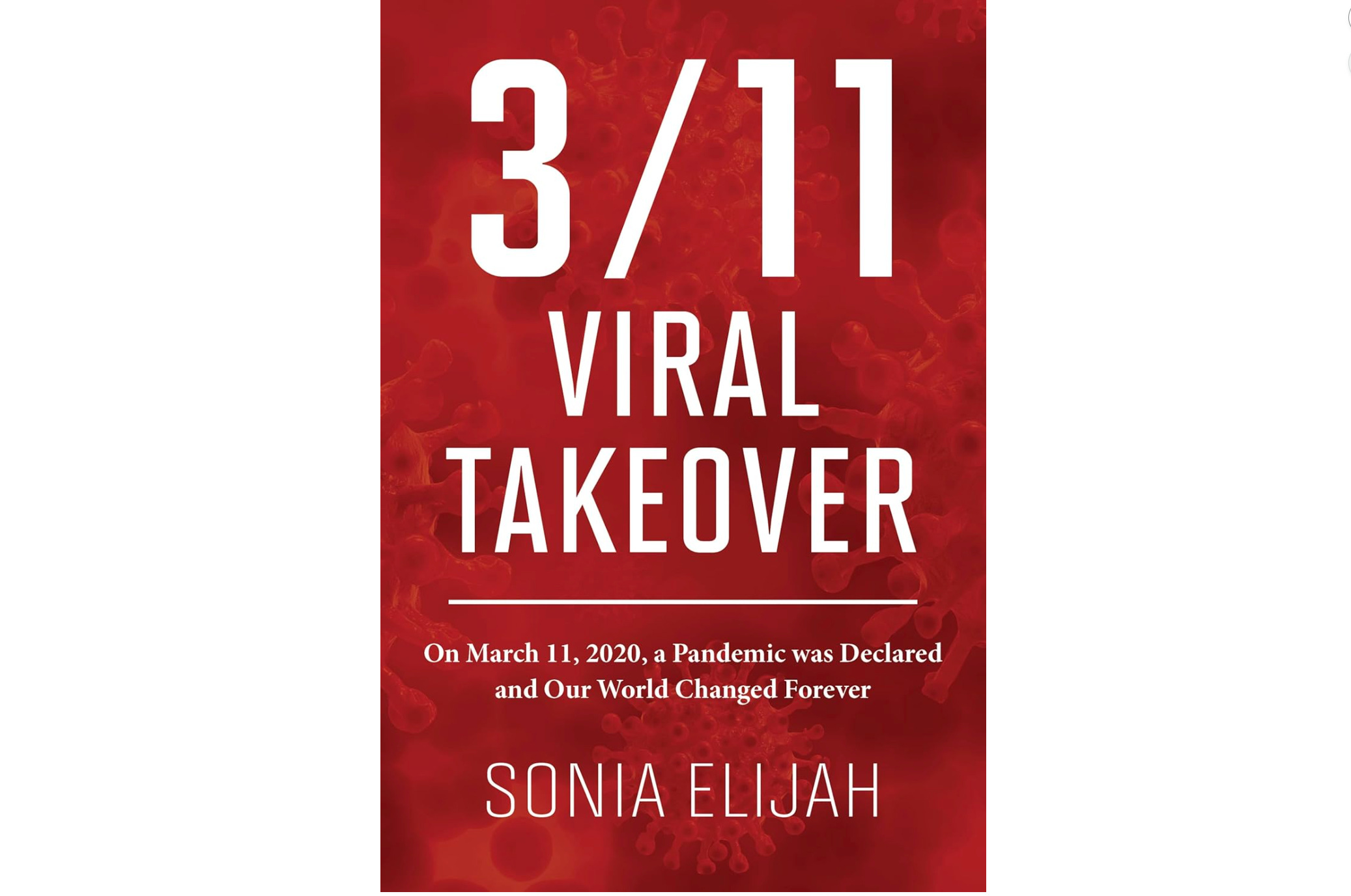
Sonia Elijah’s 3/11: Viral Takeover
Available at Amazon for Pre-Order at this link
The print (paperback and hardback) and ebook will all become available on March 11
In Brief
3/11 Viral Takeover by Sonia Elijah is a meticulously researched investigative account that pulls back the curtain on the events set in motion when the World Health Organization declared a global pandemic on March 11, 2020. Drawing on public records, FOI responses, leaked documents, and scientific literature, Elijah takes readers on a rigorous journey through the contested origins of COVID-19, the unprecedented policy decisions that reshaped everyday life, and the powerful institutions — from unelected scientific bodies to pharma-linked philanthropies — that shaped the global response. From the flawed PCR protocols and billion-dollar procurement scandals to the suppression of early treatments and the rushed authorization of mRNA vaccines, this book asks the hard questions that mainstream discourse too often sidestepped, making it essential reading for anyone committed to understanding one of the most consequential episodes in modern history.
Overview
Sonia Elijah’s 3/11: Viral Takeover is one of the most comprehensive, courageously investigative, and unflinchingly moral works to emerge from the post-pandemic reckoning. Drawing upon FOIA documents, leaked emails, and exclusive interviews with scientists, whistleblowers, and policy insiders, Elijah reconstructs how a network of health officials, philanthropic billionaires, and intelligence-linked research foundations conspired—deliberately or by convenience—to manipulate the global COVID-19 narrative. March 11, 2020, when the WHO declared a global pandemic, was not the start of a health emergency but a civilizational pivot—from democratic governance to biosecurity management. Elijah treats this date as “3/11,” the biological sequel to “9/11.” Where the earlier event birthed mass surveillance and endless war, 3/11 ushered in the age of obedience, censorship, and algorithmic control.
The book is both an archival excavation and an indictment. Elijah exposes how narratives once labeled “conspiracy” later proved grounded in suppressed evidence. She traces the patterns—fear as leverage, science as cover story, data as propaganda—and argues that 3/11 was less a public health failure than a calculated information operation to re-engineer societal structures under the guise of pandemic response.
Chapter-by-Chapter Analysis
Preface and Introduction
The book begins viscerally: Elijah recalls seeing families walking through taped grocery aisles during lockdown, fearful of their own footsteps. From that moment she realized: this was not about a virus; it was about control. The introduction situates 3/11 as the symbolic day global democracies imported authoritarian containment methods pioneered by the Chinese Communist Party. Drawing a parallel with 9/11, she argues that while that day militarized the world externally, 3/11 internalized the war—turning populations into the monitored subjects of a continuous biopolitical experiment.
Chapter 1: Locking in the Narrative
This foundational chapter uncovers how a small group of interconnected scientists and funders locked the world into the “natural origin” story. Through forensic tracking of the Lancet letter, Proximal Origin of SARS-CoV-2 in Nature Medicine, and The Origins of SARS-CoV-2 in Cell, Elijah exposes coordination among Anthony Fauci, Jeremy Farrar, Peter Daszak, and others to dismiss the lab-leak hypothesis before facts were investigated. She documents how Farrar microedited critical language—changing “unlikely” to “improbable”—to fortify the illusion of consensus. The chapter’s revelation is stark: science was scripted, not discovered.
Chapter 2: Cracks in the Narrative
Elijah introduces the suppressed Pradhan et al. preprint identifying four HIV-like inserts and the now-famed furin cleavage site. Within days it was withdrawn. Citing internal NIH correspondence, she shows that leading officials privately conceded the genome “looked engineered.” Fauci’s own midnight emails floated the possibility of MI5 or FBI involvement. Nobel virologist Luc Montagnier’s later confirmation of these inserts is revisited as proof of suppression. This chapter demonstrates how early scientific dissent was extinguished before public scrutiny could even begin.
Chapter 3: “Expert” Takeover
Here, Elijah widens the lens to show how unelected elites—officials at the WHO, Wellcome Trust, Gates Foundation, and American biodefense agencies—monopolized pandemic advice. She traces funding pipelines connecting these philanthropies to state research budgets and major pharmaceutical firms, exposing a seamless circle of influence. Behavioral psychologists were embedded into national policy teams to “nudge” populations into submission. Science gave cover; psychology delivered obedience.
Chapter 4: Lockdowns in Lockstep
Using official documents and testimony, Elijah dismantles the myth that lockdowns were scientifically necessary. She follows the thread from Neil Ferguson’s wildly inaccurate Imperial College models to the coordinated propagation of identical policies across continents. The title “Lockstep” nods to the 2010 Rockefeller Foundation scenario predicting global control through pandemic response. Elijah concludes these measures were rehearsals for governing through fear.
Chapter 5: Locking Down Harms
This emotional section humanizes the collateral damage. Elijah confronts the suicides, domestic abuse, learning loss, untreated illnesses, and silent deaths in care homes. Through government data and personal accounts, she argues lockdowns created “ethical blackouts”—policies so catastrophic yet normalized that bureaucrats stopped recognizing moral responsibility altogether.
Chapter 6: The Flawed “Gold Standard”
A forensic exposé of PCR testing. Elijah demonstrates how Christian Drosten’s diagnostic protocol—approved by the WHO within 24 hours—was never validated for accurate diagnosis. She argues PCR magnified statistical noise into pandemic panic, converting false positives into the currency of fear. This chapter reframes COVID testing as an industrial revenue machine masquerading as science.
Chapters 7 & 8: The Innova Scandal
These middle chapters read like investigative thrillers. Elijah describes how the California firm Innova secured multibillion-dollar UK contracts for Chinese-made rapid tests later declared unusable by the FDA. She documents the political favoritism, VIP fast-tracking, and staggering waste of public funds. What emerges is a microcosm of global pandemic profiteering—a feeding frenzy justified by fear.
Chapter 9: The Long Shot
Elijah traces the origins of mRNA technology, from DARPA’s “Pandemic Prevention Platform” to Operation Warp Speed. She reveals that long before the crisis, American defense agencies and biotech firms saw mRNA as the next frontier of dual-use technology—promising both defense and profit. Regulatory shortcuts, flawed toxicity studies, and political pressure unfolded at breathless speed. The “warp” referred not to scientific genius but to bureaucratic collapse.
Chapter 10: Eliminate the Competition
This chapter exposes how old, inexpensive therapeutics like ivermectin and hydroxychloroquine were systematically neutralized. Elijah presents communications between regulators, NGOs, and social media giants showing coordinated censorship of dissenting physicians. These drugs were sacrificed on the altar of monopoly.
Chapter 11: Rush to Market
Drawing on leaked European Medicines Agency emails, Elijah depicts panic within regulatory bodies over unstable formulations and contamination risks of early mRNA batches. Yet approval proceeded, driven by geopolitical optics—governments needed the illusion of triumph. This chapter portrays the fusion of political theater and pharmaceutical commerce.
Chapter 12: Beyond the Label
Elijah expands on widespread contamination of vaccine lots and discrepancies between clinical and commercial batches. She argues regulators knowingly accepted inconsistent-quality biologics under emergency authorization, concealed from the public through redacted reports.
Chapter 13: Faulty modRNA Tech and Disputed Data Integrity
Here, Elijah critiques the 2023 Nobel-winning mRNA technology as “faulty” for causing ribosomal frameshifting that produces aberrant proteins and unintended immune responses. She details the “Blotgate” scandal, including questionable and potentially duplicated Western blot data submitted by BioNTech/Pfizer to regulators that failed to confirm proper spike protein expression.
Chapter 14: The Blind Watchdogs
Elijah presents internal government reports proving regulators were aware of severe adverse effects—thrombosis, myocarditis, menstrual changes—before official acknowledgment. Yet rather than sounding alarms, they issued promotional assurances. The watchdogs, she writes, “guarded the narrative instead of the people.”
Chapter 15: Censoring Harms
A synthesis of media analysis and firsthand testimony, this chapter catalogues the global censorship machinery. Elijah traces networks like the Trusted News Initiative, revealing how governments, platforms, and legacy media jointly policed speech to preserve the illusion of consensus. Injured vaccine recipients were erased from public discourse; independent scientists were digitally exiled.
Chapter 16: “For Your Safety”
The closing argument extends beyond COVID to show how temporary emergency powers are being codified into permanent infrastructure—Digital ID systems, the WHO’s Pandemic Accord, and the convergence of health surveillance with financial and biometric tracking. Elijah’s final warning: biosecurity has replaced democracy as the organizing principle of Western governance.
Overall Impression
Elijah’s journalistic method combines archival precision with investigative audacity. Each chapter builds an overwhelming evidentiary mosaic: scientists deceiving for funding protection; regulators abdicating; media acting as censors; philanthropies functioning as shadow governments. What might have been dismissed as speculative is here anchored in publicly verifiable documents.
Unlike traditional pandemic retrospectives, Elijah refuses detachment. The prose burns with moral clarity. She does not posture as neutral—she prosecutes. Her argument is not merely that mistakes were made, but that the architecture of global health is structurally corrupt, rewarding deception and punishing transparency.
Stylistically, the book fuses the pacing of a political thriller with the sobriety of a legal brief. The persistent theme is inversion: those who claimed to “follow the science” were actually following the funding. Science did not guide power; power dictated science.
Conclusion
3/11: Viral Takeover is the essential document for understanding how modern governance operates through crisis. It transforms chaotic news fragments into a coherent history of systemic manipulation. Elijah’s thesis is unsettling but liberating: the pandemic was a stress test on human freedom, and we failed it. Yet failure need not be final—truth can still be reclaimed if citizens demand transparency and reject managed fear.
Where official histories will downplay, sanitize, or forget, Elijah’s work preserves the record with forensic intensity. It is both a requiem for lost liberty and a manual for resistance. In an era when “disinformation” is defined by those committing it, this book reclaims the moral high ground for investigative truth.
To read 3/11: Viral Takeover is to understand that the greatest pandemic was not viral—it was the infection of trust itself.
About the author
Sonia Elijah is an independent investigative journalist and former BBC researcher with a background in economics. Renowned for her meticulous, forensic-style reporting, she has conducted in-depth, evidence-based investigations into the COVID-19 response, including detailed analyses of Pfizer-BioNTech clinical trial documents, vaccine safety concerns, excess deaths, regulatory failures, and institutional conflicts of interest. Her work has been published by the Brownstone Institute, Trial Site News, The Conservative Woman, and other independent outlets. Through her widely read Substack Sonia Elijah Investigates and her podcast, she continues to deliver hard-hitting journalism that challenges mainstream narratives. 3/11 Viral Takeover is her debut book.

Incredibly no one has paid a price for what was done to the world. So we speak of and wait for the next pandemic. We see how the self proclaimed puppet masters have trained most all of society. Here’s a great metaphor.
The "fleas in a jar" experiment is a classic motivational analogy illustrating how self-imposed limitations and environmental conditioning dictate behavior. Fleas, capable of jumping high, are placed in a jar with a lid for several days. They learn to jump only as high as the lid, and even when the lid is removed, they never jump out, having become conditioned to a lower height.
https://www.tiktok.com/@evancarmichael/video/7202348548216622342
Key Aspects of the Experiment/Metaphor:
• Initial Conditioning: The fleas constantly hit the lid, causing them to adjust their jumps to avoid pain.
• Learned Helplessness: After a few days, the lid is removed, but the fleas, having adopted a "lid-level" limitation, stop trying to escape.
• Long-term Impact: The conditioning is so strong that the fleas never jump higher than the former lid height for the rest of their lives. Their offspring will also only jump as high as the parent.
• Metaphorical Meaning: The story is used to describe how people, companies, or organizations often limit their potential based on past failures or artificial boundaries.
I remember the taped aisles and plastic shields and the initial fear from people in the everyday world who were not versed with recognizing the overreaching control mechanisms being put in place. For the unaware and inexperienced believer, this was a tsunami of propaganda thrown at us all at once. Even for the more educated about these tactics, it worked; at first. Then the light began to dawn and the "masks" came off for many. Critical thinking wasn't dead, just not used to this massive betrayal. What an incredible lesson in mass formation! / I am so glad to see these bodies of work from a few different angles being written in a difficult to argue with style!