


By Dr. Jill Glasspool Malone and Robert W. Malone
Political Opinion
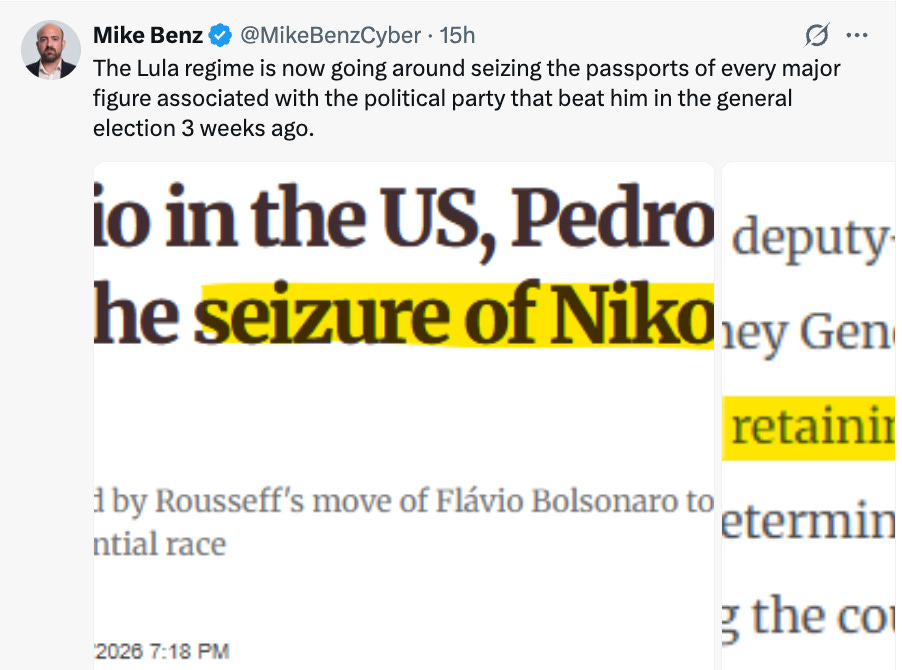
We have been appalled by the glowing, almost celebratory mainstream media coverage of Lula’s election victory and the treatment of Flávio Bolsonaro, who reportedly fled Brazil amid fears of political persecution. Rather than investigate allegations of censorship, judicial corruption, election interference, and political repression, much of the Western press appears content to celebrate those wielding power. But there are people much closer to events on the ground, and their voices deserve to be heard.
Glenn Greenwald is one of them. Unlike journalists whose principles change with the political winds, Greenwald has consistently challenged abuses of state power, regardless of who benefits. His reporting on the Operation Car Wash scandal exposed prosecutorial misconduct involving Lula’s prosecution. Now he is investigating allegations of similar abuses directed against Lula’s political enemies, particularly through the extraordinary powers exercised by Supreme Court Justice Alexandre de Moraes.
Mike Benz takes the story directly into Washington. He alleges that the Biden administration coordinated an extraordinary intervention surrounding Brazil’s 2022 presidential election, involving the CIA, State Department, Pentagon, and White House. His account raises questions about American diplomatic pressure, electronic voting machines, and USAID funding allegedly directed toward organizations aligned with Lula and Brazil’s censorship apparatus. Although Benz acknowledges that he cannot prove voting-machine manipulation, his allegations about American involvement demand answers.
The images and statements reproduced below reveal another dimension: international political figures and institutions publicly celebrating Lula, even as serious allegations of judicial overreach and political persecution are happening in real time.
When journalists, activists, and opposition figures flee their country rather than face a judicial system they believe has been weaponized against them, this is no longer ordinary politics. And when American government agencies are accused of helping shape that political environment, Americans have every right to demand a full accounting.
We believe this story is far bigger than Brazil. It concerns the abuse of judicial power, censorship, foreign interference, and the willingness of powerful institutions to defend conduct they would condemn if the political parties were reversed.
Glenn Greenwald @ggreenwald writes:
The Brazilian Supreme Court Judge revered by the Brazilian left (and now the American left for seizing Bolsonaro’s passport), Alexandre de Moraes, comes from the extremist “law-and-order” faction of the Brazilian Right as well as its extreme pro-austerity neoliberal pro-banker wing.
Less than a decade ago, when Moraes was nominated to the Supreme Court, the Brazilian left branded him a white supremacist, a fascist and a leader of the right-wing coup government. One of Brazil’s leading left-wing politicians @GuilhermeBoulos explicitly accused Moraes of having committed the worst crime against humanity that exists: “RACIST GENOCIDE,” by deliberately murdering poor black people en masse while he was the Justice Secretary for São Paulo Governor Geraldo Alckmin (who himself spent years being called all the same names by the Brazilian left until Lula picked Alckmin as VP in 2022).
Then -- starting in 2019 -- Moraes began censoring, imprisoning and persecuting Lula’s enemies and imprisoning his own critics, and was overnight transformed by the large Brazilian media and the left into the Savior of Brazilian Justice and Democracy. Only on the left can one transform from *fascist and genocidal racist* to heroic guardian of justice in less than a decade.
Also, Moraes’ own corruption scandals make everyone else’s seem trivial, yet his passport works just fine and he freely travels the world in great wealth that he and his family received from the corrupt billionaire banker responsible for Brazil’s worst-ever banking collapse…CRUCIAL FACTS ON THE FLAVIO BOLSONARO MATTER:
It’s not just Flavio Bolsonaro who fled Brazil to escape the tyrannical persecution of Alexandre de Moraes and the pro-Lula wing of the Supreme Court. There are dozens of Brazilian exiles who have done the same: dissident journalists, activists, bloggers, and politicians who all fled to avoid certain prison for political opposition.
In most of these cases, Moraes has demanded the extradition of those who fled and whom he wants to imprison back in Brazil. But Moraes’ extradition requests have been repeatedly denied by multiple countries and institutions on the grounds that these prosecutions are politically motivated or otherwise corrupted. Among those concluing this: Spain, Italy, INTERPOL, and even the US under Biden.
Just today, Italy refused Brazil’s demand to extradite a person named @edutagli, who was once a top aide to Moraes, but then fled to Italy after Moraes accused him of having been my source in a huge leak from Moraes’ office that I obtained for reporting I did with @Folha in 2024. That massive leak enabled us to publish roughly 20 articles proving systemic abuses of power by Moraes against his political enemies: exactly the reason so many Brazilians, including Bolsonaro, know they can’t get a fair trial in Brazil.
Italy today refused to extradite the person accused of being our source on the grounds that the proceedings would be a farce because Moraes — as he so often does — wants to act as the supposed victim, investigator, and judge, and thus his demand falls well outside of Italy’s extradition standards. Again, multiple countries have concluded the same, showing what a farce Brazil’s once-respected judicial system has become under the Lula/Moraes regime.
Moraes has overseen a system of political persecution masquerading as criminal justice that has been recognized as a sham by multiple countries that are not exactly Bolsonaro allies. Nobody in their right mind who is a political enemy of Moraes would remain in Brazil once if it is clear that he intends to imprison you, since he has proven that guilt is a foregone conclusion and he operates with no legal or constitutional limits of any kind.
That is why asylum under international law exists: to protect those who cannot obtain justice in their own country because the justice system has been corrupted and commandeered for political persecution. Many people, such as Julian Assange, have needed that protection (which Lula cheered). Now people need it from Moraes in Brazil. That is sadly one of the main legacies of both Lula and Moraes over the last six years….One other important note: Moraes himself is engulfed in the worst judicial scandal in Brazil’s history: on that makes most other scandals seem trivial by comparison. His family received roughly $40 million (!!!) from a corrupt billionaire (Daniel Vorcaro) shortly before his bank (Banco Master) collapsed: it was basically a ponzi scheme stealing from depositors and investors.
Moraes repeatedly lied by denying he had contact with Vorcaro. But then messages from Vorcaro’s phone were obtained by the police and leaked. showing that the banker spoke extensively and continuously with Moraes after paying his wife these obscene sums, guaranteeing Moraes and his family generational lavish wealth.
Among those chats: Vorcaro repeateadly asked Moraes about the status of the police investigation against him, and specifically asked Moraes when he should flee the country to avoid justice (he was boarding his private jet to Dubai when the police nabbed him at the last second).
Moraes deleted all of his messages to Vorcaro to prevent investigators from learning what he told the banker about pending police operations or anything else (behavior that Moraes has cited as “obstruction of justice” to justify imprisoning others before trial). So we don’t know what Moraes told the banker about pending police operations of if he tried to help him flee to Dubai to avoid arrest: because Moraes erased his messages.
That’s what makes it extra bizarre -- just surreal -- that it is now Moraes of all people who is posturing as the judge who wants to ensure that Flavio Bolsonaro is barred from leaving Brazil (even in the absence of criminal charges).
In other words, Moraes waited a whole SEVEN MINUTES before returning to his years-long role as chief persecutor of his political enemies, using blatantly abusive judical authorities to carry this all out: abuses so severe that even his prior allies have begun denouncing it as a grave danger to democracy. Does any of this look or feel or smell like “democracy”?…If the leading opponents of the government are faced with the choice of either fleeing the country or being imprisoned, does that mean the country is tyrannical and authoritairan?
It all depends on whether we like the ideology of the government or not.
Will Chamberlain @willchamberlain writes:
Flavio Bolsonaro’s passport was cancelled and he was forced to flee the country by Lula, Alexandre De Moraes, and the insane Brazilian regime.
His brother Eduardo has an arrest warrant out for lobbying the US. His father, Jair Bolsonaro is serving 27 years. Victims of political persecution, all of them.
It’s time for the Brazilian left to face the full force of American diplomatic and economic sanctions until they stop acting like a banana republic.
The Trump administration lifted Magnitsky Act sanctions on de Moraes, his wife, and his holding company last December. They should be immediately reimposed.
Further, visa bans should be imposed on every government official who has touched the Bolsonaro investigations - and their families too.
Finally, Section 301 tariffs on Brazilian goods should be quadrupled.
The Brazilian regime should look carefully at what has happened to Venezuela and Cuba, and remember that this hemisphere belongs to the United States of America.
What is the Global Magnitsky Human Rights Accountability Act?
The Global Magnitsky Human Rights Accountability Act gives the U.S. president broad authority to sanction foreign officials implicated in serious human rights abuses or corruption. These sanctions can freeze assets, prohibit financial transactions, restrict access to international banking, and bar entry into the United States, all without requiring a criminal conviction.
In July 2025, the Trump administration imposed Magnitsky sanctions on Brazilian Supreme Federal Court Justice Alexandre de Moraes, accusing him of abusing his judicial authority, suppressing free speech, arbitrarily detaining political opponents, and targeting individuals for their political beliefs. In September, the sanctions were extended to his wife, Viviane Barci de Moraes, and the family holding company, Lex Instituto de Estudos Jurídicos, which controlled significant family assets, including real estate.
Yet on December 12, 2025, the Trump administration abruptly removed all three from the sanctions list. The reversal did not come with an announcement that the original accusations were false, that de Moraes had been exonerated, or that his conduct had fundamentally changed.
Instead, it followed a diplomatic rapprochement between Trump and Brazilian President Lula da Silva, including negotiations over punitive U.S. tariffs on Brazilian exports. Lula had personally requested that Trump lift the sanctions. Administration officials also pointed to proposed Brazilian legislation that could reduce sentences for those convicted in connection with the January 2023 unrest, potentially benefiting former President Jair Bolsonaro.
If de Moraes’s actions were sufficiently serious to justify freezing his assets and targeting his family’s financial holdings in July and September, what changed by December? The publicly available record suggests that Washington’s diplomatic priorities shifted, not that the underlying human rights allegations had been disproven. It appears that Magnitsky sanctions were removed as a bargaining chip in a broader geopolitical negotiation.
But now, with de Moraes’s most recent actions, it appears that it is time for Pres. Trump to reapply those sanctions and this time, for good.
So, who is busy congratulating Lula - all the usual players, of course:
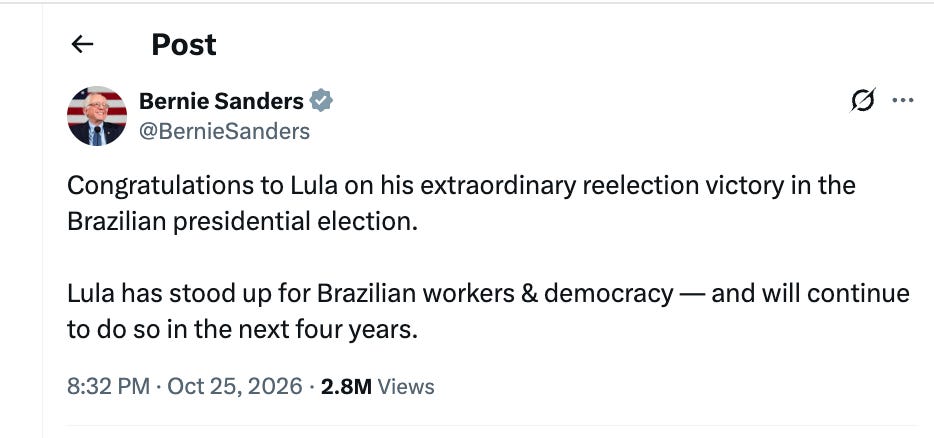
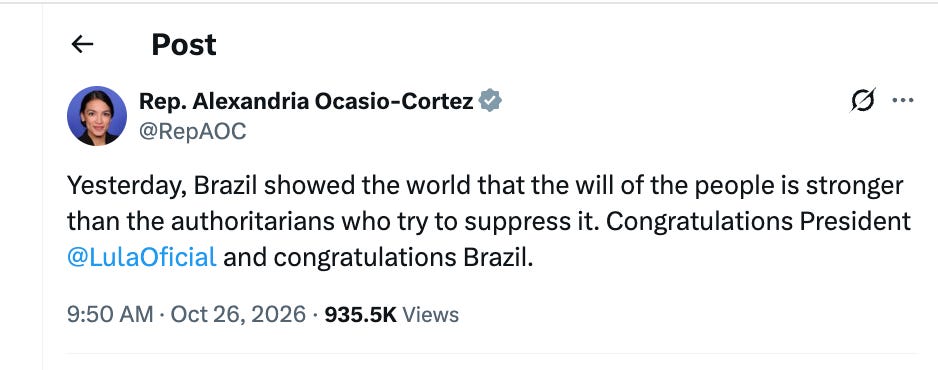
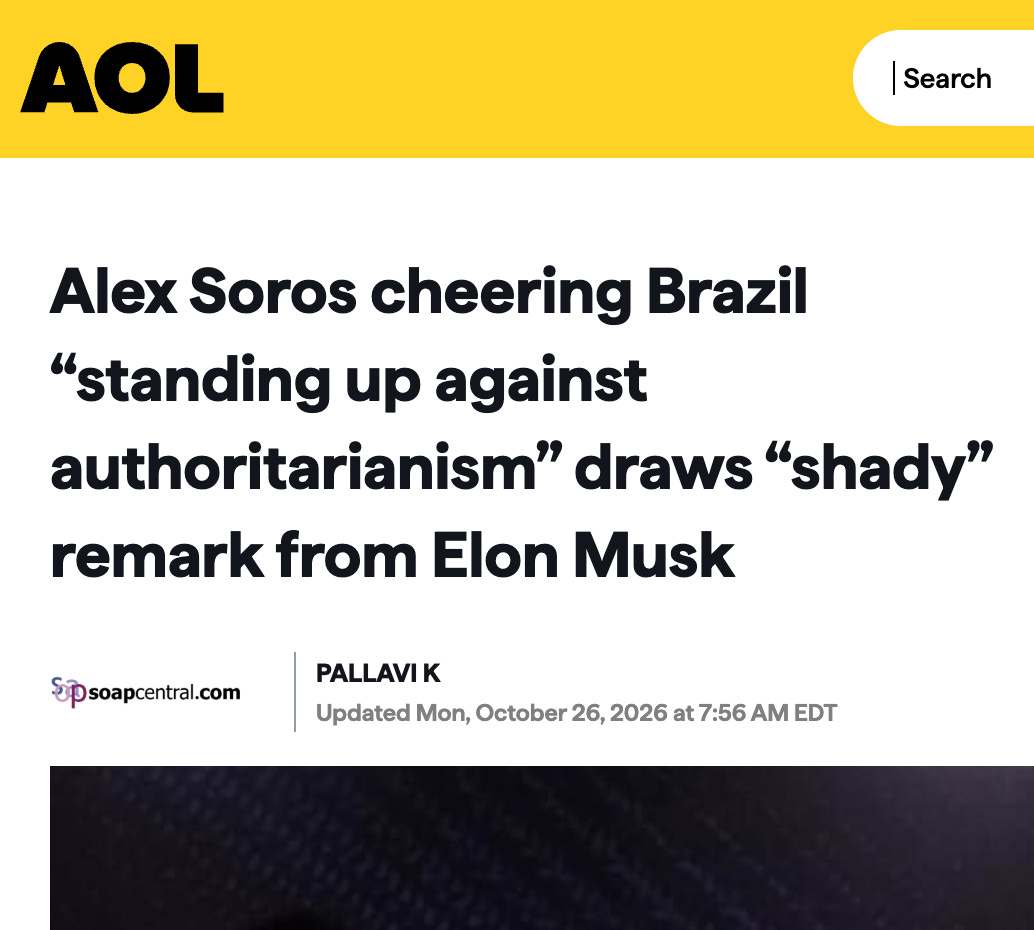
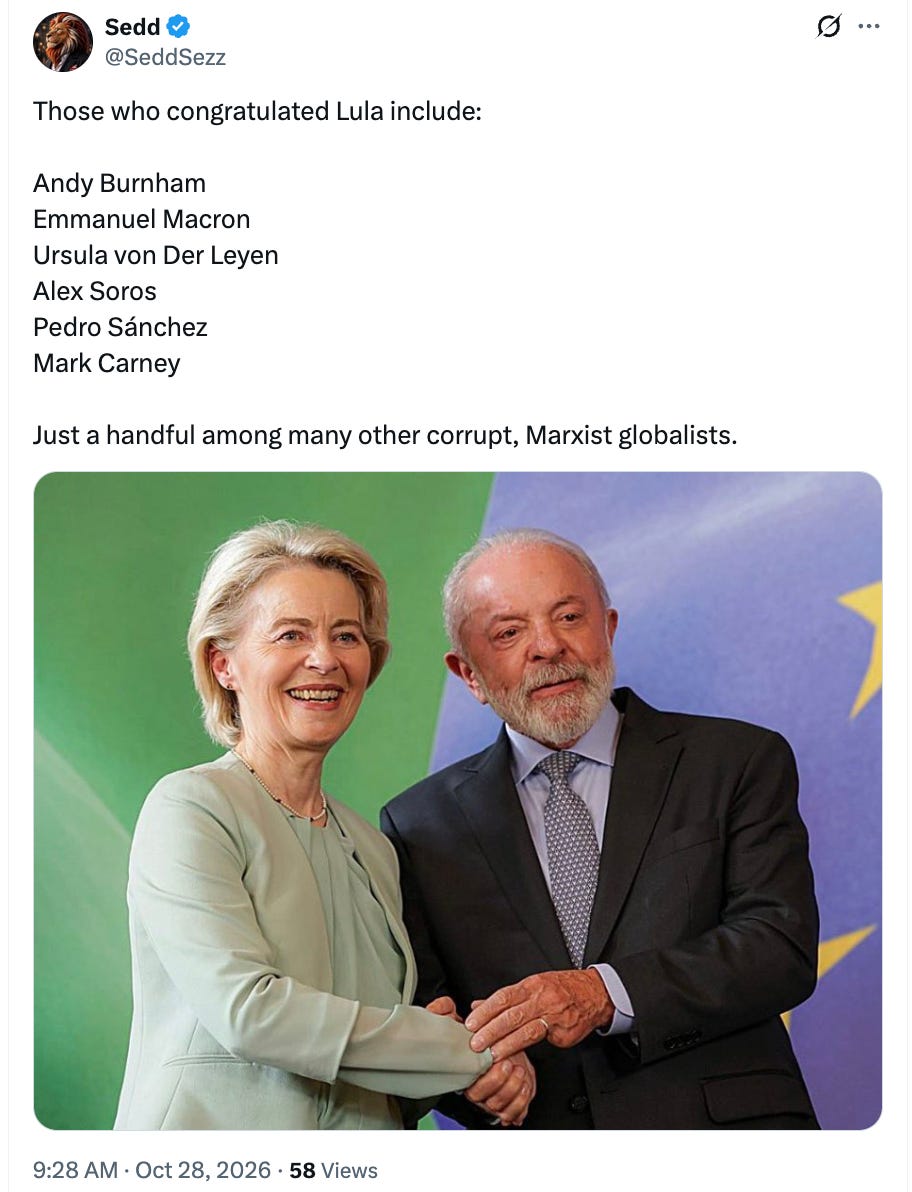
The press also celebrated the Lula win, while failing to aggressively investigate allegations of censorship, judicial abuse, and political persecution. Many outlets act as a public relations arm of the very institutions it is supposed to hold accountable.
Major international news outlets, including The Guardian, Reuters, Associated Press, Financial Times, The New York Times, Le Monde, El País, and Portugal’s Público, gave extensive coverage to Lula’s electoral victories. Much of the reporting emphasized his political comeback, celebrations among supporters, and congratulations from international leaders.
The Guardian portrayed his victory as a dramatic return to power, while Reuters and AP prominently reported the enthusiastic response from world leaders.
Some coverage framed Lula’s success as a victory for democracy, with almost no attention to the allegations of censorship, judicial overreach, and political persecution surrounding Brazil’s government.
Biden was complicit in Lula’s rise to power:
Mike Benz argues in the video below that the electronic voting machines have long been recognized as vulnerable to manipulation, pointing out that concerns about election security were once bipartisan and helped justify the creation of the Cybersecurity and Infrastructure Security Agency (CISA). He highlights connections between voting-machine companies such as Smartmatic, the U.S. State Department, and politically influential figures associated with George Soros’s Open Society Foundations. Benz contends that these relationships raise serious questions about the integrity of elections, both in the United States and abroad.
Turning to Brazil’s 2022 presidential election, Benz describes an extraordinary intervention by the Biden administration to ensure that Jair Bolsonaro accepted the election results. He alleges that CIA Director William Burns, Defense Secretary Lloyd Austin, and senior State Department official Victoria Nuland traveled to Brazil to pressure Bolsonaro and Brazilian military officials.
He states that the State Department secretly facilitated the shipment of semiconductor chips from Taiwan to Brazil, working through Supreme Court Justice Luís Roberto Barroso to ensure that electronic voting machines could be manufactured despite Bolsonaro’s objections. Benz references a Financial Times investigation describing a coordinated effort involving the White House, CIA, Pentagon, National Security Council, and State Department.
Benz also alleges that approximately $87 million in USAID funding flowed to Brazilian organizations, unions, media outlets, and judicial initiatives that supported Lula or worked against Bolsonaro. He argues that these activities helped construct a political and censorship apparatus that favored Lula’s rise to power and subsequently facilitated the prosecution and imprisonment of Bolsonaro. Although Benz says he possesses extensive documentary evidence of American involvement in Brazil’s censorship infrastructure, he acknowledges that he does not know precisely how electronic voting machines might have been manipulated. Nevertheless, he maintains that the combination of diplomatic pressure, covert technological assistance, and American funding of politically aligned organizations raises profound questions about U.S. involvement in Bolsonaro’s narrow electoral defeat.
The video:
We reported in 2024 on the censorship cooked up between Lula and Biden after Lula won in 2022.
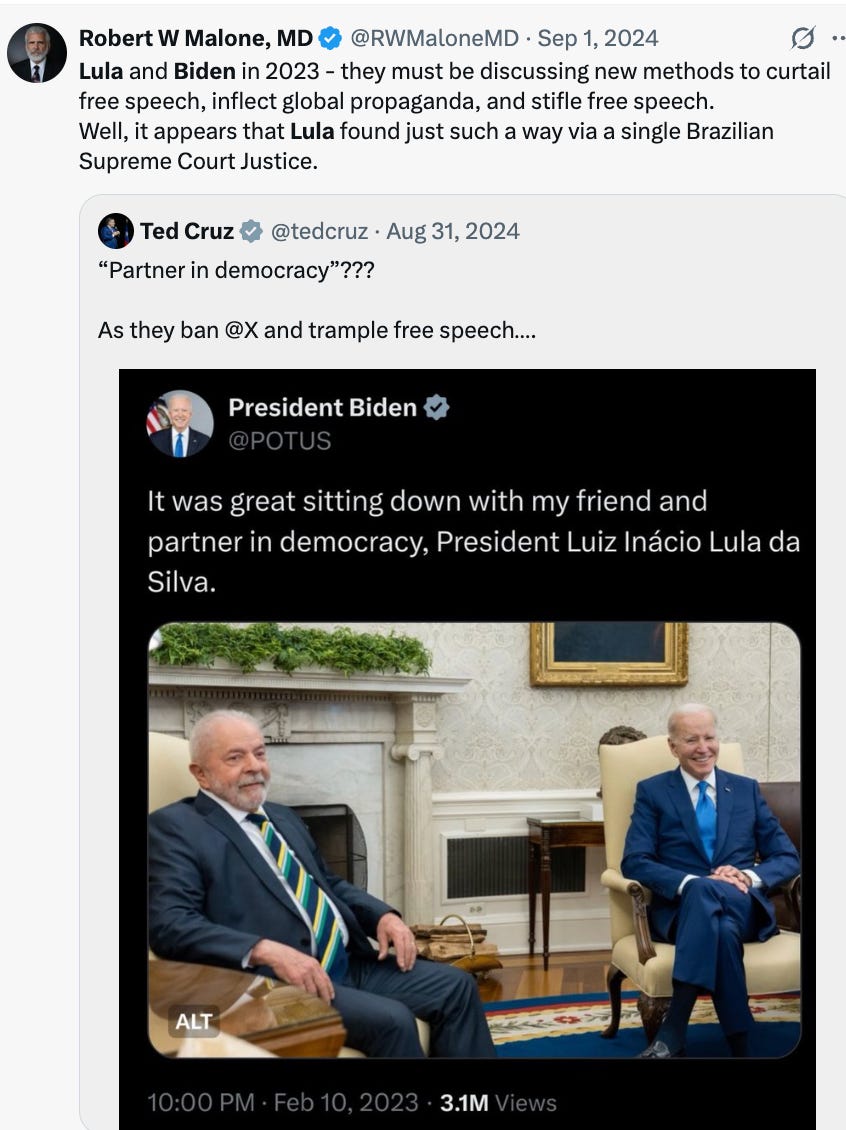
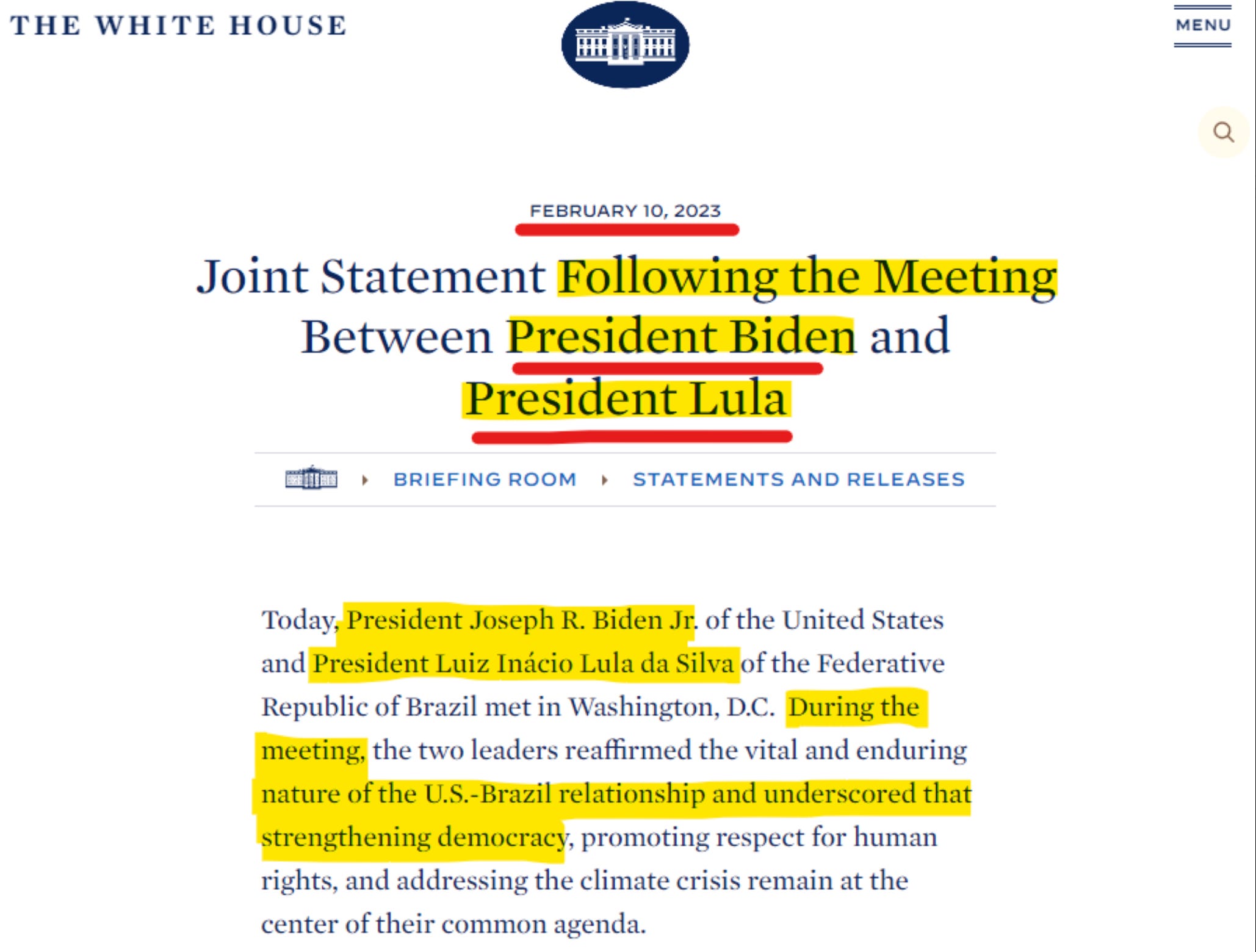
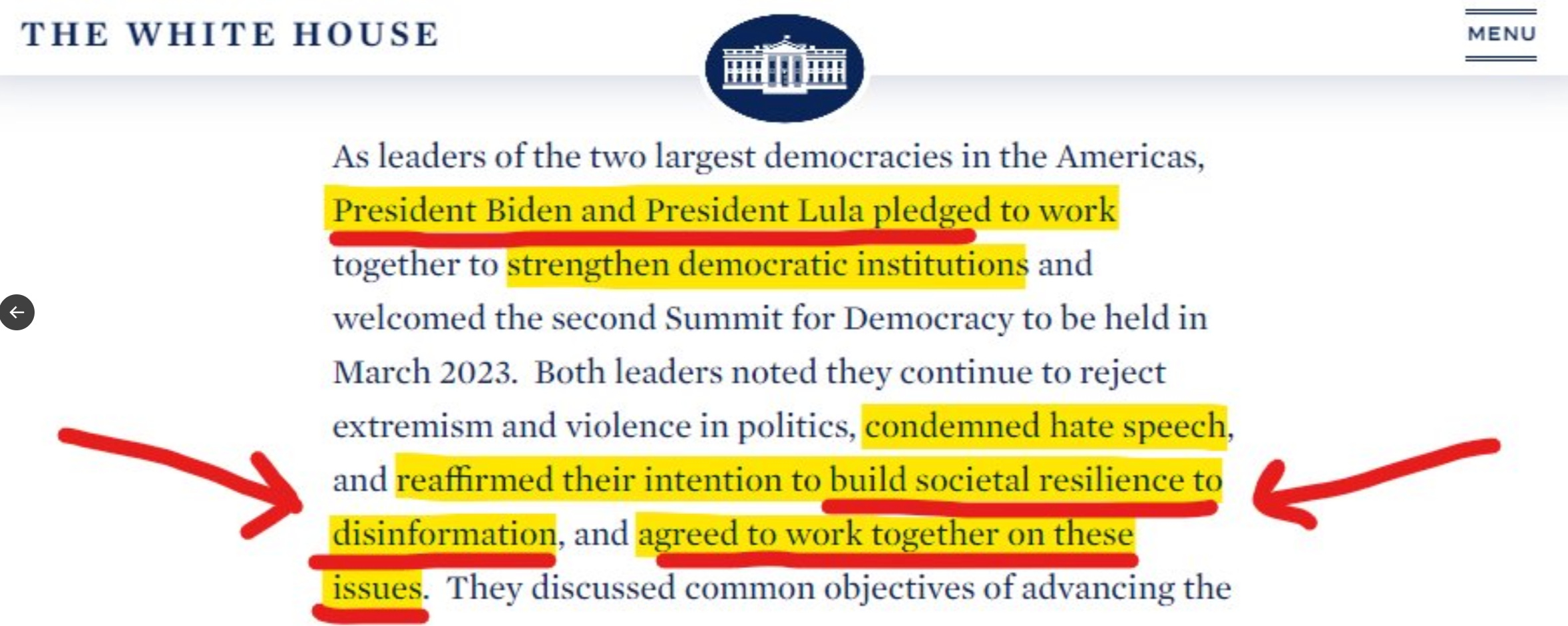
Wouldn’t it be nice to know just how Biden and Lula worked to censor Americans and Brazilians - to “build resilience to disinformation”?
But the deep state isn’t answering that question…
When the Courts Become Political Weapons, Democracy Is in Danger
The crisis in Brazil goes far beyond the political fortunes of Lula or the Bolsonaro family. At its heart is a much more disturbing question: What happens when the institutions supposedly responsible for protecting democracy become instruments for controlling political opposition, censoring dissent, and determining who is permitted to govern?
Glenn Greenwald’s reporting raises serious questions about the concentration of judicial power in the hands of Alexandre de Moraes. The accounts of journalists, activists, and political figures fleeing Brazil are horrifying. When a judge exercises extraordinary authority over political speech, criminal investigations, and the prosecution of his critics, the public has every reason to demand transparency and accountability.
But Mike Benz introduces another dimension, one that reaches directly into Washington.
Benz alleges that the Biden administration undertook a coordinated effort involving the CIA, State Department, Pentagon, National Security Council, and White House to influence the political environment surrounding Brazil’s 2022 presidential election.
His account includes diplomatic pressure on Brazilian officials, assistance in obtaining semiconductor chips for electronic voting machines, and approximately $87 million in USAID funding that he claims benefited organizations aligned with Lula and the censorship apparatus subsequently used against Bolsonaro’s supporters.
These are extraordinary allegations. Benz acknowledges that he cannot establish that electronic voting machines were manipulated. Nevertheless, the documented diplomatic involvement and his additional claims about funding and institutional coordination raise questions that deserve independent investigation.
Where does legitimate American diplomacy end and foreign election interference begin? And who decides when intervention in another country’s political affairs becomes acceptable?
Consider the contradiction. American officials routinely condemn foreign interference in elections, censorship of political opponents, and the manipulation of democratic institutions. Yet Benz describes an American foreign-policy establishment deeply involved in Brazil’s electoral environment, while Greenwald documents what he regards as the subsequent weaponization of Brazil’s judicial system against political opposition.
Biden’s own White House memo describes how the two countries will work together to censor citizens.
The implications of all of this extend well beyond Brazil. They raise serious questions about whether American diplomatic, intelligence, and foreign-aid institutions have been used to shape political outcomes abroad while presenting those interventions as the defense of democracy.
The Trump administration’s decision to impose Magnitsky sanctions on de Moraes in 2025, only to remove them months later amid diplomatic negotiations, introduces another troubling question. Human rights violations are negotiable when trade agreements and geopolitical relationships are at stake.
A democracy is not defined merely by holding elections. It is defined by whether opposition parties can compete freely, journalists can investigate without intimidation, citizens can criticize their government, and courts administer justice without political favoritism. Judged by this standard, Brazil has failed again to maintain a democracy.
And Americans should recognize the broader implications. The same institutional mechanisms described in Brazil, including government pressure on technology platforms, foreign-aid funding of politically active organizations, intelligence involvement in domestic political affairs, and the expansion of judicial authority, demand far more than scrutiny. They demand full public disclosure, independent investigations, accountability for officials who abused their authority, and an end to the use of American taxpayer dollars and government institutions to manipulate political outcomes, censor dissent, or undermine constitutional freedoms, whether at home or abroad.
We demand a full accounting of American involvement in Brazil’s 2022 election, including the diplomatic communications, election-related assistance, USAID expenditures, and subsequent cooperation on censorship and judicial enforcement. Allegations of electoral manipulation should be investigated through verifiable evidence, not accepted or dismissed according to political allegiance.
The fundamental question is whether governments and powerful institutions are accountable to the people, or whether the people are increasingly expected to submit to decisions made by institutions they can neither meaningfully challenge nor control.
Brazil’s experience raises that question with particular urgency. But the answer matters far beyond Brazil.
A government does not become democratic simply by calling itself democratic. And censorship, political persecution, and foreign interference do not become legitimate simply because those responsible claim they are protecting democracy.
End.
Independent Journalism Needs Your Support
The mainstream media has enormous financial resources, corporate backing, and powerful political connections. Independent journalists have readers like you.
Investigating government misconduct, challenging official narratives, and exposing the uncomfortable facts that powerful institutions would rather keep buried takes time, research, and resources.
If you value independent journalism that refuses to look the other way, please consider becoming a paid subscriber to Malone News. Your subscription helps us continue asking difficult questions, following the evidence, and publishing what others would prefer to ignore.
We answer to our readers, not to governments, corporations, or political parties. Help us keep it that way.
I've been hammering on social media that people need to read the Introduction to "And Not a Shot is Fired" (link below). It is from 1999, and is a quick read.
It is about how Communists (or now, Globalists) hijack "democratic" institutions to effect a takeover / coup, without military or "kinetic" means being required - citing how this was first done in post-war Czechoslovakia.
With the benefit of hindsight, it puts into context - and explains - so much of what we're NOW SEEING happen in the "democracies" of Europe, Brazil AND THE USA.
Once you understand the signs, you can't "unsee" what is happening within our nations:
https://jbs.org/vietnam/introduction-to-and-not-a-shot-is-fired/_pdf/
Definitely concerning. I also am concerned that that judge will imprison Glenn Greenwald since he lives in Brazil. Hope he and his family remain safe.