


Audio Version
Every summer, it seems to happen again. Another foodborne outbreak. Another investigation. Another recall. And, inevitably, another round of fearporn.
This year it is Cyclospora, a microscopic parasite that has sickened thousands of Americans. We now know the source of at least one major cluster. Federal investigators traced a five-state outbreak to shredded iceberg lettuce grown in central Mexico, supplied by Taylor Farms de Mexico, and served at Taco Bell restaurants in Indiana, Kentucky, Michigan, Ohio, and West Virginia. Taco Bell was the point of sale, but the contamination entered the system farther upstream, somewhere along a supply chain that stretched from a Mexican farm through a major distributor and into hundreds of American restaurants. Other Cyclospora illnesses reported across the country may have different sources and remain under investigation.
The problem is no longer a single contaminated restaurant or grocery store. Taylor Farms supplies hundreds or thousands of food-service locations through national distributors like Sysco. When contamination enters that system, it can travel farther than the produce itself, reaching hospitals, schools, restaurants, and grocery stores across multiple states before anyone realizes there is a problem.
Cyclospora cayetanensis is not a bacterium like E. coli or Salmonella. It is a single-celled protozoan parasite spread through human fecal contamination. Freshly shed oocysts are not immediately infectious. They must mature in the environment for days or weeks before they can infect another person. That makes direct person-to-person transmission uncommon and generally occurs before the produce reaches the consumer.
Cyclospora is also difficult to remove from delicate produce. Ordinary washing may reduce surface contamination, but it cannot reliably eliminate the parasite. Standard chlorination is also less effective against Cyclospora than it is against many bacteria. Once the parasite is lodged in the folds and crevices of lettuce or other leafy greens, there is only so much a consumer can do.
But there is a larger story here, and it is one that few people seem interested in asking.
In the 1970s, Americans traveling in Mexico were routinely warned not to eat raw salads or leafy vegetables. The advice was simple: drink bottled water, peel your fruit, and avoid uncooked produce that might have been irrigated, washed, or handled with contaminated water. No one considered this particularly controversial. It was ordinary travel advice based on the known risk of fecal contamination and gastrointestinal illness.
Today, Americans increasingly eat Mexican-grown vegetables without leaving home or even thinking about it. That is especially true during the winter, when supermarkets remain stocked with cucumbers, peppers, tomatoes, herbs, lettuce, and other fresh produce grown far to the south. The United States now imports roughly half of its fresh fruit and about one-fifth of its fresh vegetables, with Mexico serving as the dominant foreign supplier for many categories.
NAFTA accelerated the integration of imported foods from South America, particularly Mexico, into the North American food supply. Seasonal boundaries became less visible. We all now expect strawberries in January, tomatoes in February, and salad greens every day of the year. American growers faced competition from regions with lower labor costs, different regulatory systems, different water infrastructure, and growing conditions that allowed production when much of the United States was frozen.
After NAFTA, the number of reported produce-associated outbreaks increased dramatically. CDC researchers identified 606 outbreaks associated with fresh leafy vegetables or leafy-based salads between 1973 and 2012. From 1973 through 1997, the average was about four reported outbreaks per year. From 1998 through 2012, it rose to more than thirty-three per year. That is an 8-fold difference from pre-NAFTA to after-NAFTA.
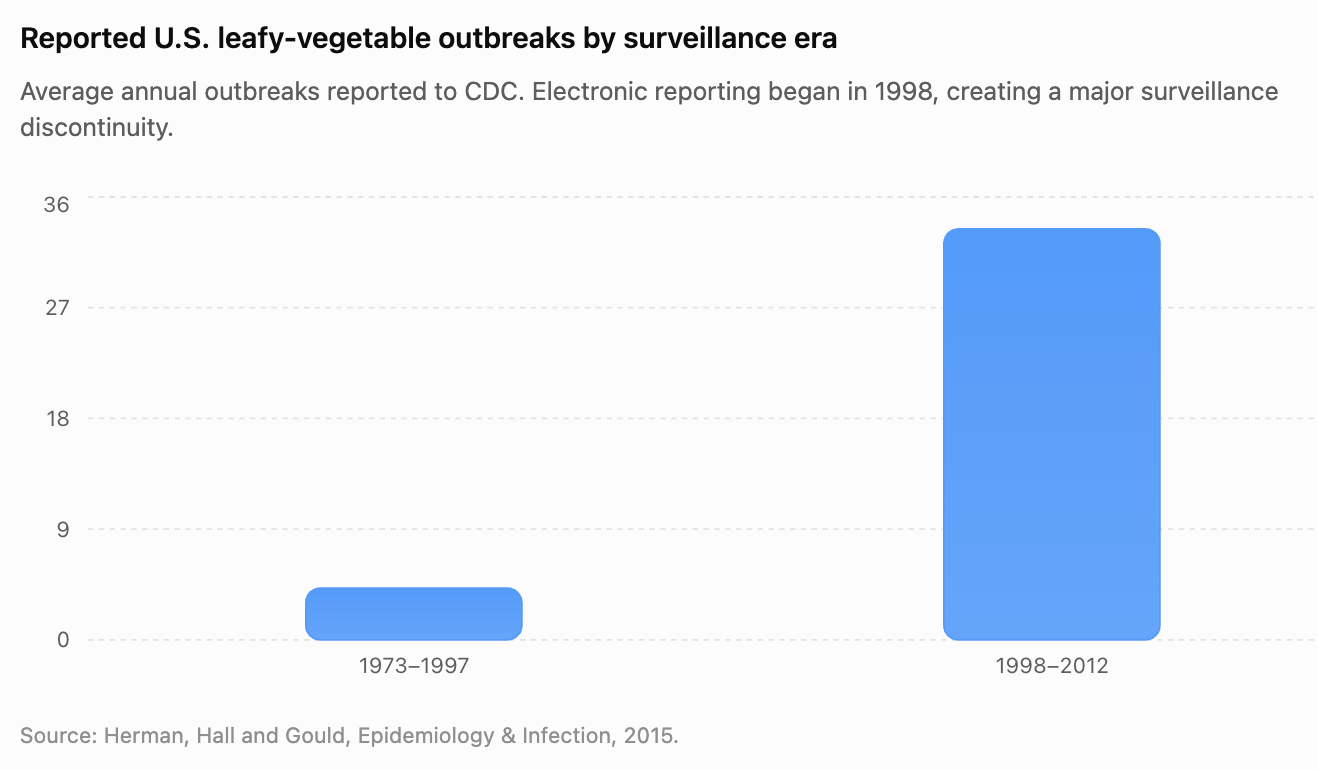
Since 2012, the pattern has become even more striking. Instead of a steady increase in the number of outbreaks, the United States has experienced a series of large, multistate outbreaks involving the same commodity over and over again: leafy greens.
Although only a few thousand illnesses each year are recognized as part of documented produce outbreaks, epidemiologists estimate the true burden is vastly larger. One recent analysis concluded that leafy greens alone are responsible for as many as 2,307,558 illnesses annually in the United States. The economic cost of these illnesses is estimated to be up to $5.278 billion.” Thus, making them one of the single largest sources of foodborne disease.
The recurrence has been serious enough that FDA developed a dedicated Leafy Greens STEC Action Plan, and the CDC, FDA, and USDA now estimate that vegetable row crops, primarily leafy greens, account for nearly 68 percent of all foodborne E. coli O157 illnesses, far exceeding beef.
How did this happen? Produce imports increased. Centralized processing expanded. Bagged salads became common. National distribution systems allowed one contaminated field, packing house, or processing line to expose consumers across many states. Yet remarkably little work has been done to determine whether increasing dependence on imported produce has itself changed the epidemiology of foodborne illness.
Produces accounts for the largest share of imported-food outbreaks, with foods such as cilantro, basil, peppers, cucumbers, papayas, berries, and leafy vegetables appearing repeatedly. Mexico and other Latin American countries were prominent sources in a number of these investigations.
It is important to note that several of the most serious romaine outbreaks in recent years were traced to American growing regions in California and Arizona, often near large cattle operations or other potential sources of environmental contamination. American agriculture has its own sanitation problems, and a domestic label is also no guarantee of safety.
There is another important complication. Most of the historical leafy-green outbreaks were not necessarily traced to contaminated fields. Nearly three-quarters were associated with salads in which investigators could not identify the precise ingredient responsible. Many occurred in restaurants or catering facilities, and norovirus was frequently involved. In those cases, a sick food worker may have contaminated the salad during preparation.
The more serious multi-state outbreaks tended to look different. They were more likely to involve E. coli or Salmonella and more likely to originate earlier in the production chain. Those were the events that produced a disproportionate share of hospitalizations and deaths.
So, when public-health officials speak of a “leafy-green outbreak,” they may be combining two very different problems. One is a restaurant worker contaminating a bowl of salad. The other is fecally contaminated irrigation water reaching a nationally distributed crop. Those events belong in the same surveillance database, but they do not have the same cause, the same scale, or the same solution.
The honest conclusion is that globalization is a huge part of this story, but no one has adequately measured how large that part is. We have dramatically increased the distance between the field and the fork. We mix crops from multiple farms, wash them in centralized facilities, package them in plastic, ship them across national borders, and expect them to remain crisp for a week or more before they reach the dinner table.
Isn’t it time for an honest analysis of the downstream consequences of trade agreements, such as NAFTA?
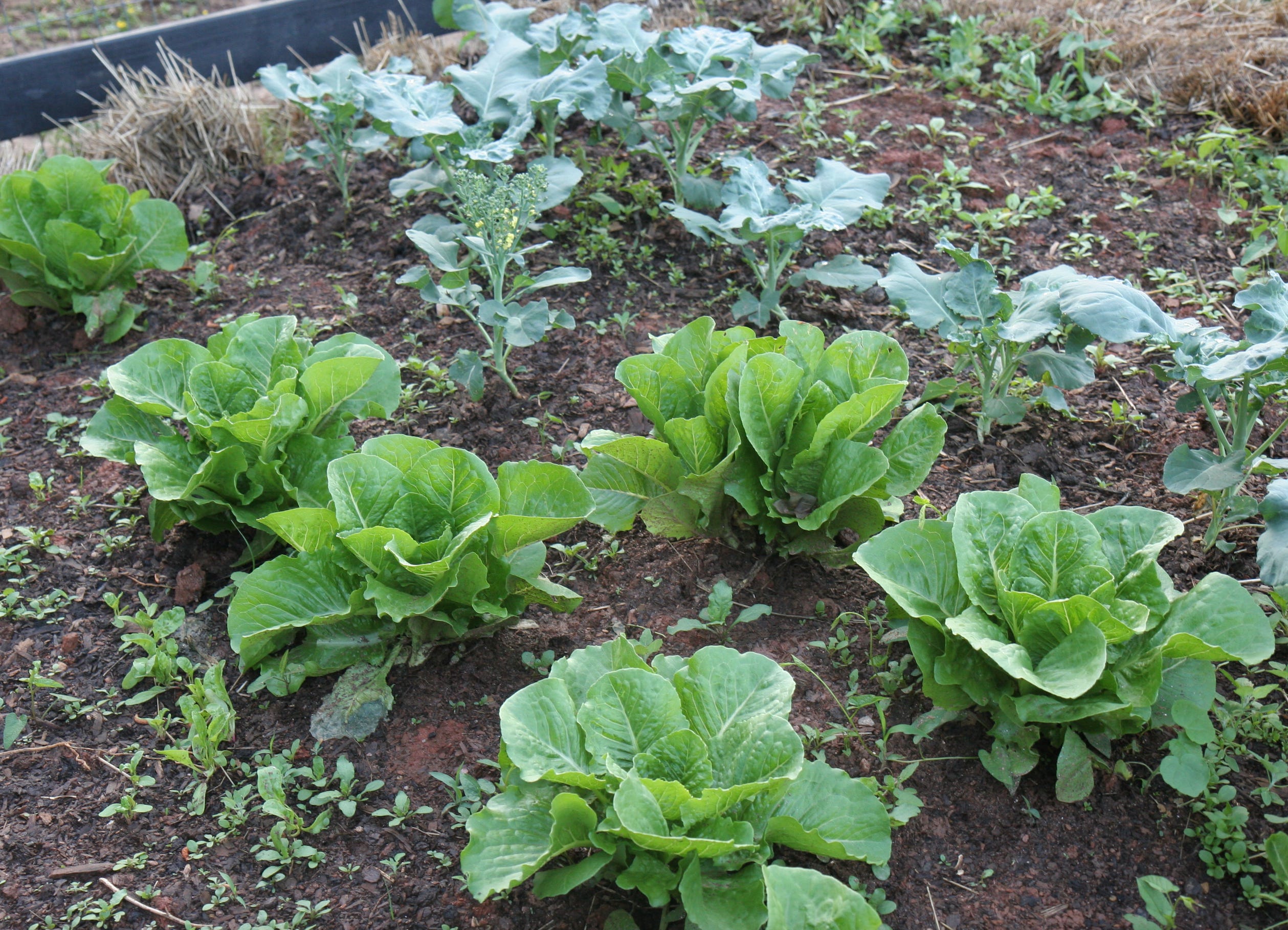
A plea for all of us to do better
Robert and I rarely buy bagged salad anymore. Not because we are terrified of Cyclospora. The odds that any individual package will make us sick remain small. We stopped buying it because once you learn to grow greens, packaged salad simply stops making much sense.
Homegrown greens taste better. They last longer because the food stays on the plant until harvest, and then it is harvested minutes before dinner rather than days or even weeks after processing. They cost pennies instead of dollars. There is no plastic container headed for the landfill, and we know exactly where they came from. We also know what was used to grow them, which, in our case, means no pesticides or herbicides, and the nitrogen comes from living soil instead of being made from natural gas. Our fertility comes from compost, cover crops, mulch, animal manures, and living soil rather than primarily from nitrogen manufactured from natural gas. Our practices feed the soil first, and the plants second.
People tend to think gardening means waiting until July for the first tomato. In reality, greens are among the fastest and easiest foods to grow. With a little planning, they can be harvested during nearly every month of the year.
The secret is to stop thinking about “the garden” as a single annual event and begin thinking in terms of succession planting. Instead of planting one large crop, sow a smaller amount every few weeks. Use raised beds, containers near the kitchen, or any sunny patch of ground. When cold weather arrives, move production into a simple hoop house, cold frame, unheated greenhouse, or sunny indoor space.
Spring belongs to spinach, lettuce, arugula, mustard greens, Asian greens, and peas. These crops prefer cool weather and often grow more vigorously before summer heat arrives.
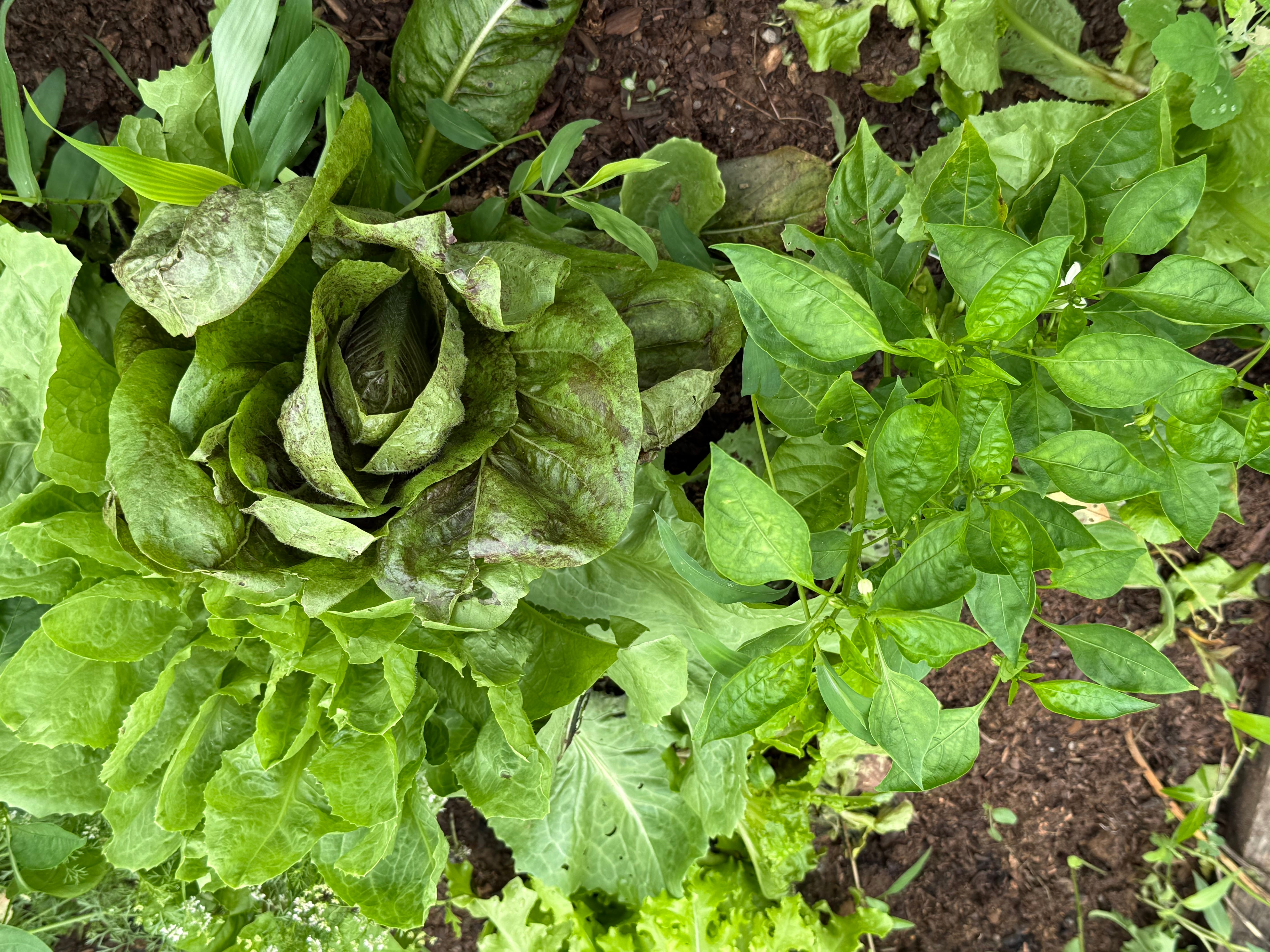
Summer requires a different strategy. Traditional lettuce and spinach often bolt in the heat, but Swiss chard, New Zealand spinach, Malabar spinach, amaranth leaves, sweet potato leaves, and beet greens will continue producing. Many people harvest beets for their roots and throw away the tops, even though beet greens are tender, nutritious, and delicious. We harvest both.
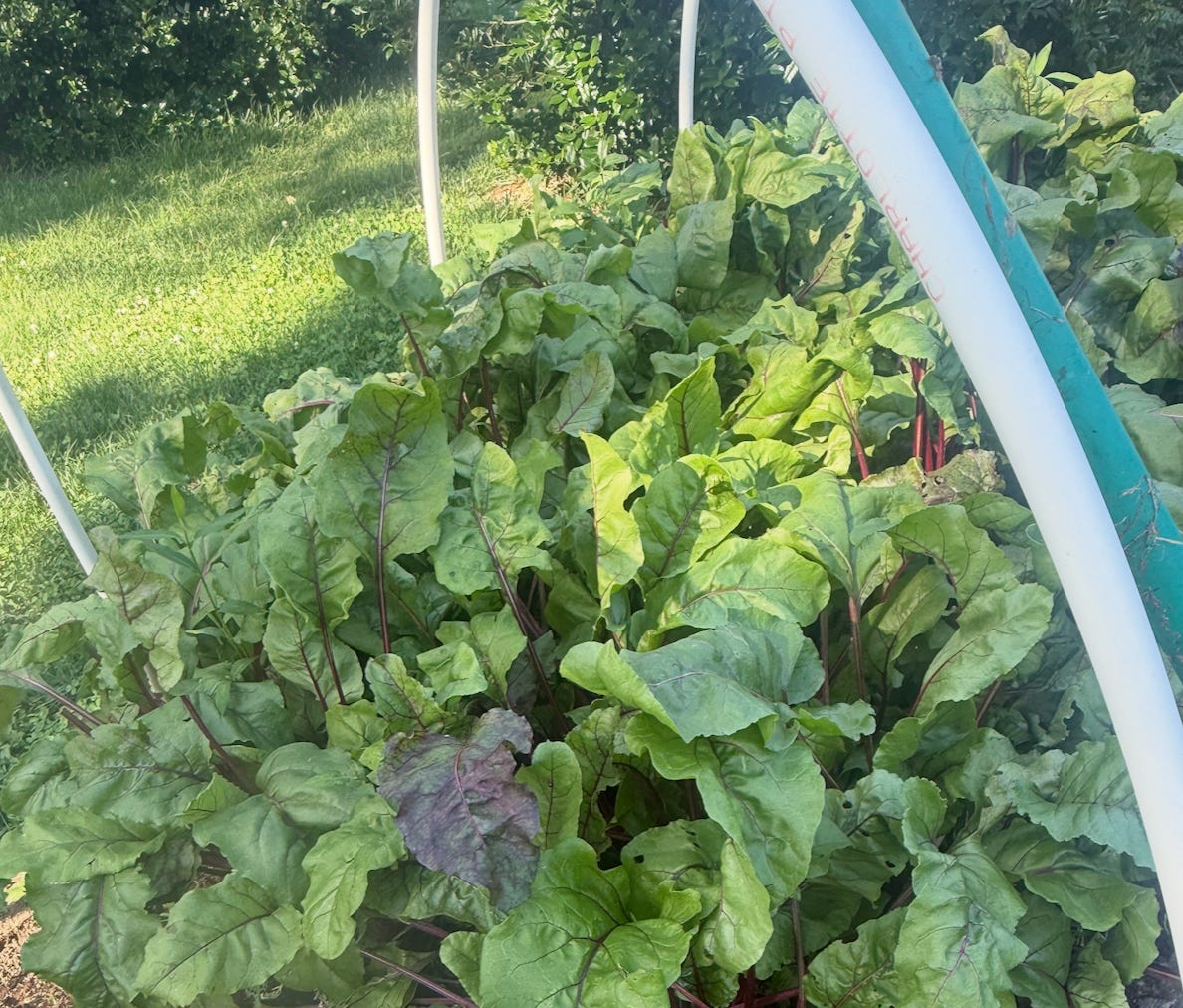
Autumn brings a second season for cool-weather crops. Spinach returns, kale becomes sweeter after cold nights, lettuce thrives again, and Asian greens flourish as temperatures fall. With a light cover, many of these crops will continue producing well past the first frost.
Winter is where a little creativity pays off. Microgreens can be harvested on a kitchen counter in ten to fourteen days. Pea shoots grow quickly indoors. Sunflower shoots are packed with flavor. Broccoli sprouts are easy to grow and are among the most nutrient-dense greens available. Mung beans and alfalfa remain old standbys, although sprouts require careful sanitation because the same warm, humid conditions that promote germination can also promote bacterial growth.
In our greenhouse, we continue harvesting herbs long after the outdoor garden has gone dormant. A greenhouse is wonderful, but it is not essential. A simple hoop system over a raised bed can protect greens from frost, wind, and heavy rain while extending the growing season by weeks or even months. The hoop system is what we use for our main greens - lettuce, spinach, and kale during the early winter months and early spring.
Raised beds make the process easier. They warm more quickly in spring, drain well during heavy rains, and allow the gardener to build living soil over time. We add compost regularly, mulch generously, and plant cover crops whenever a bed will sit empty for more than a few weeks. We are still experimenting with cover crops; this year, daikon radishes and turnips will do dual duty as cover crops and also for their clay-busting potential. Healthy soil produces resilient plants, and resilient plants are not chemical inputs.
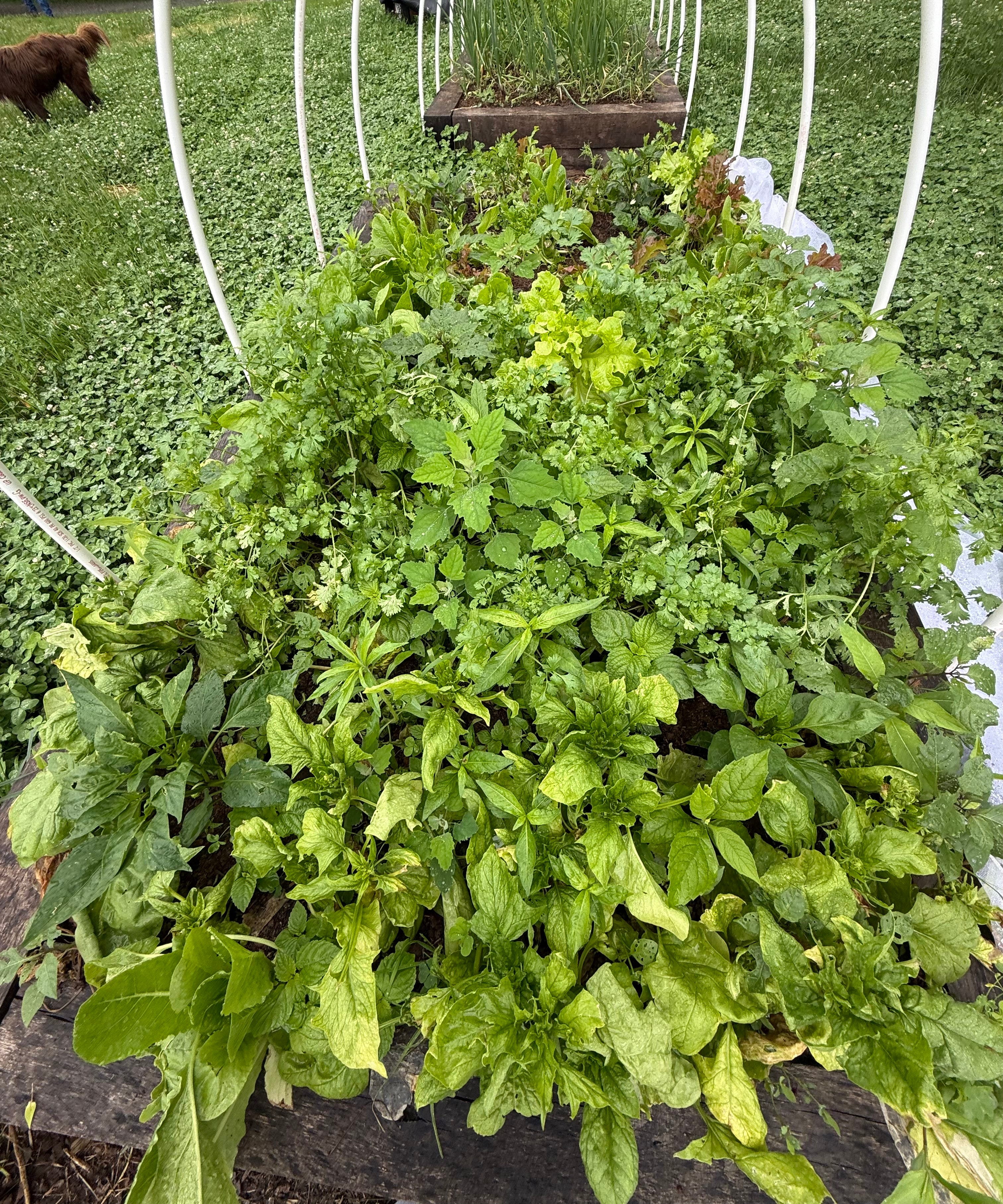
One of the biggest surprises for new gardeners is how little space greens require. A single four-by-eight-foot raised bed can produce salads for weeks. Add another bed, a few containers, and some trays of microgreens indoors, and many families can stop buying packaged greens for much of the year.
Our industrial food system has become more centralized, more dependent on imports, and less visible. Every additional field, truck, border crossing, washing facility, processing line, warehouse, and grocery shelf introduces another point where something can go wrong. Most of the time, the system works. Occasionally, it fails on a scale that would have been nearly impossible when food was grown and eaten locally.
There is another reason we enjoy growing our own greens. Freshly harvested vegetables are living tissue. The moment they are cut, they begin consuming their own sugars and vitamins through respiration. Vitamin C begins to decline almost immediately, while flavor compounds and delicate antioxidants slowly disappear during washing, packaging, transportation, refrigeration, and storage. Commercial agriculture has done an extraordinary job of producing vegetables that survive a thousand-mile trip and then can sit in the vegetable aisle for another week or two. It has been less successful at producing vegetables that taste like they were picked ten minutes ago.
Plant breeding has also changed our food. Over the past half-century, breeders have selected varieties that yield more, ship farther, bruise less, and remain attractive on grocery shelves. Those improvements have helped feed millions of people cheaply, but they have also been accompanied by measurable declines in several minerals and vitamins in many vegetables, a phenomenon known as “yield dilution.” Bigger plants do not necessarily contain more nutrition. They often contain more water. So, be careful with the cultivar when selecting your seeds or seedlings. Heirloom varieties are often best.
Commercial agriculture often manages dirt. We try to grow soil. There is a difference. Healthy soil is alive. It is full of roots, bacteria, fungi, earthworms, insects, nematodes, protozoa, and countless other organisms that recycle nutrients, build organic matter, and feed plants in ways a bag of fertilizer never can. Much of modern agriculture replaces that biological complexity with applications of nitrogen, phosphorus, and potassium. Crops still grow, often spectacularly well, but over time, the soil itself becomes less biologically resilient.
That is one of the hidden pleasures of growing food at home. We are not trying to maximize truckloads per acre. We harvest for flavor, freshness, and nutrition. Our lettuce never has to survive a week in a refrigerated trailer. It only has to make it from the garden to the dinner table.
Every head of lettuce you grow yourself is one less that depends on a supply chain you cannot see and cannot control. Growing greens is one of the easiest places to begin. The investment is small, the learning curve is gentle, and the reward begins in a matter of weeks.
There is something deeply satisfying about walking outside with a bowl, cutting enough greens for dinner, and knowing that your salad never crossed a border, entered a processing plant, or was exposed to someone defecating in a field.
That is food security on a very human scale.
JGM/RWM
If you found this essay valuable, please consider becoming a paid subscriber.
The headlines tell us what happened. Our goal is to dig into why it happened, what the data actually show, and what questions no one else seems to be asking. That takes time. It means reading the scientific literature, government reports, regulatory filings, and historical records so you don’t have to.
Your support makes that work possible. It also allows us to remain independent, free to follow the evidence wherever it leads, whether it confirms conventional wisdom or challenges it.
If you’re already a paid subscriber, thank you. You make this work possible. If you’re not, We hope you’ll consider joining us. Together, we’re building a community that values curiosity, critical thinking, and the freedom to have honest conversations about the issues that affect our health, our food, and our future.
H Ross Perot warned us about NAFTA back in the day. Trump was an H Ross Perot supporter. They were right!
Hy
Traveling through China several decades ago, I forgot to say "No Ice" in my cocktail. I drank it and got the runs. One-half of a Cipro tablet solved the problem. Contaminated water supplies exist.
Mexico has a problem. We have a problem in the US with Concentrated animal corals where 1000's of cattle are housed and the soil is contaminated with E-coli and C-Diff. Wind transfers the fine soil into adjacent fields and contaminates vegetable crops. Since 6 % of our red meat supply is contaminated with C-Diff and E-Coli, you do NOT want to consume anything but well cooked meat. The other solution is buy locally from farmers raising grass feed beef. I learned my lesson two years ago when I ate a rare filet. Mayo antibiotics saved my life. It is a serious problem and the real issues are not addressed and the focus is on measles. Sad state of medical affairs. CDC needs to be re-educated and fix the problems.