

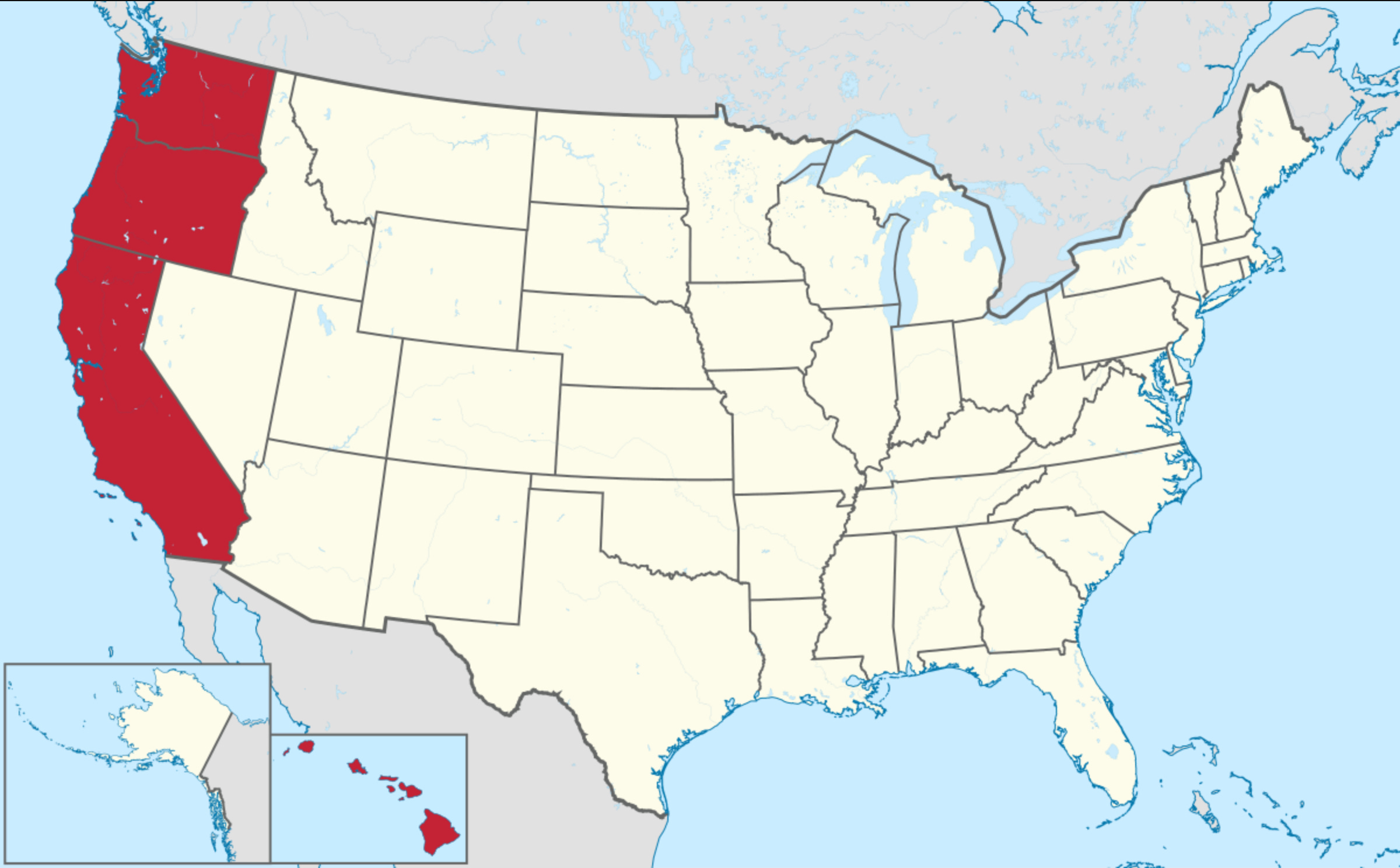
Hawaii and the West Coast Health Alliance
Background
A report from President Donald Trump’s Make America Healthy Again (MAHA) Commission states that the next generation of children may live shorter lives than their parents, despite increased health spending. The report attributes this trend to rising chronic diseases among U.S. children, driven by factors such as chemically processed foods, environmental exposures, and overreliance on pharmaceuticals. Health and Human Services Secretary Robert F. Kennedy Jr., who chairs the commission, described the findings as a “diagnosis” of the nation’s health crisis, with policy recommendations expected to follow.
Director of the National Institutes of Health Jay Bhattacharya emphasized the severity of the situation, stating, “What the report says is that the next generation of children will live shorter lives than their parents,” adding that children today are less healthy than their parents were at the same age. The report highlights alarming trends, including a near doubling of teenage depression from 2009 to 2019, over one-in-five children over age six being obese, one-in-31 children diagnosed with autism by age 8, and a 40% increase in childhood cancer since 1975.
Food and Drug Commissioner Marty Makary called the current state “the most obese, depressed, disabled, medicated population in the history of the world,” urging a shift from reactive to proactive health systems. The commission also noted that roughly 75% of U.S. youth aged 17–24 are ineligible for military service due to health conditions like obesity, asthma, allergies, or behavioral disorders.
What is the West Coast Health Alliance?
The West Coast Health Alliance (WCHA) refers to a coalition of state and institutional partnerships among California, Oregon, Washington, and Hawaii, politically justified as enabling regional coordination of health policy, disease surveillance, and emergency response. While the name has been used informally in past cooperative agreements, during 2023–2025, it evolved into a formal multi-state policy compact emphasizing unified approaches to public health management, pharmaceutical purchasing, and emergency mandates.
The administrative structure of the WCHA is organized around a “Regional Health Coordination Council (RHCC)” composed of representatives appointed by each member state. Funding is provided by a combination of state contributions, federal grants, and private philanthropic organizations, particularly foundations advocating for “pandemic preparedness” and “climate-linked health resilience.”
The West Coast states first coordinated pandemic response strategies under informal compacts in 2020. By 2023, discussions among health departments led to a semi-formal network branded as the West Coast Health Alliance. The stated purpose was to “increase efficiency and consistency in health regulation,” but it effectively positioned the Alliance as a regional public health governing bloc, somewhat independent from federal oversight. While the WCHA presents itself as a cooperative alliance for public protection, it also functions as a political structure for regionalization of bio-political control, consolidating decision-making away from local constituents and toward administrative policymakers and public-private partnerships. Academic thought leader advice, research, and policy support is primarily provided by the University of Washington, OHSU, UCSF, and UH Mānoa. All state members of the WCHA are controlled by the Democrat party, and the organization is closely aligned with Democrat policy positions relating to health (including “One Health” initiatives), vaccination schedules, and climate change.
Up until the fall of 2025, the WCHA had implemented several coordinated and harmonized policy initiatives. These included
Vaccine Policy Harmonization: Shared procurement contracts with pharmaceutical manufacturers, synchronized school immunization requirements, and joint communications campaigns promoting “regional immunity targets.”
Data Integration: A cross-state immunization and health registry allowing shared access to patient vaccination and diagnostic histories between state health departments. Critics have raised privacy concerns, as the centralized database includes biometric metadata (such as digital identification records).
Emergency Powers Alignment: Common frameworks for declaring health emergencies and enforcing mandates, ensuring policies (e.g., quarantine or vaccination requirements) are identical across state lines to limit interstate friction.
Climate and Public Health: Coordinated responses to wildfire smoke, PFAS contamination, and air quality—acknowledging environmental contaminants as health hazards.
WCHA Policies Regarding Childhood COVID mRNA Vaccination
The West Coast Health Alliance (WCHA) continues to endorse and promote widespread childhood COVID-19 vaccination, maintaining the legacy public health position inherited from the pre-Kennedy CDC and WHO frameworks, even as the federal stance under Secretary RFK Jr. has shifted toward reevaluation, safety auditing, and informed consent.
The WCHA’s state health agencies: the California Department of Public Health (CDPH), Washington State Department of Health (DOH), Oregon Health Authority (OHA), and Hawaii Department of Health (DOH), jointly reaffirmed in 2025 that COVID-19 vaccination remains recommended for children aged 6 months and older.
Their guidance documents mirror pre-2025 ACIP recommendations, prescribing:
Two-dose primary mRNA vaccine series (Pfizer or Moderna) starting at 6 months.
Occasional “seasonal” or “updated” booster based on variant formulation.
These guidelines were reissued with no inclusion of newly emerging data on adverse-event surveillance or post-vaccination cardiac or developmental outcomes.
In effect, the Alliance has frozen in time the COVID pediatric vaccine policy from the 2022–2023 era. The WCHA rationale for these policies emphasizes:
“Community protection” and “normalcy in schools.”
Equity-based public health framing - the argument that unvaccinated children disproportionately exist in lower-income or rural areas, hence vaccination is “a matter of social justice.”
Repeated assurances of safety using CDC talking points from 2022–2023, despite RFK Jr.’s HHS declaring that prior safety data was incomplete and under audit.
Their public messaging often conflates vaccine effectiveness against hospitalization (which has waned significantly in children, according to neutral analyses) with long-term protection, preserving a simplistic narrative that emphasizes forced public compliance rather than informed consent.
While vaccine uptake among children plummeted nationwide by 2025, the WCHA states used tactical methods to sustain compliance:
School-based vaccination drives with parental “opt-out” (not opt-in) consent schemes.
Bundling of COVID shots with routine childhood immunizations during checkups, normalizing them as part of standard pediatric care.
Advertising partnerships with state-funded media promoting “updated child boosters” as safe, effective, and necessary to prevent school disruptions.
Certain WCHA states even offered financial stipends to pediatric clinics for maintaining “high vaccination coverage,” continuing a pay-for-compliance model long criticized for conflict-of-interest implications.
Perhaps most telling, the WCHA:
Declined HHS data requests for pediatric adverse event figures related to myocarditis and autoimmune sequelae.
Censored or minimized state-level VAERS awareness campaigns.
Delegated monitoring to private contractors - some funded by the same philanthropic groups (Gates, Rockefeller, RWJF) that bankroll their broader One Health programs, effectively privatizing oversight.
This has made independent safety validation nearly impossible within WCHA jurisdictions, despite open calls from physicians and legislators aligned with federal reform efforts. In practice, the WCHA now functions as a political bulwark against vaccine policy reform. Its unwavering promotion of childhood COVID vaccination reflects:
Institutional inertia,
Philanthropic alignment, and
A deep fear of litigation and political reprisal if the previous narrative collapses under full transparency.
The WCHA continues to endorse routine COVID-19 vaccination in children as a “standard of care,” opposing the newly cautious, data-based federal approach. Its justification hinges on maintaining “public trust,” though what it truly safeguards are entrenched interests, opaque data systems, and the illusion of consensus.
WCHA Responses to Make America Healthy Again Policy Changes
Since the election of Republican Donald Trump as POTUS and his appointment of Democrat Robert F. Kennedy Jr. as Secretary of Health and Human Services, the WHCA has become overtly partisan, and in particular has been reflexively critical of HHS policy changes relating to the composition of the CDC Advisory Committee on Immunization Practices (ACIP). This reorganization was part of a larger, ongoing restructuring of CDC independent advisory committees, in which members with financial and organizational conflicts of interest (COI) inconsistent with Federal Advisory Committee Act (FACA) requirements were retired and replaced with new members vetted to ensure the absence of prohibited COI.
The WCHA, whose member states (California, Oregon, Washington, Hawaii), has historically positioned itself as a counterweight to federal health policy, and has openly resisted both MAHA Coalition health policy changes and, in particular, the Center for Disease Control and Prevention (CDC) Advisory Committee on Immunization Practices (ACIP) recalibration under Secretary Kennedy as well as subsequent HHS changes in childhood vaccine schedule recommendations. The “official” WCHA position (laid out in early 2025 press statements and internal memoranda) can be summarized as:
“We remain committed to evidence-based, consensus-driven immunization practices as recommended by the CDC and WHO, regardless of temporary political changes in federal leadership.”
Under Secretary Kennedy, the new ACIP was directed to re-evaluate all vaccine recommendations for safety, transparency, and post-market surveillance, including:
Revisiting the childhood vaccine schedule.
Ordering audits into conflicts of interest, data suppression, and post-vaccination adverse event reporting.
Subsequent, reasonable, data-based modified vaccine policy recommendations provided to HHS leadership by the reorganized ACIP have been immediately rejected by WCHA without consideration.
In effect, the WCHA:
Refused to accept the new ACIP membership, to adopt the new ACIP review posture, and continues to apply legacy CDC vaccine schedules across state public health departments.
Reaffirmed its alignment with the One Health / WHO global immunization frameworks, maintaining close coordination with the Global Vaccine Safety Initiative and other Gates- and Wellcome-associated projects.
Collaborated with the California Immunization Coalition, Washington State Board of Health, and Oregon Health Authority to issue joint guidance rejecting HHS’s vaccine re-evaluation framework, claiming it “threatened public trust in immunization.”
Publicly, the WCHA claimed it sought to “protect public confidence in science” by rejecting “confusing” federal reversals. However, administratively, the alliance mobilized foundation-backed “health communication” initiatives to discredit RFK’s safety reviews as “anti-science,” even though many of these initiatives were led by credentialed physicians evaluating CDC data integrity and both relevant current data as well as data gaps concerning key topics relating to effectiveness and safety of previously ACIP/CDC Director-recommended vaccine products.
The WCHA argued (in their own words) that “federal interference threatens regional consistency and emergency preparedness.” But independent analysts view it differently: the Alliance’s objection wasn’t about “science vs. politics,” but rather control vs. transparency. If Kennedy’s ACIP could force full disclosure of safety data, it would undermine the credibility of the foundations and regional departments, given their prior insistence that “vaccines are universally safe.”
WCHA policies and politicized statements have subsequently led to a Federal–State Rift, with Hawaii and Washington facing direct pushback from RFK’s HHS for allegedly failing to meet federal data-sharing obligations. WCHA-aligned private foundations have issued statements supporting WCHA’s defiance, emphasizing “science continuity against politicization.” In response, citizen-led health freedom networks across the West Coast rallied behind Kennedy’s reforms, calling for state-level investigations into WCHA’s coordination with private actors.
So, while the federal HHS under Kennedy emphasized independent auditing and informed consent, the WCHA doubled down on continuity of the pre-2025 system.
How is the West Coast Health Alliance Funded
The West Coast Health Alliance (WCHA) doesn’t publicize its funding sources in a central ledger, leading to criticisms concerning a lack of transparency and accountability. What’s known, based on publicly available 2023–2024 disclosures and investigative reviews by independent journalists and watchdog groups, is that a cluster of large philanthropic and quasi-philanthropic foundations has provided either direct or pass-through funding to the alliance’s programs, research partnerships, or pilot initiatives across the member states. The core non-State (NGO) institutional funders are either direct contributors or through affiliated grant programs tied to state departments of health and university research centers, and are reported to include:
The Rockefeller Foundation — Longtime funder of cross-state “resilience” and “pandemic preparedness” frameworks. It played a central role in early “One Health” regional integration initiatives, which WCHA later adopted.
The Bill & Melinda Gates Foundation — Provided grant-based funding to university partners (notably UCSF, OHSU, and the University of Washington) for “vaccine delivery innovation” and digital health identity systems that directly feed into WCHA’s data-sharing infrastructure.
The Robert Wood Johnson Foundation (RWJF) — Funded the equity and environmental health arms of the alliance, focusing on “healthy climate communities” and region-wide “equity data hubs.” Its funding helped launch shared data modeling tools between California, Oregon, and Washington.
The California Endowment — A domestic public health foundation that supports “regional health collaboratives” and has financed WCHA’s California-based public information campaigns and vaccination outreach.
Wellcome Trust (UK-based) — Although not U.S.-based, it has granted funds to American universities participating in WCHA’s pathogen-tracking and genomics programs, particularly through the Genomic Epidemiology Network initiative that several WCHA states joined.
Because cross-state alliances aren’t formally federal entities, much of their funding is laundered through secondary nonprofits and university-administered grants, for example:
PATH (Program for Appropriate Technology in Health): Seattle-based organization often acts as a conduit for Gates money, funding “digital vaccination credentials” and bioinformatics pipelines adopted within the alliance.
Resolve to Save Lives / Vital Strategies: Partner with state health agencies to “standardize emergency readiness frameworks.” Received funding from Bloomberg Philanthropies and Gates.
Skoll Foundation and Open Philanthropy: Provided research funding to pandemic-response tech groups that collaborate with WCHA’s AI-driven health monitoring systems.
To Advance WCHA Policies, the Hawaiian State Government and Governor Josh Green are Abusing Emergency Powers
Governor and Emergency Room Physician Josh Green, M.D., has made several public statements supporting the WCHA, a coalition formally chartered in early September 2025 by Democratic-led states (initially California, Oregon, and Washington, with Hawaii joining shortly after) in part justified by a perceived need to provide unified, evidence-based public health guidance on immunizations and respiratory viruses. The formal creation of the alliance was in response to WCHA-state claims of politicization and changes at the federal CDC under the Trump administration and HHS Secretary Robert F. Kennedy Jr., and in particular to the reorganization of the CDC ACIP to remove and replace members with various conflicts of interest.
On joining the Alliance (September 4, 2025), in announcements repeated by multiple state governors’ offices (including Washington’s, California’s, and Oregon’s), Green stated:
“Hawaii is proud to stand with our West Coast partners to ensure public health decisions are grounded in science, not politics. As an island state, we understand how critical it is to protect our communities from preventable disease. By joining the West Coast Health Alliance, we’re giving Hawaii’s people the same consistent, evidence-based guidance they can trust to keep their families and neighbors safe. Using science as our guiding star, Hawaii had the highest vaccination rate and lowest mortality rate of virtually any other state or region across the globe. This approach is critical as we all go forward into an era with severe threats from infectious diseases.”
This was part of a joint release highlighting the alliance’s commitment to safety, efficacy, transparency, access, and trust, while criticizing the lack of consistent federal leadership.
Green has tied the alliance directly to maintaining broad access to vaccines, including through his emergency proclamations (e.g., September 23, 2025, allowing pharmacists to administer COVID-19 vaccines to those age 3+ without prescription, aligned with WCHA guidance). In a September 30, 2025, X post (from @GovJoshGreenMD), he referenced forming the alliance to prioritize science amid federal misinformation:
“It’s our responsibility to ensure our communities remain protected and informed. That’s why my fellow governors and I formed the West Coast Health Alliance. We are committed to prioritizing science and evidence-based practices to keep our people safe.”
This followed an MSNBC interview where he discussed the’ importance of vaccines in countering federal-level confusion.
In releases on unified 2025–2026 respiratory virus season recommendations (COVID-19, influenza, RSV; issued around September 17, 2025), Green joined a joint statement:
“Our states are united in putting science, safety, and transparency first — and in protecting families with clear, credible vaccine guidance. The West Coast Health Alliance stands united in protecting public health and always putting safety before politics.”
These recommendations, endorsed by Hawaii’s Department of Health, draw from organizations like the American Academy of Pediatrics (AAP) and emphasize broad access. Examination of AAP COVID policy positions reveals unilateral authoritarian contradictions in Governor Green’s claims of “putting science, safety, and transparency first — and in protecting families with clear, credible vaccine guidance.”
The appearance is that Governor Dr. Green is acting not as an objective advocate for the health of Hawaii’s children, but rather his actions have been based on biases common among physicians indoctrinated into what has become a cult of vaccination, in which all vaccines are presumed to be safe and effective, rather than the more intellectually rigorous position that vaccines, like all other drugs, are associated with both risks and benefits, and must be objectively and empirically evaluated for safety and efficacy using a comprehensive risk-based approach. During recent testimony in the US Senate, it was revealed that Dr. Green’s understanding of vaccine risks and benefits, and mRNA vaccines specifically, is simplistic and influenced by simplistic, promoted narratives of vaccine “safety and effectiveness”.
With the realignment of US Federal childhood vaccine schedule recommendations with those of other economically advanced peer nations, the childhood vaccine schedule recommended by Governor Dr. Green (including continued COVID vaccination and boosting for children) is the most aggressive in the Western world. With recent US Government acknowledgement of pediatric deaths consequent to COVID mRNA vaccination, Dr. Green is now on record advocating for administering a medical product to children that has a proven adverse event of death.
The American Academy of Pediatrics medical guild is not an objective and credible source for “clear, credible vaccine guidance”. The discredited AAP is currently suing the Trump Administration over the reorganization of the CDC ACIP, which has diminished the AAP's ability to directly influence the advice and opinions the FACA-chartered ACIP provides to the CDC Director on immunization practices. As the AAP receives substantial funding from vaccine manufacturers, the AAP guild has a clear appearance of financial conflict of interest.
Public health policies advocated by AAP during COVID included:
Mask Mandates
The AAP became the primary intellectual backup for school mask mandates, declaring that all children aged two and older should mask indoors — even as global pediatric data showed extremely low risk to healthy children.
They endorsed cloth masks despite limited real-world effectiveness and developmental concerns (speech delay, social-emotional harm).
mRNA COVID Vaccines
AAP began endorsing Pfizer and Moderna vaccines for teenagers in early 2021, and for children as young as 6 months by mid-2022.
AAP strongly pressured pediatricians to adopt mRNA vaccination as part of standard wellness visits.
AAP supported policies that tied school attendance and extracurricular participation to vaccination status in certain jurisdictions.
AAP asserted that COVID posed “serious risk” to healthy children (contradicted by hospitalization data).
AAP claimed that mRNA vaccines were “thoroughly tested and safe for all ages” (later disproven by myocarditis incidence rates and incomplete trial data).
AAP claimed that adverse events were “extremely rare,” while dismissing the possibility of long-term immune or neurological sequelae.
The AAP operationalized behavioral psychology in its communications:
Emphasized “protect Grandma” rhetoric to moralize child compliance.
Issued guidance for doctors to “address hesitancy” rather than openly discuss risk-benefit uncertainty.
Encouraged peer-based persuasion (“Talk to your friends about getting vaccinated”) that blurred ethical lines between education and propaganda.
They never advocated informed consent in a meaningful way for minors—vaccine “confidence” was treated as a social goal, not a medical choice. Even though the AAP publicly acknowledged a youth mental health crisis by 2021, it refused to tie that crisis to lockdowns, masking, or isolation, citing instead “pandemic stress” as an unavoidable cause.
The AAP’s own publications noted skyrocketing rates of suicide attempts, emergency psychiatric visits, and developmental regression.
However, it continued supporting restrictions that perpetuated those harms—highlighting deep internal contradictions between their psychological findings and their policy advocacy.
Opponents—including pediatric speech therapists and developmental psychologists—later criticized this as a politically motivated overreach, not a scientifically justified intervention.
Pediatricians who questioned AAP’s universal vaccine or masking policies were often censored or threatened with board complaints.
AAP state chapters circulated model disciplinary letters to pressure compliance.
In effect, the AAP helped establish a monopoly of opinion over pediatric practice—stifling scientific debate during a period of profound uncertainty.
Gender Affirming Care
The AAP endorses full-spectrum gender-affirming interventions — including blockers, hormones, and in some cases surgery — for minors, while suppressing psychological, developmental, or ethical concerns. It treats medicalization as compassion and inquiry as hostility.
Endorses the “gender-affirmative model” — that is, clinicians should accept and support a child’s self-declared gender identity at any age.
Recommends social transition (new name, pronouns, clothing) for even prepubescent children.
Supports puberty blockers for early adolescents showing persistent gender dysphoria.
Recommends cross-sex hormones around ages 13–16 “when medically indicated.”
References surgical interventions for older teens “on a case-by-case basis,” generally deferring to WPATH (World Professional Association for Transgender Health) guidelines rather than setting explicit age thresholds.
Governor Josh Green has not explicitly stated that his emergency powers allow him to bypass vaccine exemptions per se, but he has used emergency proclamations to override federal vaccine guidelines and advance state-level vaccination access. In September 2025, Green issued an emergency proclamation allowing pharmacists to administer the Moderna Spikevax vaccine to children as young as age 3, regardless of underlying health conditions, defying updated FDA restrictions. This action was framed as aligning with the West Coast Health Alliance and prioritizing science-based public health decisions over federal policy changes.
Regarding vaccine exemptions in schools, Green has expressed support for limiting non-medical exemptions, emphasizing the importance of herd immunity and public health. In a February 2025 interview, he acknowledged the need for compromise on religious exemptions but stressed that such exemptions should not endanger public health. He supported legislative efforts like HB1118, which aimed to eliminate new non-medical exemptions while grandfathering existing ones.
While Green has not claimed the authority to unilaterally eliminate exemptions, his administration has pursued policies to restrict them through legislation and emergency measures to expand vaccine access, reflecting a broader effort to increase vaccination rates in Hawaii via legislative and administrative fiat.
As of January 8, 2026, Green’s most prominent statements date to September 2025, around the alliance’s formation and initial vaccine guidance releases. No new major public statements from Green specifically on the WCHA appear in recent searches (post-September 2025), though the alliance continues to issue guidance (e.g., reaffirming vaccine safety in December 2025). Hawaii’s DOH promotes WCHA-aligned recommendations on its sites for the 2025–2026 season. The alliance remains a point of contention, with supporters viewing it as proactive science-based leadership and critics seeing it as overreach or defiance of data-based shifts in federal childhood vaccination policy.
Conclusion
Governor Josh Green, M.D., an emergency-room physician now serving as Hawaii’s governor and has leveraged his medical authority and emergency powers to align Hawaii with the West Coast Health Alliance (WCHA), a bloc of Democratic-led states (California, Oregon, Washington, and later Hawaii) formed in September 2025. The WCHA presented itself as a bulwark against what its members described as “politicization” of federal health agencies under President Trump and HHS Secretary Robert F. Kennedy Jr., specifically the restructured CDC Advisory Committee on Immunization Practices (ACIP).
Immediately after joining, Green began issuing emergency proclamations advancing WCHA directives. These included expanding off-label vaccine access—most controversially, authorizing pharmacists to administer mRNA-based COVID vaccines such as Moderna Spikevax to children as young as three, despite emerging federal restrictions and mounting reports of adverse events. Green framed these actions as science-based and necessary to counter “federal misinformation,” citing Hawaii’s historically high vaccination rates.
The essay contrasts Green’s posture with the scientific and ethical shortcomings of his chosen policy sources, chiefly the American Academy of Pediatrics (AAP), which underwrites much of the WCHA’s pediatric vaccine and respiratory virus guidance. The AAP’s pandemic-era policies, universal masking, mRNA vaccination for infants, and suppression of informed consent, are ideologically driven, not empirically defensible. The organization’s pattern of conflicts of interest through pharmaceutical funding, its psychological manipulation tactics (“vaccine confidence”), and its simultaneous endorsement of gender-affirming interventions for minors illustrate a deeper institutional capture.
Green’s reliance on this compromised authority to justify state-level emergency actions raises concerns of both medical authoritarianism and constitutional overreach. While the governor has not explicitly eliminated vaccine exemptions, his administration has consistently eroded parental and religious autonomy through legislation (such as HB1118) and executive fiat, all justified in the language of “science” and “public safety.”
By invoking emergency powers—originally intended for short-term crises—to institutionalize permanent biomedical directives, Green blurs the line between legitimate emergency governance and executive abuse serving ideological and corporate agendas.
The actions of Governor Josh Green and the Hawaii Department of Health represent a case study in the misuse of emergency powers to entrench technocratic control under the veneer of public health. Through alliance with the West Coast Health Alliance, Green elevated a regional bureaucracy above federal oversight, consolidating power around unelected health administrators and external interests rather than transparent, evidence-based deliberation.
While Green publicly claims adherence to “science and safety,” his policies reproduce the most controversial legacies of the American Academy of Pediatrics, an institution subordinated to pharmaceutical influence and activist ideology. These same networks that once justified child masking, aggressive mRNA vaccination of low-risk minors, and even medicalized treatment of psychological distress through irreversible gender interventions are now the foundation of Hawaii’s “emergency” health policy.
Ultimately, this pattern reflects not public service but executive overreach cloaked in scientific authority. The WCHA allows Governor Green to bypass both local democratic accountability and emerging federal reform efforts that aim to restore transparency to vaccine policy under RFK Jr. The resulting system substitutes ideological conformity for inquiry, administrative decree for consent, and institutional loyalty for science- left wing authoritarianism- a trajectory that threatens both public trust and the moral legitimacy of medicine in Hawaii.
Michael Shellenberger
“Left-wing authoritarianism is almost identical to narcissism”
Evil to the core. The Washington Congressman from those states need to be removed from office. They have been totally brain washed. Congressman Schiff has played a major role He demanded that Amazon delete any documentaries or books that were critical of injecting our children with vaccines. Amazon complied. He took his marching orders from his benefactors.
I live in Hawaii and can tell that, in my opinion, Josh Green is a blithering, political hack and is pharma bought and paid for. In short a creep.