

The mice are winning, the rats and squirrels are eating our cars, and we may have to reconsider our retirement from cat ownership.
Our last two cats were both success stories and failures. They lived extraordinarily long lives, and by the time they finally departed this world, we were not particularly enthusiastic about cats as a species. In fact, we had pretty much decided that our cat-owning days were over.
But here’s the thing. Cats on a farm make sense. Why? Because they hunt. They hunt mice, rats, and sometimes squirrels. And on a farm, that is a very good thing.
Ever since our last cats retired from hunting, and then years later died, we have been fighting a losing battle against rodents. The mice, rats, and squirrels are winning, and frankly, we are getting tired of it.
Let’s start with the rats and squirrels.
For reasons known only to rats and squirrels, these furry little vermin have decided that the engine compartments of our vehicles make excellent places to live. They climb inside, chew through insulation and tubing, build nests, and generally create havoc. God only knows why they find automotive wiring so appealing. And then they pee all over everything.
Now, I realize that rats and squirrels are not known for their sophisticated domestic habits, but setting up residence in an engine compartment and then urinating all over your own living quarters strikes me as an exceptionally poor choice in personal hygiene. And Robert really finds powerwashing out urine and feces while laying on his back on concrete under a car rather unappealing for some reason.
In any case, we recently sold our relatively new Kia, but not before spending approximately $3,000 repairing the damage these little monsters had done. Three thousand dollars!
Then there is the “Porsche barn”, where Robert keeps his two babies. Yes, the cars have their own barn. And yes, the mice have discovered it. Robert recently found mouse droppings in an engine compartment, which resulted in an escalation of the ongoing rodent war. Traps, poison, and considerable irritation have followed.
Meanwhile, down at the horse barn and in the office trailer, we have rats. Not an occasional rat, mind you, but an ongoing population that has established permanent residency. Year after year, we battle them. We trap them, we eliminate them, and somehow there are always more.
So, you might reasonably ask, why not just get a couple of farm cats?
Well, there’s a backstory.
The Cats Who Retired Early
Our previous two cats lived extraordinarily long lives. Which, I suppose, is a testament to the quality of care they received. Unfortunately, both eventually decided that their working days were over and that the house, complete with central heating, regular meals, and a personal litter-box attendant, was a much better arrangement.
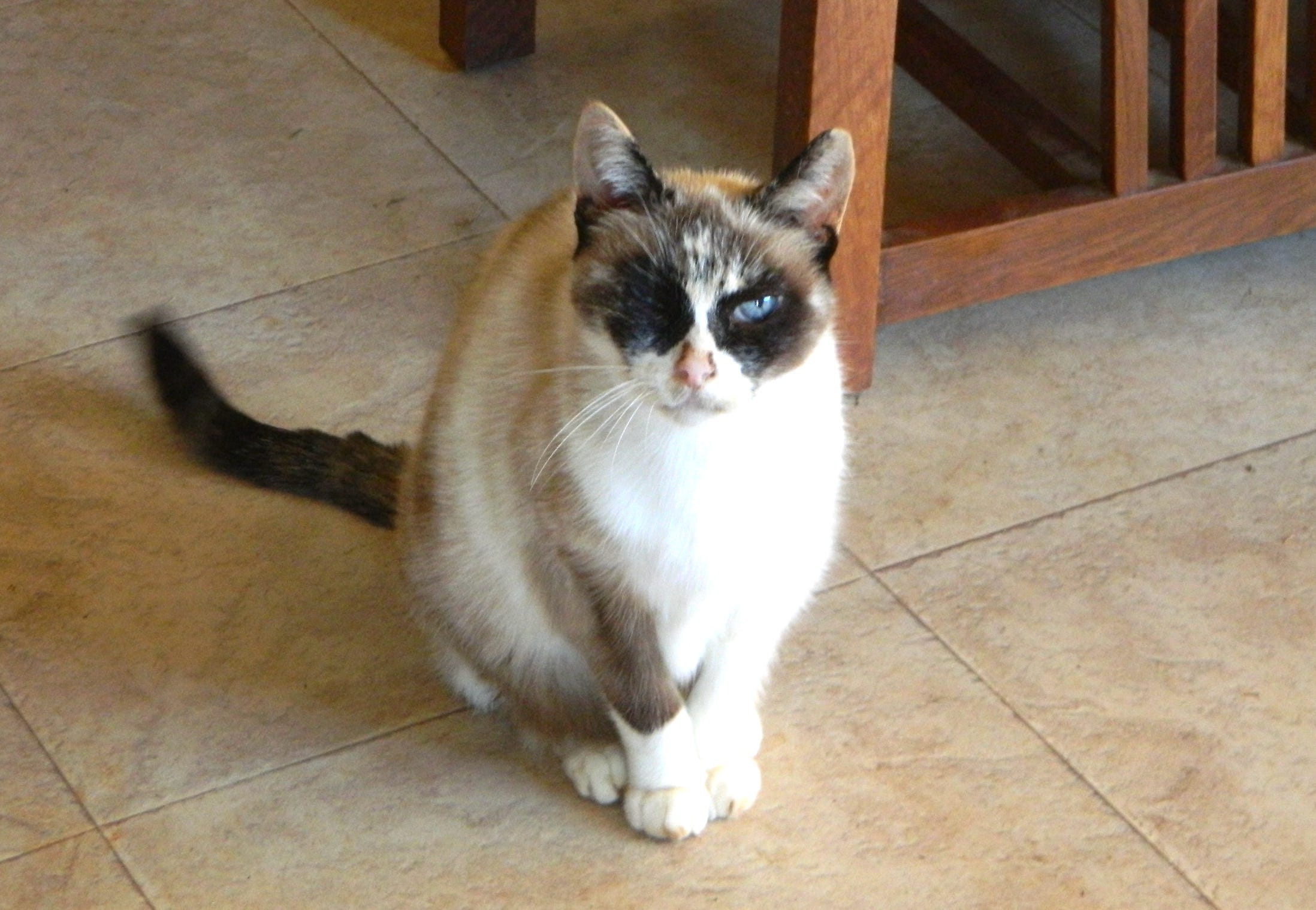
The first was Sage, our beautiful Siamese-looking cat. I honestly don’t remember exactly how we acquired her as a kitten, although I suspect she came from an animal shelter. For many years, Sage was a perfectly acceptable member of the farm family. She came and went, did her cat things, and generally minded her own business
.
But somewhere around the age of fifteen, Sage decided she was retiring from outdoor life. Permanently. And with retirement came a rather unfortunate personality change.
She became increasingly cranky, feeble, and downright mean, particularly toward the dogs. We had four Australian Shepherds at the time, all of whom had lived with cats for years without incident. But Sage seemed to take particular pleasure in tormenting them. She would actually stalk the dogs, wait until one was within striking distance, and then take a swipe at its face with her claws..
Eventually, when Sage was approximately twenty-two years old, the situation came to a terrible end. We returned home from dinner one evening to discover that one of the Aussies had apparently had enough. Sage was dead, and the circumstances suggested that one of the dogs had shaken her.
To say this was disturbing would be putting it mildly. Our youngest son was still young enough that we never told him the details. None of those dogs had ever been aggressive toward cats, and all had lived peacefully with them for years. I have always suspected that Sage finally pushed one of them beyond its tolerance. It was an awful ending to a very long life, and not one I care to repeat.
All four of those dogs are long gone now, having lived out their own lives. And all of them subsequently lived peacefully with our next cat, BC.
Enter BC, the Barn Cat
BC came into our lives around 2005, back when we were living on our Maryland farm.
One day, we spotted a young black manx (short-tailed) cat dragging the back half of her body as she disappeared into the space between the double walls of our barn. She was clearly badly injured, and I had no idea whether we would ever be able to catch her.
But I started putting out canned cat food and keeping watch. Eventually, armed with a pair of heavy gloves and a good deal of determination, I managed to grab her. We put her in a kennel, gave her food, water, and a safe place to recover, and hoped for the best.
To this day, we don’t know exactly what happened to her. She may have been hit by a car, or perhaps accidentally stepped on by one of our big horses. Either way, her hindquarters had suffered a serious injury.
I did some research into recovery from certain types of feline injuries and decided that, given her circumstances, we would give her time, rest, and supportive care while watching her progress. And recover she did.
Within a relatively short period, she was walking again, although she always had a limp. She gradually became tame, tested negative for the major feline viruses we were concerned about, and was accepted by the dogs. So we decided to bring her into the farm family rather than turn her over to a “shelter.” Within a month, she was moving in and out of the house as if she had always lived there.
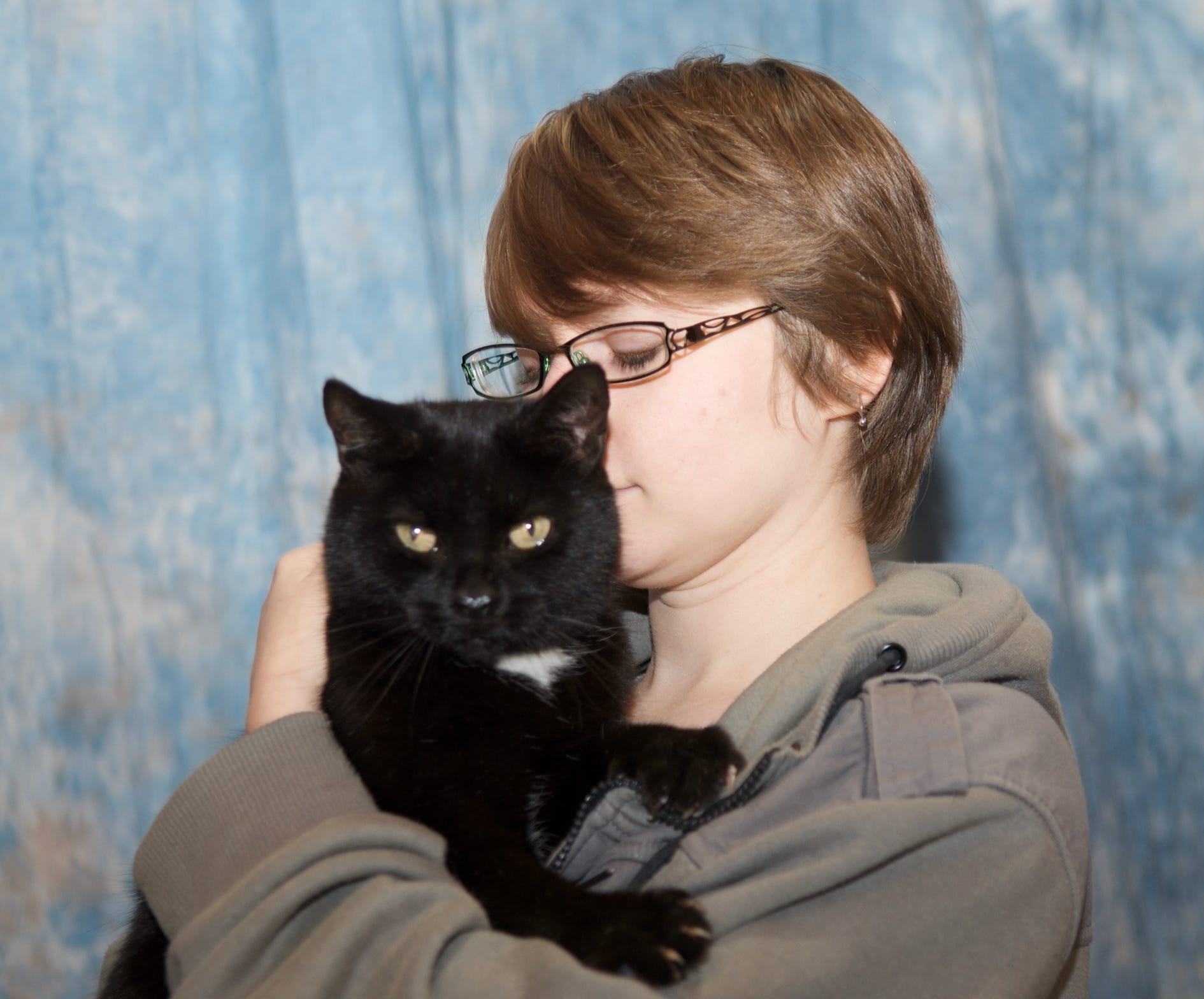
We named her BC, short for either Black Cat or Barn Cat. Not particularly imaginative, I admit, but it suited her.
BC turned out to be a wonderful farm cat. She was an excellent mouser, industrious and determined, but because of her old injury, she couldn’t climb trees. This was a rather ideal arrangement. She could catch mice, but birds were generally beyond her capabilities. For years, BC earned her keep.
But then, around the age of fifteen, history began repeating itself. BC decided she had worked long enough. She retired herself from outdoor life and became a full-time house cat. She developed a tremendous appreciation for the litter box, soft furniture, and the comforts of indoor living. And she lived another five-plus years.
Unfortunately, those final years were not particularly pleasant for anyone. She became less mobile, and eventually incontinent. She had always been a bit feral - pet her at your own risk. We did our best to accommodate her declining health, but eventually her quality of life deteriorated to the point that we made the difficult decision to have her euthanized.
It was sad, of course. She had been a good cat and a faithful member of the farm family for nearly two decades.
But by then, I was tired. Tired of litter boxes, elderly cats with bad attitudes, and our home gradually becoming a somewhat pungent feline retirement facility. So, after BC, we decided enough was enough.
No more cats.
The Rodents Have Other Ideas
Fast-forward approximately six years.
We now have an out-of-control rodent problem, and I am beginning to think our decision to retire from cat ownership may have been a mistake.
There is a reason farmers have kept barn cats for centuries. A good mouser can patrol buildings, discourage rodents from settling in, and catch the little devils that seem perfectly capable of avoiding even the most carefully placed traps.
The problem is figuring out how to get the benefits without repeating our previous experiences.
Do we adopt two adult cats, preferably ones with proven hunting skills, and acclimate them to living in the horse barn? Perhaps a bonded pair of working barn cats that would be perfectly happy with food, water, shelter, and a job to do? Or would they harass the poultry, the guinea fowl? How would the free-ranging peacocks react?
Or do we get a couple of siblings, either older kittens or young cats, and raise them to be farm cats from the beginning? Do I really want to deal with the destruction in our house -scratched furniture and the like, and all the havoc that kittens create?
Adult cats might already know how to hunt, but they also come with established habits and personalities. Kittens might be easier to acclimate to the farm, but there is no guarantee they will grow up to be particularly enthusiastic mousers. And then there is the “breaking in” period.
Then there is the question of housing. Setting up proper cat accommodations in the horse barn would be another project. We would need a secure place for them to acclimate, somewhere warm and protected from the weather, and a reliable feeding arrangement. And, of course, they would need to be spayed or neutered, vaccinated, and given appropriate veterinary care.
There is also another practical complication. Once we have cats roaming the farm, we can no longer use rodent poison without risking poisoning the cats, either directly or when they catch poisoned rodents. Even conventional traps would have to be placed where curious paws couldn’t reach them. So, in some ways, getting cats means giving up other rodent-control methods we currently rely on.
And here’s another complication.
The horse barn is not particularly close to the house. If we establish the cats down there, will they stay there? Or will they eventually discover the house and decide that the humans, dogs, and indoor accommodations are much more interesting?
On the other hand, we also have mice and squirrels around the house, so perhaps having cats patrol both areas wouldn’t be such a bad thing.
Except that this is exactly how we ended up with two retired house cats in the first place.
So, To Cat or Not to Cat?
Like most animals on our farm, cats need to earn their keep. That doesn’t mean we don’t love them or care for them. Quite the opposite. Our animals receive excellent care, often better than we give ourselves. But a working farm is not simply a collection of pets. Every animal has a purpose, whether that is producing food, maintaining the land, providing companionship, or controlling pests.
Cats have traditionally filled an important role in that arrangement.
And right now, we have a job opening.
The qualifications are straightforward: must enjoy hunting mice and rats, preferably have a strong dislike of squirrels, be willing to live primarily in a barn, and not expect to retire to our living room at age fifteen. Unfortunately, I suspect the last requirement may be difficult to enforce.
So, I’m putting the question to our readers, particularly those of you who have working farms, barns, or homesteads.
What has worked for you? Would you recommend adopting adult working barn cats, or starting with a pair of young siblings? Have you found a way to keep barn cats primarily in the barn, rather than eventually having them move into the house and take over?
And perhaps most importantly, have all of your cats actually made a meaningful difference in controlling rats, mice, and squirrels?
Because at this point, between the chewed-up cars, the mice in the Porsche barn, and the rats in the horse barn and office, I’m beginning to think that a couple of good cats might be worth their weight in gold.
Or at least worth $3,000 in Kia repairs.
Enjoy our homesteading stories? Please consider becoming a paid subscriber.
Not everything we write at Malone News is about politics, public health, or the latest controversy. Sometimes it’s about the everyday challenges, frustrations, and rewards of building a more self-sufficient life. Like trying to figure out how to keep the mice out of our barns without signing up for another twenty years of cat ownership!
These lighter stories are part of what makes Malone News different. We share our lives on the farm, what we’ve learned, what works, and what doesn’t. And we hope these stories inspire others to take a few steps toward greater independence and self-sufficiency.
If you enjoy our writing, please consider upgrading to a paid subscription. Your support helps keep Malone News independent and allows us to continue sharing both our investigative reporting and our homesteading adventures.
Thank you for reading and being part of our community!
Yes, get barn cats. Feral cats that don't like you. Additionally, a Jack Russell or Rat Terrier. Ordinarily, if you leave the hood up part way on vehicles, rodents won't find the engine a perfect place to nest.
We always had cats on the farm. They were not allowed in the house .Mom made a cat house for them for the Winter. We have a garage cat. She knows she is not allowed in the house . She is a great mouser. She brings us presents on the front porch. We have a heat lamp for her in the garage for the Winter which she loves. Find a farmer who has kittens. The momma cat teaches her babies to mouse. Have a special place in the barn where they get fed and a warm place in the Winter to sleep.