Homesteading: RIP...
It has been a really hard week here, and honestly, I am not even sure I can write about it.
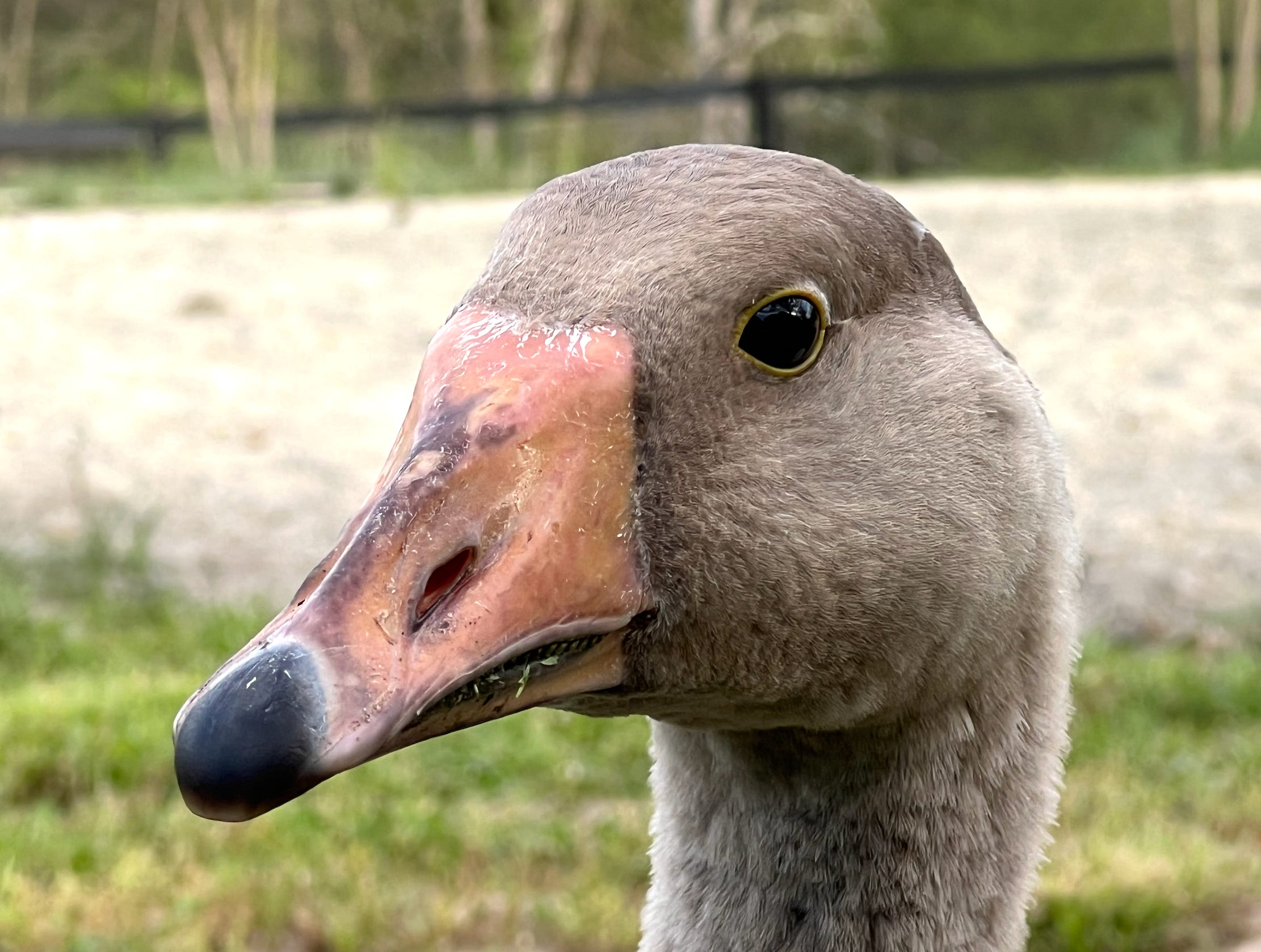
We lost our wonderful silly goose, Gonzo, and one of our beautiful young pea-boys to what was most likely a bobcat or a fox.


It all started with the rain.
A heavy, cold rain that should not even exist in mid-May. The kind that chills everything right down to the bone and makes the whole farm feel unsettled.
We think our young peacock must have decided to sleep under a vehicle that night instead of high up on a roofline or tucked safely into a tree like he usually did.
One of the unsettling realities of living on a homestead is that the predators are always watching. Always. Day and night. They wait for one mistake, one moment of bad weather, one lapse in routine, one rainy night when the dogs aren’t on duty.
Normally, our dogs are excellent guardians. Bella, especially, takes her job very seriously. Most nights she sleeps just outside the door, keeping watch over the farm like a little furry security guard. She chases off anything she considers suspicious, which basically includes the entire wildlife population of Virginia.
But with the rain pouring down, the dogs stayed inside that night. We have a pet door, so they make their own decisions about where to sleep, and on miserable nights like that, comfort won.
Around midnight, all the dogs exploded into barking and ran outside. Well, all except Kitty, who is too tiny to work the pet door - which is just how we like it.
I slept through it. Robert did not. But at the time, he did not realize a bird had actually been taken.
The next morning, white and colored feathers were everywhere. The bird bath had been knocked over. Feathers were stuck halfway up a tree. There were more scattered across a mulch pile, and then the trail disappeared down the hill into the woods.
It must have been an epic fight. He did not give up easily.
That part broke my heart the most.
This happened on Saturday, and both of us knew immediately what it meant. Once a predator discovers an easy meal, it almost always comes back.
I worried the elderly guinea fowl would be next. There are only four left now, and they move around the farm like a tiny, confused neighborhood watch committee.
But we were wrong.
Three days later, the predator struck again.
For years, every single night, we put Gonzo to bed in one of the horse stalls. And if we forgot, she would march herself there indignantly and put herself to bed anyway. The horse barn is actually a pretty safe place.
But that is not where the predator found her.
At twilight, just before dark, Gonzo liked to graze in the little patch of grass between the new arena and the horse barn. That was her spot for the last feed of the day.
And that is where she died.
Gonzo had known nothing but kindness her entire life. She trusted everyone. Dogs, horses, cattle, people. Frankly, she was fairly certain she outranked all of us and was serving as head supervisor of the property.
So I suspect she never even saw danger coming.
Her struggle appears to have been short. The feathers told that story. And while that does not erase the pain, it helps a little to remember she lived a far better life than most animals ever do. Geese are surprisingly long-lived creatures, and for three years she had freedom, companionship, fresh grass, ponds to splash in, and endless opportunities to harass unsuspecting visitors.
She was the mascot of this place.
She greeted strangers and friends alike at full volume. She snuck into the house whenever she found an open door.
But even the peaboys like to find their way inside. This was the last photo I took of the peaboy #1 - dated May 17th.
Gonzo the goose liked to bathe enthusiastically in fountains, puddles, stock tanks, kiddie pools, and anything else containing two inches of water. She was the clown of the farm.
And yes, Gonzo had a boy’s name because she was so outrageously loud we were convinced she had to be male. She eventually proved us wrong by laying hundreds of eggs over the years.
I can honestly say it has been very difficult to write any of this down.
If you keep livestock long enough, eventually you will have deadstock.
That is simply part of farming.
But these were not just livestock. They were pets. They were personalities. They were part of the rhythm and joy of daily life here.
What made it even harder was watching the surviving young pea-boy after his brother disappeared. The two of them had been inseparable since birth.
For two straight days, he wandered the front yard, where they lived most of the time - calling for his friend. A low, mournful sound over and over again. A sound that I have never heard a peacock make before. He would sometimes disappear into the tree line - deep into the forest, calling and calling, hoping for an answer that never came. I half expected that he would be taken each time he wandered into the forest - searching vainly for his friend.
It just about wrecked me to hear it.
Eventually, he paired up with our older male, his father, Prince Caspian, and now follows him everywhere. But he has changed. He startles easily now. Sudden movement sends him darting away. Loud noises make him jump.
I suppose that is probably a good thing. Hard lessons are still lessons.
So now Robert and I live with the understanding that it is likely only a matter of time before the predator returns. And honestly, there is not much we can realistically do beyond keeping the dogs free to patrol.
A trap would probably catch one of our own dogs before anything else. Neither of us has the time or energy right now to sit in a hunting blind through the night. So we do what farmers and homesteaders have always done. We reinforce what we can, pray for a little luck, and accept that nothing living is ever completely safe.
In the meantime, foals are to be born mid-June, so the mares have to be moved into the lower pasture - which has what is called “no-climb” wire - basically, expensive animal wire mesh with 2x3 inch openings - 4 foot tall, with then a board topper on top of that, raising the fence to five foot tall and coyote proof.
Even our coop, which resembles Fort Knox for chickens, is not perfect. And the free-ranging birds certainly are not.
Is there a lesson in all of this?
Not really. At least not a tidy one.
Only the reminder that predators and prey have always coexisted in this world. Nature is not cruel, but neither is it sentimental. We do our best to protect the animals placed within our care, and sometimes, despite all of that effort, loss still comes.
Predators have to eat too. Which means we all have to be careful out there.
That does not make it hurt any less.
JGM


Gosh, that was so hard to read, I can only imagine your pain I am so, so sorry.
Farming is hard, and sometimes it breaks your heart. Just like all worthwhile things in life.
Thank you for sharing.