

Spring is here, and given the temperatures forecast for the next ten days, we wouldn’t be surprised if we didn’t see another frost until next November. Fingers crossed!
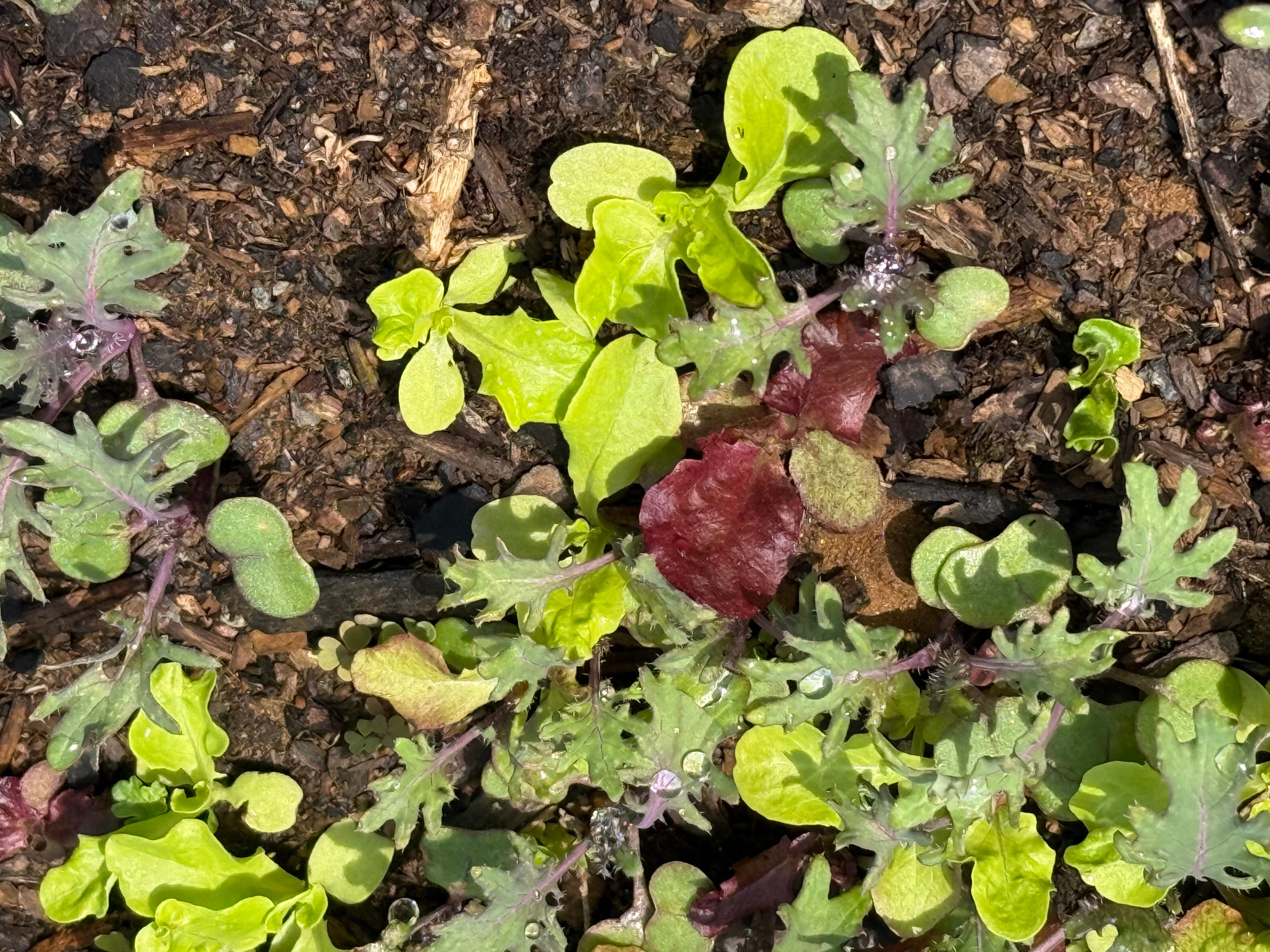
Our mixed crop of lettuce and kale is off to a good start. They are under netting, so hopefully they don’t bolt as the weather warms up.
My garlic, planted late fall is thriving, and a few of the spinach seeds managed to germinate.


In the greenhouse, the cucumber, sweet peppers, and various varieties of squash are growing by leaps and bounds. In this house, I have sweet potato starts going.
All in all, things are on schedule for getting into the ground in a big way soon.
Probably our biggest news on the farm is that in another two weeks, we will receive 8 turkeys from a hatchery
Turkeys
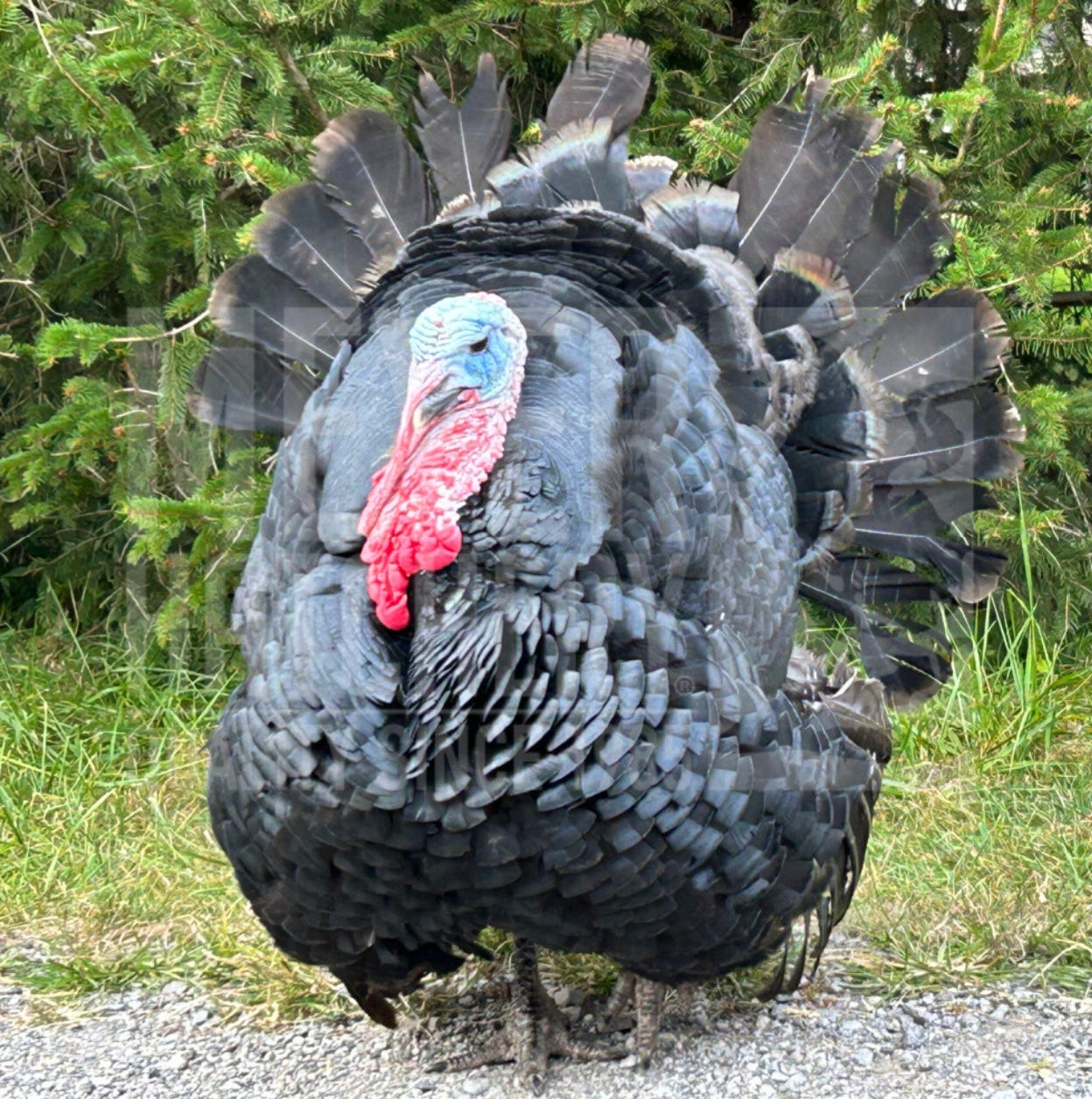
For food production, turkeys can be a great addition to the homestead. But, like almost all farm animals, with the possible exception of chickens, there are a lot of caveats. The first is that anyone considering turkeys needs to understand there are two very different types of birds that behave, grow, and reproduce in fundamentally different ways.
The broad-breasted turkey
What most of us eat at Thanksgiving is a meat-producing bird known as the broad-breasted turkey. These birds are, frankly, not very bright. As in “dumb as a stump.” They also do not forage well and tend to prefer to stand near a feeder, waiting for grain. That matters nutritionally. A turkey that relies heavily on grain will produce meat that skews higher in omega-6 fats, unless the feed is specifically formulated to include omega-3 sources.
The broad-breasted turkey is less a creature of the wild and more a marvel of modern engineering. It is the commercially dominant turkey in the United States, and the one most Americans encounter once a year, beautifully bronzed, reclining on a platter, surrounded by family members arguing about politics and pie. If you have eaten turkey from a grocery store, the odds are overwhelming that it was a broad-breasted bird.
These turkeys were developed for one purpose and one purpose only: meat. Specifically, a lot of white breast meat, produced quickly and efficiently. Broad-breasted turkeys reach market weight in about sixteen to twenty weeks, which in turkey terms is the equivalent of going from kindergarten to professional linebacker in a single summer. Mature toms commonly weigh thirty to forty pounds, while hens average twenty-two to twenty-five pounds. They convert feed into muscle with remarkable efficiency, which makes them economically irresistible to commercial producers.
Their appearance reflects this narrow focus. Broad-breasted whites dominate the industry because their white feathers leave no dark pin feathers after processing, resulting in the pale, uniform skin consumers expect.
One limitation of these birds is reproduction. Broad-breasted turkeys cannot mate naturally. Their bodies are simply too large and awkwardly proportioned. They are not especially mobile either. Flying, foraging, and general turkey athleticism are not part of the job description. These birds are typically raised in controlled environments where food comes to them, not the other way around.
For the homesteader, this means that if you want to raise broad-breasted turkeys, you will need to buy eggs or poults from a hatchery every year. Shipping eggs or live birds adds up quickly, and losses are not uncommon. Still, if your goal is white meat that has been humanely raised on organic or carefully chosen feed, the cost may be worth it.
Their rapid growth comes with tradeoffs. Leg weakness, heart strain, and respiratory problems are common concerns, all tied to the fact that they grow faster than their bodies would ever choose to on their own. For this reason, they are usually processed by twenty weeks of age and are poorly suited to long-term or backyard keeping unless conditions are tightly managed. Reproduction or retirement is not part of the plan.
On the plate, broad-breasted turkeys deliver exactly what they were designed to provide. The flavor is mild, the breast meat abundant, and the thighs generous. They roast, smoke, and fry beautifully, especially when feeding a crowd. If your goal is to put a very large bird in the oven and enjoy leftovers for days, this turkey will not disappoint.
Compared to heritage turkeys, the contrast is stark. Heritage birds grow more slowly, move more, mate naturally, and develop a richer, more complex flavor with a much higher proportion of dark meat. But not nearly as much white meat, bummer!
Broad-breasted turkeys are optimized for efficiency and volume, while heritage breeds prioritize sustainability and self-propagation. One is a carefully engineered product of industrial agriculture. The other is a turkey that still knows how to be a turkey. Well, at least most of the time…
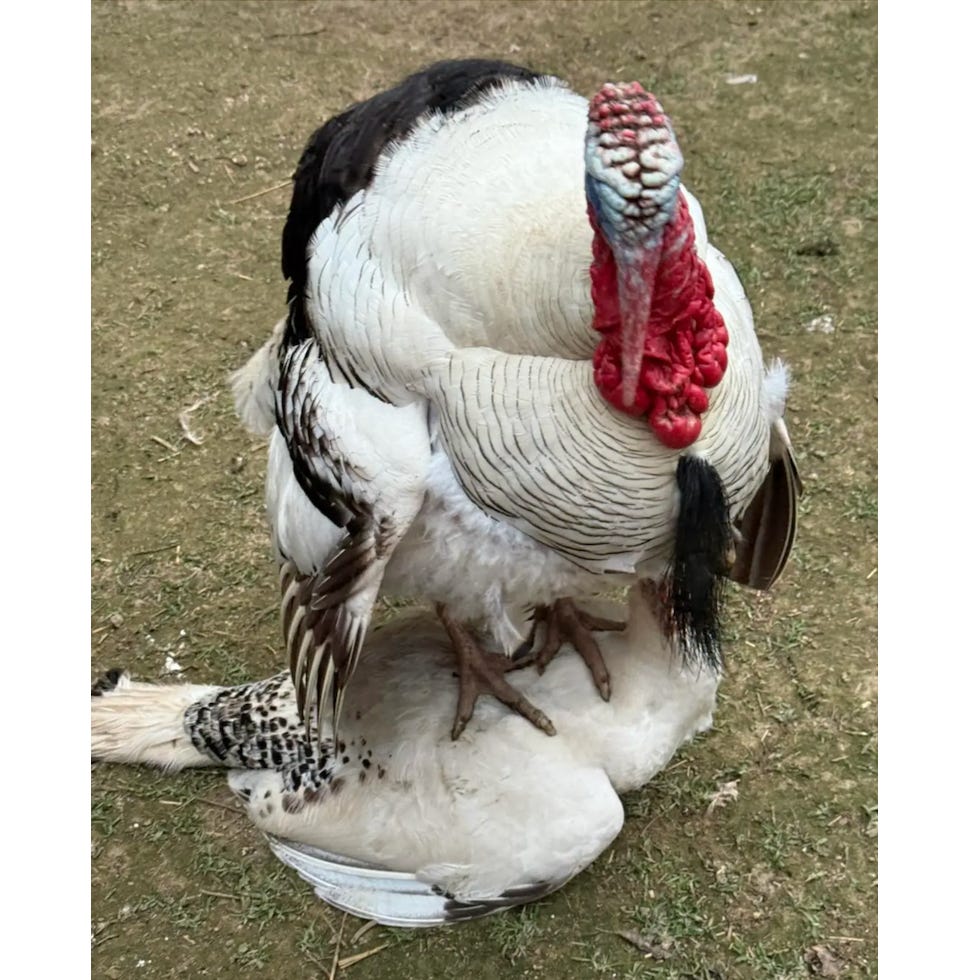
Both have their place. But the broad-breasted turkey is a reminder that when humans set out to improve nature, the result may be impressive, useful, and delicious, even if it occasionally needs help standing up, among other necessary traits needed for the survival of a species.
Heritage Turkey Breeds
Heritage breeds are a very different story. First and foremost, they have relatively thin breasts, which means there is very little white meat. Most of the meat is dark and can be quite gamey. Many people raise a heritage turkey only to discover on Thanksgiving that the amount of white meat barely exceeds what you would find on a store-bought chicken.
We have had our share of turkeys on the farm, and in general, the hens are sweet, good-natured birds. The toms, however, can become a nuisance if allowed to free-range. When buying from a hatchery, you usually have the option of sexed birds, which is worth considering. If you have a preference on the sex of the birds.
Sex-linked turkeys are far less common than sex-linked chickens, but a few do exist. The clear standout is the Royal Palm, a heritage breed in which males and females hatch with noticeably different down coloration. Males tend to be lighter with more white, while females are darker with stronger striping. When the line is well maintained, this allows for fairly accurate day-old sexing.
Some Narragansett turkeys may also show early color differences, with males often lighter and females darker, but this trait is inconsistent and depends heavily on careful breeding. In many modern or mixed lines, the sex-linked signal has largely disappeared.
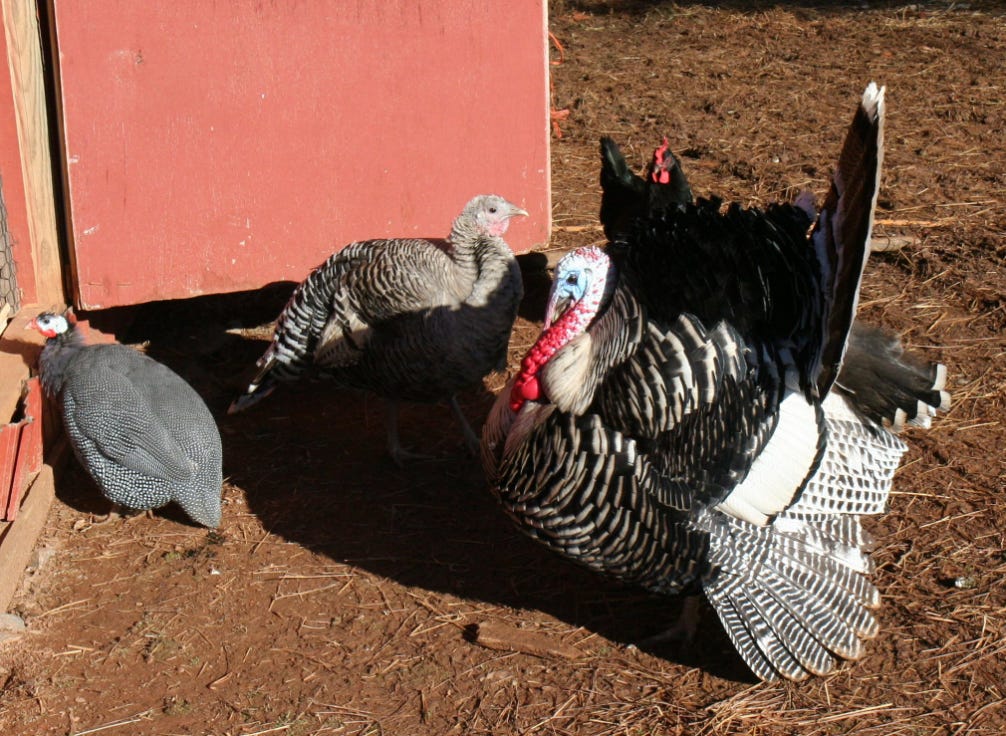
Most turkey breeds, including both broad-breasted commercial types and many heritage breeds, are not sex-linked at all. Broad Breasted Whites and Bronzes, along with heritage varieties such as Bronze, Slate, Black, White Holland, Beltsville Small White, and Midget White, cannot be reliably sexed at hatch by color. With these birds, sex becomes obvious only later through differences in snood growth, caruncles, spurs, size, or behavior. In short, if you want day-one certainty,
Royal Palms are the practical option. For most other turkeys, patience is required, which feels appropriate for a species that has never been particularly interested in making things easy for humans.
Turkeys are not easily vent-sexed at hatch the way chickens are. Commercial hatcheries instead rely on secondary sex characteristics that appear a few days to a couple of weeks later, such as differences in feather development, leg thickness, body size, and early snood growth. Hatcheries raise poults just long enough for these traits to emerge, then sort them. That is why turkeys are often sold as “sexed” even though they were not sexed on day one.
In our area, we cannot let the hens free-range, or the foxes will take them as soon as they start sitting on eggs. Both hens and toms are vulnerable to predators until the toms grow large enough to intimidate the local fox population. We are fortunate not to have coyotes on the farm.
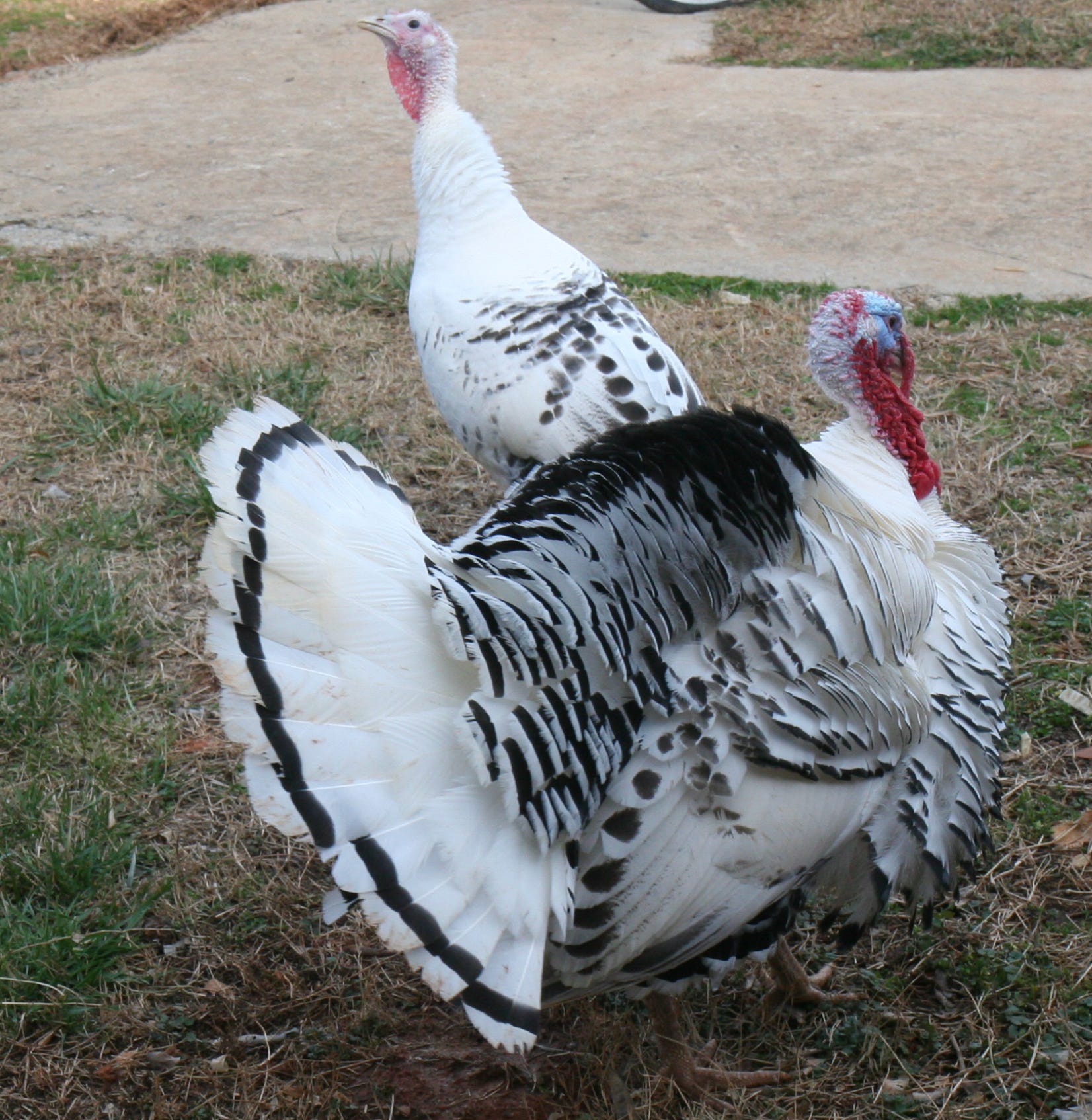
Major Tom
Our last tom was a big male named Turkey Major Tom, and he had a significant other. She sadly died at the paws of a homicidal fox. After that, he developed a passionate relationship with the chrome bumper of our truck. The bumper may have looked like a turkey in reflection, but the relationship was doomed by the cold, hard reality of automobile parts. He spent his days attacking the chrome bumper of our truck or the bumper of any car that came up our long, gravel drive.
This behavior reached its peak when a visitor drove away, only to have Major Tom follow her car obsessively down the lane, attacking her back bumper the entire way. About twenty minutes later, the poor woman arrived back at our door, soaked in sweat and puffing loudly, umbrella in hand. She explained that the turkey had followed her car for nearly a quarter mile, so she got out and used her umbrella to push him all the way back to the house.
We looked down the drive and sure enough, there he was, right back to attacking our truck bumper. We smiled politely, thanked her profusely, shut the door, and burst out laughing. Truth be told, Major Tom would not have been missed.
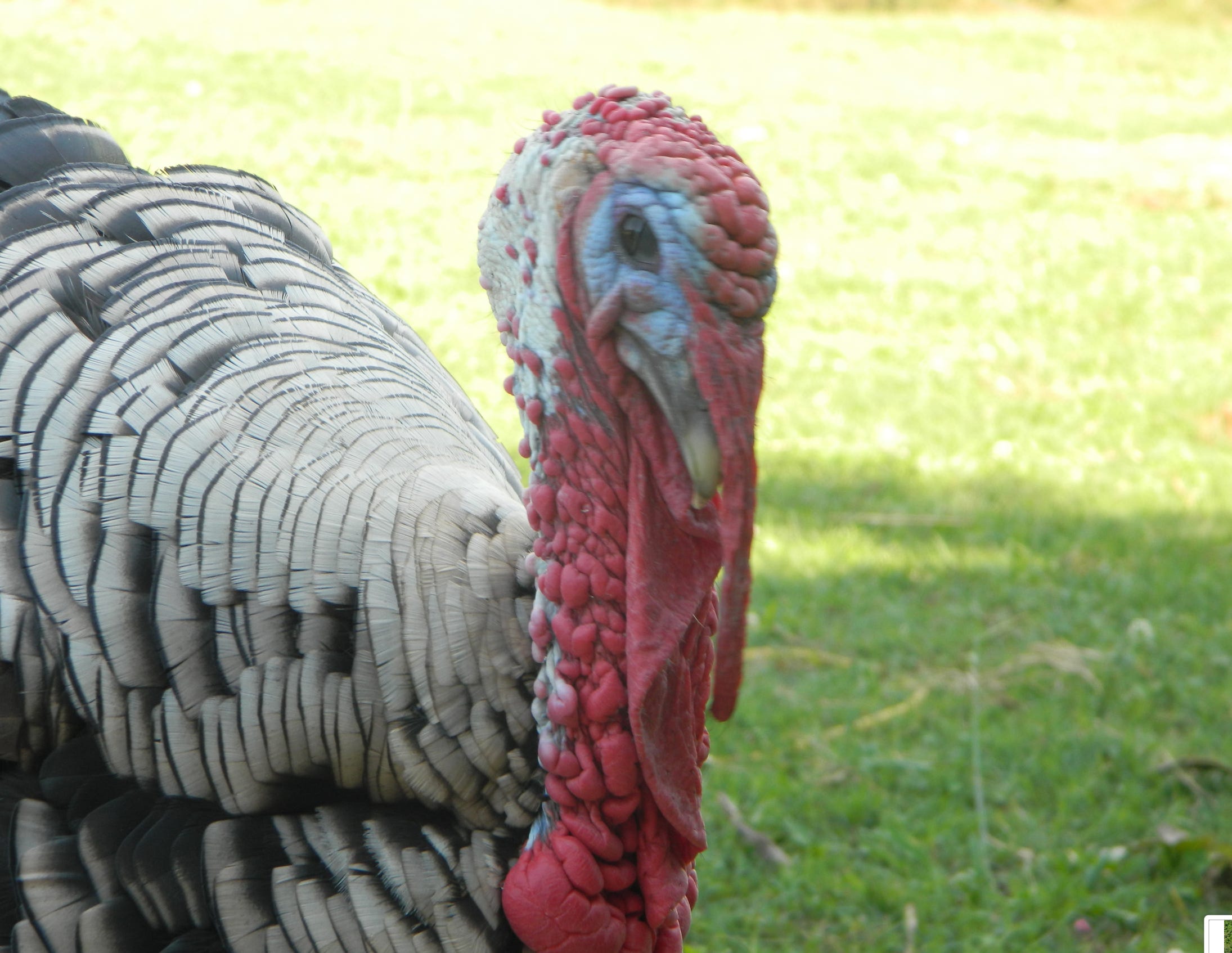
Mature toms can be tricky, and yes, sometimes they can be extremely mean, much like a rooster. They will also fight each other, so if you are raising turkeys for meat, it is generally best to process the males before full maturity.
Why Raise Your Own Turkeys for Meat
All that said, there are three additional reasons to raise your own turkeys for meat. The first is that mRNA vaccines are coming to a poultry house near you. It is not a question of if, but when, mRNA vaccines are rolled out for avian influenza. Plus, the commercial feed fed to these birds is substandard.
Turkeys sold in retail stores are often injected with a solution containing water, salt, and spices to enhance tenderness and juiciness. This solution can also include broth, stock, butter, fat, flavor enhancers, and approved additives such as MSG, sodium erythorbate, nitrates, and nitrites (“curing salts”). You are what you eat.
The second good reason is that a mature turkey weighs between twelve and twenty-five pounds, depending on sex and breed. For home use – the breeding, rearing, slaughter, and processing of five to eight turkeys a year, versus tens of chickens used for the same purpose, is a much simpler operation. Simply due to the fact that a typical chicken weighs less than five pounds. It takes about three or four chickens to equal one turkey hen, and seven to eight chickens to equal one big commercial tom. The processing of that many chickens is frankly an all-day job, and butchering is never for the faint of heart.
With turkeys, it is easier to find local processors if you want to go that route, rather than bringing them a barnyard full of chickens. The costs of using an abattoir are expensive. If raising turkeys for meat, note that, except for heritage-breed hens, one will have to scald and hand-pluck the birds unless one buys a larger plucker, an electronic device like a washing machine drum with rubber fingers. After scalding, the carcass is put into the tub with a hose running on it, turned on, and about a minute later- a defeathered bird, ready for butchering. The bird is then immediately iced and butchered. Another job that seems simple until one is actually faced with the task. All we can say is be prepared for a real lesson in avian anatomy (YouTube is your friend for tutorials on how to butcher) and have a good stomach. It isn’t for the faint-hearted, particularly the first time around.
The third good reason to raise and process your own birds is that commercial turkey houses are deeply inhumane. Birds are packed in at high densities. A single commercial turkey house typically holds 5,000 to 20,000 birds, depending on the gender. Conditions often deteriorate as the birds grow, litter becomes fouled, and ammonia levels rise. Birds can and do die from respiratory distress caused by ammonia fumes. True story, in many poultry houses, workers are required to wear respirators because the ammonia fumes from the fecal waste are so noxious.
We live in an area with several such operations. Occasionally, open-air, semi-trucks packed with turkeys in small cages, headed to slaughter, pass by on the road. The birds are bedraggled, with broken feathers, bald patches, and are clearly in poor condition.
It sickens us both to see animals in such sad shape, especially knowing how differently things can be done on a small scale.
This comes back to the six hens and two toms we will be getting via the postal service come mid-April. We have chosen a cross between a broad-breasted and a heritage-type turkey. Although the literature on these birds says they still require artificial insemination, my hope is that we can find a heritage-breed royal palm turkey and mate it with one or two of the more fit hens. Hence, the next hybrid generation will be more able to breed naturally, have robust hybrid vigor, and be more physically stable. But maybe a bit more white meat. A girl can hope.
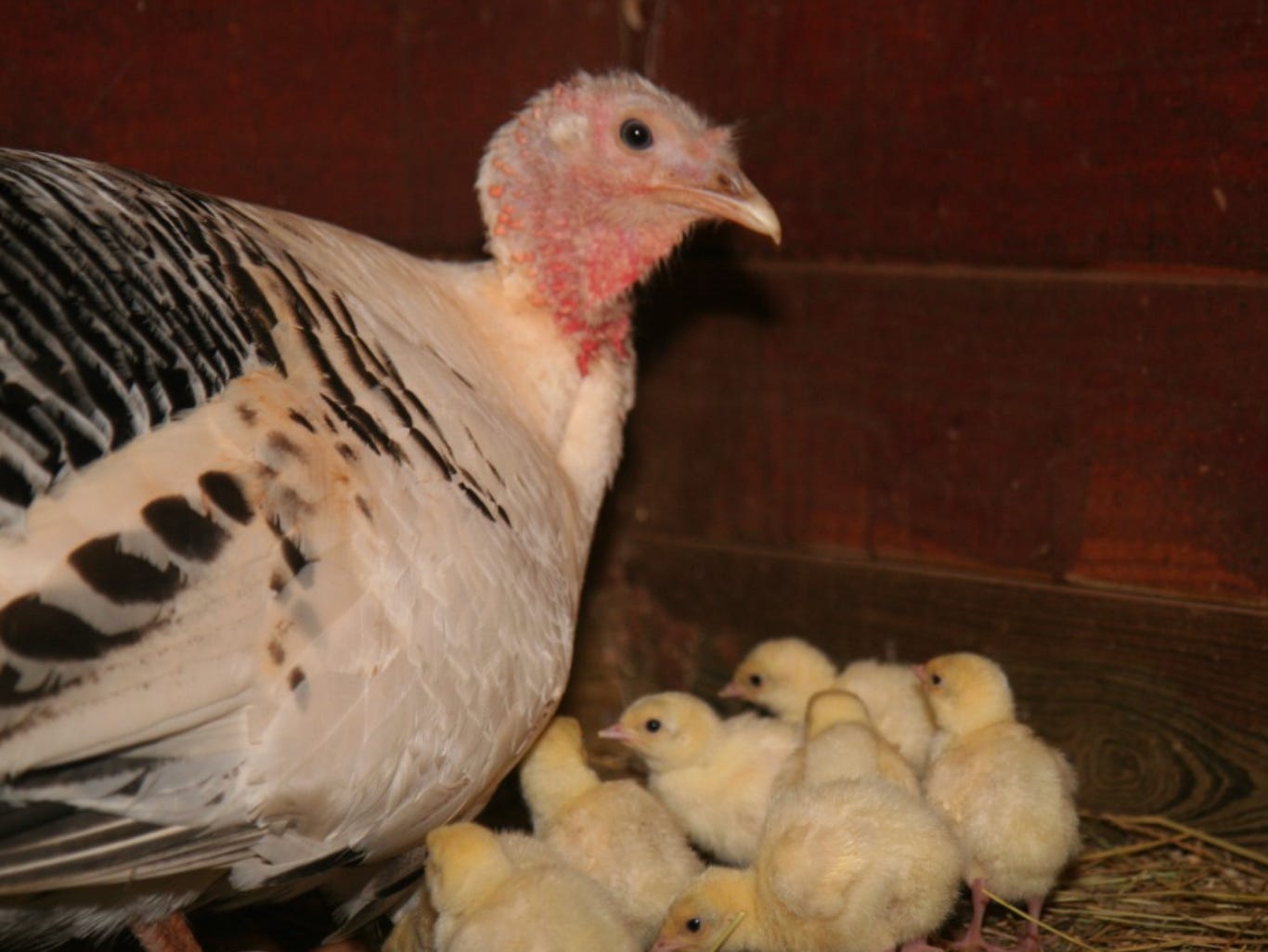
If not, all eight turkeys will be processed before Thanksgiving and go into the freezer to supply us with poultry for the year.
Turkeys that are fed real food, raised humanely, and slaughtered humanely. Yes, more work. But worth it.
Do you have wild Turkeys on or near your property in VA? In southern Oregon, they are out in full force right now. The hills are filled with gobblers, trying to find the females. I can see 2 or 3 right now from my window big Toms, beards down to the ground, all puffed up, strutting around looking beautiful, gobbling every once in a while. We already found a nest with eggs.
I have raised plenty of chickens over the years basically for eggs. Only one year, 1984..just some 20yrs or so ago, we raised some chickens for meat. Once all the chickens were butchered and then processed in my kitchen, I declared that I would never go through that again!! I did quickly learn how to remove their innards but I was done ( I had a one month old breastfed baby)!
I still have to say that they were the BEST tasting chicken I have ever eaten 😋