

By: Jill Malone (Robert Malone editing)
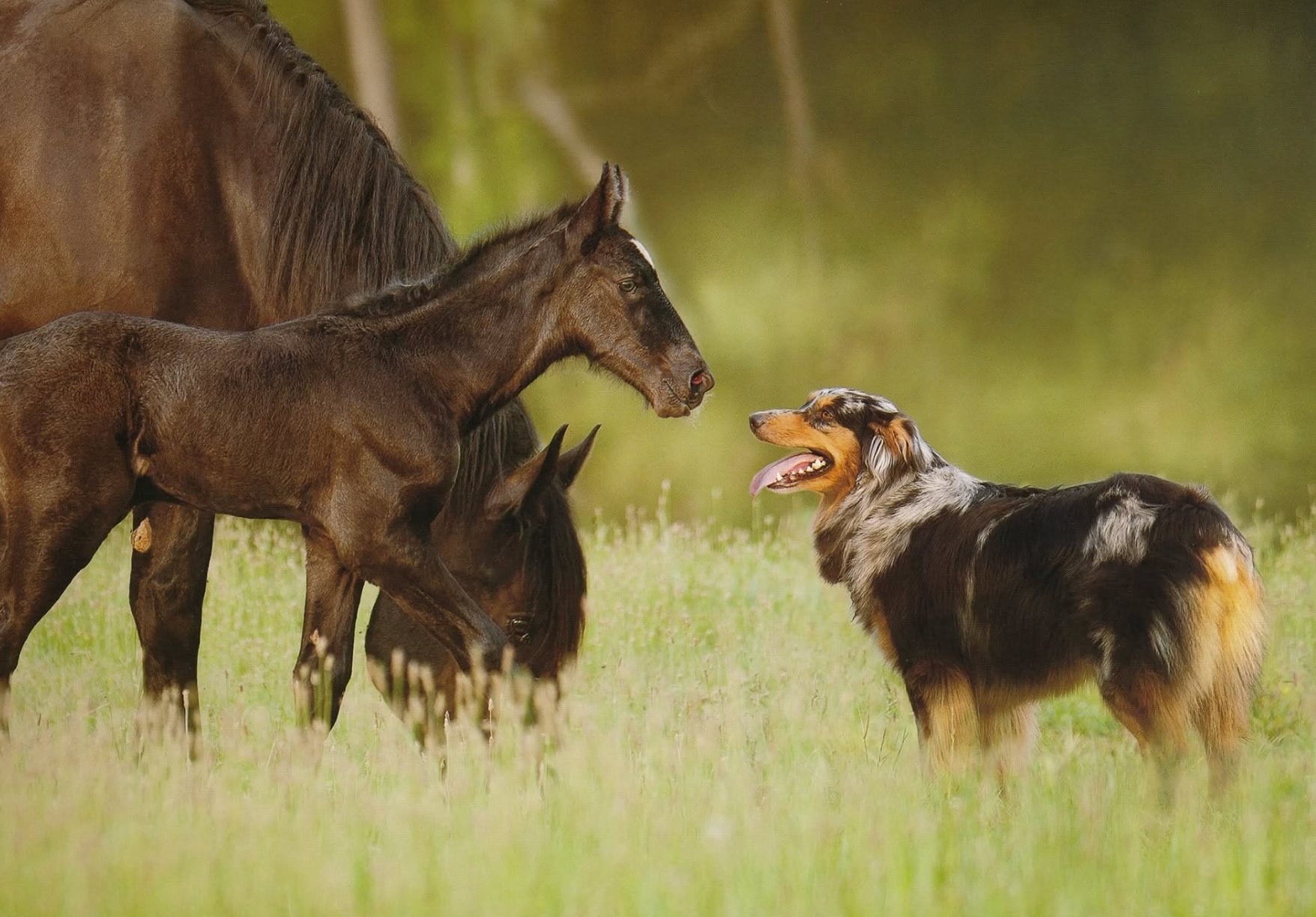
We are going to Nina and Colby May’s house for Thanksgiving today. With a quick stop at a horse friend’s newly purchased farm first. I am looking forward to relaxing with friends and not having to cook… or at least, yes and no. I actually enjoy putting together a big meal for friends and family. The big discussion this morning was whether it is appropriate to bring Kitty - the consensus being that yes, Kitty gets to come and the big dogs get locked in the house, with the pet door closed - as they don’t self-regulate well. Otherwise, we will come home to three wet, cold, shivering Aussies - running around being stupid. As the two sisters are now approaching eleven years old, someone has to look out for their wellbeing!
At the Brownstone Polyface conference at Joel Salatin’s farm, we bought a large turkey, which is sitting in our freezer. Cooking that gorgeous bird will have to wait until Christmas.
So it is a little weird for me not to be cooking a big meal. But Nina is gluten intolerant and doesn’t usually make stuffing, so I am in charge of bringing what I consider the most important part of Thanksgiving dinner. The stuffing - mine is more traditional than some, seasoned bread-cube based, and has wild rice, chestnuts, and all sorts of goodies.
I managed to get solar-powered Christmas tree lights on one of our Atlas cedar trees yesterday, but still have lots more lights to put up soon. But it won’t be happening this morning - as bad weather cometh.
I can’t believe that another year has flown by. And here we are getting ready for winter; as the weather has turned, three inches of rain are expected on Thanksgiving - starting soon- and Robert and I are sitting in the living room working.
Yesterday was a long day of writing and basic farm clean-up. Frankly, my lower back is killing me. But I managed to get heavy ceramic pots emptied of the worm-out soil and put away for next year’s planting. I also pulled about three-quarters of the newly deceased marigolds. Oh, and cleaned out the cement water fountains Robert made from cattle feeders.
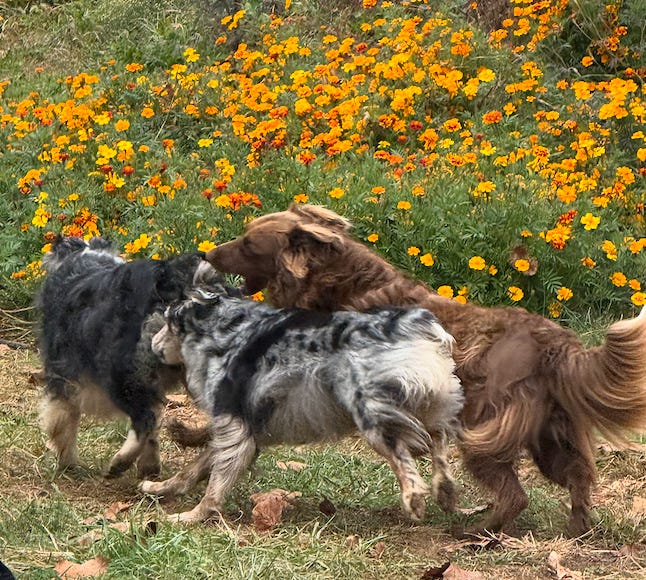
Anyway, I am a little marigold obsessed right now.
First, earlier this month, I plucked hundreds of flowers, pulled off and dried the petals for use as a garnish. Now looking rather orange and quite pretty in a little jar.
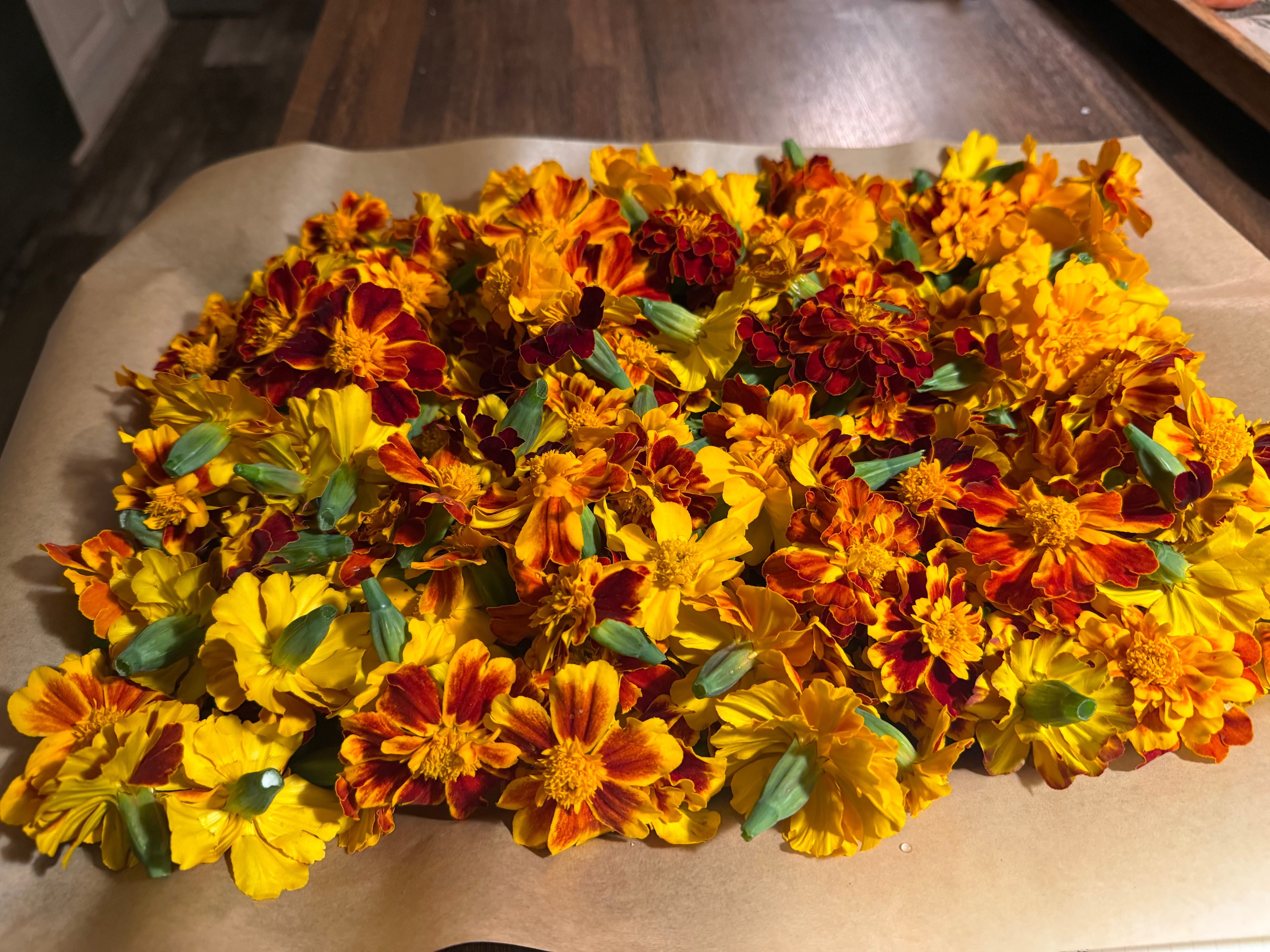
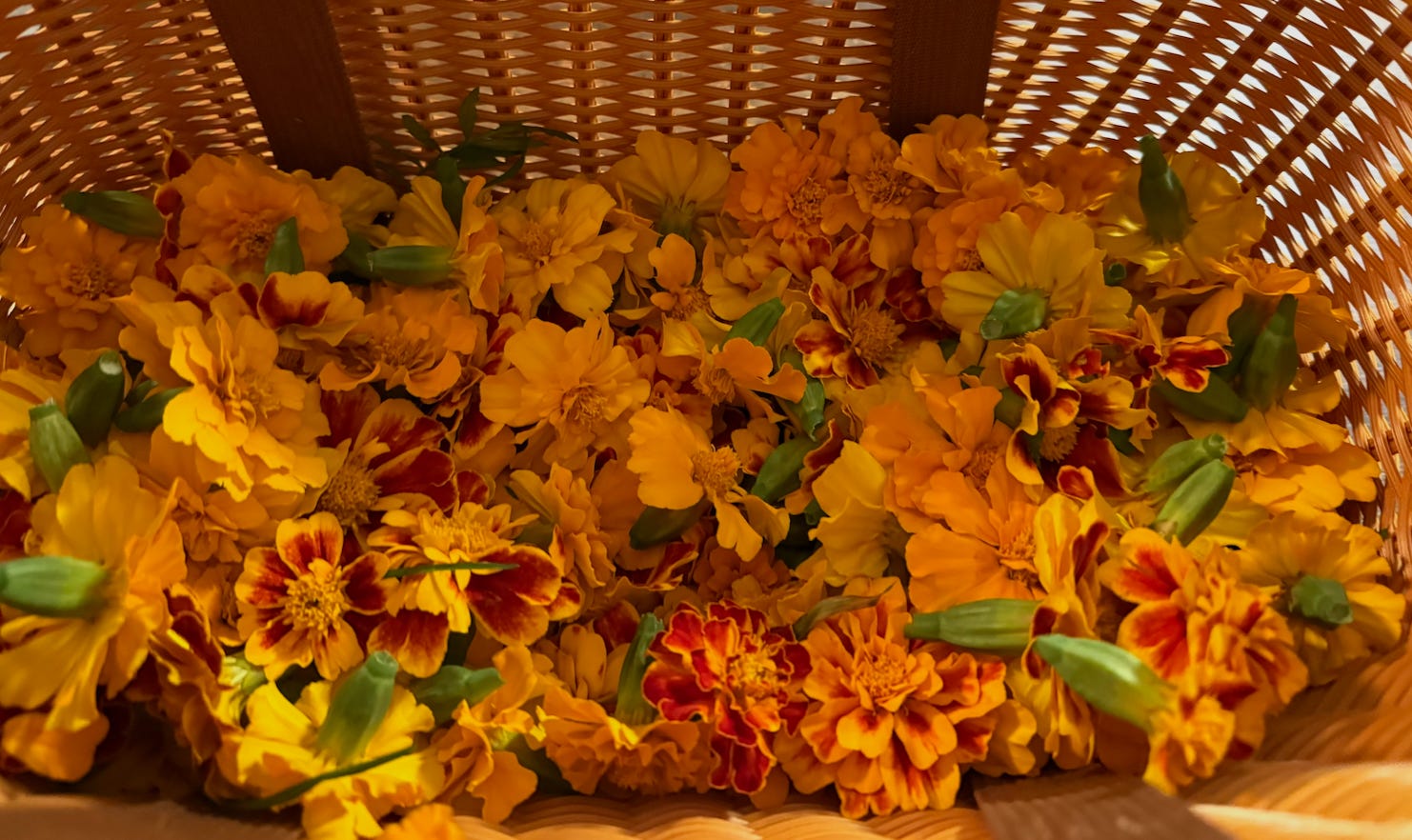
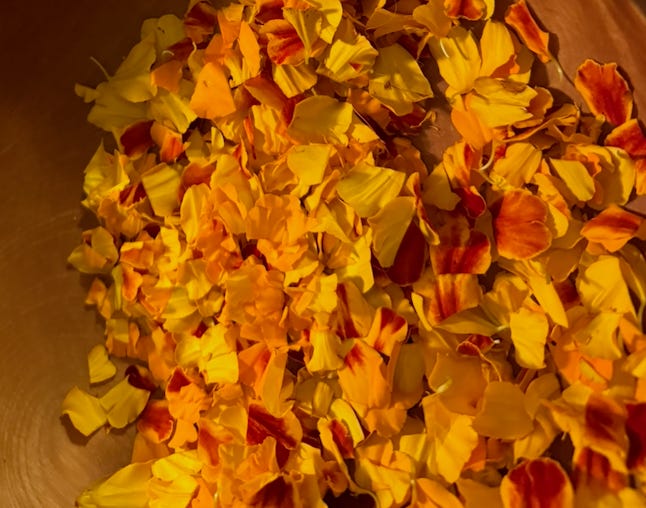
Having done that, I plucked zillions more flowers - this time removing the petals, opening up the seed heads, and pulling out the seeds. Which have now dried. I think I have about a pound.
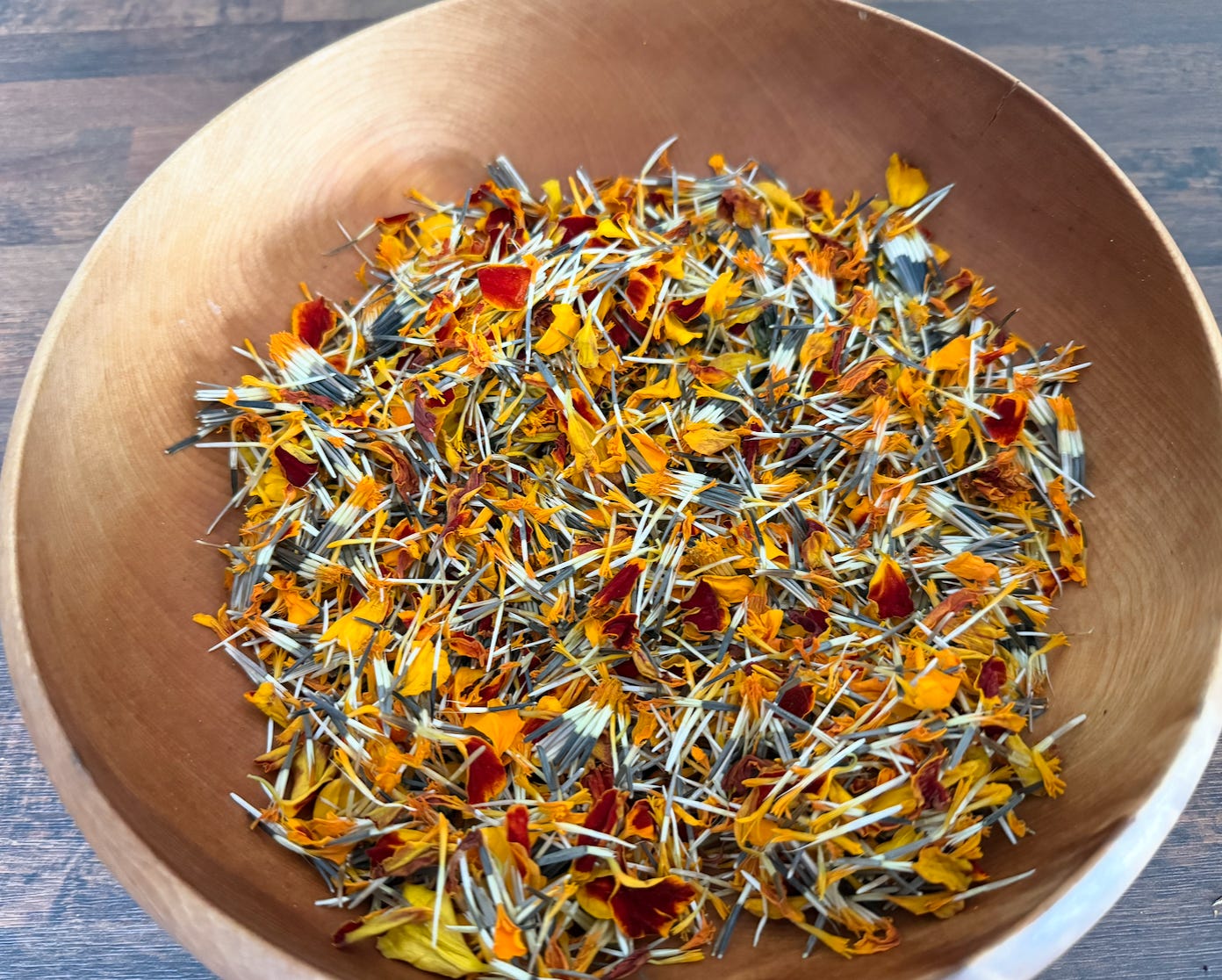
Now, what to do with all these seeds (above is about a quarter of the harvest)?
This year, we broadcast marigold seeds throughout parts of our garden, and they filled in beautifully with very little effort. So the plan is to plant them around our fruit trees. Marigolds attract beneficial insects, including hoverflies that help control aphids, suppress weeds, shade the soil, and add organic matter. Certain varieties of French marigolds can also suppress harmful soil nematodes. And we most definitely have French marigolds, which are a bit shorter than the African varieties - which is a good thing.
Evidently, the trick is to scatter the seeds directly onto the soil beneath the mulch and leave the immediate area around the tree trunks clear. Over time, by allowing some of the flowers to go to seed, we may be able to establish a self-seeding population throughout the orchard. What a lovely, inexpensive way to incorporate flowers into a working farm while encouraging biodiversity and reducing our reliance on chemicals.
On the barn front, we have been doing some major work and renovations - including paving the interior of the barn. Yes!
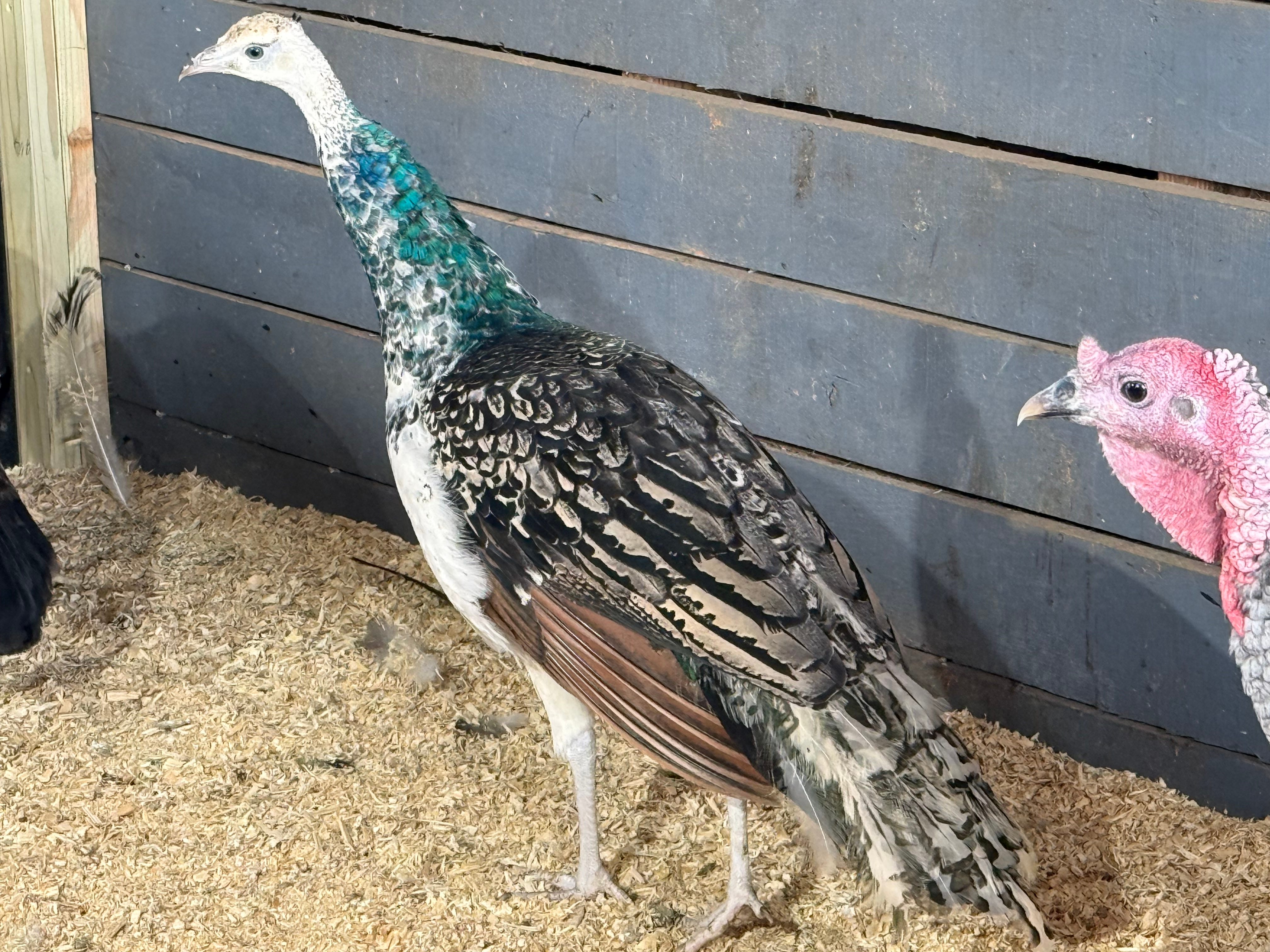
But we have a little problem; remember that little year peacock chick? Well, he and his siblings are growing up fast and have decided they never want to leave the beautiful, big barn. So, they sit in the rafters all day and night and crap down on the blacktop. Sigh.
Now, we already have three males wandering about, five females, and another, not so nice peacock penned. More peas, we don’t need.
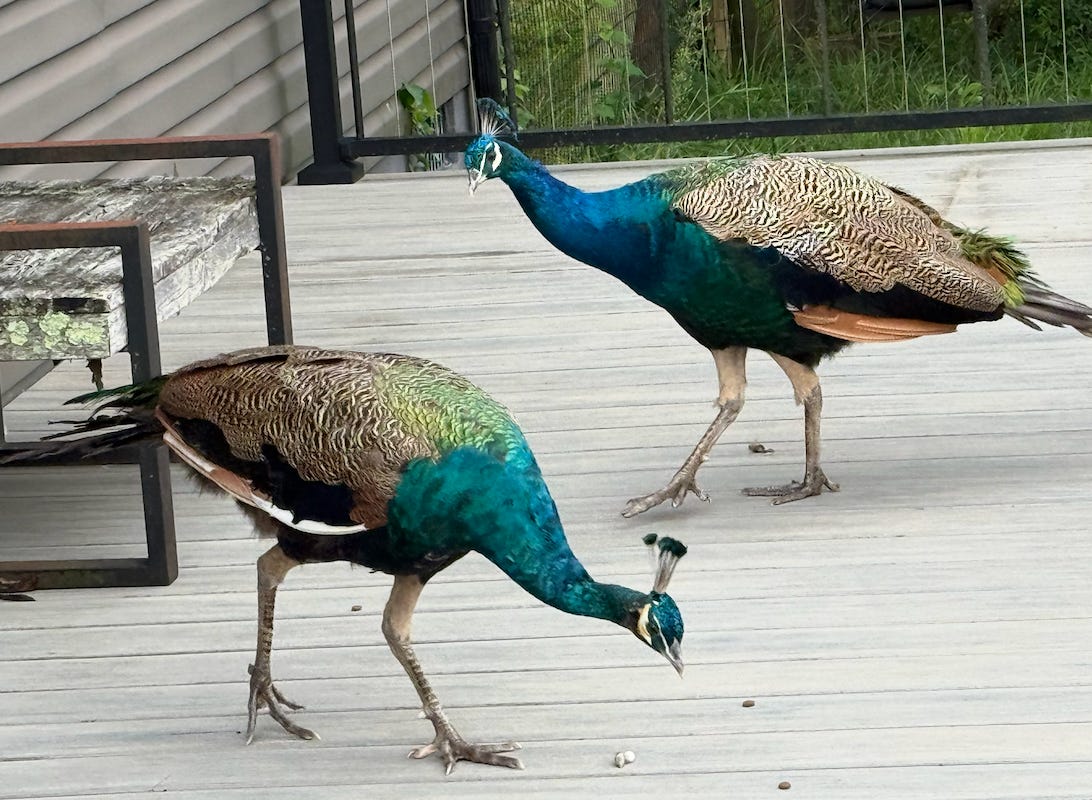
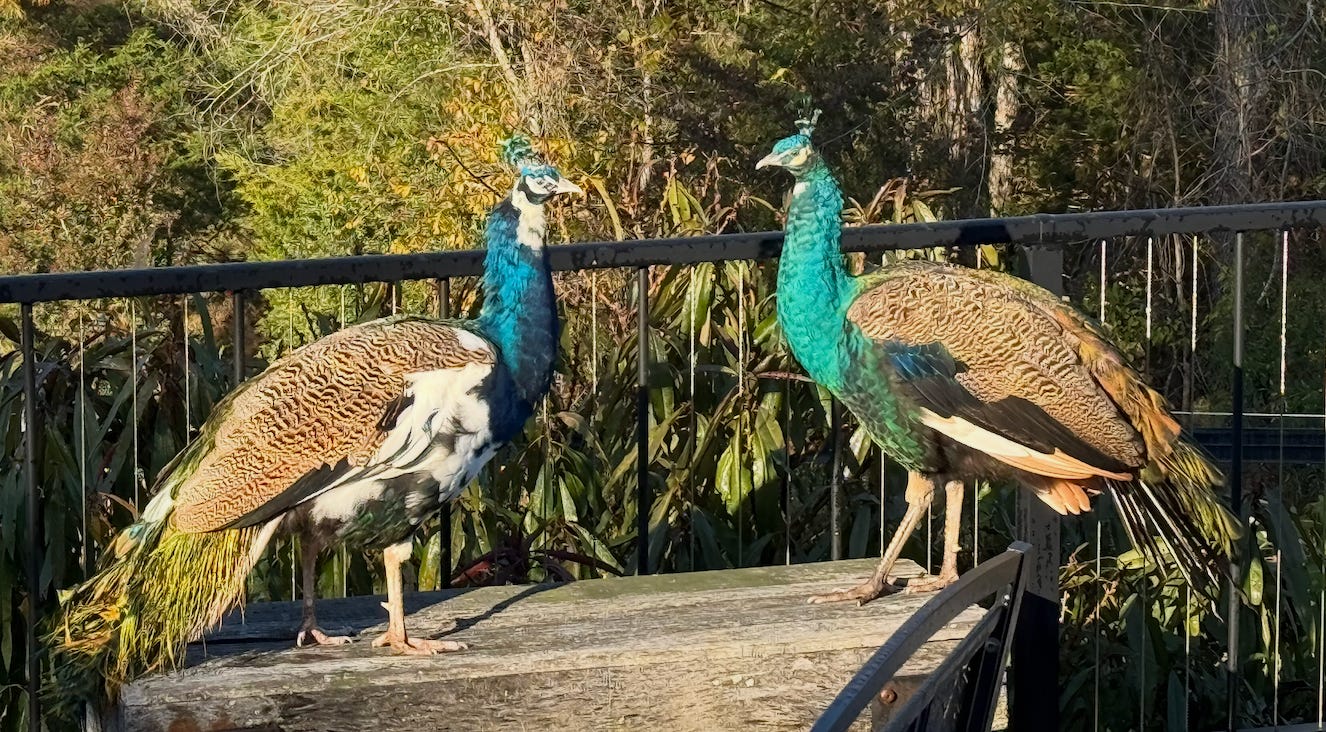
So, even though this beautiful boy, below, is one of my favorites - he doesn’t have his adult color yet, I may end up selling him. I certainly will be selling his two siblings. Bleh - I hate selling animals. It is the worst part of having a farm. But if we can stand the poop, waiting until spring is best for sales and gives these guys a better chance of surviving. Winter is hard on peas, and right now, these young birds have it made - hanging out in our wonderful barn…
Oh, and I did buy a heritage Blue Slate tom turkey for our two broad-breasted girls, who, somewhat surprisingly, are laying eggs - starting about a month ago. I started saving their eggs this week and will incubate them, although I am not convinced they are fertile, as none of us has witnessed any “action.” The tom is still a little young, as he is a 2026 spring baby.
So, our turkeys have been spared for this Thanksgiving and perhaps next year as well. I am looking forward to seeing what the F1 generation of a cross between modern commercial and heritage turkeys produces. My hope is to develop a more robust, naturally reproducing bird that retains some of the meat-producing characteristics of the commercial turkey.
I know that a lot of people don’t like to think about where their meat comes from, particularly on Thanksgiving. But in my opinion, there is something fundamentally more humane about raising and slaughtering your own livestock, or at the very least, knowing the farmer who raises your animals and the butcher who processes them.
Those of us who raise livestock understand that we have entered into a bargain of sorts with our animals. We provide them with food, shelter, protection, veterinary care and, hopefully, a good life. In return, some of those animals provide us with food. That bargain comes with a moral obligation to minimize suffering, including at the end of their lives.
Which brings me to a particularly disturbing story out of Florida this week.
On Monday, Florida authorities announced criminal charges against six individuals associated with an Orlando halal slaughterhouse following an investigation into allegations of extraordinary animal cruelty. I will spare you the details on Thanksgiving, but what was reportedly documented goes well beyond the question of whether an animal should be stunned before slaughter.
Perhaps equally disturbing is that allegations of animal abuse at this particular establishment date back several years.
I have long had concerns about religious exemptions to American humane slaughter laws, particularly as they relate to the commercial halal meat industry. I also believe we need to have a broader discussion about cultural attitudes toward livestock, the value placed on animal life, and whether religious accommodations are being adequately balanced against our obligations to prevent unnecessary suffering.
Although American law provides religious exemptions for both Jewish kosher and Islamic halal slaughter, there are substantial differences between the two traditions. Jewish ritual slaughter is entrusted to a specially trained and religiously authorized slaughterer, known as a shochet. The procedure is governed by centuries of codified religious law, with stringent requirements concerning the slaughterer’s competence, the condition of the knife and the precise method of slaughter. Failure to adhere to these requirements can render the meat non-kosher.
Islamic halal slaughter does not require comparable specialized training or professional qualifications. Standards and oversight vary considerably among halal certification authorities.
Although Islamic teachings prohibit unnecessary animal suffering, the absence of uniform professional qualifications and procedural safeguards raises legitimate animal welfare concerns, particularly when inexperienced individuals are permitted to slaughter large livestock.
These are important distinctions that should not be glossed over simply because both practices are accommodated under the same federal religious slaughter exemption.
Religious freedom is not a license to abuse animals.
And on this Thanksgiving, when so many Americans will sit down to a meal that includes an animal raised specifically for their consumption, perhaps it is worth reflecting not only on the food before us, but also on the life of the animal that provided it.
My gratitude extends beyond the dinner table, beyond the humans in my life, to include the animals that nourish us.
Now, on another topic, the horses. Blankets went on today - and I think the horses were glad of it. Our horses are “hot-blooded” - meaning that they were developed in the Iberian Peninsula (Portugal) and as such, don’t grow a huge winter coat.
Quartz is getting quite accomplished now, and we can’t wait to get him in the show ring come spring.


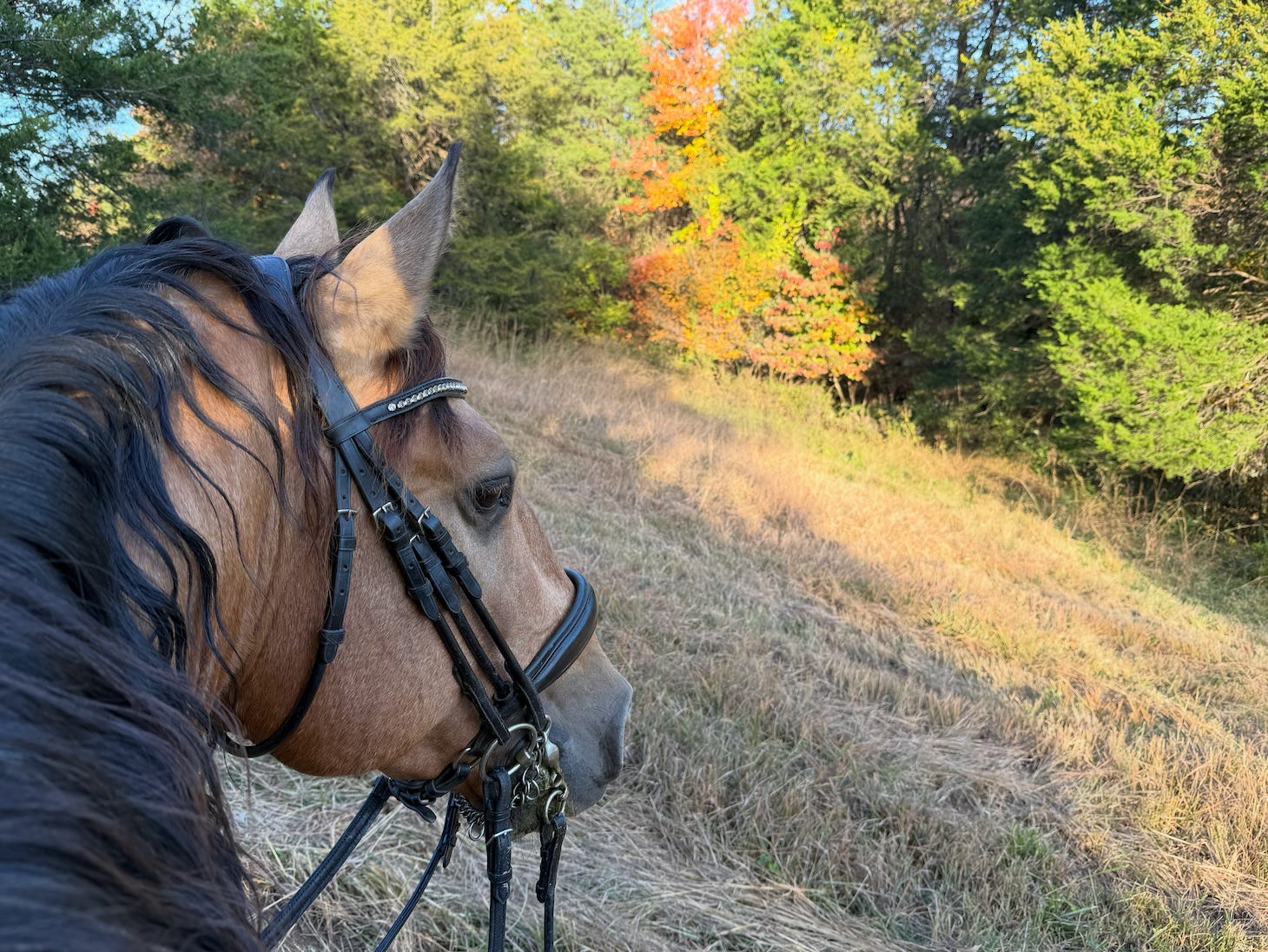
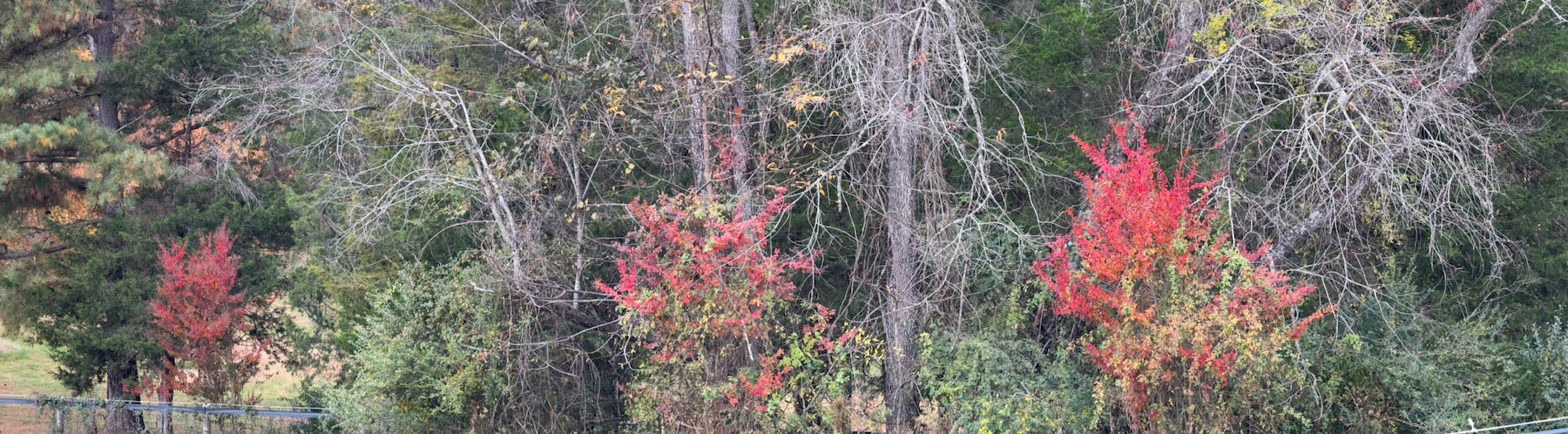
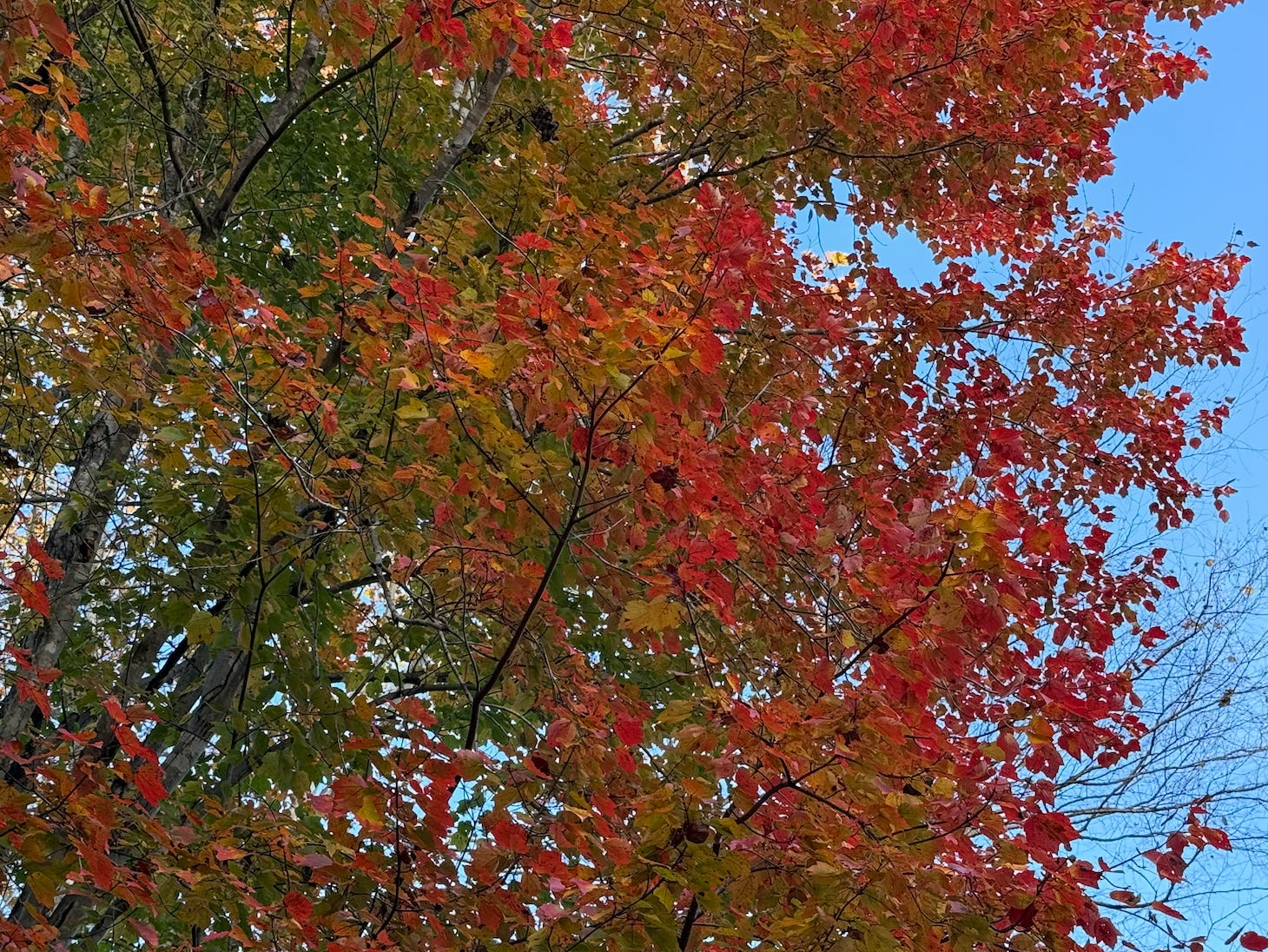
Jade and I have been taking long, ambling walks about the farm this month. I think we are both going to miss the temperate fall weather and the leaves. So many pretty leaves.
Finally, I managed to sweet-talk some friends into helping me move the citrus and other tender plants in for the winter.
It was a good year for the potted plants, mostly due to the summer rains, which seemed to happen two or three times a week. We never had that August-to-September drought that seems to roll around in Virginia. Hence, my inability to water regularly enough never caught up with me…
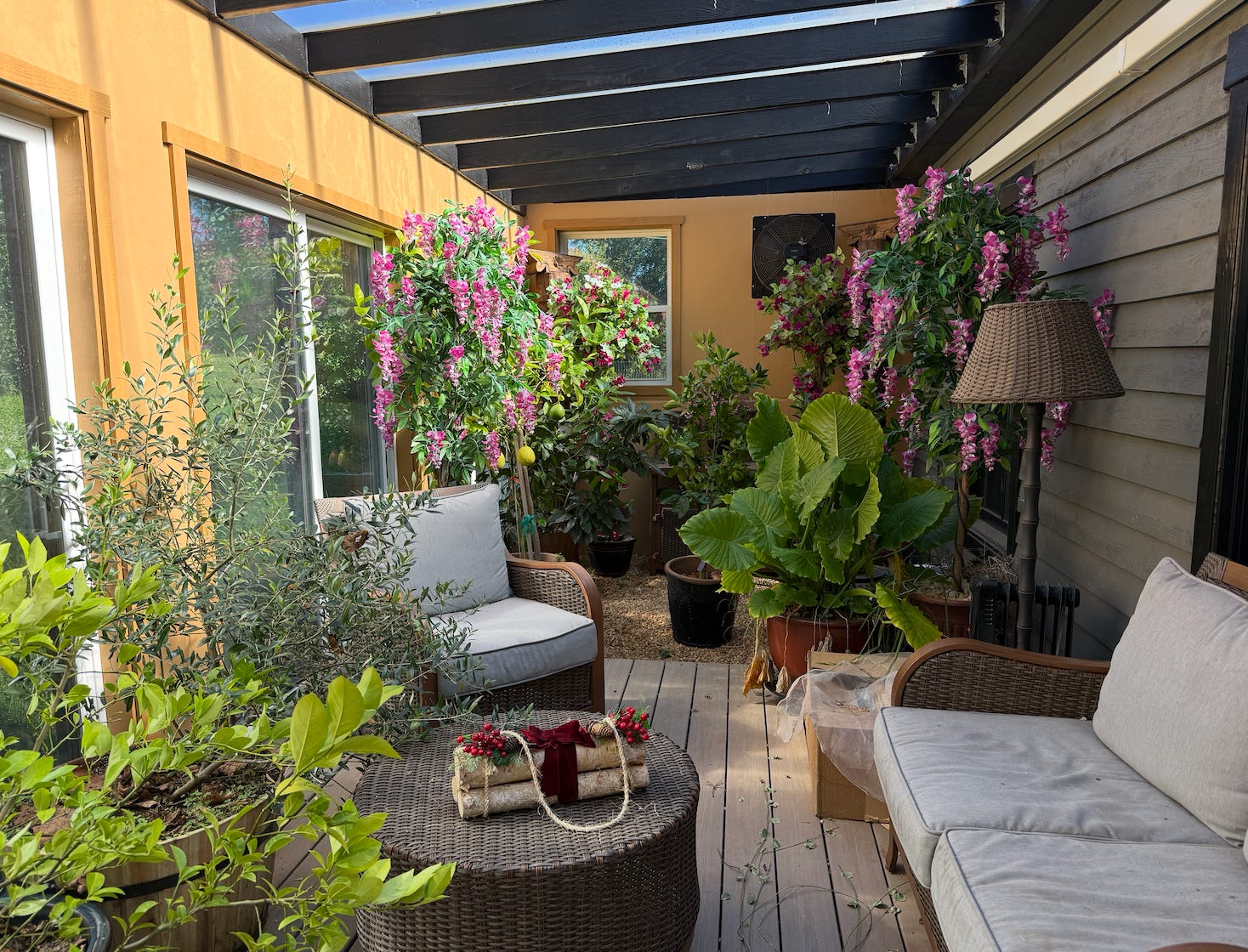
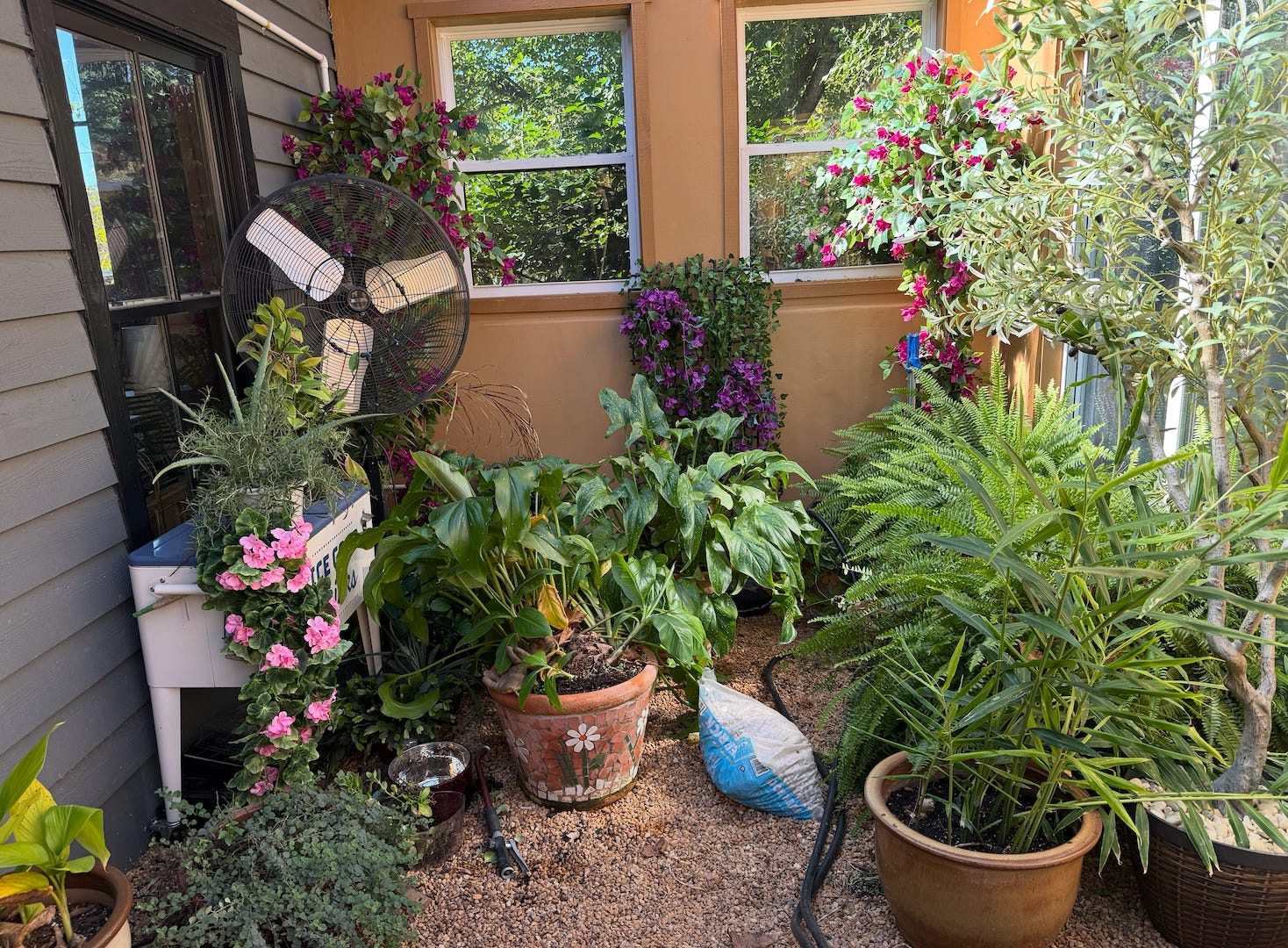
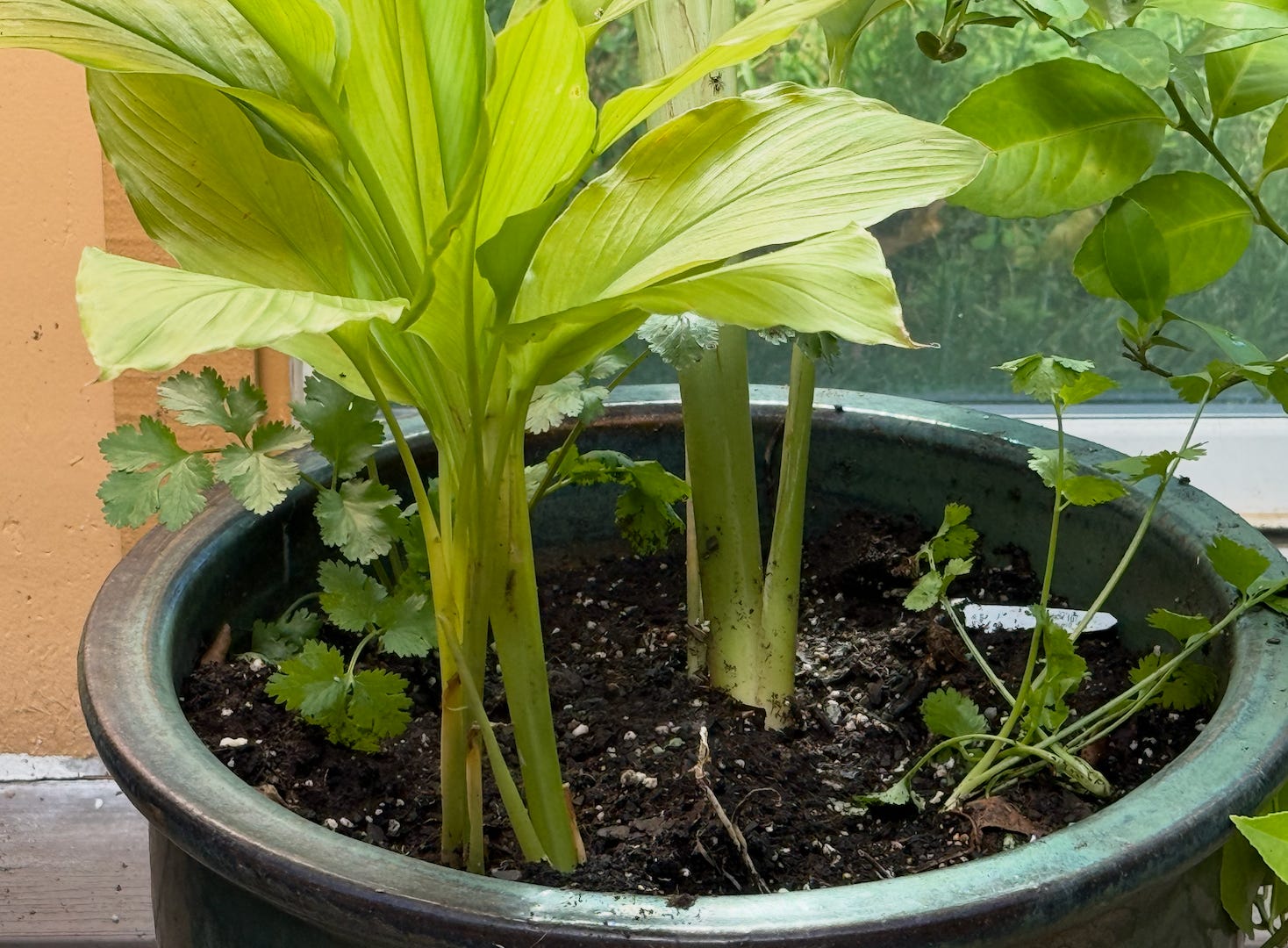
Young cilantro plants -
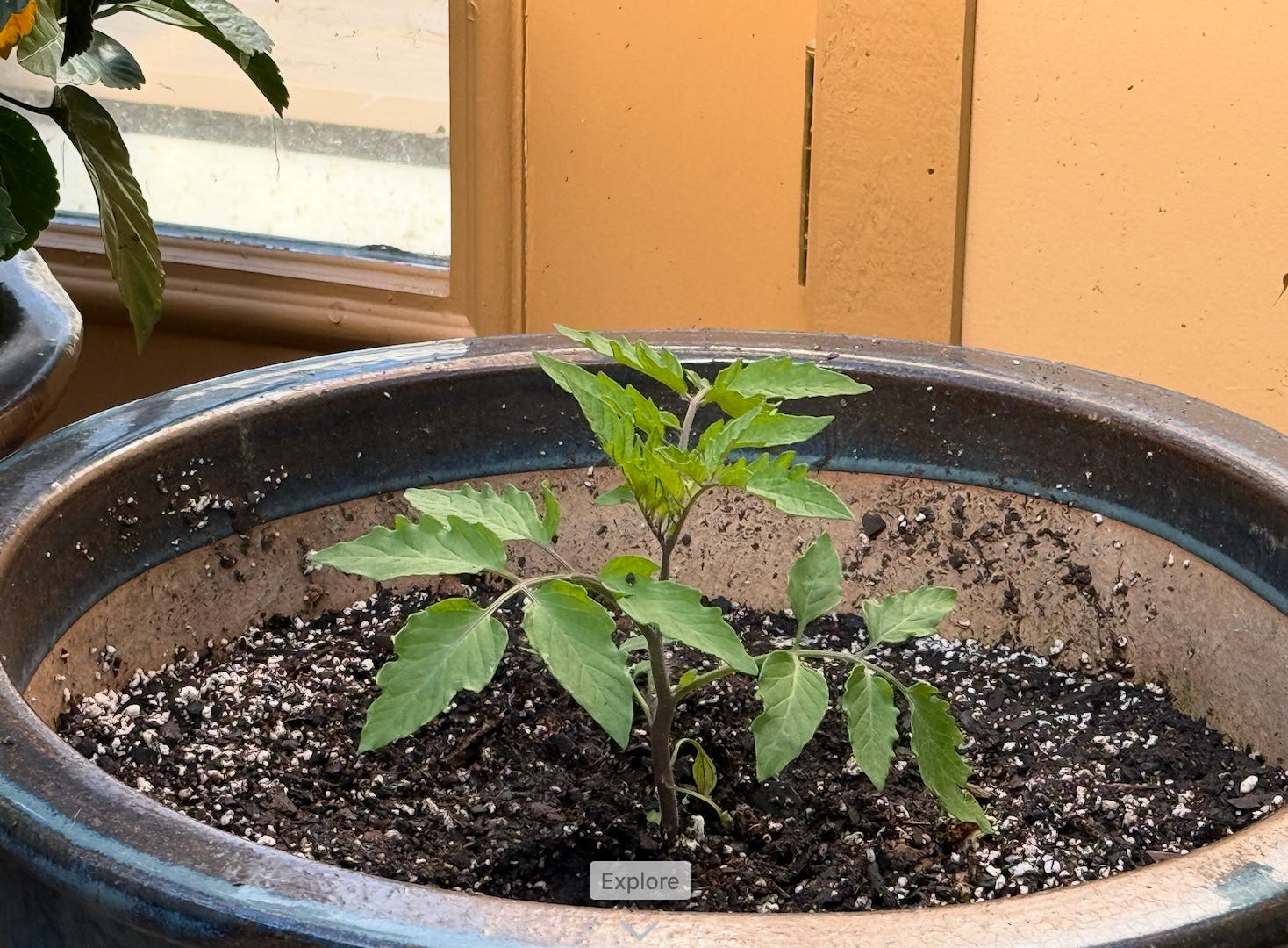
This self-seeded tomato, which I transplanted in October (when the photo was taken), has now reached two feet tall!
Finally, a note about the ethereal nature of the net. In writing this photo essay today, I searched high and low for photos of the Aussie girls as pups, shown below. Unfortunately, most of those photos are on an older computer. I did manage to pull up some photos from old Facebook posts.
How time flies. All these deeply personal memories would be fuzzy and distant by now, if not for the wonders of photography. Yet, with the exception of an old calendar from 2015, I have none of these photos saved as hard copies anywhere. For that matter, I have virtually no printed photos from the past two decades.
In my old laboratory records and communications, which I have been going through for a book, I noticed something rather disturbing. I have all the correspondence from the 1980s, but I no longer have much of that historical record from the early 1990s. Why? Because everyone began communicating by email. Those old email accounts, hard drives, etc., are long gone. Disappeared.
Cloud services are the worst. They fill up, the credit card on file expires, accounts lapse, and data can be lost. We rely on Amazon, Apple, Microsoft, and other cloud services to store our most valuable generational memories, news stories, and writings. What are we, as a culture, thinking?
This all reminded me that I really need to sort through my 40,000 photos, stored on various computers and in various photo libraries, winnow them down to two-hundred or so, get them printed on archival-quality paper, perhaps turn them into a photo book, and also save them on a dedicated drive.
My New Year’s resolution? Rectify the situation.
And to all of you thinking of doing the same, make a point of printing not just your photographs, but also the correspondence, personal writings, family stories, and other documents that tell the story of your life and the times in which you lived. Set up a storage system, whether it be a file cabinet or a few banker’s boxes, and organize and label these materials for future generations. Think of it as creating your own family’s historical archive.
So, this Thanksgiving, make a plan. Think about how to preserve your memories: your family’s roots, events, milestones, stories, and the faces of those you love, for your children, their children, and their children’s children. Because when you pass, no one can do this for you.
This is one way you can give back to your family, across generations and through time. Give them the opportunity to travel back in time and into your life, to see the world as you lived it. And trust me, one day, a long time from now, a child or a parent, related to you by blood but who never had the chance to meet you or anyone in your family alive today, will thank you.
And now, a glimpse into our personal canine photo album.
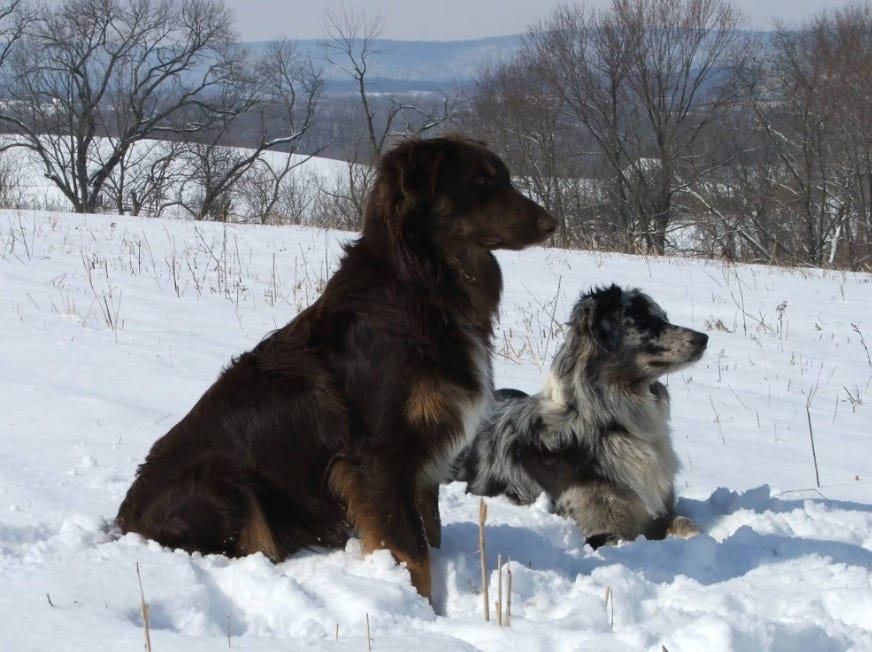
Luna and Rojo were Aussies that we owned starting around 2002. Luna was my heart dog - the dog that no others compare to. I did stock dog trials with her, which tested me in ways that helped me grow enormously as an animal trainer and helped me somewhat conquer my extreme shyness about performing in front of people.
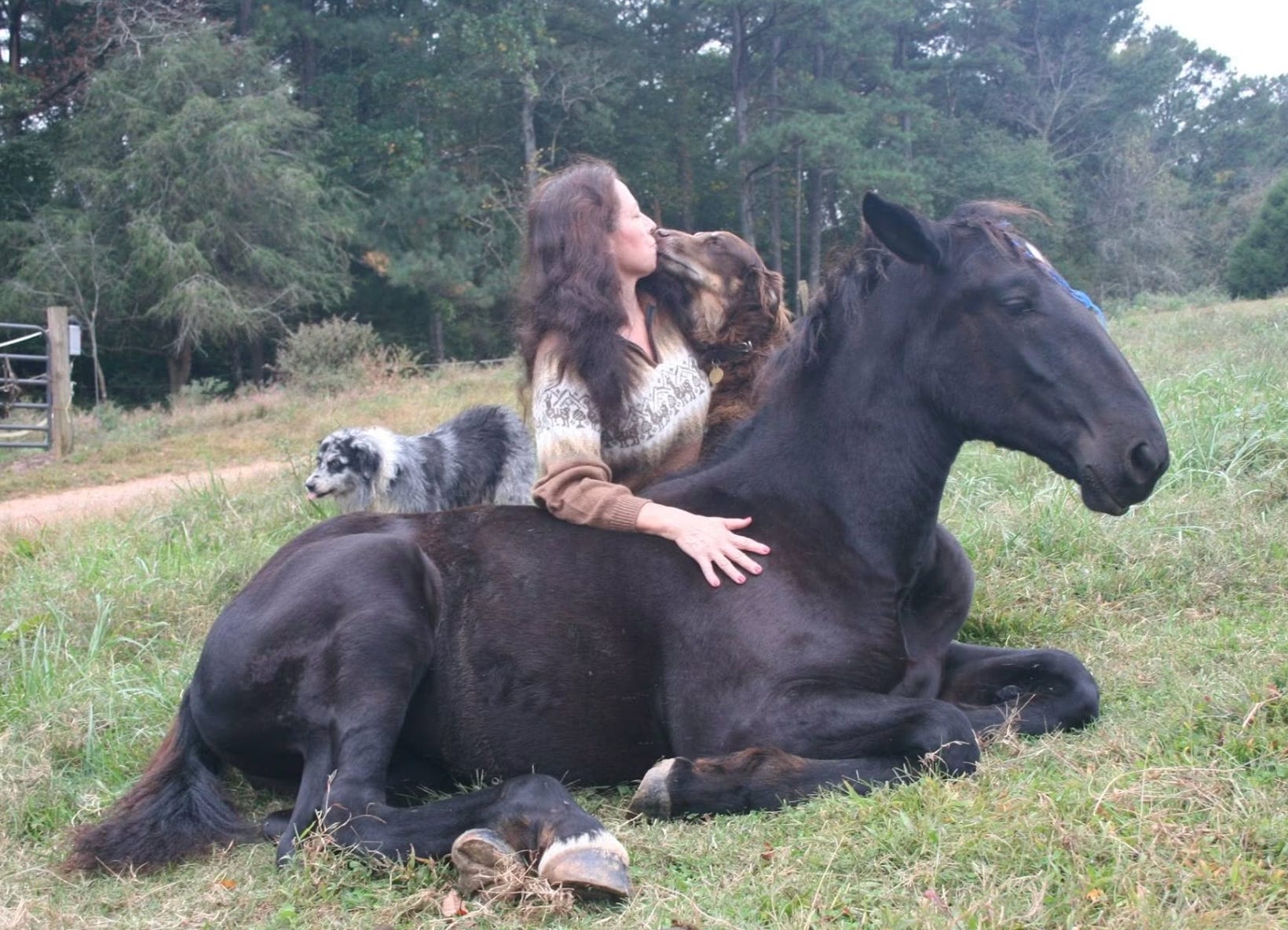
Below is Chakra, a Percheron foal that we had to bottle-feed. So, this huge girl was rather attached to us. I think here, she would have been about four months old.
Tragically, we ended up selling her - the best Percheron we ever bred and a week later, she ran into a fence and punctured a lung; she had to be put down.
It broke our hearts a bit.
But Luna, wonderful Luna, and Rojo had a litter of pups - and Aura was the one we kept.
At some point, Aura made it into one of those national calendars that they sell at all the big box stores.
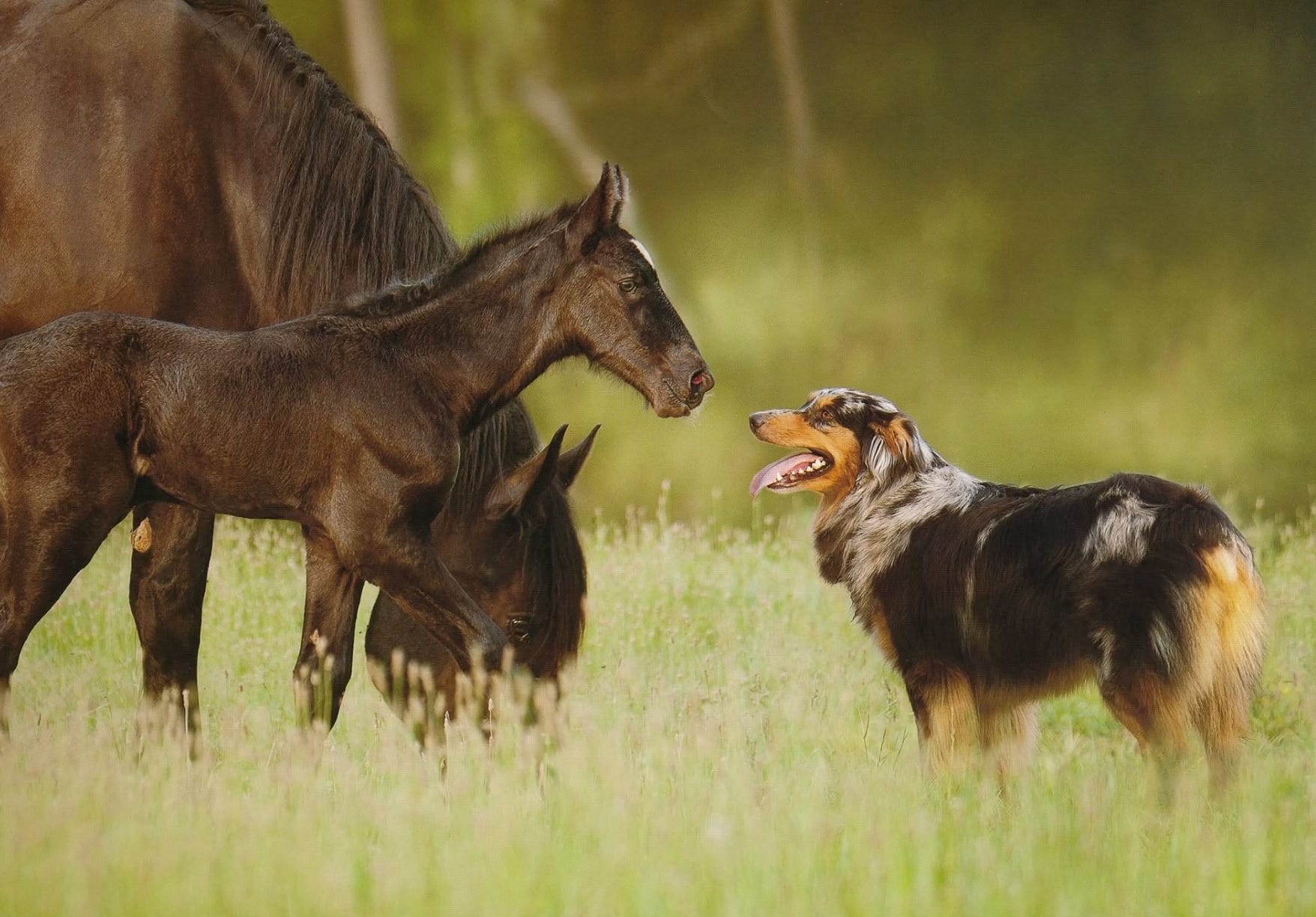
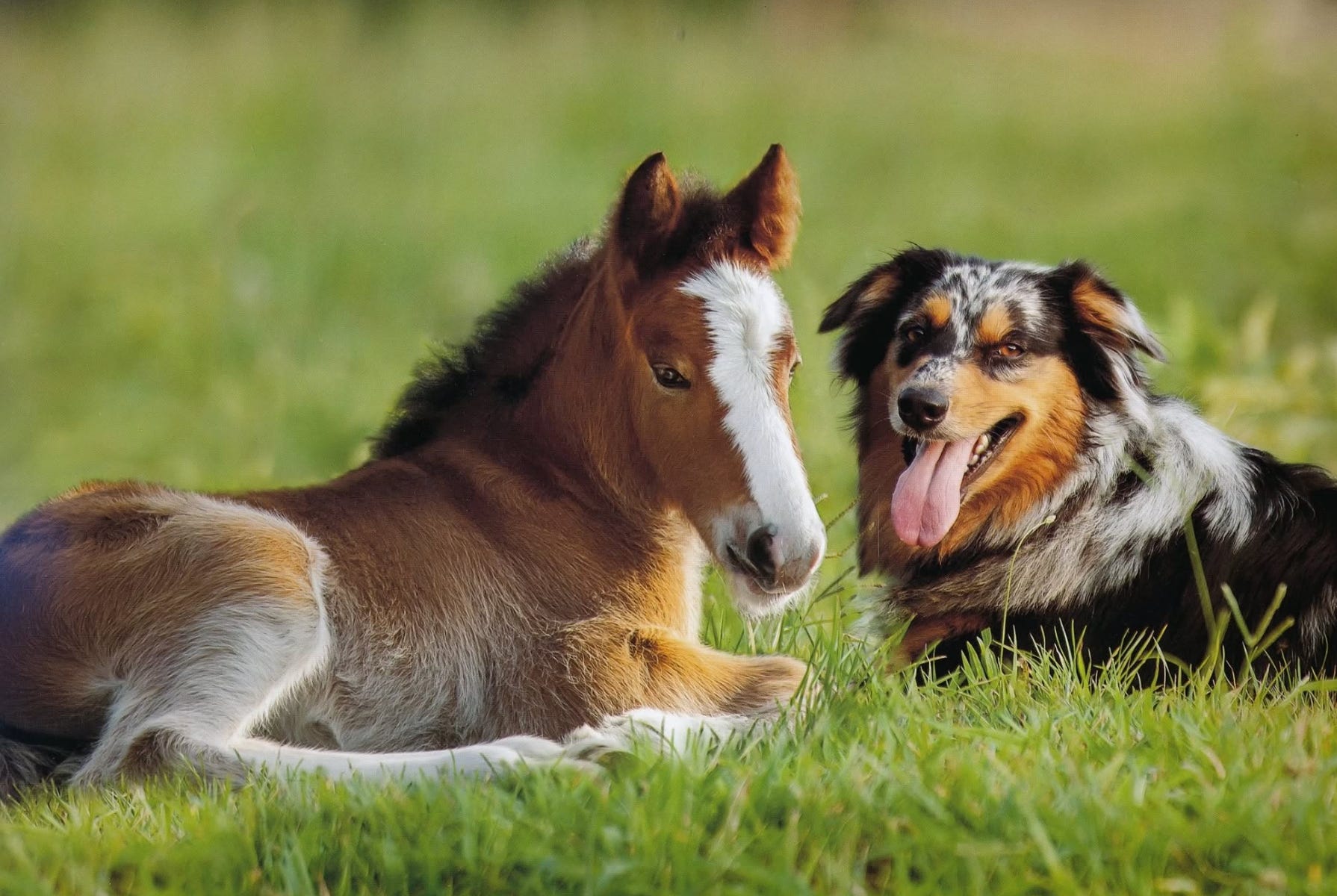
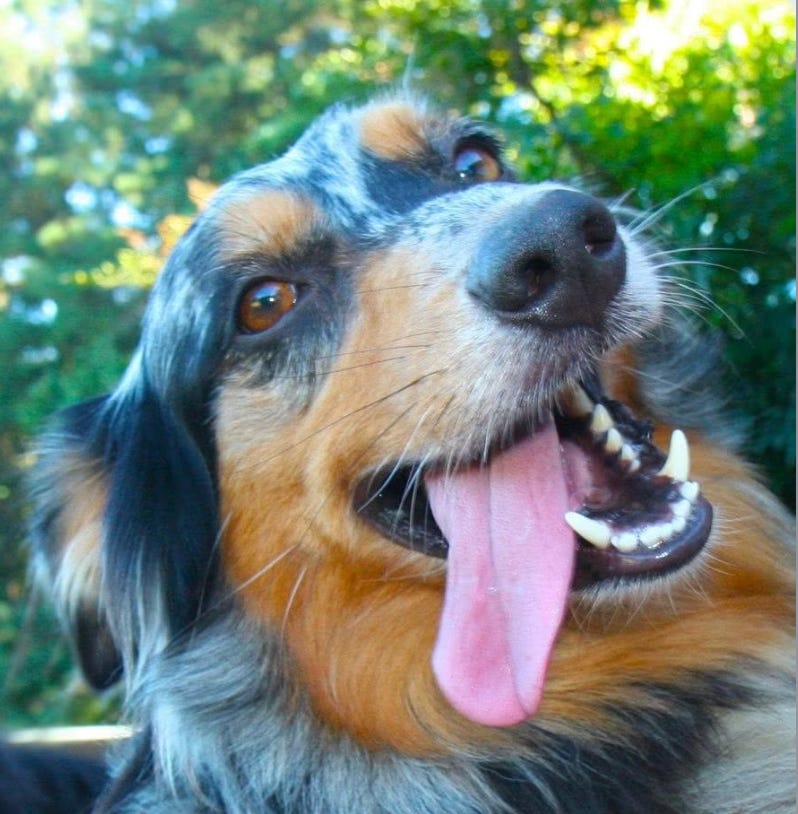
In 2016, Aura had a litter of pups, and we kept two girls: Nina and Bella.
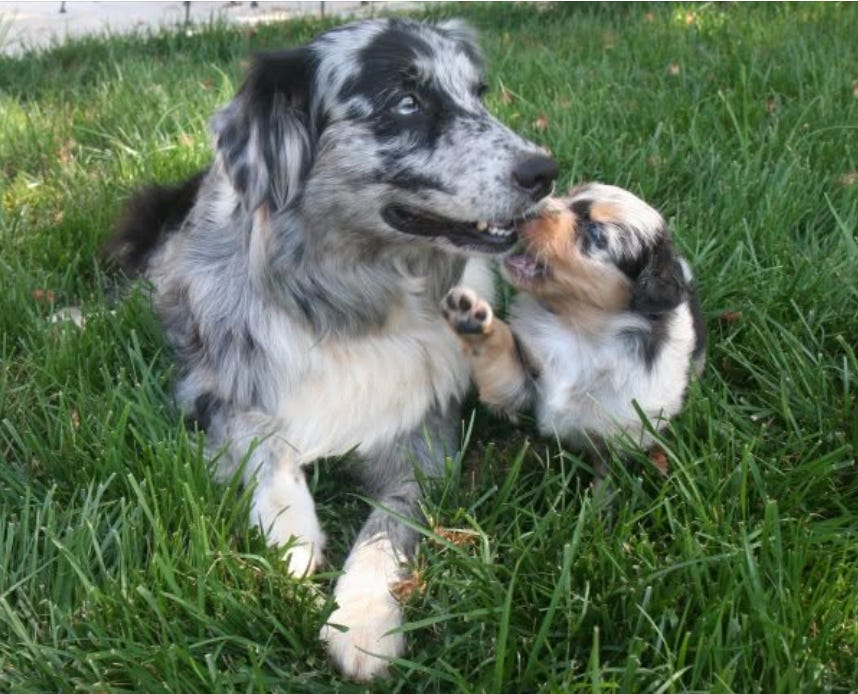
Pictured below is Nina with her grandmother, Luna. Luna loved her grandpups as if they were her own.
Luna passed away in 2016. I believe she was about 14 years old when this photo was taken, earlier that year.
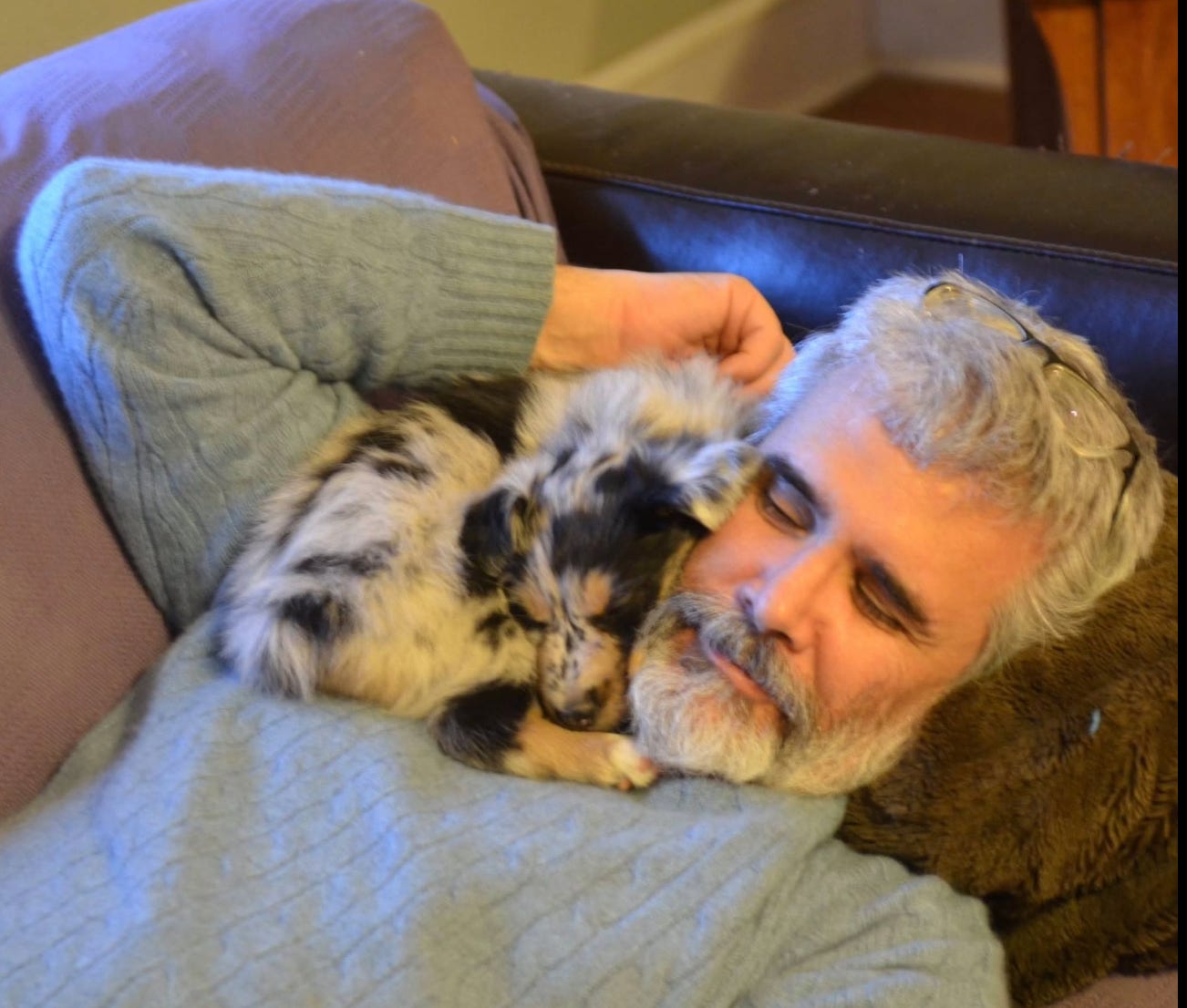
Robert and Nina
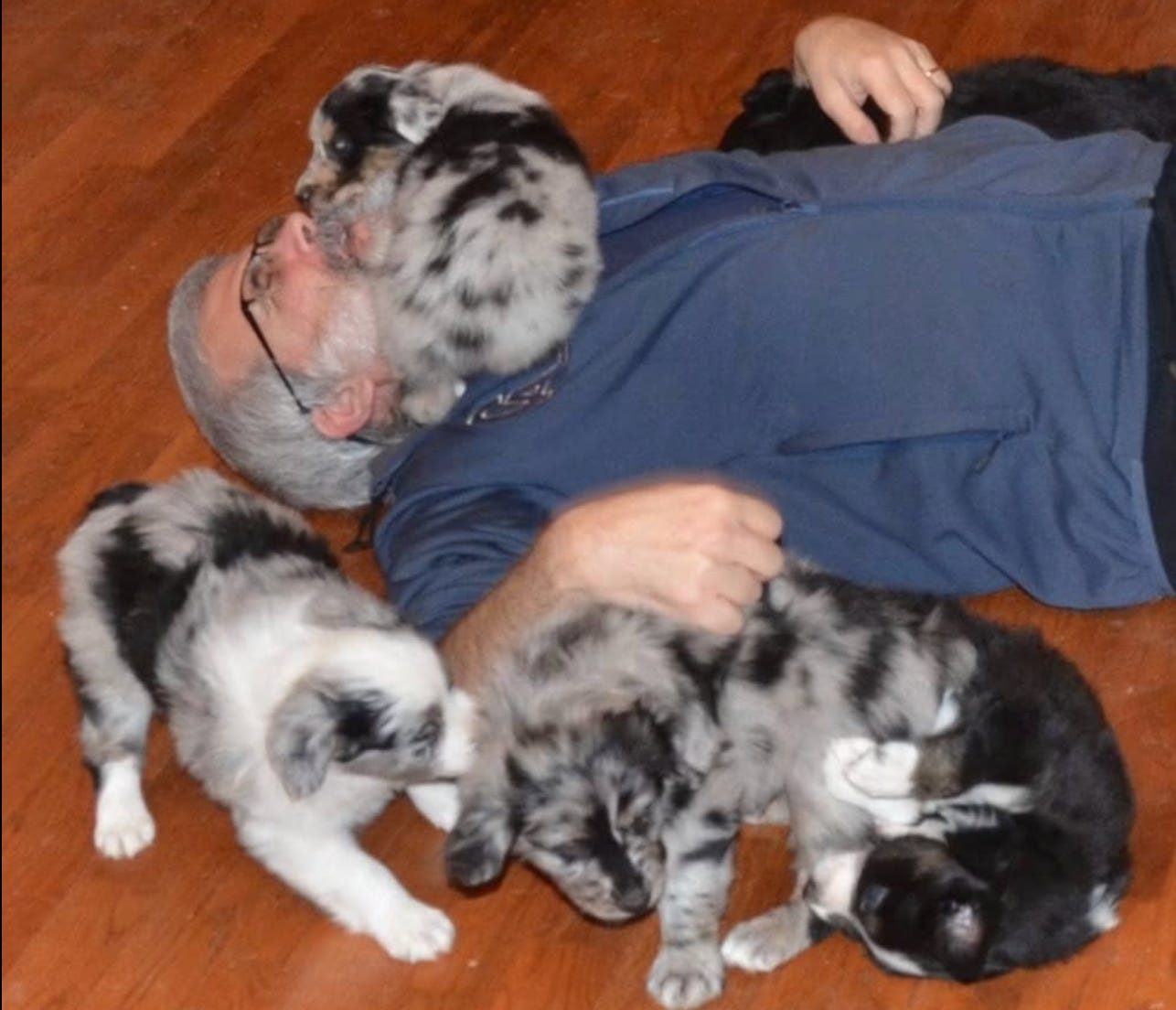
Robert and the pups
Aura and her pups.
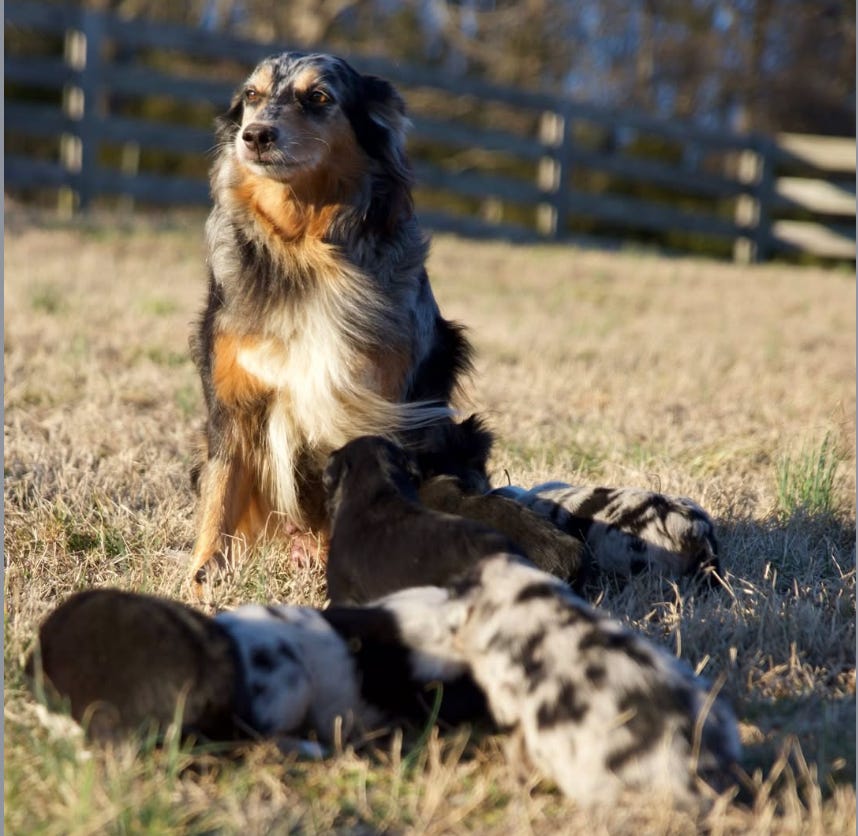
Oso’s father and our girl’s brother, whom we sold as a pup, went on to do great things in the performance arena.
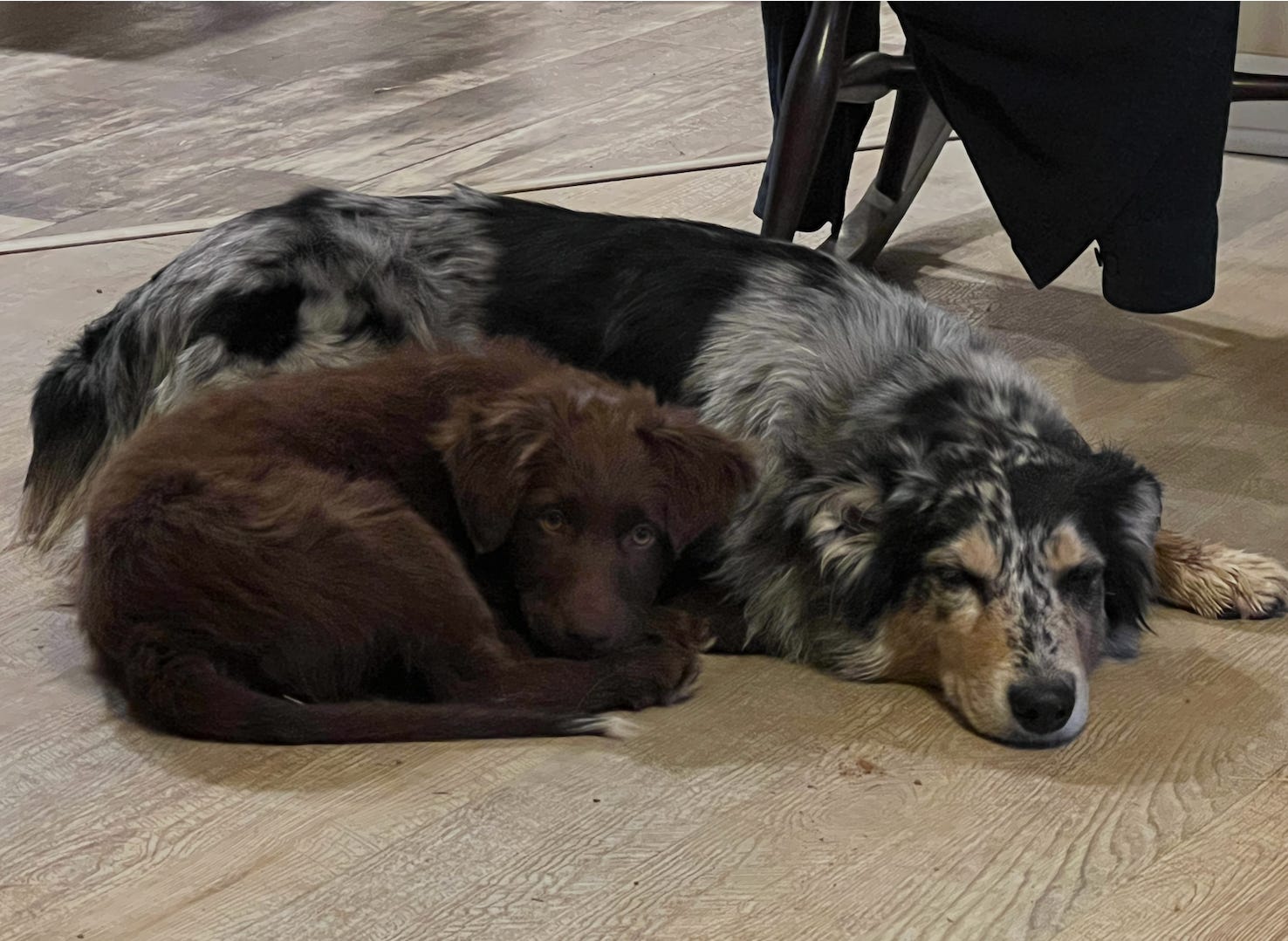
Here is Nina and her nephew, Oso - whom we acquired in 2022 or thereabouts.
Aura and her daughter, Nina, looked so much alike!
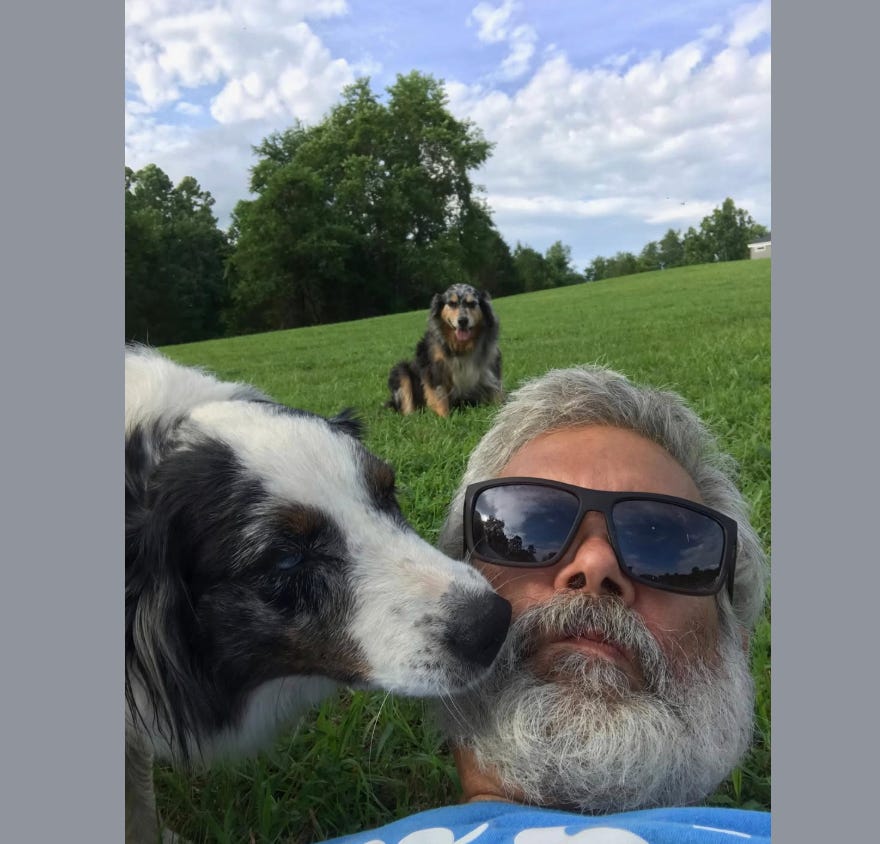
Robert, Aura and her daughter, Bella - all grown up.
Bella and Robert have always had a special relationship.
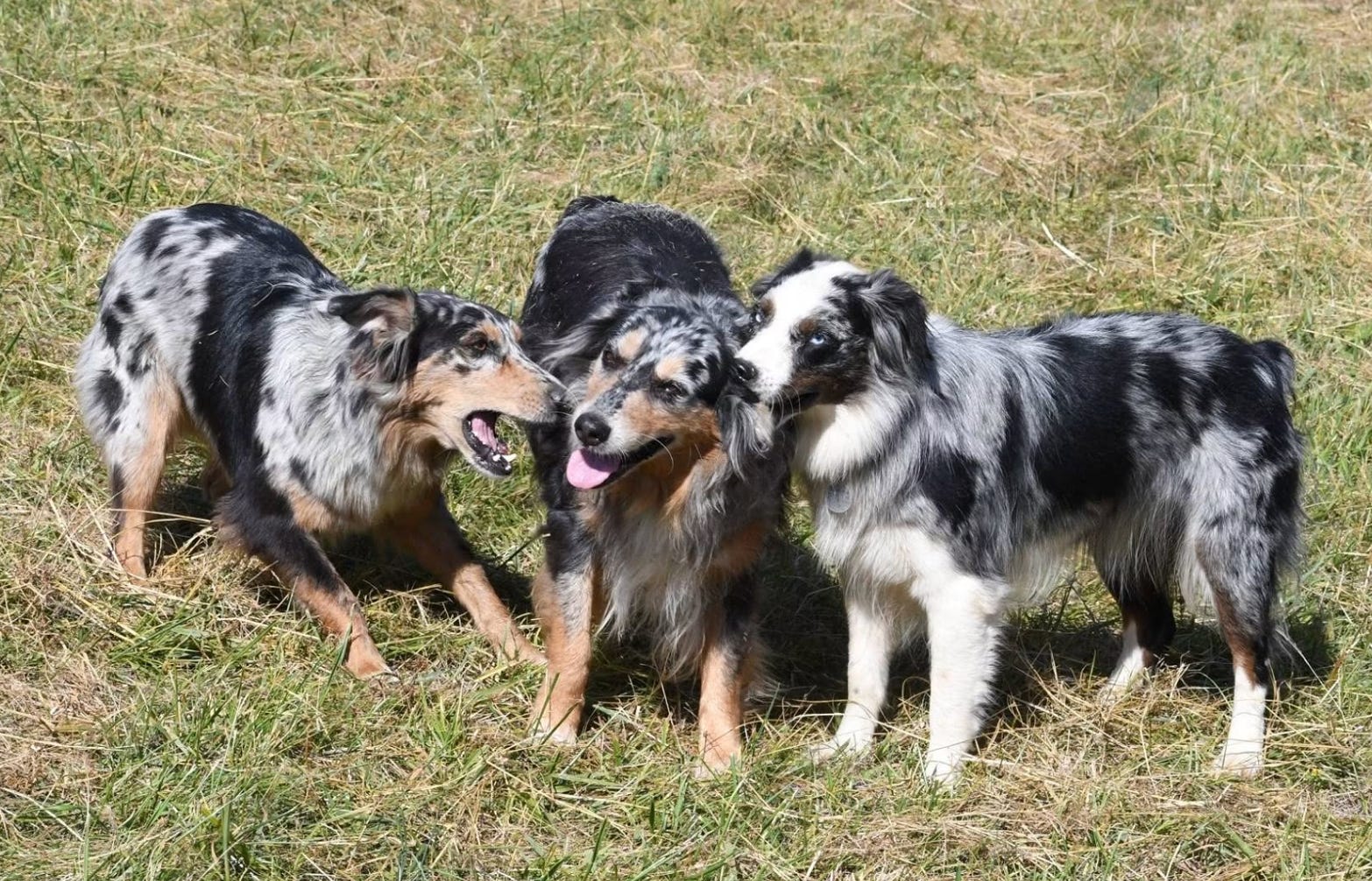
Aura and her daughters, Nina and Bella.
Aura passed of old age around 2024.
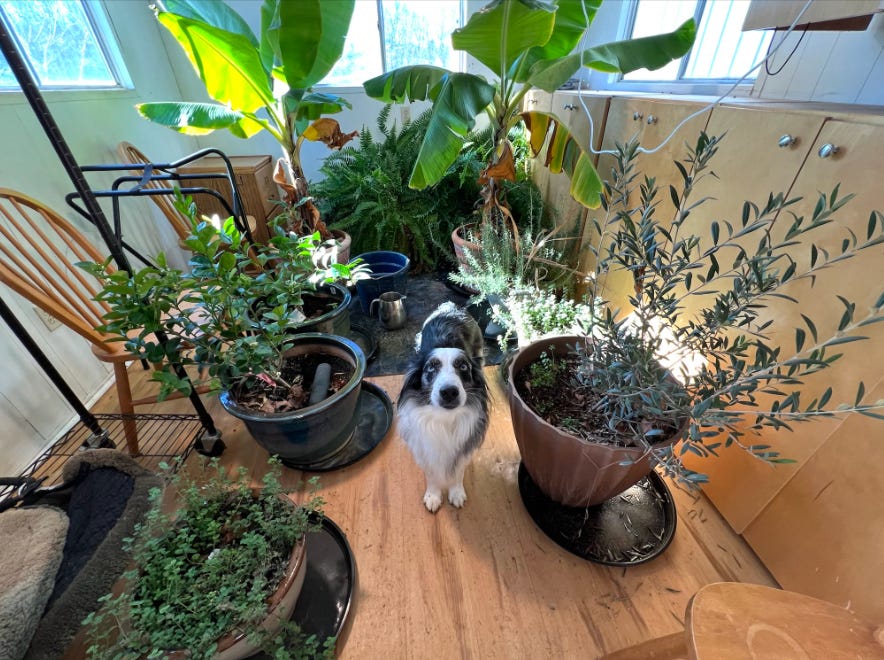
Bella - with my potted plants, brought in for the winter, before we had the greenhouse.
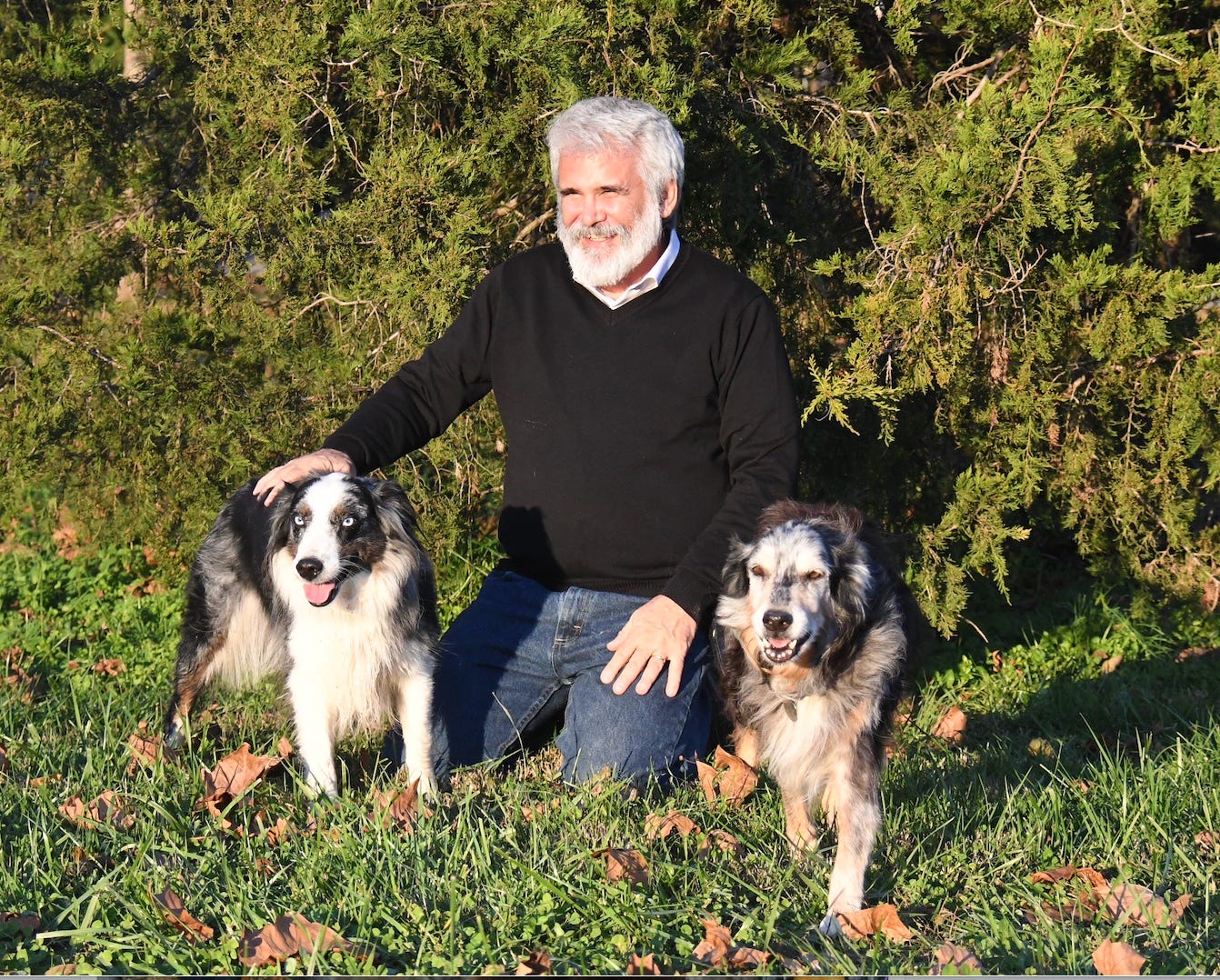
Robert, Bella, and Bella’s mother - Aura.
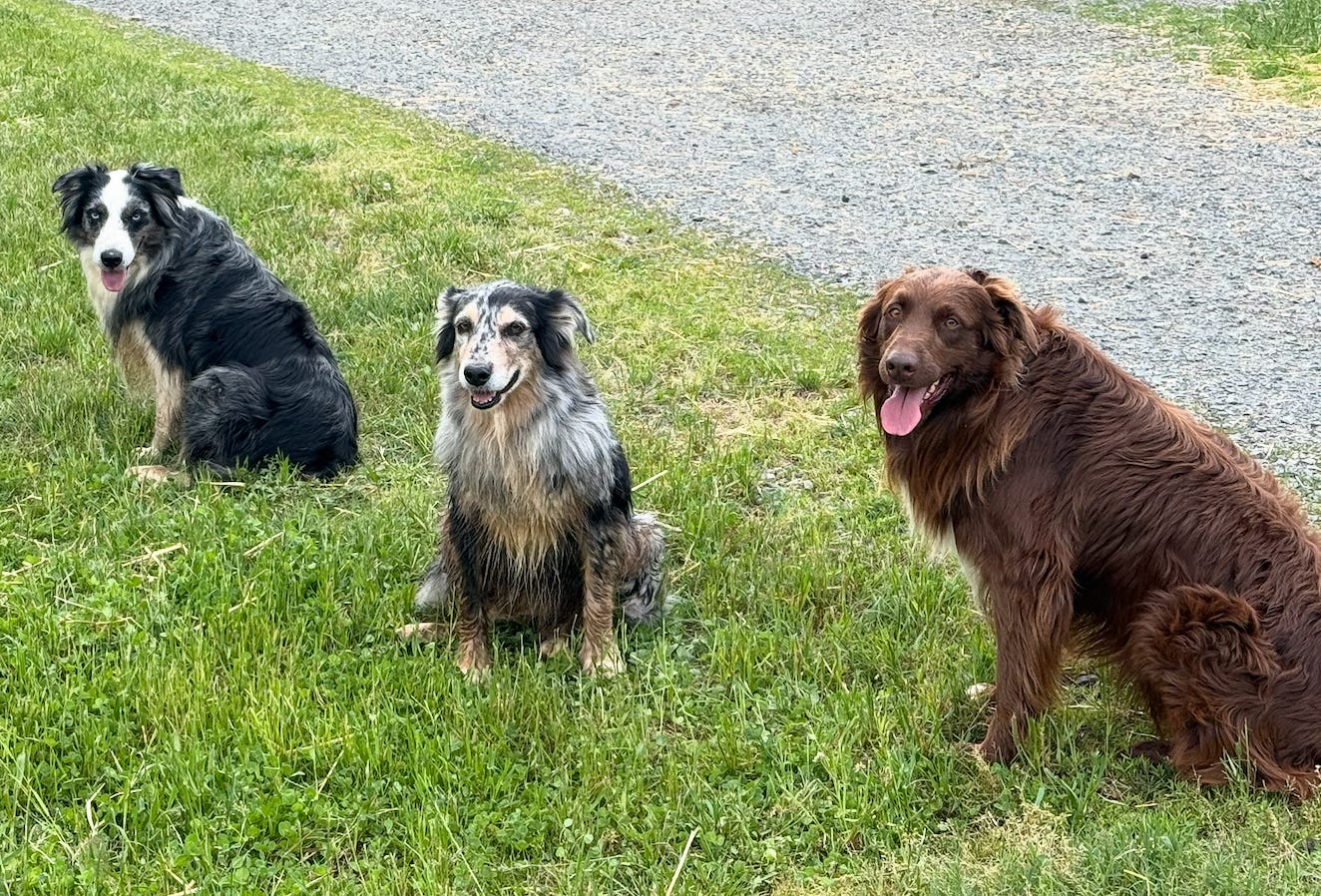
How the trio looks on most days now. A bit scruffy - as the sisters start to approach old age, wet from swimming in the river, and enjoying their lives to the fullest.
Thank you for indulging me as I shared a few memories of our beloved Aussies.
Have a wonderful Thanksgiving, folks. Robert and I read your comments, have come to think of many of you as friends, and are grateful for all of you.
A Thanksgiving request from Robert and me.
Our Substack has become much more than a place to publish articles. Over the years, it has become a community where we share ideas, exchange knowledge, discuss the issues of our times, and occasionally share glimpses into our personal lives.
We work hard to keep much of our writing freely available to everyone. But independent journalism, research, and writing take an enormous amount of time and resources. It is our paid subscribers who make this possible.
If you enjoy our work, whether it be our investigative articles, scientific and political commentary, homesteading essays, or even the occasional ramblings about life on the farm, please consider becoming a paid subscriber.
And to those of you who already support our work, know that you have our heartfelt gratitude. You make it possible for us to continue writing independently, on our own terms.
Happy Thanksgiving, and thank you for being part of our lives.
HAPPY THANKSGIVING everyone. Despite the incredible injustices everywhere, we still have a lot to be thankful for. Celebrate the best that you can today.
Wishing you a greatful Thanksgiving, as you reflect on all of the ways God has blessed you!!