

Jessica’s essay below is a gentle reminder that the greatest things in life are rarely the most efficient. A machine can organize our calendars, answer our questions, and even mimic our words, but it cannot replace the quiet satisfaction of learning a skill with our own hands, the wisdom gained through struggle, or the love that grows from caring for another person. In our pursuit of convenience, we risk surrendering the very experiences that shape character, purpose, and joy. Humanity was never meant to be optimized like a factory floor.
We were made to wonder, to create, to fail, to forgive, and to grow. The challenge before us is not whether we can automate more of our lives, but whether we will still choose the beautifully imperfect path of being fully human. Whether society, or at least a portion of it, can recognize that greater ambition and more money to create more automation do not necessarily equate to a fulfilling or happy life.
Jessica’s essay is ultimately a hopeful one. It reminds us that while technology may become ever more capable, our humanity remains a choice, one renewed every day in the simple acts of thinking for ourselves, making something with our own hands, sharing a meal, tending a garden, comforting a friend, and choosing presence over convenience.
JGM
Audio Version:
Has Automation Stolen What It Means to Be Human?
By Jessica Rose
I want to begin this article by reminding everyone reading it of the old parable of the man fishing alone on a beach. It goes something like this, more or less.
There’s a man fishing alone on a beach with a single, simple fishing pole. Another man walks up to him and asks him why he doesn’t buy a boat to fish because then, he could catch more fish. The fisherman responds by saying: “Then what?” The passer-by then says in a matter-of-fact way: “Well then, you could buy an even bigger boat and catch even more fish with the money from selling all of that fish!”. The fisherman responds by saying: “Then what?” The passer-by confounded that the fisherman does not seem to understand what he is telling him balks: “Then you could retire and hire others to do the fishing for you!” The fisherman responds by saying: “Then what?” Even more confounded, the passer-by says: “Then you could have more time to spend doing what you love!”
The fisherman looks at him. And waits. For understanding. The passer-by then comprehends perhaps for the first time in his life that the long and often exploitative path to simplicity is pointless. The fisherman, even with all of the money in the world would be doing precisely what he already was doing.
Here’s a more “well-known” version if you like.
One day, a wealthy businessman (or investment banker, in some tellings) was vacationing in a small coastal village in Mexico. He watched as a lone fisherman rowed his little boat back to shore with just a few large fish. The businessman complimented the fisherman on the quality of the catch and asked,
“How long did it take you to catch those?”
“Only a little while,” the fisherman replied.
“Why didn’t you stay out longer and catch more?” the businessman asked.
“I caught enough for my family’s needs today,” the fisherman said.
The businessman pressed on:
“But what do you do with the rest of your time?”
The fisherman smiled and answered, “I sleep late, fish a little, play with my children, take siestas with my wife, stroll into the village each evening where I sip wine and play guitar with my amigos. I have a full and busy life.
”The businessman scoffed. “I’m a Harvard MBA – I can help you. You should spend more time fishing. With the extra money, buy a bigger boat. With the bigger boat, catch even more fish, then buy several boats and build a fleet. Cut out the middleman, sell directly to processors, open your own cannery. Control production, processing, and distribution. You’d eventually move to the city, expand to other locations, run a growing enterprise.”
The fisherman listened patiently, then asked, “And how long would all that take?”
“Fifteen, maybe twenty years,” the businessman replied.
“And then what?” the fisherman asked.
The businessman laughed. “That’s the best part! When the time is right, you announce an IPO, sell your company stock to the public, make millions – become very rich!”
“Millions… and then what?” the fisherman repeated.
“Then,” the businessman said triumphantly, “you could retire! Move to a small coastal village where you could sleep late, fish a little, play with your kids, take siestas with your wife, stroll to the village in the evenings to sip wine and play guitar with your friends.”
The fisherman looked at him quietly for a moment, then smiled and said, “But that’s exactly what I’m already doing.”
The businessman stood there, speechless, as the simple truth sank in: the fisherman was already living the very life the ambitious man dreamed of achieving – after decades of grinding pursuit…
I was walking today and knew that I had to write up some of the thoughts I had about automation being the key to the demise of what it means to be human.
To be connected. To work hard. To truly earn. To truly learn.
It got me thinking about one of the first examples of automation that was actually a really neat idea: the water wheel. Water wheels and similar devices appeared as early as the 1st century BC (or possibly earlier in rudimentary forms) among the Greeks and Romans, used for grinding grain. These harnessed flowing water to drive machinery continuously without constant human input, representing early power automation in industry. Similar water-powered trip-hammers existed in ancient China over 2,000 years ago.
The most commonly cited earliest true example of automated control – a self-regulating feedback mechanism – is the improved water clock (clepsydra – comes from Ancient Greek meaning to pipette…) invented by the Greek engineer Ctesibius around 270–250 BC in Ptolemaic Egypt (Alexandria)…
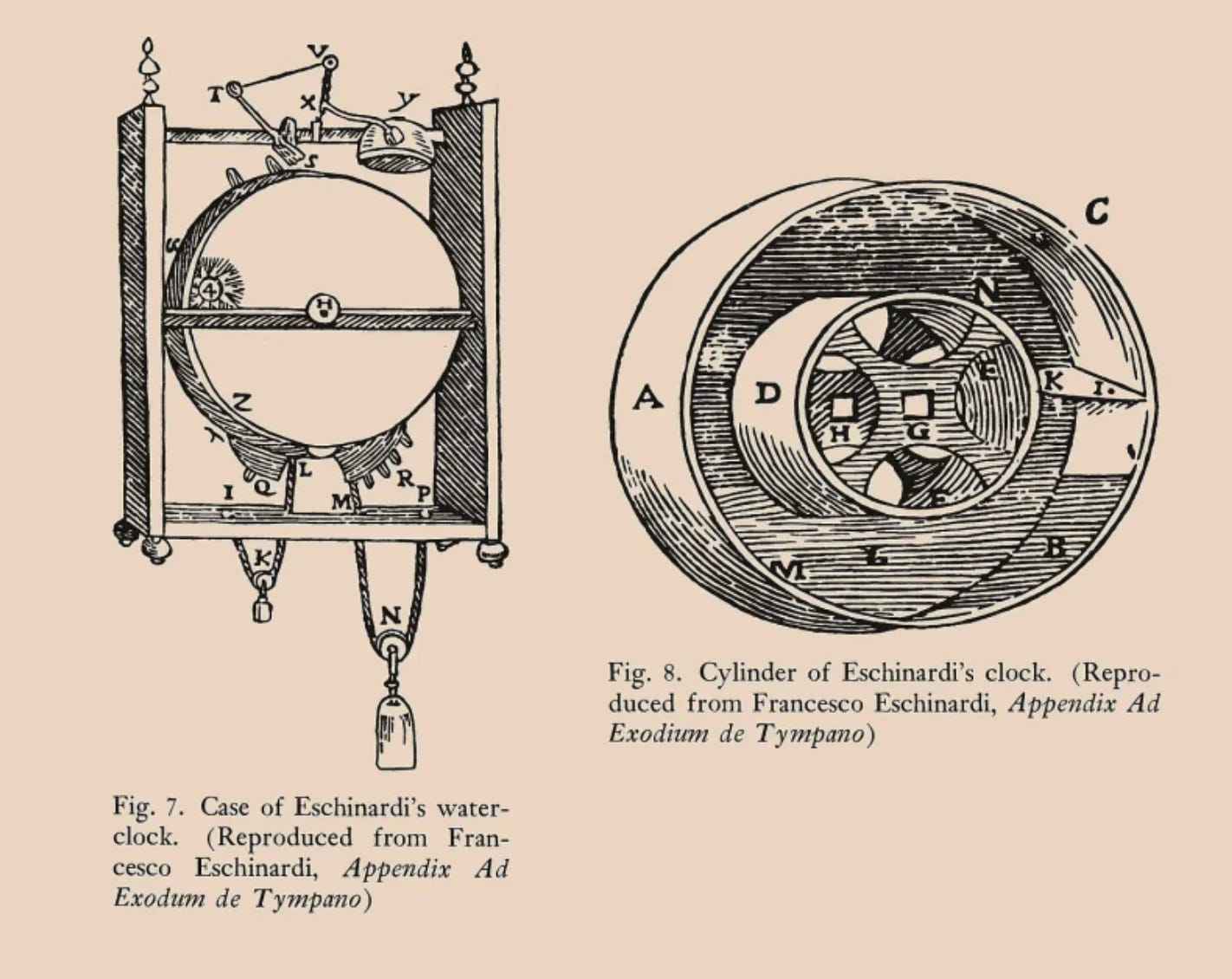
Automatic devices can be divided into subdivisions based on function. Some devices help and are “non-invasive” in terms of imposing on the human part of humanity. Some devices are quite “invasive” in this same way.
Many – if not all – devices made in the last century fall into the latter subdivision. I think of these as inflictions upon humanity masquerading as “convenience”, as opposed to devices that make our human lives better. Many examples exist and play a daily role in our human lives today.
(Some examples)
Single-serve pod coffee makers: Ah yes! The promise of instant coffee without that brewing hassle! Only problem is what you actually get is mediocre taste, generation massive plastic waste, ingestion of microplastics and likely forever chemicals, high cost per cup relative to traditional methods, and most importantly, the removal of the simple ritual of making coffee that many find relaxing or social.
Smartphones: How many times a day does someone on one of these dumb devices almost bump into you? How many people do you see on a daily basis who are literally in phone-land – more akin to zombies – than engaged with nature or others? With constant notifications and app ecosystems, they automate communication, information access, navigation, and entertainment into one device for seamless convenience! The only catch is that they contribute to addiction, reduced attention spans, social isolation, anxiety, poorer sleep, and less presence in real-life and social interactions.
Robotic vacuum cleaners: Why vacuum or sweep when you can off-shore that duty to a robot! They handle floor cleaning autonomously so you “don’t have to”. But guess what? They require more setup/maintenance than promised, miss spots, create noise/annoyance, and don’t replace the satisfaction or light exercise of manual vacuuming, perhaps even as a family activity, eliminating yet another social interaction. But hey, you get yet another gadget to charge and repair.
Microwave ovens: Ah yes. Where would we all be without being able to speed up heating of forever plastic/endocrine disrupting nightmares that are TV dinners? But hey, isn’t that the ultimate convenience? Guess again! This encouragement of ingesting ultra-processed ready meals to save you time also reduces home cooking skills/pleasure, alter social family meal rituals, and shift food prep away from shared or mindful preparation toward solitary, rushed eating. Not very social or human-like behavior.
And now we get to the real winners in our list.
Smart home devices and always-on assistants: Oh man, where do I start with these? Automation of climate control, lighting, music, shopping lists, etc., for effortless living! Why wouldn’t you want to not take the time to get up off your ass and turn the thermostat yourself when a computer can do it for you! I am being sarcastic, of course, because all of these so-called smart devices foster dependency, privacy erosion (constant listening), increased screen time fragmentation, and a subtle loss of basic self-reliance or analog comforts. Loss of self-reliance. Isolation. Loss of social structure.
Automatic/self-checkout kiosks and app-based ordering: Welcome to the new world where all you have to be able to do is use your index finger to have all of your shopping needs fulfilled! No more actually having to walk to the grocery store or market! No more talking to other people at the market! No need to go slow! Ingest! Ingest! Ingest! Consume! Consume! Consume! They’re so awesome, aren’t they? Speeding up transactions by removing cashiers and human interaction. Stupid humans: so error-prone and slow! But hey, guess what? These apps and self-checkouts also increase frustration (computers never make mistakes – wait, is the printer not printing again?), reduce jobs/social contact, and turn routine errands into impersonal, glitch-prone experiences that feel more alienating, than efficient.
I could go on… but these examples are sufficient for now.
Notice how in every single example, there is an inherent de-socialization component baked in. Hmm. Is this to ensure that our lives are made more convenient, or is this something more insidious? Having said that, I want to stress how deeply disturbed I am every single day that these things are being demanded by humans.
No demand; no supply.
Why are we demanding these things? Do people really and truly believe that these idiotic things make their lives easier/better? Where does the line get drawn between convenience and relinquishing self-sovereignty? Does this line get drawn? Have we not opted into slavery?
Why are supply chains even a thing? The only supply chain that any human used to need is the line from their own goat to fresh cheese.
This automation of human work, to me, poses a real existential crisis that is the root reason why we are “where we are” today as a society.
Giving up these wonderful ritualistic habits that translate to being able to eat that day, or being with our loved ones, or sleeping well after a day of hard work, has led us nowhere but isolated and dependent.
I want to end this short pokey piece on a positive and inspiring note. I would love it if everyone would watch Maynard J. Keenan’s 4-part mini-movie series called: The Art of Work. It speaks deeply to what I am writing about here…
I simply hope that this article is shared profusely and that perhaps, even one person will wake up from their digital slumber as a result of reading it.
Notice that I didn’t even touch on AI or human-replacing robots: the ultimate automation enforcing a permanent vacation from human-ation.
Be like the man alone fishing on the shore and never succumb to the lie that the act of DOING is something that needs to be sped up or removed from the human equation.
DOING is not far from BEING.
Love and light.
The essay above was lightly abbreviated. The full essay was was first published on Jessica’s Substack and then republished at the Brownstone Institute. Republished here via a creative commons license.
To Conclude, by JGM:
The older I get, the more convinced I am that the richest parts of life cannot be outsourced. They are found in the work of our own hands and hearts: domestic chores, tending a garden, caring for animals, sharing a meal with family, comforting a friend, reading a good book, or simply sitting quietly with our thoughts.
These moments are not interruptions to life; they are our lives. Technology can save us time, but it cannot tell us how to spend it well. In the end, our humanity is not defined by what we produce, but by what we nurture, what we create, and the love we invest in the people and places entrusted to our care.
The more our world races toward automation, the more precious these simple acts become. They remind us that being human has never been about doing everything faster. It has always been about living our lives as to the fullest.
Love this! My favorite time is spent in the barn, milking the cow, in the garden planting and harvesting and in the kitchen preparing the harvest. That’s family time with my husband and mother and sometimes my children and grandchild. More people should discover the joy of self sufficiency!
The answer to your first question: heck YES! I can name even more daily examples of the de-humanizing going on with increasing automation. Just for starters, I have often been rebuked when trying to help someone who dropped a full grocery bag, or struggles to open a heavy door, or is experiencing a flat tire. They look at me with only a suspicious stare before they say NO.
It’s an awful change from 30 years ago. Grieve worthy actually.