


I have been in Brussels at the European Union to deliver the keynote speech for the “Make Europe Healthy Again” organization and conference, hosted by the Patriots for Europe. This movement is growing throughout Europe - almost every seat in the auditorium was filled!
Below is the full video that Jill made of the speech (the angle is off - but it was the best she could do), followed by the text:
The MAHA and MEHA Movements- A View from Across the Atlantic
For members of the press or others unfamiliar with my qualifications, I am a US Licensed Physician, and a well-qualified medical scientist trained at the University of California, the Salk Institute and both Northwestern and Harvard Medical Schools. I have experience and expertise in vaccine development, immunology, biochemistry, molecular biology, clinical research, and regulatory affairs. I was the original inventor of manufacturing, delivering and using synthetic mRNA as a drug including for vaccination purposes. I currently serve as a medical advisor to MAHA action, and as co-chairperson to the CDC Advisory Committee on Immunization Practices.
My primary purpose is to brief this meeting about “Make America Healthy Again” initiatives including the ongoing reforms at the US Centers for Disease Control and Prevention, and in particular the CDC Advisory Committee on Immunization Practices. I am not here to advise or even to pretend to fully understand European politics or the “Make Europe Healthy Again” movement. My hope is that the progress being made by the grass roots bipartisan MAHA movement in the United States can provide examples which may be useful to the MEHA movement in Europe.
The opinions expressed here are my own, and do not necessarily represent those of the US Government, the US Centers for Disease Control and Prevention, or the CDC Advisory Committee on Immunization Practices.
Medical Ethics and the Principle of Subsidiarity
I hope and trust that you share my strong support for both individual informed consent (as defined in the Nuremberg accords and Helsinki Agreement) as well as the Principle of Subsidiarity enshrined in Article 5(3) of the Treaty on European Union (TEU).
In my opinion, in medical treatment matters, the patient is the lowest effective level of governance, for, if we are not allowed to govern our own bodies and what medical treatments we accept, then there is no personal freedom and there can be no proportionality.
The cornerstone of this ethical structure is the principles of patient Informed Consent, which were widely violated during COVID. In a free society, citizens must have the freedom to decide what medical procedures they wish to accept for themselves and their children. They must be provided complete, transparent access to the full spectrum of information concerning risks and benefits of a procedure, including vaccination. And they must be allowed to choose whether to accept a medical procedure – whether or not it is experimental- without being subjected to coercion, compulsion, or enticement. The interests of the collective society should not outweigh the rights of the individual to bodily autonomy.
The principle of subsidiarity was introduced in the Maastricht Treaty of 1992 and reinforced in the 2009 Lisbon Treaty to balance EU integration with national sovereignty due to ongoing bureaucratic “competence creep,” which is very similar to the “mission creep” seen with the CDC and many other US Federal agencies. More about that later.
As a reminder, this brilliant foundational component of the Treaty on European Unity in article 5, section 3 states that;
“Under the principle of subsidiarity, in areas which do not fall within its exclusive competence, the Union shall act only if and in so far as the objectives of the proposed action cannot be sufficiently achieved by the Member States, either at central level or at regional and local level, but can rather, by reason of the scale or effects of the proposed action, be better achieved at Union level.
The institutions of the Union shall apply the principle of subsidiarity as laid down in the Protocol on the application of the principles of subsidiarity and proportionality. National Parliaments ensure effective implementation of the principle of subsidiarity through the procedure set out in that Protocol.”
In my opinion, the current European Council appears to be routinely violating this central European treaty principle. The bizarrely counterproductive decisions centrally made and then forced on EU member states and citizens in the name of “public health” during COVID illustrate the consequences of permitting routine violations to Article 5 Section 3.
The toll in economic and social damage, sickness, death and loss of faith and legitimacy for public health and the healing professions is profound, and cannot be easily repaired.
Consequent to this heavy handed mismanagement, we now face a similar crisis of confidence in public health and medical caregiver legitimacy in the United States. The big difference in the political climate and affairs between the US and the European Union is the outcome of the recent leadership elections. You have Ursula von der Leyen and we have Donald Trump- and his close ally Robert F. Kennedy Junior.
President Trump and Secretary Kennedy share a deep, longstanding commitment to the overall health of the citizens that they serve, and in particular to America’s children. With all of the rhetoric and weaponized hate currently deployed against both of these transformational leaders, what is often overlooked is that they are unified in their commitment to a better future for our children.
It is long past time for this political, social, and governmental commitment. As President Trump has often pointed out, data demonstrate that if nothing is done, America’s children will live shorter, sicker lives than those of their parents.
The MAHA Commission
To understand and fix this situation, President Trump has launched an all-of-government response, in some ways similar to what he did for COVID with Operation Warp Speed, and has put Secretary Kennedy in charge of this new initiative. It is called the MAHA Commission.
The Presidential Make America Healthy Again (MAHA) Commission was established by Executive Order on February 13, 2025, shortly after Robert F. Kennedy Jr.’s confirmation as HHS Secretary. Chaired by Kennedy, the 14-member commission includes leaders from HHS, USDA, EPA, NIH, FDA, and other agencies. Its mission focuses on addressing the childhood chronic disease epidemic (e.g., obesity, diabetes, autism, mental health disorders) by identifying root causes like poor diet, environmental toxins, overmedicalization, and inactivity.
There has never been such a candid and comprehensive response to a public health crisis in the history of the United States.
So far, the commission has released two key reports:
The first was essentially a threat assessment. On May 22, 2025, the “Make Our Children Healthy Again: Assessment” was published – a 72-page analysis identifying a wide range of factors driving the decline in children’s health such as ultra-processed foods, chemical exposures, chronic stress, and unnecessary medications. It outlined 10 initial research initiatives and called for federal restructuring.
The second was an action plan. On September 9, 2025: “Make Our Children Healthy Again: Strategy” was published. This is a comprehensive plan of action with over 120 initiatives, emphasizing executive actions to promote nutrition, reduce toxins, enhance transparency, and realign incentives. To guide implementation of these actions, it proposed creating a new agency within the US HHS called the Administration for a Healthy America (AHA).
The strategy organizes initiatives into four pillars: advancing science, realigning incentives, raising awareness, and fostering collaboration. Many aspects of this plan may appear quite radical to Europeans. I will briefly summarize the key Pillars of this plan;
In the area of Nutrition & Food Policy-
· Revamp Dietary Guidelines for Americans to prioritize whole foods, limit ultra-processed items, and ban synthetic dyes.
· Remove restrictions on whole milk in schools; encourage states to waive SNAP benefits for sugary drinks/candy.
· Define/label ultra-processed foods; improve school/military meal standards (e.g., more fresh produce).
· Promote low-carb/whole-food diets in guidelines and education.
For the Environmental Toxins & Chemicals Pillar-
· Phase out petroleum-based synthetic food dyes; review GRAS status (generally recognized as safe) for food additives.
· Assess/reduce pesticide exposure (e.g., glyphosate, atrazine) via EPA reviews, though these policies have been softened from initial proposals.
· Remove fluoride from water supplies; study electromagnetic radiation and heavy metals in soil/water.
· Link soil health to human health through farmer support programs and research.
Regarding Physical Activity & Lifestyle-
· Re-establish Presidential Fitness Test in schools; fund afterschool activity programs.
· Partner with President’s Council on Sports, Fitness, and Nutrition to combat child inactivity.
· Integrate nutrition/lifestyle education into medical schools and public awareness campaigns.
Medications & Overmedicalization is a particular focus-
· Review over-prescription of SSRIs, antipsychotics, stimulants, and weight-loss drugs for children.
· Ensure “most-favored-nation” drug pricing; ban direct-to-consumer pharma ads.
· Phase out animal testing for drugs/chemicals; lift bans on Category 2 peptides.
· Full transparency on vaccine data; reconstitute ACIP to eliminate conflicts of interest.
For the Research & Transparency Pillar-
· Fund $50M for autism/chronic disease research; close data gaps on root causes.
· Eliminate industry influence via ethics frameworks and transparency rules.
· Hold public hearings/roundtables; evaluate federal programs for effectiveness.
And the Final Pillar, Institutional Reforms-
· Create Administration for a Healthy America (AHA) to coordinate chronic disease efforts.
· Fire/replace conflicted CDC/NIH officials; cut $500M from mRNA projects.
· Align 30+ states with MAHA policies; prosecute misuse of public health funds.
Are these just words, or has there been progress?
· Under Secretary Kennedy’s leadership, HHS has already advanced special nutrition program waivers, dietary reforms, and ACIP reconstitution. To date, the strategy emphasizes private-sector partnerships (e.g., with farmers) and public engagement.
· However, there have been setbacks. Agriculture lobbies have influenced pesticide language, drawing criticism from environmental groups and the general public – particularly in alternative media. Broader reforms face budget hurdles and congressional obstructionism.
· Broader, long term goals include reducing childhood obesity (from 20% to under 10% by 2030), cutting chronic disease rates, and reorienting the entire medical system from a focus on treating illness to promoting health, thereby saving trillions in healthcare costs through disease prevention.
Changes at CDC and ACIP
To illustrate how these plans are being translated into action and policy, I will now focus on the ongoing reforms at the US Centers for Disease Control and Prevention (CDC). There are multiple factors driving these changes.
In the United States, we have more protections in place to insure patient level data privacy than exist throughout much of Europe. This creates obstacles to implementing emerging big data technologies and solutions. One consequence of this is that it is more difficult to gather and analyze data necessary to guide public health policy decisions, and when gathering and assessing these data there is much more opportunity to introduce a variety of biases including confirmation bias.
Conflicting Mandates of “promotion versus protection”
Like many US Federal agencies, the CDC suffers from conflicting mandates. In the case of vaccines, it is tasked with gathering information on the safety and effectiveness of vaccines, but also tasked with promoting vaccines and vaccination. This creates an intrinsic conflict of interest within the agency that remains unresolved. There has been more emphasis and budget for promoting vaccination, which has driven development of a cult-like focus on maximizing vaccine uptake. This has pervaded the entire medical services sector, to the point that any attempt to objectively and rigorously evaluate vaccine safety and efficacy is regarded as a systemic cultural threat to public health. The interests and culture of public health and those of the vaccine industry have become inseparable, and are not allowed to be questioned.
The Overton window of acceptable public discourse concerning vaccines is functionally closed, with layers of gatekeepers in corporate media, academia, medical guilds, industry marketing, scientific journals and political parties all focused on preventing any objective scientific evaluation of vaccine risks and benefits. This is justified based on the thesis that any information concerning vaccine risks will lead to “vaccine hesitancy”, which will then cost lives.
The CDC has become the primary governmental enforcer of this logic, to the point of sponsoring social media gang stalking campaigns targeting dissenters. During the Biden administration, the Federal Security Apparatus and Intelligence Community cooperated with the CDC to monitor and censor all who challenged or violated this cult-like belief system. The accepted official position became that any who questioned any aspect of promoted vaccine safety and effectiveness narratives was killing people. Those who transgress were literally or figuratively accused of being mass murderers by press as well as CDC-sponsored and facilitated activists. Those seeking to take my medical license during COVID literally accused me of being a mass murderer for publicly discussing the risks of the mRNA products.
Here is one example illustrating the perverse logic that has enabled this cult of vaccination. According to evidence based medicine, the “best available evidence” should guide clinical decisions. Retrospective studies have emerged showing vaccinated kids are much sicker, but these studies are always dismissed by the “vaccine experts” and the mainstream media for not being “well-controlled.” However, since placebo trials on vaccines are never done for “ethical” reasons, by the rules of evidence based medicine, the retrospective studies we have are the “best available evidence” and their conclusions about vaccine harm cannot be dismissed unless better (placebo controlled trials) are conducted to corroborate or refute them.
The alternative vaccine safety advocate community’s perspective is that the actual reason those placebo trials are never done is because they would immediately show how dangerous the vaccines are - hence why the vaccine industry has to constantly make excuses for not doing them while simultaneously claiming if done they would show vaccines are harmless.
In short, anytime someone critiques a retrospective study comparing vaccinated to unvaccinated as “invalid” it’s critical to remember those studies are the gold standard because “better” ones will never be done due to promoted, contrived, and tenuous ethical considerations that can never be questioned.
And the profitability of the vaccine industry soared to new heights.
But all drugs, including vaccines, have risks and benefits. All drugs should be judiciously prescribed for those that are more likely to benefit from treatment than to be harmed. And free citizens have the right to understand those risks and benefits, and to determine if the potential benefits outweigh the risks for them as individuals. This is particularly true with prophylactic vaccines, which are administered to otherwise healthy persons with the intention of preventing an unpredictable event (infection and subsequent disease) at some point in the future.
To probe how far this has gone within American culture, I recently posted two simple questions on “X”, both of which were read by over 200,000 people and provoked thousands of comments. About a third of those comments were attacks that would meet European standards for hate speech. These were the two posts:
“Can we at least agree that it would be good to have safer and more effective vaccines that are rigorously tested according to established modern regulatory standards?”,
and
“I look forward to the day when it is no longer acceptable to censor and ridicule parents of vaccine injured children.”
This hate speech appears to originate from a combination of left leaning political partisans, fake accounts (bots), and avid members of the cult that aggressively advocates that all vaccines are “safe and effective”.
As has happened in the EU, CDC has suffered from bureaucratic mission creep, exacerbated by this cult-like culture of unquestioning vaccine advocacy, combined with a perverse utilitarian bioethical framework based on the thesis that the ends justify the means, and this is requiring broad-based reorganization.
State Department is now Assuming a Greater Role in Global Health Policy
Major restructuring of the US Government Health enterprise is in progress. Together with USAID, the CDC has traditionally led many aspects of US International public health initiatives. Under President Trump, this is now changing. USAID has been decommissioned, and the US is withdrawing from the World Health Organization.
The State Department will now be playing a much larger role in guiding US International Health Policy. Under Secretary Rubio, Thomas DiNanno acting as Under Secretary of State for Arms Control & International Security will be assuming an active role in guiding International Health Security. This comes in the form of a new “America First Global Health Strategy” built on three pillars: making Americans safer, stronger and more prosperous.
The State Department argues U.S. global health programs have become “inefficient and wasteful,” leading to a “culture of dependency among recipient countries.”
The State Department has developed a plan to migrate from global health aid to fostering the self-reliance of countries the U.S. has supported in prior years. The U.S. will focus on working directly with nations, requiring them to co-invest in global health initiatives in order to tackle diseases such as tuberculosis, polio and HIV/AIDS as part of a new strategy from President Trump’s administration. As part of co-investments, recipient governments will have to meet “performance benchmarks” in order for more U.S. foreign health assistance to be released.
The U.S. is looking to complete bilateral deals with countries getting the majority of the health foreign aid by the end of this year, with the goal of ushering in the new agreements by April 2026. According to the State Department,
“Our global health foreign assistance program is not just aid – it is a strategic mechanism to further our bilateral interests around the world. Moving forward, we will utilize our health foreign assistance to advance U.S. priorities and move countries toward resilient and durable local health systems. We will do this by entering multi-year bilateral agreements with recipient countries that lay out clear goals and action plans.”
“These bilateral agreements will ensure that both 100 percent of frontline commodity purchases and frontline healthcare workers will continue to be funded during the agreement period. We will partner with each country to ensure there are data systems in place that can both monitor potential outbreaks and broader health outcomes,” the State Department said. “We will also work to rapidly transition technical assistance to support governments in taking over key functions rather than individual clinical sites.”
The rollout of the new plan comes after the administration effectively dismantled the United States Agency for International Development earlier this year, as the U.S. drew back disbursement of international aid. The position of the State Department is that
“When there is an outbreak, we will be prepared to work with local governments to respond promptly.”
“When necessary, we will be prepared to surge resources to ensure the outbreak is contained, travelers are appropriately screened, and – to the maximum extent possible – the outbreak does not reach American shores or harm Americans living abroad.”
Changes in CDC and ACIP Structure and Policy
At the CDC, the consequences of years of absentee leadership are being corrected. Until recently, the bureaucracy has been allowed to run itself without significant oversight or peer review. Secretary Kennedy observed that his efforts to direct 50M$ in funding to support Texas efforts to address the Measles outbreak were blocked by the bureaucrats that had been running the CDC. These same bureaucrats also blocked access and external review of vaccine safety data bases. They are no longer employed by the Federal Government. The weekly MMWR publication, which has served as a non-peer reviewed mouthpiece for the bureaucracy, is also being operationally scaled back.
Perhaps most consequentially, the Advisory Committee on Immunization Practices (ACIP), which had been completely captured by the CDC bureaucracy and medical practice guilds, has been reconstituted and tasked with reevaluation of the scientific and medical underpinnings of the CDC childhood vaccine recommendations. The ACIP was originally intended to serve as an independent advisory board to the Director of the CDC, and operates under a congressional mandate provided by the Federal Advisory Committee Act. Over time, mission creep lead to the ACIP functioning as an unelected board determining federal vaccine policy, and thereby state vaccine policy.
Akin to the EU Principle of Subsidiarity, in the US the States have the authority to regulate the practice of medicine. But also like in the EU, bureaucratic mission creep has gradually eroded this to the point where the federal government, akin to your European Council, has assumed control of public health policy making. Under President Trump and Secretary Kennedy, the proper constitutional balance of power is now returning.
At the specific direction of both the President and Secretary, major changes in public health and vaccine policies are being made by Secretary Kennedy’s team with the assistance of the reconstituted and redirected ACIP.
From ending universal COVID shots to uncovering manipulated RSV data, the Secretary’s team is reshaping the foundation of U.S. vaccine policy. Even the CDC’s childhood schedule—once considered untouchable—is now under review for safety, sequencing, and transparency. It marks the biggest shift in vaccine oversight in a generation—and it is all grounded on one principle: informed consent.
Health Secretary Robert F. Kennedy Jr. and officials at the Department of Health and Human Services have changed recommendations and policies for multiple vaccines, including shots against COVID-19 and measles.
In May of this year, under orders from Kennedy, the CDC stopped recommending COVID-19 vaccines for healthy children and pregnant women. The Food and Drug Administration later revoked emergency authorizations for the vaccines. The FDA also approved four shots for narrower populations: those younger than 65 who have an underlying condition and all those 65 years of age and older. After acceptance of recommendations from the ACIP, he CDC now calls for individuals to speak with a health care provider about risks and benefits before receiving a COVID-19 vaccine, a change approved on Oct. 6. The specifics involve a shift from COVID-19 vaccines being “recommended” to requiring “shared decision making”. The ACIP has also called for improved disclosure of risks and benefits of these products in the CDC-produced “vaccine information sheets” (VIS). Kennedy wrote on X that the move amounted to “restoring informed consent.” Unlike here in Europe, where the official advertising for the COVID injections has increased, the CDC and US Government are no longer advertising in favor of COVID vaccination.
Regarding the Measles, Mumps, Rubella Vaccine, President Donald Trump recently encouraged people to take separate vaccines against measles, mumps, and rubella. Stand-alone options, though, are not currently available in the United States. Acting CDC Director O’Neill on Oct. 6 backed Trump and called on manufacturers to produce monovalent vaccines against the diseases.
The United States in 2025 has recorded the most cases of measles since 1992, although these levels are still below typical measles case numbers for the European region. Secretary Kennedy said the vaccine limits the spread of measles and that people should get it. He also raised concerns about side effects, which can include seizures. Officials in Texas, the state that has recorded the bulk of the cases, announced on Aug. 18 that the measles outbreak there is over.
Regarding Varicella Vaccine & MMRV, accepting the advice of the ACIP, the CDC in an October update endorsed stand-alone varicella vaccinations for younger children because they face an elevated risk of febrile seizures if they receive the measles, mumps, rubella, and varicella combination vaccine. The CDC’s immunization schedule lists a first dose against measles and varicella at about the time of a child’s first birthday. It is recommended that children get a second dose when they are 4, 5, or 6 years of age. These recommendations are now being reviewed by the ACIP.
The CDC previously recommended both the MMR and MMRV vaccine options. It still recommends MMRV vaccination for a child’s second dose, because the higher seizure risk has not been apparent for older children.
Regarding the Hepatitis B Vaccine, the ACIP had been prepared to vote on advising the CDC to delay the first dose of the hepatitis B vaccine from shortly after birth to at least 1 month of age, but advisers ended up tabling the motion on my recommendation, in which I stated that “We need to postpone that decision because we need to really have the data to address whether or not hepatitis B vaccine should be administered to children at all”. Many other countries start the hepatitis B vaccine regimen at 2 or 3 months of age, if they have a regimen at all.
Trump said in remarks about vaccines that he thinks that children should not receive the hepatitis B vaccine until they are adolescents, as an Independent Women’s Forum report recommends. Some other groups, including the American Academy of Pediatrics, support the current schedule. After additional internal study, this issue will be the subject of a following ACIP meeting and advisory recommendation
Regarding Annual Influenza Vaccines, the ACIP recommended that the government keep in place its recommendation that people at least 6 months of age receive an influenza vaccine each year. Advisers also said officials should stop backing influenza vaccines containing thimerosal, a mercury-based preservative, because of concerns over cumulative mercury exposure. Over the summer, with no CDC director in place, Kennedy signed off on both recommendations. I serve as chairperson for the Influenza Vaccine working group of the ACIP, and an HHS-approved scope of work for that working group should be published soon by the CDC.
RSV Vaccines and Antibodies. In August, then-CDC Director Susan Monarez approved another recommendation from the advisory committee. It recommended that infants receive an antibody for RSV during their first respiratory virus season. The season starts in the fall. The product, clesrovimab, provides an alternative to Beyfortus, an antibody that is already approved and recommended. One of the advisers (myself) later said the data the panel heard appeared to be manipulated, and Monarez was later fired. Over the summer, Secretary Kennedy also approved the panel’s advice to expand the recommendation for RSV vaccination from individuals aged 60 to 74 who face an increased risk of severe disease to people aged 50 to 74 who face an increased risk.
The vaccines continue to be recommended for adults 75 years of age and older, regardless of health.
In the case of the HPV vaccine, the former ACIP had been scheduled to vote in June on whether to expand the recommendation for the human papillomavirus vaccine to children ages 9 and 10. The vaccine is currently recommended for children ages 11 and 12. The vote was removed from the meeting agenda after Kennedy replaced the panel’s members, due to documented conflicts of interest. In meetings of the reformed committee, members have neither been presented with information about the human papillomavirus vaccine nor voted on altering the recommendation.
Regarding the Chikungunya Vaccine, the Food and Drug Administration in August suspended one chikungunya vaccine because, regulators said, data indicated that it was no longer safe. The data included reports of serious adverse events, such as cardiac problems, and even death following vaccination. Another vaccine against chikungunya virus is still available in the United States.
Concerning the overall vaccine schedule, the ACIP is studying the childhood immunization schedule, which has gone from having five vaccines in 1995 to about a dozen currently.
ACIP co-Chairman Martin Kulldorff said on Sept. 18 that “The work includes looking] at interaction effects, or if it’s best to do one vaccine before another…”.
The CDC states on its website, “[The] CDC’s recommended immunization schedule is safe and effective at protecting your baby.” But The CDC is now facing a lawsuit over the schedule, with doctors alleging that the agency has not adequately tested vaccine-vaccine interactions.
Regarding the potential association between childhood vaccines and autism, this issue is still under review, but based on peer-reviewed studies, known concerns about the mechanism of action. and extensive data analysis, the President and Secretary have warned parents and pregnant mothers to avoid the use of acetaminophen, if at all possible, during pregnancy and when treating infant fever.
Regarding the administration of vaccines during pregnancy, an ACIP workgroup is examining vaccines for pregnant women. “We always have to be very, very careful and considerate with not just vaccines but with drugs, or anything that we give to a pregnant mother, because of risk of, for example, birth defects,” Kulldorff said in the September meeting. The CDC has not recommended COVID-19 vaccines for pregnant women since May. No other vaccine recommendations during pregnancy have changed. The CDC currently recommends whooping cough, influenza, and RSV vaccination for pregnant women.
As you can see from this brief summary, under guidance from Secretary Kennedy as well as Secretary Rubio, President Trump and his team are making unprecedented strides towards reinvigorating scientific and medical integrity in Public Health. These actions are triggering an amazing amount of controversy, but at their core are commitments to both fundamental medical ethics, the rights of the individual patient, and a bipartisan commitment to improving the health of all Americans and particularly American children.
In the end, it is hard to refute or oppose a commitment to Making America Healthy Again. And, I suspect, equally hard to oppose the new grassroots movement to Make Europe Healthy Again.
At the conclusion of the conference, I was grateful to honored and grateful to receive the Mut und Menschlichkeit Award (translated as “Courage and Humanity Award”)
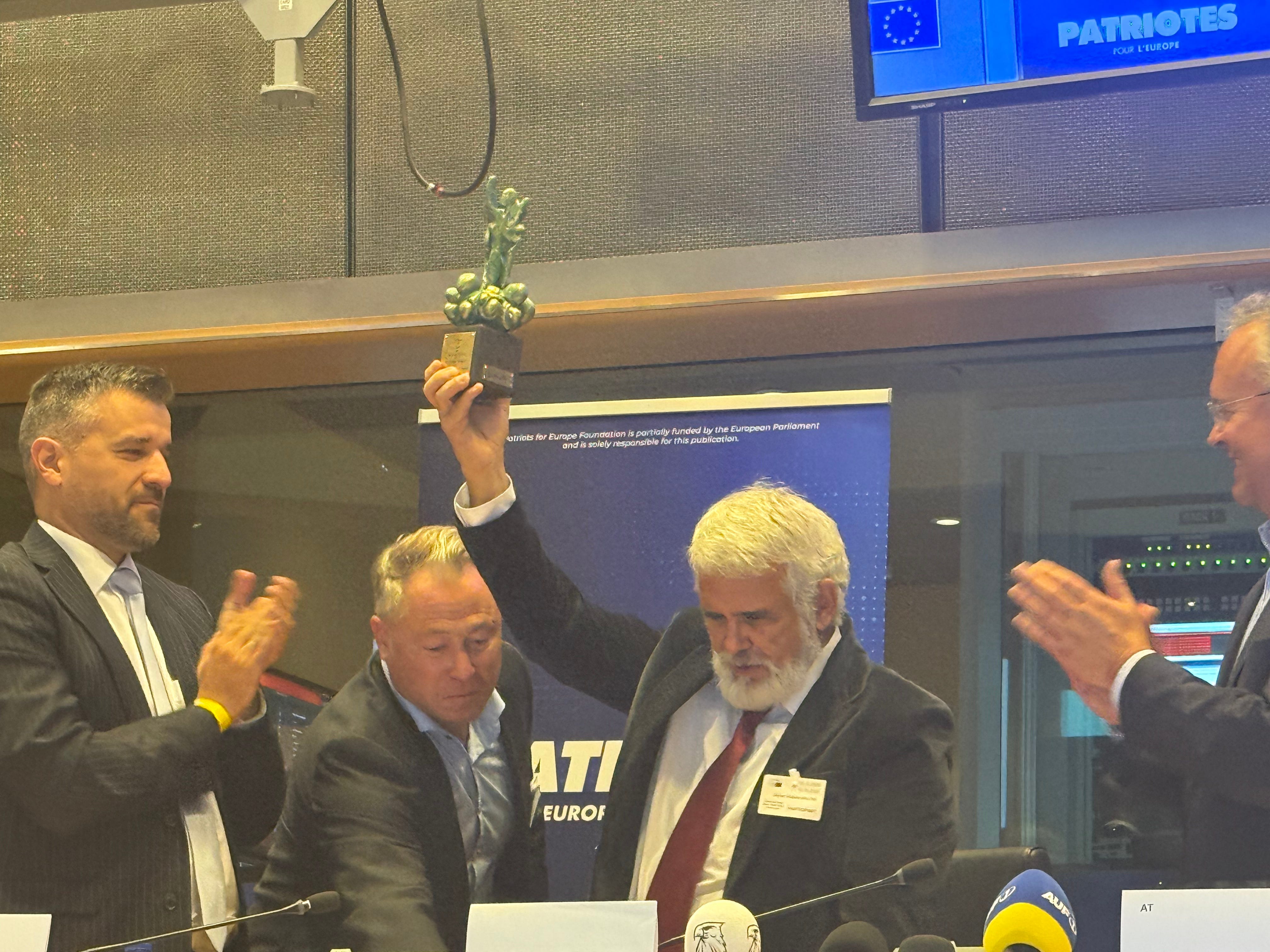
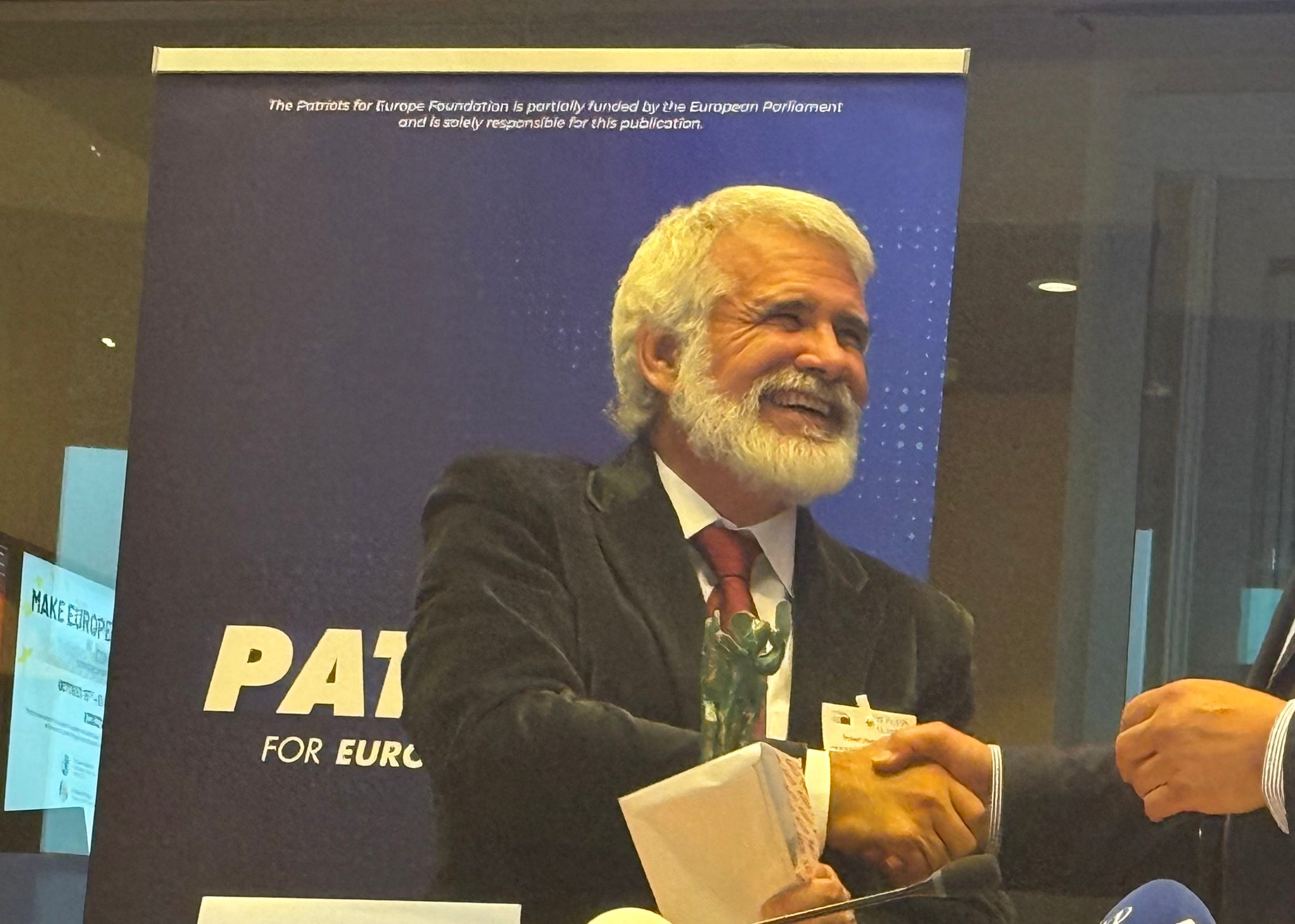
The Mut und Menschlichkeit Award (translated as “Courage and Humanity Award”) is a recognition established by the Swiss association Leben und leben lassen (meaning “Live and Let Live”), a group of entrepreneurs and artists primarily from the canton of Aargau in Switzerland. The award honors individuals who demonstrate exceptional courage, humanity, and commitment to addressing societal challenges, often in politically or socially sensitive areas such as criticism of government policies, advocacy for freedom of speech, and opposition to perceived elite-driven agendas (e.g., the “Great Reset”).
Key Details:
• Purpose: It aims to celebrate people who go beyond ordinary efforts to highlight injustices, stand with the public, and exhibit moral integrity amid global issues like pandemic restrictions and restrictions on civil liberties.
• Founded By: The association Leben und leben lassen, led by figures like chairman Peter Villiger, an international security consultant.
Another congratulations for a well warned reward. Graduates of our challenging medical and scientific training system that are courageous enough and willing to question that system are both desperately needed and rare. The best of health to you and yours.
There have been recent studies showing unvaccinated children are far less likely to have developmental delays, asthma, ear infections and gastrointestinal problems. These outcomes were shown because this is specifically what the tests were looking at. I saw a reporter ask Michigan congresswoman Debbie Dingell about vaccines and RFK Jr.’s position as HHS secretary and the woman went off the rails. She said Kennedy should not be in this position he’s not a scientist and vaccines have made our kids and country extremely healthy. She basically called Kennedy an idiot and that he should be removed. This is what we’re dealing with. 1 in 33 kids get autism up from 1 in 40,000 back in my day and she refuses to acknowledge this catastrophic problem. Ray Charles could see this blatant problem and he’s dead, but Debbie Dingell gets her checks, big checks from big Pharma, so she’s being paid to allow children’s lives to be destroyed all for money! DISGUSTING!!! There are hundreds of representative, house and senate taking tens of thousands of dollars from pharmaceutical companies that won’t allow themselves to see what is blatantly obvious also, because of money. It should be made illegal for all representatives to take money from Big Pharma period. J.Goodrich