

Audio Version:
By: Drs. Robert Malone and Jill Glasspool Malone | Washington, DC | November 24, 2026
Public Health and Medical Ethics: Analysis and Commentary
Executive Summary
Who decides what medical interventions an elderly patient should receive when she can no longer make those decisions for herself? What happens when her previously expressed wishes conflict with institutional medical protocols, government recommendations, or the financial interests of healthcare providers?
Using influenza vaccination of the elderly as a starting point, this article examines the scientific evidence, medical ethics, legal safeguards and financial incentives that influence end-of-life medical decisions.
Key findings and recommendations:
The right to refuse medical treatment does not expire with age or dementia. When patients lose decision-making capacity, their previously expressed wishes and personal values should take precedence over what others believe is in their best interests.
The scientific evidence for influenza vaccination in the elderly has important limitations. A 2018 Cochrane review found that vaccination reduced the seasonal incidence of influenza from approximately 6 percent to 2.4 percent. Vaccinating 1,000 elderly patients would prevent an estimated 36 cases of influenza over a single season. Even this evidence was rated as low certainty, and randomized controlled trial data were insufficient to establish a mortality benefit.
The CDC promotes influenza vaccination using modeled mortality estimates without documented independent peer review. The CDC claims that influenza vaccination prevented approximately 9,700 deaths among elderly Americans during the 2024–2025 influenza season. These estimates were published on a government website, not in a peer-reviewed scientific journal, and are derived from mathematical modeling rather than randomized controlled clinical trials measuring mortality. Furthermore, the models are based on low-quality survey estimates.
Government and corporate financial incentives create conflicts of interest. Despite the limitations of the randomized clinical trial evidence, Medicare, insurance companies, and healthcare systems tie reimbursement and physician compensation to quality measures that include vaccination rates. Under certain Medicare quality measures, respecting a patient’s informed refusal of influenza vaccination can count against her physician’s performance score.
The corporatization of American medicine threatens independent medical judgment. As of January 2026, 82 percent of American physicians were employed by hospitals, health systems or other corporate entities. Institutional protocols, financial incentives and performance targets can undermine individualized medical care.
A living will alone may not be sufficient. A designated healthcare agent and, for frail or seriously ill patients, actionable medical orders such as a POLST (Physician Orders for Life-Sustaining Treatment) can help ensure that treatment preferences are honored, including during medical emergencies.
Comfort-focused care is a legitimate medical choice. Decisions concerning vaccination, antibiotics, hospitalization, feeding tubes, dialysis, surgery and prescription medications should account for the patient’s remaining life expectancy, quality of life and personal wishes. Declining a medical intervention does not mean forfeiting medical care.
Nutrition deserves greater attention. Identifying and correcting nutritional deficiencies, including vitamin D deficiency, should be an integral part of medical care for the elderly.
Federal healthcare policy needs reform. Financial incentives tied to vaccination rates should be eliminated. Physicians should neither be rewarded for administering vaccines nor penalized for respecting informed refusal. Relevant financial conflicts of interest should be disclosed to patients. Nursing homes should be required to regularly discuss and document residents’ treatment preferences and restore continuity of medical care.
Families should have these conversations long before a medical crisis occurs. Physicians should establish their patients’ goals of care before recommending individual medical interventions and provide patients and their representatives with the absolute risks and benefits of treatment, including the limitations of the scientific evidence.
Respecting a patient’s informed refusal of a medical intervention should be a measure of quality medical care, not a deficiency in it.
The decision to prolong life, preserve its quality or allow a natural death belongs to the patient, not to the federal government, insurance companies or hospital administrators.
Can an elderly patient refuse treatment?
This fall, one of Robert’s physician friends asked him for advice about his own mother. She lives in a nursing home. She is no longer fully mentally competent, and she is physically frail, with a history of serious falls. He wanted to know whether she should get a flu shot this winter.
Robert advised his friend to have his mother vaccinated, given her frailty, the potential for influenza outbreaks in nursing homes and the relatively low burden of vaccination. In retrospect, his advice failed to take into account a more fundamental question: What would his friend's mother have wanted?
What Robert should have asked first was whether his friend’s mother, while she was still capable of making her own medical decisions, had expressed any wishes about her end-of-life care.
We believe patients have a fundamental right to the information they need to make an informed choice, and a right to accept or refuse any medical intervention. That right does not expire at eighty, and dementia does not erase it. What changes near the end of life is who speaks for the patient, and how that person works out what she would have chosen.
The flu shot is a small decision. The same question runs through larger decisions, such as whether to send a frail parent back to the hospital or treat her next pneumonia.
What did Robert’s mother choose?
Robert’s own mother faced a version of this question. In her early eighties, a failing heart valve left her in heart failure. Her physicians could offer chest surgery to replace the valve. She declined it and accepted that she would die sooner.
She made that choice while fully able to weigh it. Nobody had to guess what she wanted, because she could still tell them.
His friend’s mother is in a different position. She can no longer weigh the risks of a vaccine, a hospital stay or an operation on her own, so someone must decide for her. That person can ask what she would have wanted, or ask what a reasonable person would want in her place. Those two questions do not always lead to the same answer.
Who was William Osler, and is pneumonia still the old man’s friend?
Sir William Osler was born in 1849 in Bond Head, in what is now Ontario. In 1889 he became one of the four founding professors of Johns Hopkins Hospital in Baltimore. He moved medical students out of the lecture hall and onto the wards, where they learned by examining patients. He also helped build the system of postgraduate hospital training that American residents still follow. His textbook, The Principles and Practice of Medicine, first published in 1892, became the dominant medical text of its era. In 1905 he left Hopkins to become Regius Professor of Medicine at Oxford.
American physicians still repeat his sayings on hospital rounds. The best known of them on this subject comes from his textbook:
“Pneumonia may well be called the friend of the aged.
Taken off by it in an acute, short, not often painful illness, the old man escapes those ‘cold gradations of decay’ so distressing to himself and to his friends.”
Osler also called pneumonia “the captain of the men of death,” a phrase he borrowed from John Bunyan. He saw the disease both ways: as the great killer of his age, and as a merciful end for the very old.
His own death tested the saying. In the autumn of 1919, at age seventy, Osler fell ill with what he and his physicians believed was influenza. The infection became pneumonia, then a lung abscess and an infected pleural space. He died at his home in Oxford on December 29, 1919, after an operation to drain the infection. His final illness lasted more than three months.
Pneumonia remains a leading cause of death among the elderly, and influenza is a common precursor. Whether pneumonia is contagious depends on its underlying cause. Many of the viruses and bacteria responsible for pneumonia can spread from person to person.
Should elderly parents get the flu shot?
One of the principal reasons elderly Americans are encouraged to receive an annual influenza vaccine is to reduce their risk of dying from influenza or its complications. But how strong is the scientific evidence that vaccination actually prolongs their lives?
In 2018, Cochrane, an independent international organization, published an analysis of randomized controlled trials of influenza vaccination in adults aged sixty-five and older. Perhaps its most striking finding was how little randomized trial data existed to evaluate the effect of vaccination on mortality.
The available trials suggested that vaccination reduced the incidence of influenza over a single season from approximately 6 percent to 2.4 percent, meaning that roughly thirty older adults would need to be vaccinated to prevent one case of influenza. Even this evidence was rated as low certainty.
But preventing a case of influenza is not the same as preventing a death. Despite decades of influenza vaccination programs targeting the elderly, the randomized controlled trial evidence available to the Cochrane reviewers was insufficient to determine whether vaccination reduced mortality in this population. That is a significant gap in the clinical evidence, particularly given the importance placed on preventing deaths when recommending annual influenza vaccination to the elderly.
A 2007 study published in the New England Journal of Medicine reported a 48 percent lower risk of death from all causes during influenza season among vaccinated seniors. However, this was an observational study, not a randomized controlled trial. Elderly people who receive influenza vaccines may differ substantially from those who do not. They tend to have better access to medical care, see their physicians more regularly, and are less likely to be severely frail or bedridden. These differences can account for lower mortality rates independent of any protective effect of the vaccine. Epidemiologists refer to this as healthy-user bias.
DANFLU-2, a large randomized controlled trial involving approximately 332,000 Danish adults aged sixty-five and older over three influenza seasons, compared the high-dose influenza vaccine with the standard-dose vaccine. The high-dose vaccine did not significantly reduce the combined risk of hospitalization for influenza or pneumonia, although some secondary outcomes favored the high-dose formulation. The trial only compared two vaccines; there was no unvaccinated control group, so it says nothing directly about vaccine versus no vaccine.
The influenza vaccine generally confers protection lasting through a single influenza season. Unlike many preventive medical interventions that may take years to yield measurable benefits, influenza vaccination has the potential to benefit patients even when their remaining life expectancy is only a year or two.
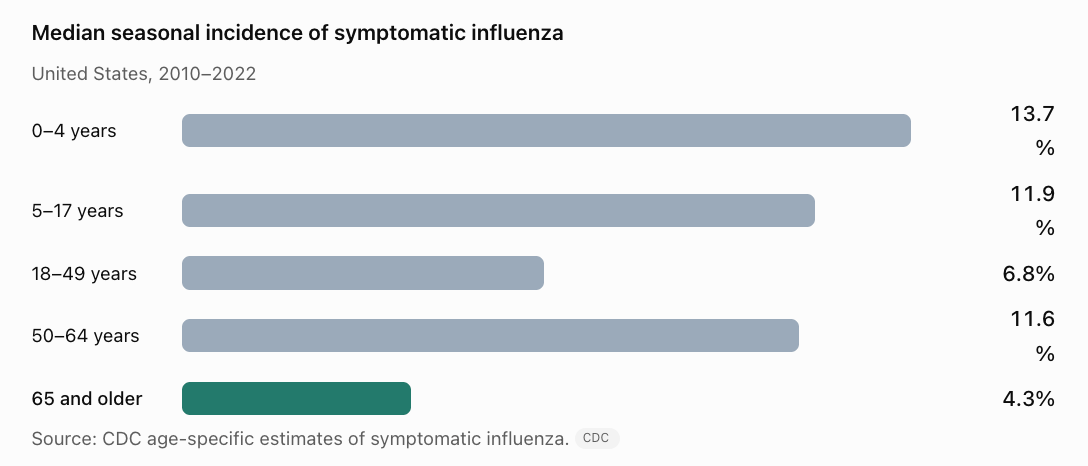
A patient who chooses to forgo influenza vaccination in favor of allowing nature to take its course should also be made aware of the potential complications of influenza. However, these risks must be put into perspective. According to CDC estimates for the period from 2010 to 2022, the median seasonal incidence of symptomatic influenza among Americans aged sixty-five and older was 4.3 percent, or approximately one in twenty-three. These estimates include both vaccinated and unvaccinated individuals. Understanding the absolute risk of contracting influenza, as well as the potential consequences of infection, is also part of informed consent.
What is a living will, and is it enough?
A living will is a type of advance directive that documents your wishes regarding medical treatment should you become unable to communicate them yourself. Every adult should consider having one. But a living will alone may not be enough. When a frail elderly woman collapses at home or in a nursing home, emergency medical personnel are generally obligated to follow established resuscitation protocols unless presented with a valid medical order directing otherwise. A living will tucked away in a drawer, or even included in a medical chart, may not prevent unwanted resuscitation or other emergency interventions.
A POLST (Physician Orders for Life-Sustaining Treatment) goes a step further than a living will or advance directive. It translates a patient’s treatment preferences into actionable medical orders that emergency medical personnel, nursing homes, and other healthcare providers are generally required to follow. Depending on state law, a physician, nurse practitioner, or physician assistant signs the document after discussing treatment options with the patient or her legally authorized representative.
A POLST typically addresses three major decisions:
Resuscitation: Whether to attempt CPR if the patient’s heart stops or she stops breathing.
Medical intervention: Whether to provide comfort-focused care, limited medical treatment, or full treatment, including under what circumstances the patient should be transferred to a hospital.
Artificial nutrition: Whether to provide nutrition through a feeding tube and, if so, under what circumstances.
The terminology, specific treatment options, and legal requirements vary by state.
A POLST is meant for people who are seriously ill or frail. Clinicians use a simple test: would they be surprised if this patient died within the next year? If not, it is time for the conversation. States use different names for the form, including POLST, MOLST, MOST and POST. Virginia’s older version is called POST, and the state now recommends the National POLST form.
Readers outside the United States have their own versions. The United Kingdom, Canada and Australia all recognize some form of living will or advance directive, though its name and legal force vary by country, and in Canada and Australia by province or state. Ask your physician which form applies where you live.
When federal financial incentives undermine informed consent
Palliative care treats pain, breathlessness and other suffering at any stage of a serious illness, often alongside treatment intended to cure the underlying disease. Hospice is a form of palliative care for patients whose physicians certify a life expectancy of six months or less and who elect hospice rather than curative treatment for their terminal illness. Medicare pays for this care under the hospice benefit. Patients who are not enrolled in hospice can also elect comfort-focused care through a POLST.
But the federal government has introduced financial incentives into what should be a private medical decision between a patient and her physician.
Under Medicare’s Merit-based Incentive Payment System (MIPS), participating physicians are scored against federally established standards of medical care, including vaccination rates. Physicians whose overall performance scores fall below federal thresholds can have their Medicare reimbursement reduced by as much as 9 percent. Under certain quality measures, a patient’s informed refusal of influenza vaccination can count against her physician.
Consider the implications. The federal government has established financial incentives to promote influenza vaccination among the elderly, despite insufficient randomized controlled trial evidence in the 2018 Cochrane review to establish that vaccination reduces mortality in this population.
This system also raises serious questions about regulatory capture. Pharmaceutical manufacturers benefit commercially when federal reimbursement policies encourage widespread use of their products. Physicians face potential financial consequences when their overall performance falls short of government expectations. Yet patients are rarely made aware of these institutional financial incentives when discussing vaccination with their physicians.
These financial incentives extend beyond Medicare reimbursement to individual physician compensation. A 2022 JAMA Health Forum study of 22 American health systems found that 84 percent of primary care physician compensation plans included quality and cost incentives, representing an average of 9 percent of physician pay in those plans.
In 2018, the Medical Group Management Association described a large primary care practice that tied 10 percent of physician compensation to quality measures, including influenza vaccination, with progressively higher vaccination targets of 75, 85 and ultimately 95 percent. As an example, during the 2024 influenza season, insurer Wellcare offered primary care providers an additional $20 for each eligible influenza vaccination.
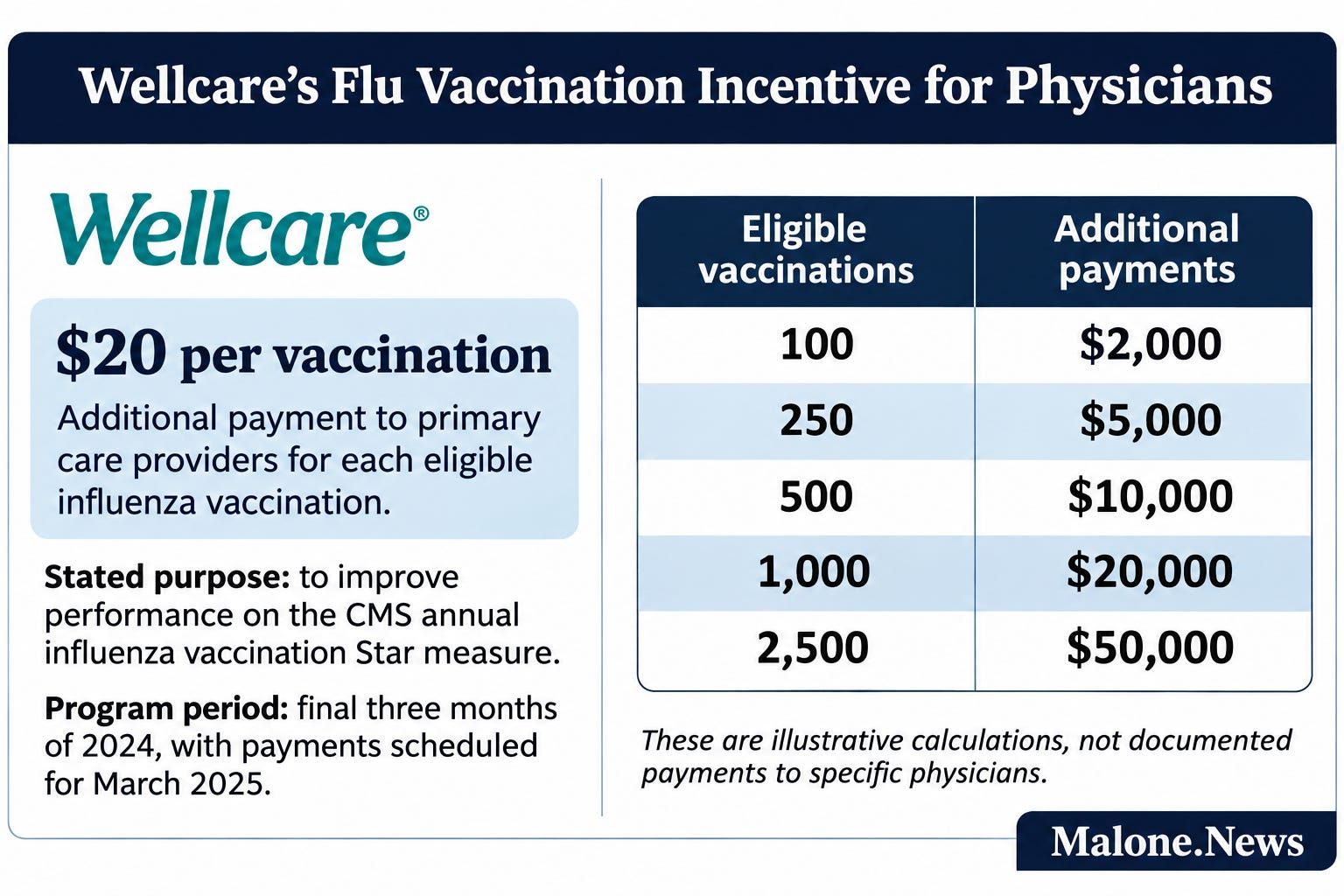
Given the limitations of randomized trial evidence that influenza vaccination reduces mortality among the elderly, these financial arrangements raise serious ethical questions. Should physicians be financially rewarded for increasing vaccination rates? And should patients be informed of these potential conflicts of interest?
What scientific and ethical justification is there for tying physician compensation to the uptake of a pharmaceutical product when randomized trial evidence for its purported survival benefit in the target population remains insufficient? Who benefits from these policies, and whose interests are being represented?
When government modeling becomes the basis for financial incentives
Despite the limitations of randomized controlled clinical trial evidence establishing a mortality benefit from influenza vaccination in the elderly, the CDC continues to promote vaccination as a means of preventing deaths in this population.
In a report dated March 12, 2026, the CDC estimates that influenza vaccination prevented approximately 12,000 deaths during the 2024–2025 influenza season, 81 percent of which were among adults aged sixty-five and older. That amounts to approximately 9,700 elderly lives purportedly saved.
Where is the scientific evidence supporting this claim?
The report was published on a government website, not in a peer-reviewed scientific journal. It has no named authors, no documented independent peer review, and the CDC acknowledges that its disease burden estimates remain preliminary.
These mortality estimates are the product of mathematical modeling (sound familiar), not randomized controlled clinical trials measuring mortality. According to the CDC’s own published methodology, estimates of vaccine effectiveness against hospitalization are used to calculate the number of deaths prevented by vaccination.
Furthermore, the CDC acknowledges that its estimates of vaccination coverage rely on self-reported telephone surveys with relatively low response rates, that these surveys are subject to recall and nonresponse bias, and that estimates of the number of people vaccinated have frequently exceeded the actual number of vaccine doses distributed. Overestimating vaccination coverage can inflate estimates of the benefits of vaccination.
What makes this particularly disturbing is that the federal government has gone well beyond issuing public health recommendations. Through Medicare’s performance-based reimbursement system, the federal government has established financial incentives for physicians to increase influenza vaccination rates.
One federal agency promotes a pharmaceutical product using modeled mortality estimates published on a government website without documented independent peer review, while another federal agency financially incentivizes physicians to administer that product. Under Medicare’s 2026 Adult Immunization Status quality measure, however, a patient’s informed refusal of influenza vaccination is not listed as an exception under the influenza vaccination criteria.
Consider what this means. A physician who respects an elderly patient’s informed decision to decline influenza vaccination can adversely affect his or her own performance score and, ultimately, Medicare reimbursement.
Since when is respecting a patient’s right to refuse a medical intervention considered a deficiency in the quality of medical care?
Given the decades of federal expenditure on influenza vaccination programs, why has the government not prioritized adequately powered randomized controlled clinical trials examining mortality, all-cause mortality and quality of life among the frail elderly?
Instead, we have a system in which pharmaceutical manufacturers benefit commercially from government vaccination policies, physicians face potential financial consequences for failing to meet government-established performance standards, and patients are rarely informed of these financial conflicts of interest.
Where is the scientific justification for these financial arrangements? Where is the independent oversight? And where are the protections for informed consent and informed refusal?
If the federal government is going to financially incentivize physicians to administer a pharmaceutical product, surely the scientific evidence supporting that policy should be held to an exceptionally high standard.
Equally important, no physician should ever be financially penalized for respecting a patient’s informed decision to decline a medical intervention, regardless of how effective that intervention may be.
The physician’s primary obligation is to the patient, not to the federal government’s vaccination targets.
Who speaks for a parent who can no longer decide?
Medical ethics establishes a hierarchy for making decisions on behalf of patients who can no longer speak for themselves. First and foremost are the patient’s previously expressed wishes, whether documented in a living will or POLST or communicated to family members over the years. Next comes what medical ethicists call substituted judgment: determining what the patient herself would have chosen based on her known values, beliefs and preferences.
Only when the patient’s wishes cannot reasonably be determined does the decision default to what is known as the best-interest standard. At this point, the physician’s recommendations may carry considerable weight with the legally authorized decision-maker.
But how independent is that medical judgment when the federal government has tied physician reimbursement to patient vaccination rates? Under Medicare’s performance scoring system, a physician may have a financial incentive to recommend influenza vaccination, even when the clinical benefit for a particular frail elderly patient is uncertain. This creates a potential conflict of interest precisely when the patient is most vulnerable and least able to advocate for herself.
Robert’s advice to his friend bypassed the first two ethical standards and went directly to the third. He approached the decision as a question of what was medically in the mother’s best interests, without first asking what she herself would have wanted. Yet her son was perhaps the person best positioned to answer that question.
Decision-making capacity is not an all-or-nothing proposition. A woman who is no longer capable of weighing statistical risks and benefits may still understand that she is being offered an injection. She may willingly accept it or pull her arm away. Although her response may not settle the question of informed consent, it should not be disregarded. The same is true of a nursing home resident who repeatedly expresses a desire not to return to the hospital.
One of the simplest safeguards is to designate a trusted health care agent through a medical power of attorney while the individual still has the capacity to do so. In the absence of a designated agent, most states establish a legal hierarchy of surrogate decision-makers, generally beginning with a spouse and then adult children, although state laws vary. Potential disagreements among family members are far better addressed in advance through a legally executed document than during a medical crisis at a hospital bedside.
Which other end-of-life treatments can elderly patients decline?
Influenza vaccination is just one of many medical interventions that an elderly patient, or her legally authorized representative, may choose to forgo.
The use of antibiotics to treat pneumonia in patients with advanced dementia comes closest to the circumstances Osler described. Some families who have elected comfort-focused care only choose to manage fever, pain and breathlessness without attempting to cure the infection. Others opt for oral antibiotics in the hope of relieving symptoms or resolving the infection. Both approaches can be medically and ethically appropriate.
A hip fracture presents a different set of considerations. Without surgical repair, the patient may experience severe pain with even the slightest movement, including being repositioned in bed. Surgery may therefore be the more compassionate choice, even for a patient nearing the end of life.
Feeding tubes have not been shown to prolong survival or prevent aspiration pneumonia in patients with advanced dementia. The American Geriatrics Society recommends careful hand feeding instead. Similarly, for some patients over eighty with multiple chronic illnesses, dialysis may offer only a modest survival benefit while requiring many hours of treatment each week. Conservative management of kidney failure without dialysis is an established medical option that deserves discussion.
An implanted cardiac defibrillator can be deactivated at the patient’s request, sparing her potentially painful and repeated electrical shocks during the dying process.
Even routine prescription medications warrant reassessment. Anticoagulants, aggressive blood sugar control and intensive blood pressure management can increase the risk of bleeding, falls and hypoglycemia in frail elderly patients. Medications prescribed years earlier may no longer be appropriate given the patient’s declining health, remaining life expectancy and personal wishes.
Does your doctor work for you or for the hospital chain?
Robert’s friend could approach his mother’s care from the perspective of an independent physician. Fewer and fewer American physicians have that professional independence. As of January 2026, 82 percent of American physicians were employed by hospitals, health systems or corporate entities, including insurance companies and private equity firms, up from 52 percent in 2018. Only 18 percent now practice in physician-owned settings. In a survey conducted by the Physicians Advocacy Institute and NORC at the University of Chicago, the majority of employed physicians reported that changes in practice ownership had adversely affected patient care and physician autonomy.
The financial incentives discussed above extend throughout the healthcare system. Medicare Advantage plans are evaluated on vaccination rates as part of a broader quality rating system tied to financial bonuses. KFF estimates that Medicare Advantage quality bonus payments will exceed $13 billion in 2026. These financial incentives can extend to the health systems and medical practices that contract with those insurers.
Employed physicians often work under compensation arrangements tied to productivity and quality targets. Electronic medical records flag unvaccinated patients as having a “care gap.” Under standing orders, a medical assistant may administer a vaccine with the patient’s consent before the physician even enters the examination room. Nursing home residents may receive care from a succession of clinicians who never knew them when they were capable of expressing their wishes.
Although Medicare has reimbursed physicians for advance care planning conversations since 2016, these billing codes remain underutilized. How much time is devoted to meeting vaccination targets compared with discussing what patients actually want as they approach the end of their lives?
The practice of administering vaccines to patients under general anesthesia for unrelated surgical procedures raises additional questions about informed consent. Although hospitals generally maintain that authorization is obtained beforehand, there have been allegations of vaccination without specific patient authorization, with physicians reportedly relying on broad language in surgical consent forms.
Given the financial incentives associated with vaccination rates, who is independently auditing these consent procedures? Are hospitals required to document specific authorization for vaccination separately from general consent to medical or surgical treatment? What protections exist for elderly patients with dementia who cannot subsequently report what happened to them?
Are healthcare institutions held as financially accountable for obtaining informed consent as they are for meeting vaccination targets?
Imagine if the federal government placed as much emphasis on documenting and honoring patients’ end-of-life wishes as it does on meeting vaccination targets.
What should you, your family, and your physician do?
If you are the older person
- Prepare a living will and designate a health care agent. These documents establish your wishes and identify who has the legal authority to make medical decisions on your behalf when you can no longer do so.
- Ask your physician about a POLST if you are frail or seriously ill. In the absence of medical orders limiting treatment, emergency personnel generally default to resuscitation and other emergency interventions. If you live outside the United States, ask about the equivalent document in your country or province.
- Ask how long a treatment takes to provide a meaningful benefit. A medication that takes five years to provide a clinical benefit may not be worth its side effects for a ninety-year-old with a limited life expectancy.
- Ask for absolute risk and benefit data. A 50 percent reduction in risk may mean reducing your risk from two in a hundred to one in a hundred. Ask how many patients must receive the treatment for one to benefit, and what adverse effects have been documented.
Take vitamin D3 and nutritional deficiencies seriously. As we discussed in our 2022 article, Preventable Deaths and D3, numerous studies have associated low serum vitamin D levels with respiratory disease and mortality. Yet the US government’s recommended dietary allowance for adults over seventy remains just 800 IU per day, a recommendation based primarily on skeletal health rather than immune function.
Some physicians specializing in vitamin D recommend daily doses of 5,000 to 10,000 IU for patients, depending on their serum vitamin D levels, body weight, medical conditions and response to supplementation.
Vitamin D should not be considered in isolation. Adequate magnesium is important for vitamin D metabolism, zinc supports immune function, and vitamins A and K also play important physiological roles. Overall nutritional status deserves particular attention in frail elderly patients. Supplementation should account for existing medications, particularly anticoagulants that interact with vitamin K, and the potential for excessive vitamin A intake.
Given the billions of dollars spent promoting influenza vaccination and financially incentivizing physicians to vaccinate the elderly, why is there not a comparable institutional commitment to identifying and correcting nutritional deficiencies in this same population? Vitamin D3 is inexpensive, readily available, and essential to normal immune function.
For further reading, see our previous articles:
- Discuss your wishes with your children. Have these conversations while you are healthy and capable of making your own decisions. Make sure your family understands what quality of life means to you, what medical interventions you would accept, and under what circumstances you would prefer to allow a natural death. Do not leave your children guessing.
If you speak for an aging parent
Honor her wishes. Before deciding what is best for her, consider what she would have chosen for herself. Recall past conversations, even casual remarks about illness, medical treatment and dying.
Pay attention to her response when medical care is offered. Even when her decision-making capacity is impaired, her willingness to accept or refusal of a medical intervention should not be disregarded.
Review her medical records and advance directives. Determine whether she has a POLST, whether it accurately reflects her current wishes and whether it is readily accessible to emergency medical personnel.
Understand the difference between hospice and palliative care. Explore the options available to her before a medical crisis forces the family to make difficult decisions.
Ask about financial incentives and institutional policies. Do not assume that every medical recommendation is based solely on your parent’s individual circumstances. Ask whether a proposed intervention is medically necessary, consistent with her wishes or part of a standardized institutional protocol.
If you are the physician
Establish the patient’s goals before recommending individual medical interventions. Determine whether the patient’s priority is prolonging life, maintaining independence, preserving quality of life or minimizing suffering.
Ask yourself the “surprise question.” Would you be surprised if this patient died within the next twelve months? If not, initiate a conversation about advance care planning and whether a POLST is appropriate.
Review standing orders and hospital transfer protocols. Ensure that institutional policies and routine medical procedures do not override the patient’s expressed wishes. Obtain informed consent for preventive interventions, including vaccination.
Present comfort-focused care as a legitimate medical option. Explain the potential benefits and burdens of treatment, and make clear that declining a medical intervention does not mean forfeiting medical care.
Disclose relevant financial conflicts of interest. Patients and their representatives deserve to know when physician compensation or institutional reimbursement is tied to acceptance of a recommended medical intervention.
Assess nutritional status. Give particular attention to vitamin D deficiency among elderly patients, especially nursing home residents. Consider daily vitamin D3 supplementation, appropriate laboratory testing, and individual dosing based on nutritional status, medical history, and risk factors. Do not overlook other essential nutrients.
Reforming Medicare and restoring patient autonomy
Eliminate vaccination-based financial incentives. Medicare, insurance companies and healthcare systems should not tie physician compensation, reimbursement rates, or performance bonuses to influenza vaccination rates. Physicians should neither be financially rewarded for administering vaccines nor penalized for respecting a patient’s decision to decline them.
Until these financial incentives are eliminated, documented informed refusal should satisfy all vaccination-related quality reporting requirements, and patients with comfort-focused POLST orders should receive the same exemptions as hospice patients.
Eliminate financial penalties for honoring patient decisions. Neither physicians nor healthcare institutions should be financially penalized when a patient exercises the right to decline vaccination or other preventive medical interventions.
Require advance care planning in nursing homes. Upon admission, annually thereafter, and whenever a resident’s health significantly deteriorates, the attending physician should discuss and document the resident’s treatment preferences. Standing medical orders, preventive care protocols and hospital transfer instructions should reflect those wishes.
Restore continuity of medical care. Every nursing home resident should have a designated physician or responsible clinician who knows the patient, understands her treatment preferences, and ensures that those wishes are communicated to and respected by all healthcare personnel, including those providing emergency and after-hours care.
Four questions Robert would ask his friend today
If his friend asked him the same question today, Robert would first ask four questions of his own.
Does your mother have a living will, a designated health care agent or a POLST in her medical record?
What has she told you over the years about how she wants to live out her remaining days and how she wishes to die?
Would her physicians be surprised if she died within the next twelve months?
When the nurse offers her a flu shot, does she willingly extend her arm or pull it away?
Having examined the scientific evidence, the ethical considerations and the financial incentives surrounding influenza vaccination of the elderly, Robert would no longer make a recommendation to his friend without first understanding the patient’s wishes and goals of care.
The absolute risks and benefits must also be considered. According to historical CDC estimates, the median annual incidence of symptomatic influenza among Americans aged sixty-five and older was 4.3 percent, including both vaccinated and unvaccinated individuals. The randomized trials examined in the 2018 Cochrane review suggested that influenza vaccination reduced the seasonal incidence of influenza from approximately 6 percent to 2.4 percent. Roughly thirty elderly patients would need to be vaccinated to prevent one case of influenza.
The randomized trials suggest that vaccinating 1,000 elderly patients would prevent approximately 36 cases of influenza over a single season. Even this evidence was rated as low certainty. The Cochrane reviewers found insufficient randomized controlled trial evidence to establish whether influenza vaccination reduces mortality in the elderly.
Yet the CDC claims that influenza vaccination prevented approximately 9,700 deaths among elderly Americans during the 2024–2025 influenza season. That figure is the product of mathematical modeling published on a government website without documented independent peer review, rather than a mortality benefit demonstrated in randomized controlled clinical trials.
Meanwhile, Medicare has established financial incentives for physicians to increase influenza vaccination rates. Under certain quality measures, a physician who respects a patient’s informed refusal of vaccination can potentially be financially penalized.
How did we arrive at a system in which respecting a patient’s right to refuse a medical intervention can count against a physician’s assessment of quality of care?
Patients and their families deserve to understand the absolute risks and benefits of vaccination, the limitations of the scientific evidence and any financial incentives that may influence their physician’s recommendations. For a frail elderly patient, the decision should also take into account her remaining life expectancy, quality of life, the potential complications of influenza and her own wishes regarding medical treatment.
But the implications extend well beyond an annual flu shot. The same considerations apply to another hospitalization, the treatment of pneumonia or whether to pursue medical interventions that may prolong life at the expense of its quality.
These questions are relevant to every family with aging parents and to those of us who are becoming those aging parents. If your mother or father lives in a nursing home, have these conversations now, before the night nurse calls to tell you that your parent has developed a fever.
If you are in your seventies or eighties, consider these questions yourself. Document your wishes, discuss them with your physician, designate someone you trust to speak on your behalf, and make sure your children know where those documents are kept.
Do not leave your family to make these decisions in a moment of crisis, wondering what you would have wanted. Nor should those decisions be dictated by hospital protocols, insurance companies or federal reimbursement policies. They are yours to make.
End.
Medical disclaimer: This article is intended for informational and educational purposes only and should not be construed as individual medical advice. Decisions regarding vaccination, nutritional supplementation, medications and end-of-life care should be made in consultation with a qualified healthcare professional, taking into consideration the patient’s medical history, individual circumstances, personal values and treatment preferences. Nothing in this article is intended to replace individualized medical care or the informed consent process.
Independent journalism and in-depth research of the kind presented in this essay take considerable time and effort. We believe that patients and their families deserve access to information about medical ethics, informed consent and the financial incentives that increasingly influence medical care.
We have made this essay available to all readers because these issues affect virtually every American family.
If you value our work and are not yet a paid subscriber, please consider becoming one. Your financial support enables us to continue researching, writing and publishing independently, without obligations to pharmaceutical companies, corporate sponsors or government agencies.
Help us keep independent voices independent. Become a paid subscriber to Malone.News.
Please share this article with your family, friends, physicians and others caring for aging parents. These are conversations that need to take place long before a medical crisis occurs.
We also encourage other Substack authors, independent media outlets and patient advocacy organizations to republish this article in its entirety, provided that proper attribution is given and a link to the original article on Malone.News is included. Our goal is to get this information into the hands of as many people as possible.
References and further reading
Sir William Osler and the history of pneumonia
Osler W. The Principles and Practice of Medicine. New York: D. Appleton, 1892, and subsequent editions.
McGill University Health e-News. Remembering Osler’s death 100 years ago.
US National Library of Medicine. Sir William: Regius Professor at Oxford, 1905–1919.
Influenza incidence, vaccination and clinical outcomes
Centers for Disease Control and Prevention. Influenza Disease Burden.
Centers for Disease Control and Prevention. Key Facts About Influenza. Includes historical age-specific estimates of symptomatic influenza incidence.
Demicheli V, et al. Vaccines for preventing influenza in the elderly. Cochrane Database of Systematic Reviews. 2018.
Nichol KL, et al. Effectiveness of influenza vaccine in the community-dwelling elderly. New England Journal of Medicine. 2007;357:1373–1381. DOI: 10.1056/NEJMoa070844.
Johansen ND, et al. High-dose influenza vaccination in older adults (DANFLU-2). New England Journal of Medicine. 2025. American College of Cardiology trial summary.
Kwong JC, et al. Acute myocardial infarction after laboratory-confirmed influenza infection. New England Journal of Medicine. 2018;378:345–353. DOI: 10.1056/NEJMoa1702090.
Advance directives, POLST, hospice and medical ethics
National POLST. Advance Care Planning and POLST.
Givens JL, Jones RN, Shaffer ML, Kiely DK, Mitchell SL. Survival and comfort after treatment of pneumonia in advanced dementia. Archives of Internal Medicine. 2010;170(13):1102–1107.
Virginia Department of Health. Durable Do Not Resuscitate and POLST Program.
American Medical Association. Decisions for Adult Patients Who Lack Capacity. Code of Medical Ethics, Opinion 2.1.2.
American Medical Association. Withholding or Withdrawing Life-Sustaining Treatment. Code of Medical Ethics, Opinion 5.3.
Queensland University of Technology. End of Life Law in Australia: Advance Directives.
Canadian Virtual Hospice. Advance Care Planning Across Canada.
Centers for Medicare and Medicaid Services. Medicare Hospice Benefit.
American Geriatrics Society Ethics Committee and Clinical Practice and Models of Care Committee. American Geriatrics Society feeding tubes in advanced dementia position statement. Journal of the American Geriatrics Society. 2014;62:1590–1593. DOI: 10.1111/jgs.12924.
Hammes BJ, Rooney BL, Gundrum JD. A comparative, retrospective, observational study of the prevalence, availability, and specificity of advance care plans in a county that implemented an advance care planning microsystem. Journal of the American Geriatrics Society. 2010.
Corporate ownership and physician independence
Physicians Advocacy Institute and Avalere Health. Physician Employment Trends and Practice Acquisitions, 2018–2026.
Physicians Advocacy Institute and NORC at the University of Chicago. The Impact of Practice Acquisitions and Employment on Physician Experience and Care Delivery
Reid RO, et al. Physician Compensation Arrangements and Financial Performance Incentives in US Health Systems. JAMA Health Forum. 2022.
Medical Group Management Association. Incorporating Quality Measures in Your Physician Compensation Plans. August 2018.
Medicare reimbursement, quality scoring and vaccination incentives
Centers for Medicare and Medicaid Services. Merit-based Incentive Payment System: Payment Adjustments.
Centers for Medicare and Medicaid Services. 2026 MIPS Quality ID 493: Adult Immunization Status.
Centers for Medicare and Medicaid Services. 2026 MIPS Quality ID 497: Preventive Care and Wellness.
Centers for Medicare and Medicaid Services. 2026 Star Ratings Measures.
Centers for Medicare and Medicaid Services. 2026 Small Practice Eligibility FAQ.
Performance-based physician reimbursement and influenza immunization rates in the elderly. American Journal of Preventive Medicine. 1998.
A performance-based incentive program for influenza immunization in the elderly. 1993.
Wellcare. $20 Enhanced Payments for Flu Shots. Corporate provider bulletin, 2024.
Health Plan of San Mateo. 2026 CareAdvantage Benchmark Pay-for-Performance Incentive Guidelines.
Physician billing for advance care planning among Medicare fee-for-service beneficiaries, 2016–2021. The Permanente Journal. 2025.
Vaccination protocols and informed consent
Centers for Disease Control and Prevention. Contraindications and Precautions: General Best Practice Guidelines for Immunization. Includes discussion of vaccination during hospitalization.
Is Signed Consent for Influenza or Pneumococcal Polysaccharide Vaccination Required?. Archives of Internal Medicine. 2004.
Commonwealth of Virginia. Virginia Code § 32.1-126.4: Influenza and pneumococcal vaccination.
Vitamin D, immune function and respiratory disease
National Institutes of Health, Office of Dietary Supplements. Vitamin D: Fact Sheet for Health Professionals.
Demay MB, et al. Vitamin D for the Prevention of Disease: An Endocrine Society Clinical Practice Guideline. Journal of Clinical Endocrinology & Metabolism. 2024.
Sanders KM, et al. Annual high-dose oral vitamin D and falls and fractures in older women: A randomized controlled trial. JAMA. 2010;303:1815–1822.
Jolliffe DA, et al. Vitamin D supplementation to prevent acute respiratory infections. Lancet Diabetes & Endocrinology. 2025.