

Does Eating Less Meat Make You Live Longer?
By: Dr.s Jill Glasspool Malone and Robert W. Malone
On October 8, The Washington Post published an interview with Walter Willett, the 81-year-old Harvard professor described as the world’s most-cited nutrition expert. The article, subsequently promoted by Harvard, offered readers a glimpse of what this influential nutrition scientist eats every day. Oatmeal, yogurt, nuts, vegetables, fish, and chicken. Nothing particularly remarkable. But behind this seemingly harmless discussion of one man’s diet lies a much larger effort to change what the rest of us eat.
Willett has spent decades arguing that Americans should eat less meat, particularly red meat, and replace much of it with plant-based foods. He is also a leading architect of the EAT-Lancet Commission’s Planetary Health Diet, an international initiative promoting major changes in global food production and consumption. Its 2025 report recommends an average of just 15 grams of beef, pork, or lamb per day, roughly one pound per month. The Commission also claims that worldwide adoption of its dietary recommendations could prevent approximately 15 million premature deaths annually.
That is more than one-quarter of annual deaths worldwide, supposedly preventable through dietary reductions in meat consumption.
But EAT-Lancet is pursuing more than improved nutrition. Its dietary recommendations are explicitly tied to climate objectives, including reducing agricultural greenhouse gas emissions, with cattle production receiving particular attention. The Commission seeks to influence what farmers produce, what institutions purchase, and what governments encourage people to eat.
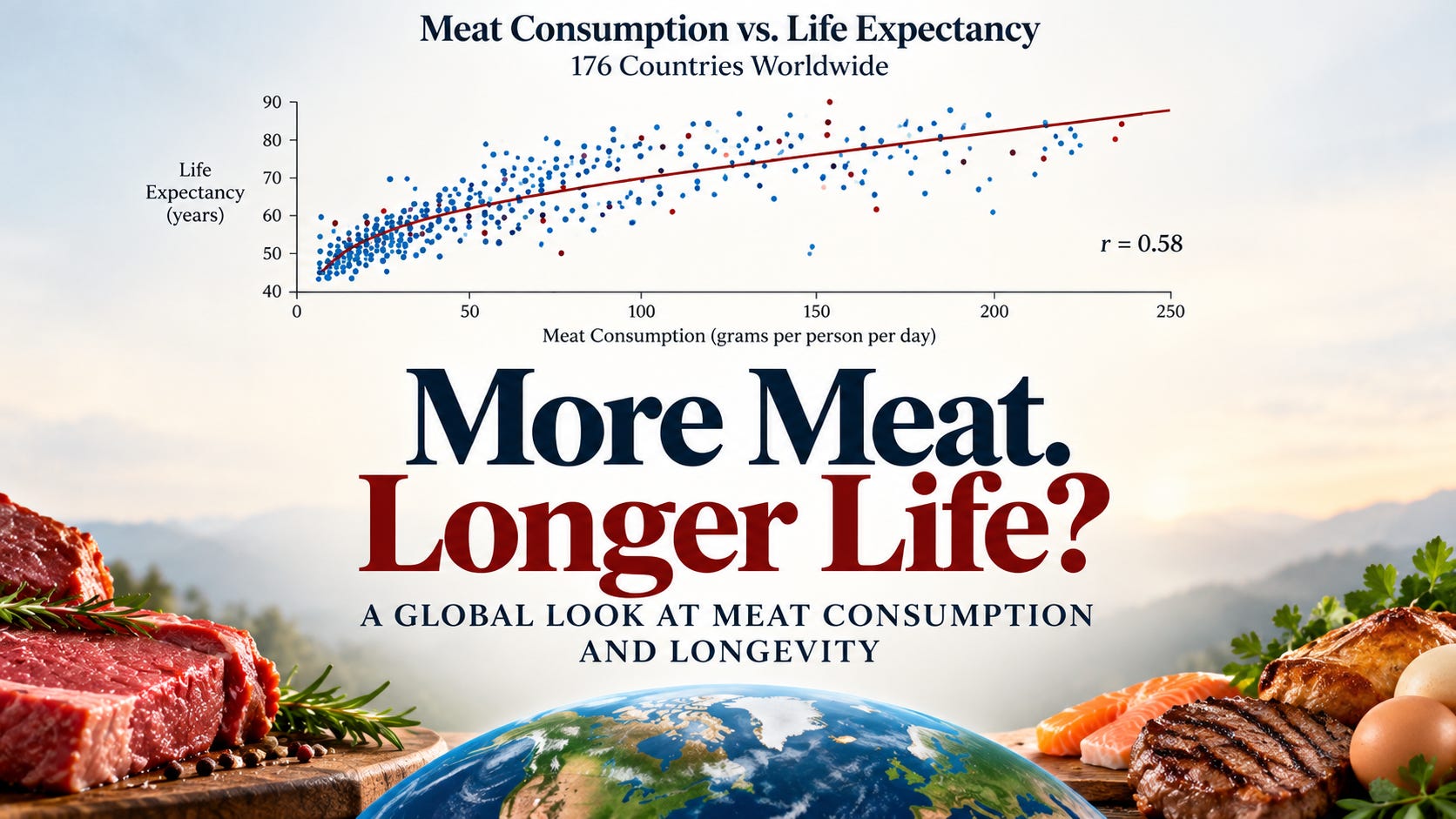
Before nutritional recommendations become the foundation for sweeping changes in agriculture and food policy, one question deserves a serious answer: Does eating less meat actually make people live longer?
(Note: The full article below and audio version are available to paid subscribers only.)
