

Author: Tiffany Ryder
Most people think leaving is failure. I used to believe that too – right up until the night a twenty-three-year-old walked into my ER, and I realized I could no longer be a part of what I was watching.
A previously healthy young woman had stumbled into my ER unable to speak clearly, with sudden weakness on one side of her body. Her presentation was textbook for stroke – but obviously it had to be something else, because she was twenty-three.
Advanced brain imaging showed multiple small strokes. Some were fresh. Some had been there for hours, maybe days. I grilled her and her mom on her medical history, family history, recent injuries, recent drug use. Nothing surfaced. Mom explained the only thing new was a pharmaceutical product her university had mandated she take before she could start the new semester. When was that? A week ago.
It was then I knew there was nothing I could really do. I could diagnose her. Stabilize her. Get neurology involved. But none of that would fix what had happened. And none of it would touch why it was allowed to happen in the first place.
I couldn’t even document it properly. There was no diagnostic code to capture what I was looking at. (Spoiler alert: there wouldn’t be one for years.) She wouldn’t become a statistic, because her injury wouldn’t be trackable. There would be no accountability - almost as if it never happened at all.
That’s the machine. That’s how it works.
It doesn’t just harm people – it makes the harm almost invisible. It protects itself by making sure anyone who sees it clearly, pays a price for saying so. So most of the time they remain silent.
A few months later, I left clinical practice. Not to step back, but to fight from outside instead of greasing its wheels from within. It felt like failure.
What I eventually understood is that sometimes the most powerful thing you can do to save people is to loudly refuse to participate in the sham. Most people never leave. Not because they can’t see the problem, but because leaving costs too much. So they stay.
They tell themselves that patience is strategy, that palatable is powerful, that one day they’ll have earned enough trust to change things from the inside. And the machine lets them believe that because people who believe are useful. They make the machine look legitimate. They make harm look manageable. Movements built on that instinct don’t reform anything meaningfully.
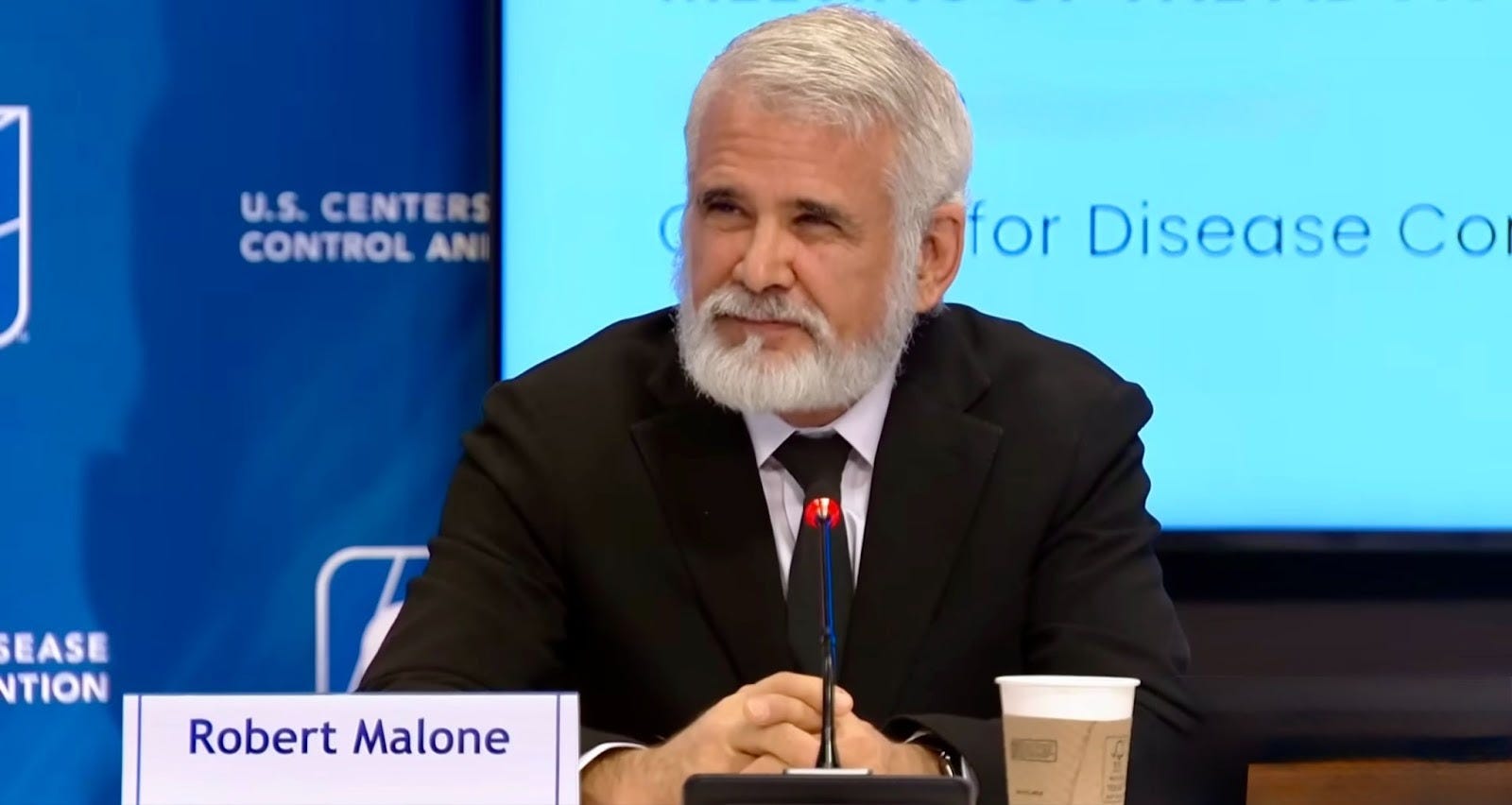
The machine doesn’t come for those who stay silent. It comes for the ones who refuse to. Robert Malone learned this the hard way. Twice.
In June 2021, he appeared on the DarkHorse podcast and raised concerns about spike protein toxicity, risk-benefit analysis, and the ethics of mandating experimental injections under Emergency Use Authorization. YouTube pulled the episode within days. His Wikipedia credits acknowledging his role in developing the technology were scrubbed. Twitter banned him permanently that December.
A career’s worth of contributions – ignored. His expertise became ‘misinformation.’ Because the machine did what it always does. Not just push back, but erase.
But Malone is resilient. He refused to stop showing up for the mission anyway.
So when Secretary Kennedy reworked ACIP and Malone was asked to serve, he said yes. He gave hundreds of hours of uncompensated labor. He did the work. He showed up. He sat inside the body that shapes vaccine policy recommendations and tried to move the needle from the one place where it theoretically could be moved – from the inside.
And then a federal judge stayed ACIP’s recent changes to vaccine guidance – including the incredibly conservative move to shared clinical decision-making on Covid vaccines, an evidence-grounded shift that simply acknowledged what the data actually shows about benefit for low-risk populations. The entire body was thrown into judicial limbo. The machine had found its opening.
Nobody knew what would happen next. Would the ruling be appealed? Would the committee be disbanded? Reconstituted?
The uncertainty shook reformers, and brought back the fear that defined the Covid era.
In that moment, confused, frustrated, trying to be transparent with the people who had trusted him, Malone shared what he’d been told through official channels: that ACIP was being disbanded. What came next is evidence of a much deeper problem.
HHS Spokesperson Andrew Nixon responded to press inquiries, calling it “baseless speculation,” and continued to publicly push back with this language. For once, the media did their job. In the context of two conflicting accounts, CNN investigated and reported that other ACIP members had also been told the committee would be disbanded, which means that Malone’s statement wasn’t the product of “baseless speculation” at all. He was simply reporting what multiple people inside the process believed to be happening, because that’s what they’d been told by people in a position to know. That should have been the end of it. But it wasn’t.
This is the same spokesperson who, on March 4th from his official government account, told a constituent raising questions about Huntington’s disease trial methodology: ‘Why don’t you read up on your history? Or maybe you’re too old and forget.’ His instinct to punch down isn’t new, but his interaction with Malone revealed that his curt words aren’t just reserved for the media or patient advocacy groups — they extend to the very people we’ve asked to serve.
When the dust hasn’t settled and the facts aren’t clear, your first instinct should always be to circle the wagons and protect your people while you figure out what’s next. Nixon appears to have the opposite instinct. And the people in a position to prevent it didn’t.
A man who had already lost his platform, his Wikipedia credits, and his mainstream credibility just for telling the truth was left exposed. Again. But this time by the home team.
That’s when Malone looked at that privileged seat and asked himself the question that most people in positions of power never ask:
Is my service and sacrifice actually moving us toward the outcomes I most care about, or am I just occupying a position that feels meaningful but isn’t?
And then he resigned.
He wasn’t resigning from a functioning committee, but he was refusing to sit in a waiting room, hoping an administration that hadn’t defended him would eventually reconstitute something worth serving on. Most people would have waited. Kept the title and preserved the possibility. He didn’t.
He left - not with a polite letter and a graceful exit, but with full transparency. With clarity about what he’d sacrificed to support an effort that didn’t seem anyone was poised to defend.
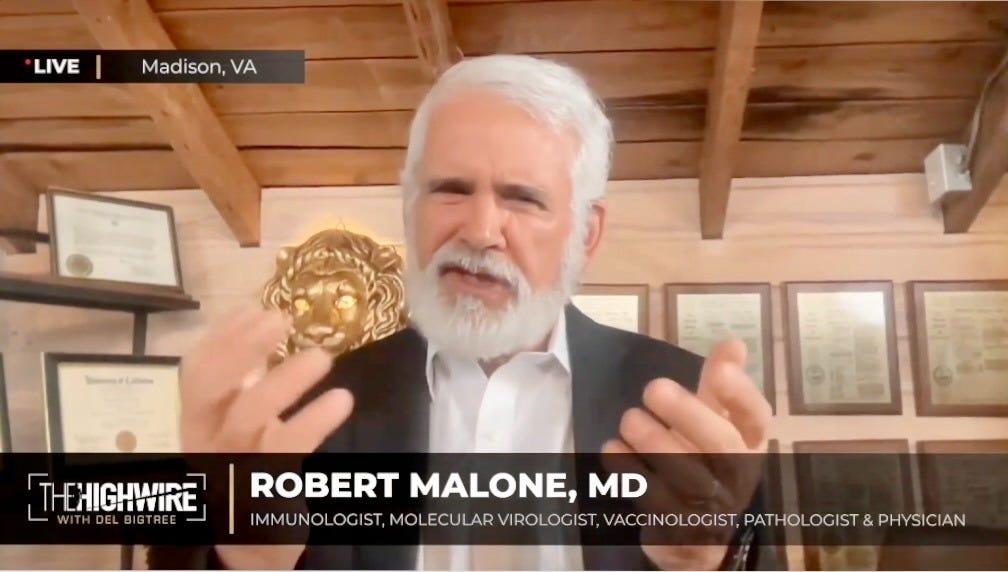
Caption: Dr. Robert Malone weighing in on ACIP with Del Bigtree on The HighWire.
He called it what it was: ‘a fool’s errand’.
And he was right. Not because the mission itself is foolish, but because being asked to fight without anyone watching your back is.
We don’t know the end of this story. We don’t know what will happen with ACIP. But Dr. Malone’s resignation isn’t a verdict on what ACIP can accomplish. It’s a verdict on how we treat the people we ask to serve.
If we’re honest, it’s not something to be proud of — and Malone isn’t the only one who’s had to deliver that verdict.
Look at what just happened to FDA’s CBER Director Vinay Prasad. Prasad’s leaving his position at FDA after only a year of public service – the machine came for him on the way out. The media ran hit pieces attacking everything from his leadership to his Hinge profile until The Wall Street Journal topped it all off with a story citing claims of sexual harassment. But, as it turned out, per HHS, “no allegations of sexual harassment have been filed.” Where was the official statement calling Liz Essley Whyte’s misinformation what it was? For nineteen days, it was MIA. His friends and family had to read those headlines. And the movement watched. Because the machine was doing exactly what it always does, and we let it.
Meanwhile FDA Commissioner Marty Makary has stepped into one of the most embattled roles in federal health and has taken incoming from every direction while trying to do the right thing. Acting CDER Director Tracy Beth Høeg has had her reputation systematically attacked for publishing reasonable takes on COVID policy when honesty was exactly what we needed. These are not isolated incidents.
MAHA keeps asking people to step into the arena. And when the machine turns on them, we go quiet.
The machine doesn’t just win by coming for us from the outside. It wins when we fail each other from the inside. Every time we watch one of our people get destroyed and say nothing, we do the machine’s work for it. We don’t need enemies when we have silence. Because silence is how the machine wins without firing a shot.
The other side doesn’t do this.
They circle the wagons instinctively. Their weakness pulls them together – even when it’s inconvenient, even when the facts are murky, even when the person who needs defending made a mess on their way out. We like to pretend we’re superior, but they actually understand something we keep having to relearn: you cannot build a movement on sacrifice without support. You cannot keep asking people to give everything if everything they give gets them hung out to dry.
So what did Malone actually do when he walked away?
He didn’t quit. He held up a mirror.
He made the most honest gesture available to someone who has already lost and rebuilt once and is watching the same games play out again. He sacrificed his seat not in anger but in faith. Faith that this movement is worth the hard conversation. Faith that if he forces the questions loudly enough, publicly enough, at personal cost, we might finally answer them honestly.
Are we pushing hard enough?
Are we actually playing to win, or are we playing not to lose?
Do we actually have each other’s backs, or do we just say we do?
We cannot win this war as individuals. If we try, we’ll be systematically eliminated from the fight. We have to have each other’s backs – not when it’s convenient, not when the facts are already settled, but in the moment. When it’s messy. Because that’s when it matters most.
MAHA is the most important movement of our time. It deserves people willing to lose something to see it through. It deserves the clarity that comes from someone standing up and saying – loudly, at personal cost, with nothing left to protect – this isn’t good enough. We can do better. Because we have to - but those brave souls, like Dr. Malone, deserve all the cover we can offer them.
We can’t just bear witness to the machine’s carnage. We have to be brave too.
The need for honest science hasn’t gone anywhere. Neither has the public appetite for it. The only question left is whether the people claiming to fight for it are willing to do what that actually requires.
Dr. Malone already gave his answer. The rest of us are still deciding.
Tiffany Ryder is a licensed emergency medicine clinician, researcher, and founder of Red Flag Media. She left clinical practice to do honest work covering the MAHA movement – the people building it, the machine fighting it, and the cost of telling the truth. Subscribe on Substack at signalandnoise.online.
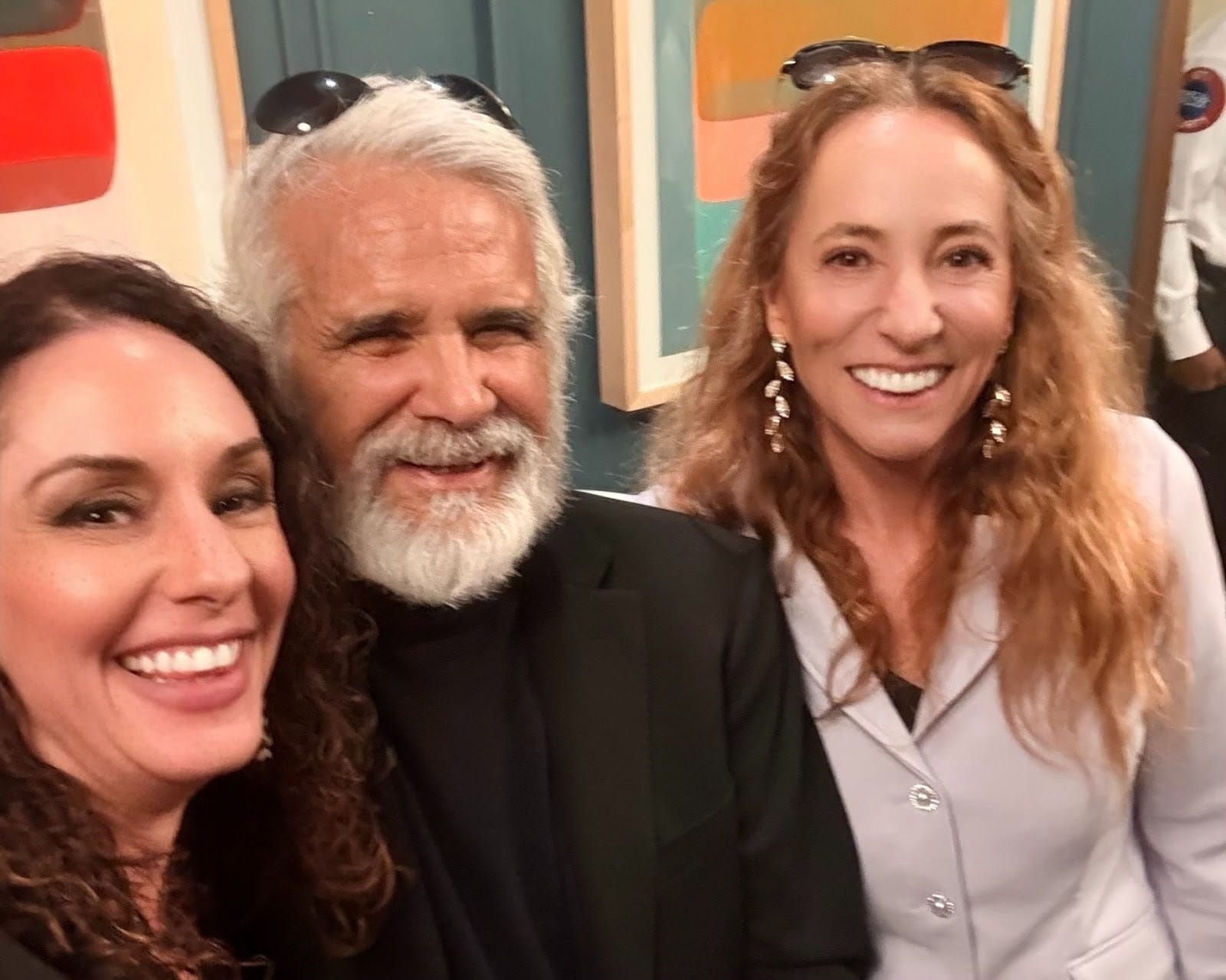
Caption: I had the privilege of thanking Robert and Jill in DC last week. I look forward to seeing what’s next for them.
Dr. Malone, I admire your integrity immensely. Thanks for standing up for sound science - which is the same thing as standing up for the truth. I don't even really know you, yet I consider you and Jill among the finest people I know.
Your humility is what makes you embarrassed to be called a hero. But THIS is why you're a hero.