

Audio Version:
Investigative analysis / By: Dr’s Jill Glasspool Malone and Robert W. Malone
The Birds in Our Barn Are Not Disposable
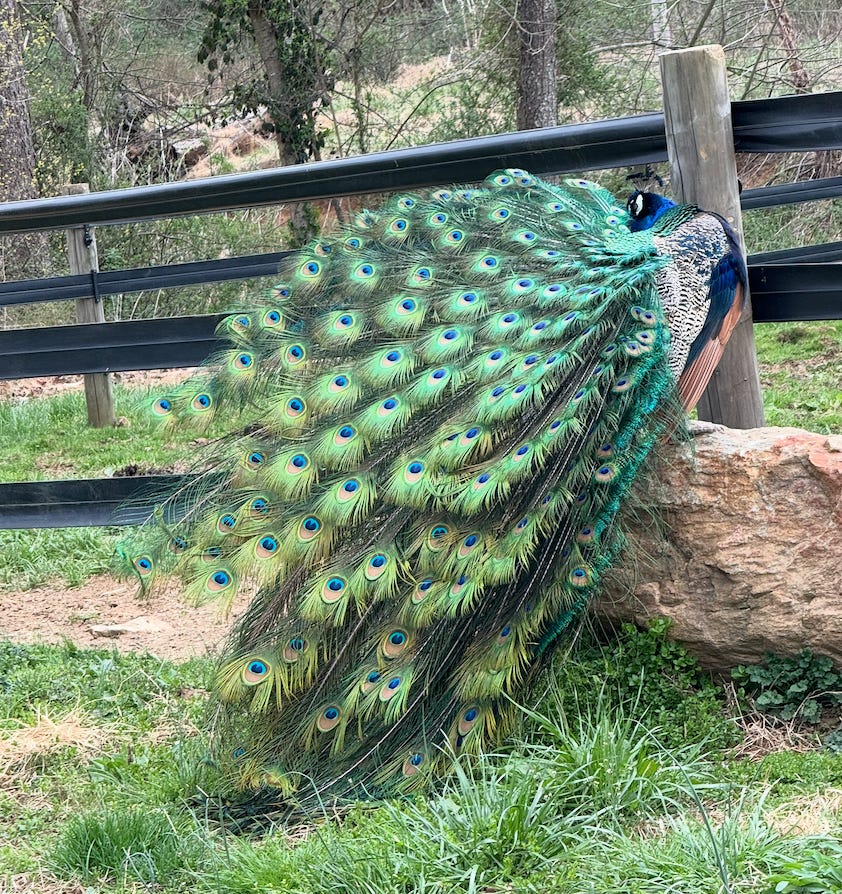
We currently have eleven peafowl, two turkey hens, two emus, four guinea fowl, and eight laying hens living on our farm. That is 27 birds in all. They are a colorful, noisy, occasionally obnoxious collection of birds that have become part of our everyday lives.
The peafowl and guinea fowl spend much of their time roaming the property, sleeping in the barn or up in the trees at night. They come begging for treats at the door, wander around as though they own the place, and occasionally express their appreciation by depositing large bird droppings on top of our cars.
Beautiful pests, every one of them. And they make me smile.
Our four guinea fowl are all males, probably seven or eight years old by now. We call them the geriatric bachelor herd. They still patrol the property, squabble with each other over who knows what, and make an extraordinary amount of noise about very little. Those four guineas also keep the tick population down. We consider them an essential pest extermination service.
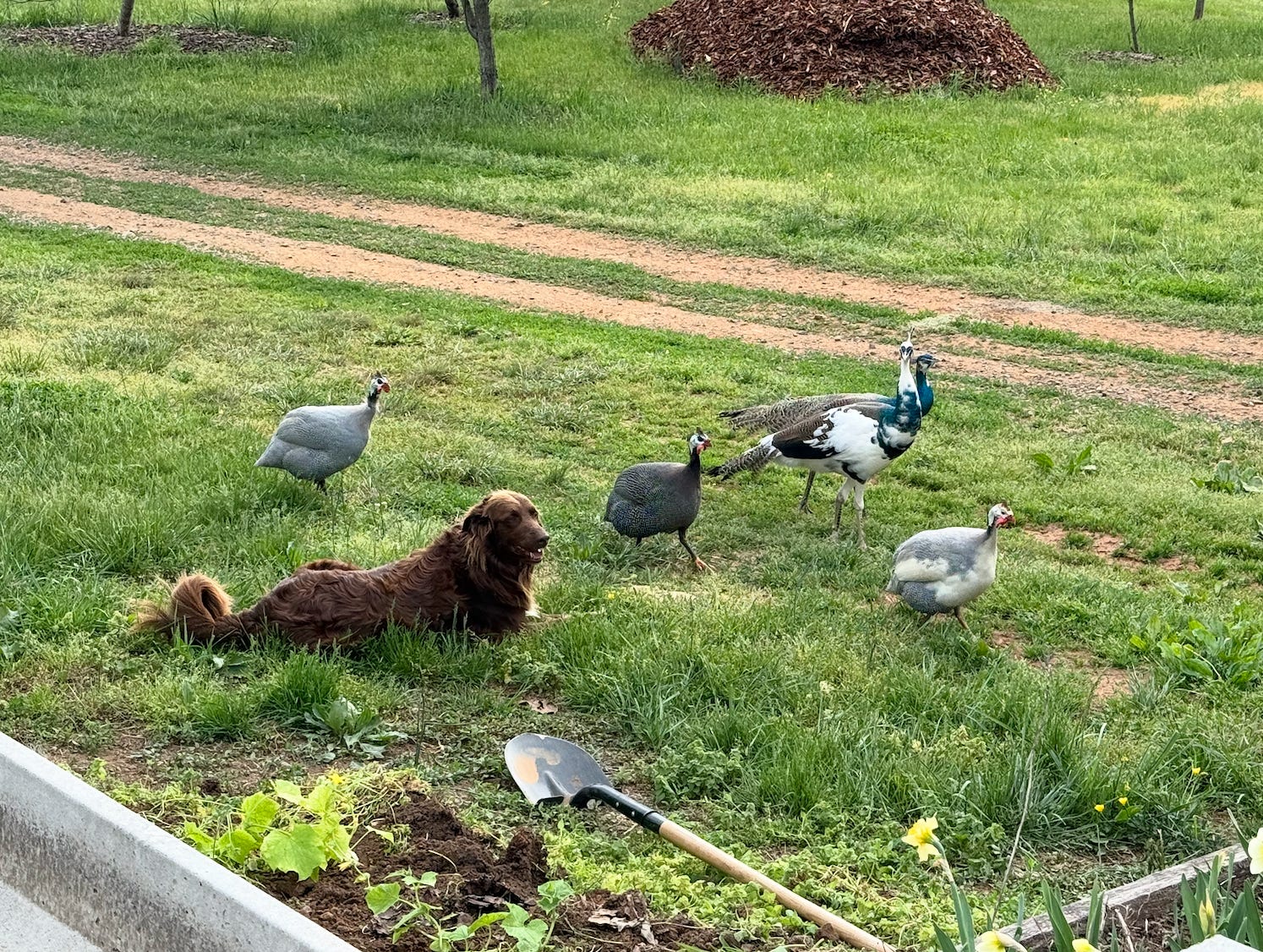
And here’s something interesting. None of these birds has ever suffered from a respiratory disease. Not one. They live outdoors, encounter wild birds, forage through the pastures, and generally lead the sort of lives that would make a USDA inspection service officer shudder. They remain extraordinarily healthy - probably because they do live outdoors, encounter pathogens, which build a robust immune system, and eat a varied diet of their choosing. We supplement their foraging with plenty of greens, kitchen scraps, treats, and generous quantities of organic poultry feed.
That doesn’t prove they are resistant to avian influenza, but given the large numbers of wild birds on our farm, it is hard to see how they could have avoided contact with the virus somewhere. This does make me wonder whether we have spent too much time trying to engineer disease resistance in laboratories and too little time studying birds that are already thriving under ordinary farm conditions.
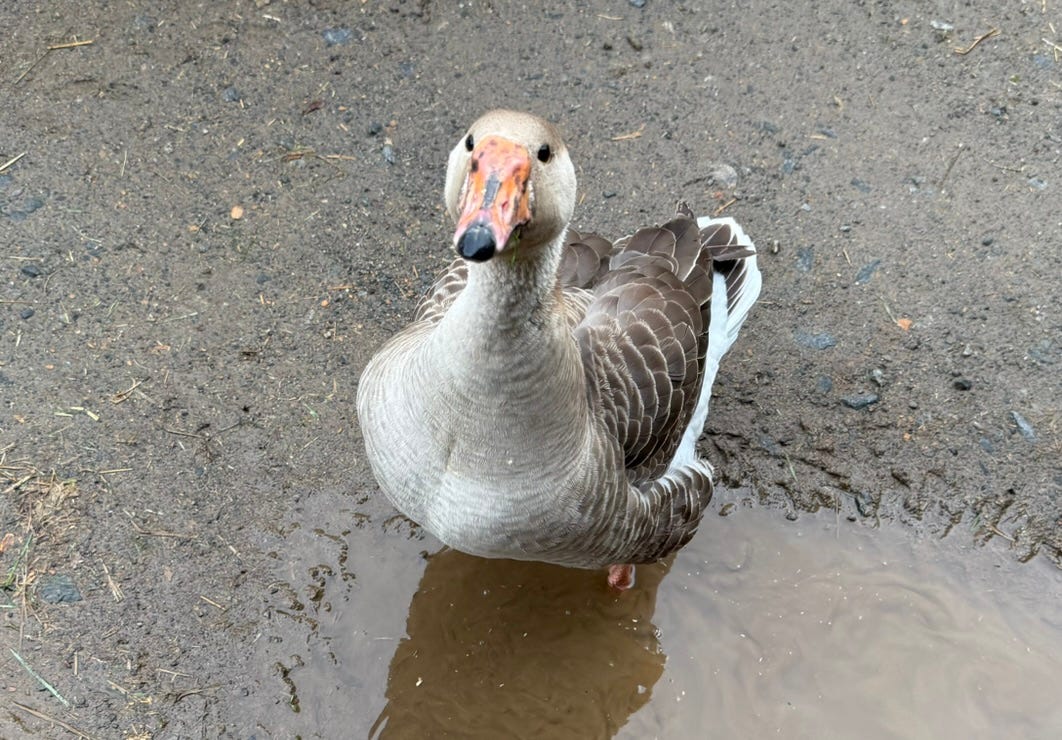
All of these birds matter to us. Earlier this summer, we lost our beloved goose, Gonzo, due to a predator. I still miss her little daily rituals: waiting for us at the glass door each morning, following us around the farm as we did chores, and begging for affection. Her death was heartbreaking. Frankly, I don’t think I could ever eat goose. One thing about working with birds, they are not all the same: intelligence, emotional IQ, tractability, and flightiness differ greatly.
Anyone who has raised geese, peafowl, or other long-lived birds understands that these animals are not simply livestock. They have distinct personalities, routines, friendships, and peculiar habits. Over time, they become part of the family.
Now imagine a government official arriving at your farm, discovering a bird that tests positive for H5N1, and informing you that your entire flock must be destroyed. Not because every bird is sick. Not because every bird is dying. But because that is the established disease-control protocol for infected poultry flocks.
Could this actually happen? Yes.
Maryland provides a troubling example of how government oversight of backyard poultry has expanded. Anyone keeping chickens, even a handful of backyard hens, must register their premises with the state. Poultry retailers, including stores such as Tractor Supply, are required to maintain records identifying purchasers, their addresses, and the birds purchased. These records must be made available to state inspectors. By 2022, Maryland already had more than 8,000 registered backyard flocks, supported by an established network of poultry inspectors and testing agents.
During the 2023–2024 H5N1 outbreaks, Maryland officials conducted poultry surveillance and testing, including investigations involving backyard poultry and flocks near infected commercial operations. Maryland doesn’t publish their inspection results, or if officials are conducting unannounced testing of healthy backyard birds, so we just don’t know. But what we do know is that the infrastructure exists and was used at some level fairly recently.
Combined with disease-control laws and regulations that can result in quarantine and compulsory flock destruction, this raises legitimate concerns about government overreach. For small farmers, the implications are obvious: a system designed to monitor animal disease can also become a powerful instrument of government surveillance, potentially discouraging poultry owners from reporting suspected illness for fear of losing their entire flock. It is also a backdoor for government officials to come onto your property for no good reason. Once there, your entire operation is open to government surveillance. So much for the right to privacy.
For a commercial poultry operation, the destruction of an entire flock represents an enormous financial loss. For a small farm like ours, where many of these birds are beloved companions, it would also be a devastating personal loss.
And that brings me to something federal regulators seem to have difficulty understanding.
Farmers and homesteaders talk to one another.
We share experiences, discuss disease prevention, compare treatments, and learn from what happens on neighboring farms. In backyard poultry groups, conversations about avian influenza include fear of what will happen if government authorities become involved.
I know people who say they would rather isolate sick birds, tighten biosecurity, and attempt to care for their animals themselves than risk losing every healthy bird on their property. In fact, many advise this course of action on various chat groups. Because yes, we have all read the stories of what inspectors in states like Maryland have done. Which includes both culling of birds and lockdowns of entire homestead farms - usually over a few backyard hens.
And after years of destroying domestic poultry while H5N1 continues circulating in wild birds, it is reasonable to ask whether federal policy has adequately considered the people and animals it is supposed to protect.
We first raised these questions in Malone News three years ago.

In February 2025, the Trump administration announced a $100 million research initiative to combat avian influenza, funding new approaches involving vaccines, therapeutics, genetic engineering, and disease surveillance. By 2026, USDA had selected dozens of research projects.
But there is one remarkably simple question that seems to be receiving comparatively little attention.
Why aren’t they starting their research programs/influenza resistance program with chickens that already demonstrate natural resistance to disease and breeding more of them?
Breeding for Natural Resistance: The Solution They Keep Overlooking
For generations, farmers have improved the health and resilience of their livestock through selective breeding. They observed which animals remained healthy when others became sick, which survived disease outbreaks, and which passed those desirable traits to their offspring. Long before genetic engineering, this was how farmers developed hardier, more productive animals.
Chickens are no exception. Research has demonstrated that genetic differences among chicken breeds and individual birds can influence susceptibility to avian influenza. Some birds are better equipped to withstand infection than others. That natural variation provides an opportunity to breed poultry with greater resistance to disease.
Yet modern commercial poultry production has concentrated heavily on a relatively narrow range of genetic lines - generally heavily inbred, selected primarily for rapid growth, feed efficiency, egg production, and uniformity. These traits have made poultry production remarkably efficient, but they have also raised questions about whether sufficient attention has been paid to genetic diversity and disease resilience.
Instead of relying almost exclusively on surveillance, biosecurity, vaccination, and the destruction of infected flocks, why not make breeding for natural resistance a central part of the national avian influenza strategy?
Remember, the term “highly pathogenic avian influenza” refers to the virus’s effects on poultry, not humans. Despite years of widespread H5N1 circulation in wild birds, human infections remain extraordinarily rare. Since 2022, the United States has recorded just 73 confirmed human H5 bird flu cases and two deaths in a population of roughly 350 million people. That works out to approximately one reported infection for every 4.8 million Americans and one death for every 175 million. Sustained human-to-human transmission has not been documented.
Recent antibody studies offer further perspective. In a CDC study of dairy workers exposed to infected cattle, approximately 7% had evidence of previous H5 infection, and half of those testing positive reported no symptoms.
Other research has detected antibodies capable of neutralizing H5N1 in approximately 2.2% of adults tested. If representative of the U.S. population, that would translate to roughly 7.7 million Americans with some preexisting antibody activity against the virus. Whether those antibodies arose from previous seasonal influenza infections, environmental exposure to avian influenza, or other immune cross-reactivity remains an important question.
The population-level numbers are striking. After years of widespread circulation in wild birds, confirmed human infections remain exceedingly uncommon. The question is whether our disease-control policies, particularly those involving the compulsory destruction of entire domestic flocks - billions of birds at this point- are proportionate to the actual risks and adequately account for animal welfare, agricultural livelihoods, and the possibility of breeding naturally resistant poultry. Not to mention the issue of costs to both taxpayers and consumers of poultry. You would think the citizens of the United States were made of money, the way our government spends it.
But back to a program of creating a hardy chicken. Such a breeding program would not eliminate H5N1 overnight, but we would hardly be starting from scratch. Researchers have already identified naturally occurring differences in avian influenza resistance among chicken breeds, including indigenous Asian breeds such as Thailand’s Chee and Dang chickens. These birds have demonstrated greater resilience and reduced viral shedding compared with commercial White Leghorns in experimental studies. Other heritage breeds, including the Egyptian Fayoumi, are being investigated for their natural disease resistance. And these are just the breeds we know about.
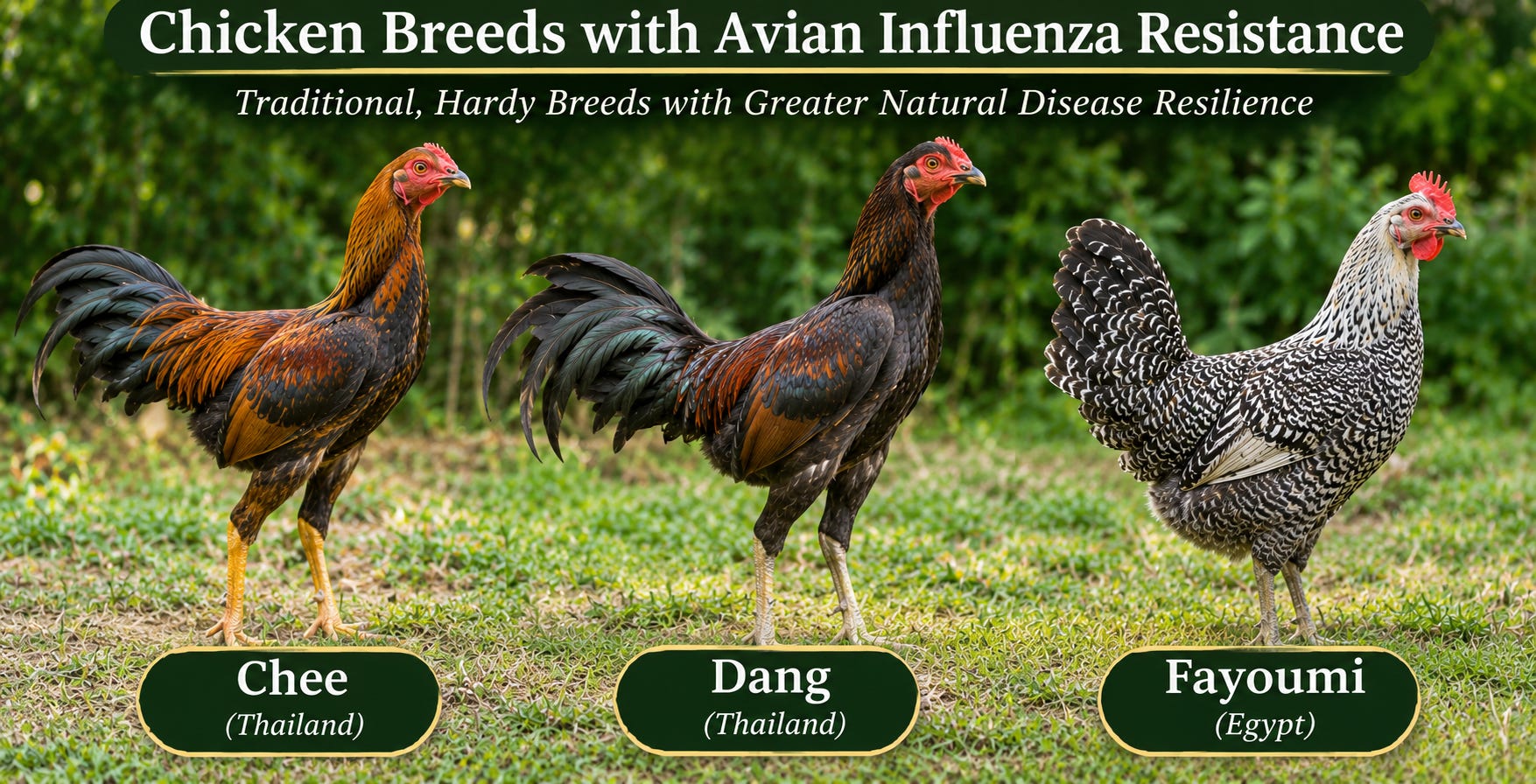
Chee (Thailand): Demonstrated longer survival under H5N1 challenge.
Dang (Thailand): Also demonstrated longer survival.
Fayoumi (Egypt): Known for general disease hardiness and currently being investigated for natural H5N1 resistance.
The goal of selective breeding should be to develop chickens that not only survive infection but also limit viral replication and transmission. But we already have living chicken populations that offer a starting point. Rather than beginning in a laboratory attempting to engineer resistance gene by gene, why not begin with these existing birds, determine which protective traits are inherited, and selectively breed those characteristics into productive commercial poultry?
We don’t have to invent a disease-resistant chicken from scratch. Farmers and homesteaders throughout the world have already created promising candidates.
These are precisely the kinds of solutions that agricultural research institutions should be investigating. The goal should not simply be to develop another pharmaceutical or technological intervention. It should also be to produce healthier, more resilient poultry populations that are less vulnerable to devastating outbreaks in the first place.
And unlike a vaccine that may require repeated administration or updating as viruses evolve, inherited resistance could potentially provide benefits across successive generations.
We have spent decades breeding chickens to produce more meat, more eggs, and greater profits. Perhaps it is time to place equal emphasis on breeding chickens that can survive disease.
This isn’t some radical new scientific concept. It is the foundation of animal husbandry, practiced by farmers for generations.
Yet when we examine where USDA is directing its avian influenza research dollars, a very different set of priorities begins to emerge.
Because what the USDA is actually funding on the research and development side is more vaccines and genetic engineering, which of course, at this stage means gene identification.
Millions for Genetic Engineering.
Pennies for Natural Resistance.
In February 2025, Agriculture Secretary Brooke Rollins announced a $1 billion initiative to combat bird flu, including $500 million for biosecurity, $400 million in financial assistance to poultry producers, and $100 million for research.
USDA subsequently selected 58 research projects, funding everything from vaccines and antiviral treatments to sophisticated surveillance systems and genetic engineering. Ohio State University is working on gene-edited chickens, while other researchers are investigating how to manipulate multiple genes to create resistance to H5N1.
Of note, the USDA is spending millions developing experimental antiviral treatments for poultry, despite the disappointing record of influenza antivirals in human medicine. A 2025 systematic review of 73 clinical trials involving more than 34,000 participants found that oseltamivir (Tamiflu) had little or no effect on hospitalization or mortality, shortened symptoms by less than a day, and increased adverse reactions. Yes, that means that Tamiflu made people sicker. Yet USDA is pursuing experimental antiviral treatments for chickens, a species in which H5N1 can progress rapidly and kill birds before treatment could realistically begin. What evidence suggests these expensive new therapies will succeed where established influenza drugs have delivered such limited benefits? And even if researchers develop an effective treatment, will USDA permit farmers to use it instead of ordering compulsory flock destruction?
But that is not the point here; there is a glaring omission in their 100 million dollar research program: Where is the major federal breeding program focused on chickens that already demonstrate natural resistance to avian influenza?
We already have chicken breeds that demonstrate greater resistance to avian influenza. We have generations of experience selectively breeding livestock for desirable traits. And we have modern genetic tools that could make conventional breeding more precise. And male chickens reach sexual maturity at 15 weeks, females at 20 weeks, meaning we can breed almost three generations of birds in a single year! By overlapping generations, much can be accomplished in a short period of time.
Why not start with the hardier chicken breeds that farmers have developed through generations of selective breeding, rather than spending years and millions of dollars trying to engineer resistance from scratch?
The goal should be straightforward: develop healthy, productive chickens that can withstand H5N1 and are less likely to spread it.
Farmers don’t need another decade of research papers identifying resistance genes. They need chickens that survive.
Farmers have spent generations breeding healthier, hardier livestock. We already have chicken breeds that demonstrate greater resistance to avian influenza. What we need now is a serious federal commitment to building on that knowledge, rather than relying on endless surveillance, experimental technologies, gene identification, and the destruction of entire flocks.
After billions spent fighting bird flu and millions of chickens destroyed, isn’t it time we started breeding chickens to survive it?
A Personal Request to Our Free Readers
Robert and I spend countless hours researching, writing, and investigating the issues that affect our lives, our farms, our freedoms, and our country. This article is particularly personal to us. We have spent years raising animals, watching government policies unfold, and asking questions that too often go unanswered.
Malone News is independently published. We don’t have corporate sponsors, government grants, or a large newsroom supporting this work. We rely on our readers
If you value independent journalism that challenges government policies, follows the money, and isn’t afraid to ask uncomfortable questions, please consider becoming a paid subscriber.
Your support allows us to keep investigating, writing, and making our work available to everyone, including those who cannot afford a subscription.
If you’ve been reading Malone News for free, now would be a wonderful time to become a paid subscriber.
Thank you for reading, sharing our articles, and helping us keep independent journalism alive.
Jill and Robert
Postscript:
At UC Davis, researchers are studying naturally occurring avian influenza resistance in Fayoumi chickens. The project has a total budget of just $299,938, half provided by the Foundation for Food & Agriculture Research and half matched by UC Davis. This project is entirely separate from USDA’s $100 million H5N1 research initiative.
Clearly, the idea of breeding chickens for natural disease resistance is already being explored within the scientific community. The researchers, the knowledge, and the promising chicken breeds already exist. Yet USDA’s published list of 58 funded projects does not identify a single conventional breeding program.
Why did USDA prioritize genetic engineering, experimental vaccines, and antiviral drugs without making conventional breeding a major research priority? Is this simply institutional preference for high-tech solutions, or do commercial interests, patent opportunities, and the financial incentives surrounding pharmaceutical and biotechnology research influence which projects receive funding?
We cannot establish those motives from the published grant awards alone. But when taxpayers are investing $100 million in bird flu research, they deserve to know why an established agricultural approach appears to have received so little attention. Who determined these research priorities, and whose interests do they ultimately serve?
References:
USDA policy, surveillance, and research funding
1. U.S. Department of Agriculture, Animal and Plant Health Inspection Service (USDA-APHIS). Highly Pathogenic Avian Influenza: HPAI Poultry Innovation Grand Challenge. 2025–2026. USDA’s $100 million research initiative, including vaccines, therapeutics, and disease-control technologies.
2. USDA-APHIS. HPAI Response Plan: The Red Book. Federal response framework for surveillance, quarantine, depopulation, disposal, and disease containment.
3. USDA-APHIS. Avian Influenza Incidents and Depopulation Methods, February 2022–June 2024. Federal records documenting affected premises, poultry depopulation, and destruction methods.
4. USDA-APHIS. Epidemiologic and Other Analyses of HPAI-Affected Poultry Flocks. 2025. Federal analyses of outbreak patterns, wild-bird introductions, and transmission between poultry premises.
Natural resistance and poultry genetics
5. Matsuu, A., et al. (2016). “Pathogenicity of Genetically Similar H5N1 Viruses and Differences in Sensitivity Among Chicken Breeds.” PLOS ONE, 11(4), e0153649. DOI: 10.1371/journal.pone.0153649.
6. Foundation for Food & Agriculture Research (FFAR). (2026). Research into Natural Avian Influenza Resistance in Fayoumi Chickens. UC Davis project examining naturally occurring resistance in heritage and commercial poultry.
7. Idoko-Akoh, A., et al. (2023). “Creating Resistance to Avian Influenza Infection through Genome Editing of the ANP32 Gene Family.” Nature Communications, 14, 6136. Research demonstrating experimental influenza resistance in gene-edited chickens.
Influenza antiviral effectiveness
8. Gao, Y., et al. (2025). “Antiviral Medications for Treatment of Nonsevere Influenza: A Systematic Review and Network Meta-Analysis.” JAMA Internal Medicine, 185(3), 293–301. Analysis of 73 randomized trials involving 34,332 participants. Found that oseltamivir had little or no effect on mortality or hospitalization and increased treatment-related adverse events.
PMC
9. Hanula, R., et al. (2024). “Evaluation of Oseltamivir Used to Prevent Hospitalization in Outpatients With Influenza: A Systematic Review and Meta-Analysis.” JAMA Internal Medicine, 184(1), 18–27. DOI: 10.1001/jamainternmed.2023.0699. Analysis of 15 randomized trials involving 6,166 influenza-positive patients, finding no statistically significant reduction in hospitalization and increased gastrointestinal adverse events.
JAMA Network
10. USDA-APHIS. (2025). HPAI Poultry Innovation Grand Challenge: Award Selections. November 2025. Lists 14 projects categorized as novel therapeutics, including poultry-specific antivirals, CRISPR-based treatments, niclosamide, tannins, and nutritional interventions.
APHIS+1
Previous Malone News reporting
11. Malone News. (2023). “Why Are the Chickens So Sick?” March 15, 2023.
12. Malone News. (2025). “Fox in the Henhouse: mRNA Bird Flu Vax.” February 20, 2025.
13. Malone News. (2025). “Ostriches Executed for No Good Reason.” November 8, 2025.
Is it possible that eating naturally disease resistant food, be it animal or vegetable, would help the consumer of the food become more disease resistant as well?
Evolution…God’s “Gain of Function”…adaptation for survival where animals with stronger systems develop into new resistant animals and subsequent less need for proprietary ingredients of the Capitalistic type…
…no wonder they cull entire herds of research ostriches in Canada or mass culling in America
Seems that the last thing they want is naturally occurring resistant offspring of consumer animals 🧐