
LEAKED VIDEO: Virologist Simon Wain-Hobson Tells NIH Leaders Lab Leak Likely Happened, Criticizes Collins and Fauci for “Professional Failure”
“Scientists can’t be egocentric and say, ‘We can override the safety of society.’”

7 minute read
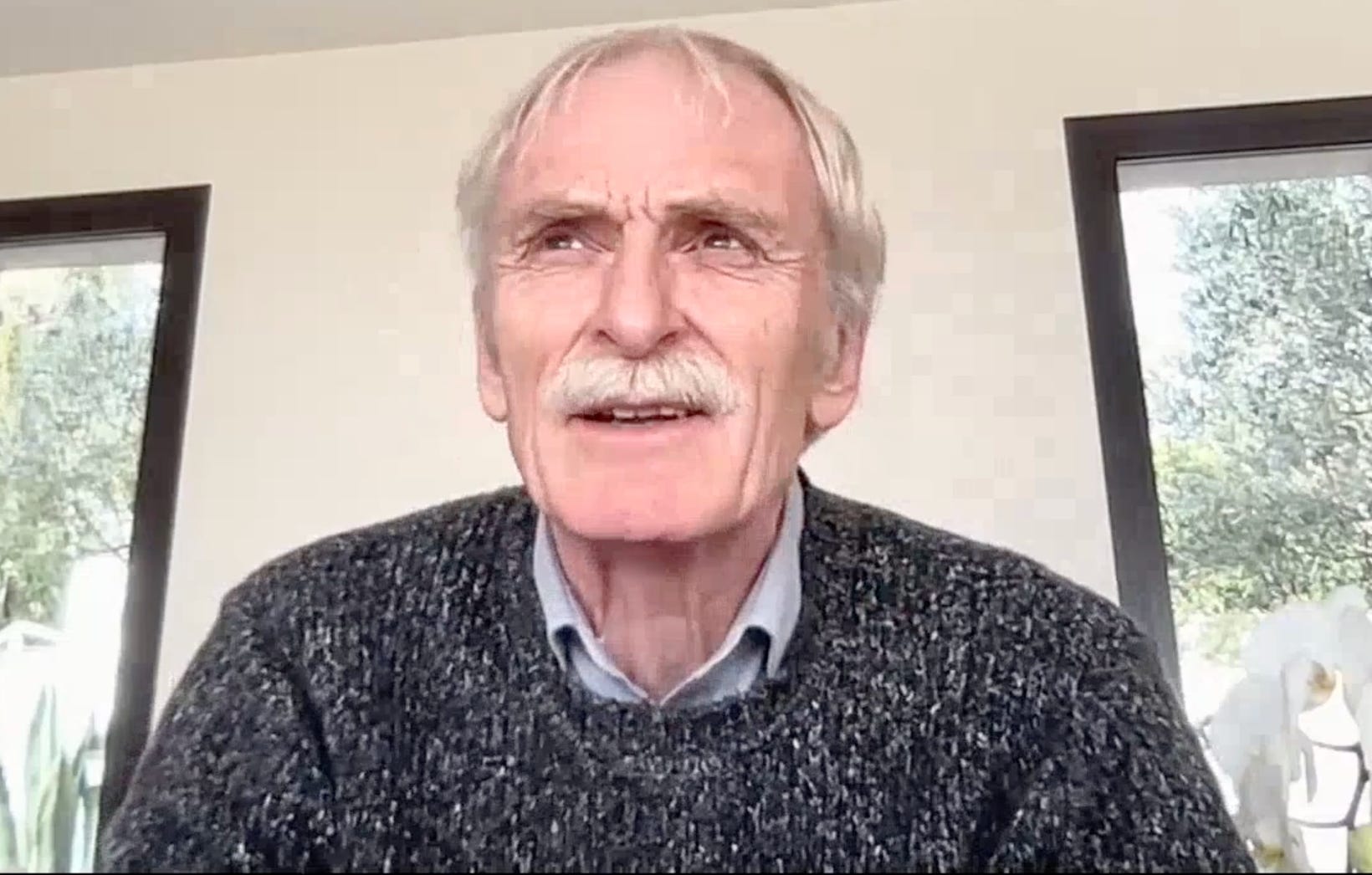
Professor Simon Wain-Hobson of the Institut Pasteur berated former NIH leaders Francis Collins and Tony Fauci for having “sterilized debate” over the dangerous gain-of-function research that many say likely started the COVID pandemic, adding that a controversial paper funded by the NIH called “Proximal Origins” that denied the possibility of a lab accident was based on “no data.”
Wain-Hobson’s comments came during a private talk he gave last month on gain-of-function research at the National Institute of Allergy and Infectious Diseases (NIAID), which Tony Fauci once led. The NIH invited Wain-Hobson to speak about dangerous gain-of-function research, which federal agencies are now seeking to better regulate, while waiting for the White House to release a new executive order.
The existence of this talk and its details have not been previously reported and makes clear that the Fauci regime is being erased from the NIH.
On a March video call with over 100 NIH scientists and officials, Wain-Hobson criticized NIH bosses for writing a 2011 essay in the Washington Post that dismissed concerns about dangerous virus research. Wain-Hobosn said this stifled discussion with a “Papal Bull” when the safety of virus research should have been debated and wrangled with by scientists.
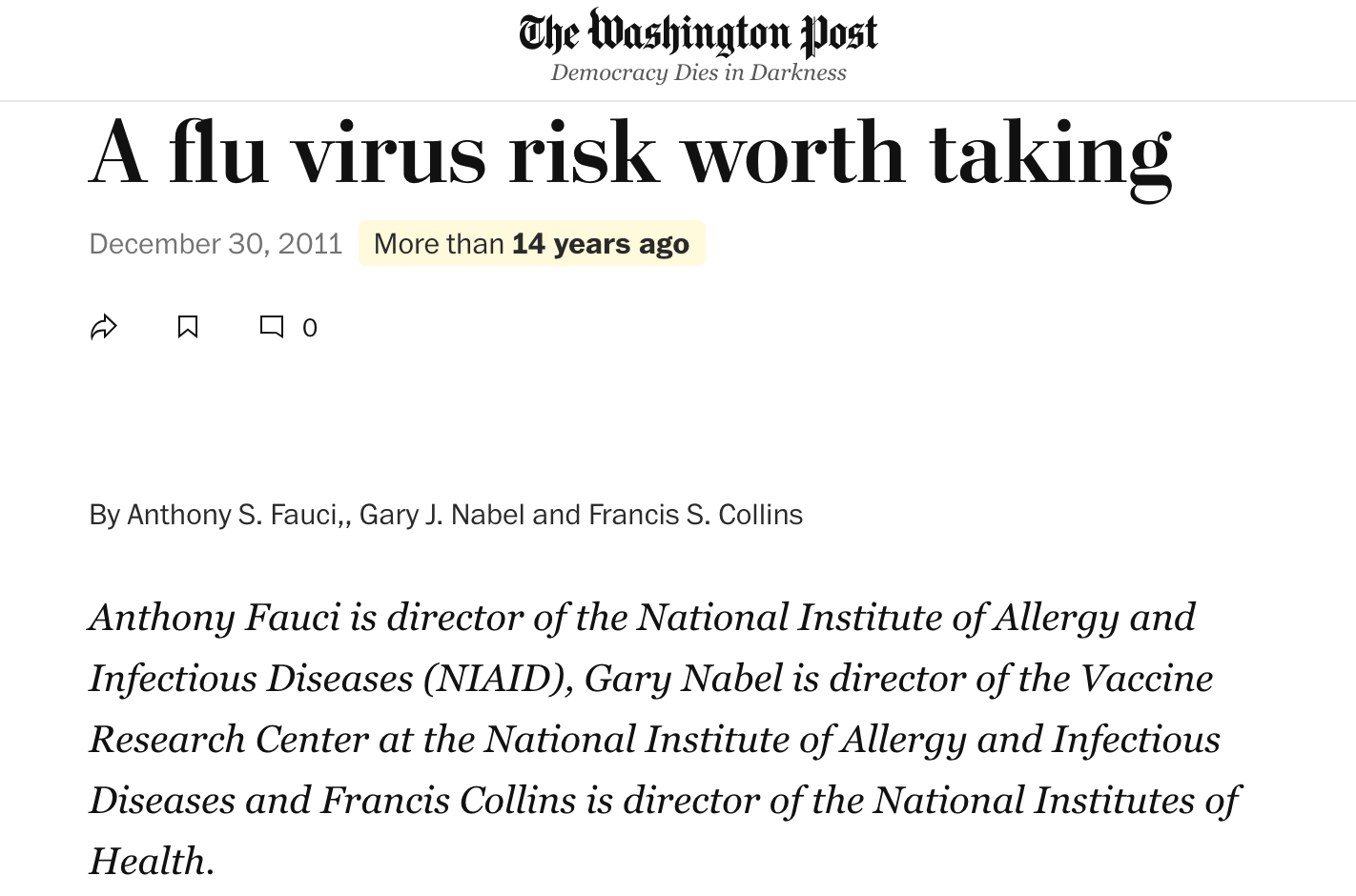
“And everyone was scared of doing this because Drs. Fauci, Nabel, and Collins had sterilized the debate,” Wain-Hobson said. He then apologized before continuing his criticism. “Sorry to be blunt,” he said. “I know these are former colleagues of somebody, but it was…the equivalent of a Papal Bull and it stopped all discussion. We can’t have this.”
Gary Nabel left the NIH the year after writing this essay to join Sanofi in 2012 as head of vaccine development. Both Collins and Fauci have since retired.
Wain-Hobson also condemned Nobel Prize winners for writing a May 2020 letter complaining about the cancellation of an NIH grant awarded to Peter Daszak of EcoHealth Alliance over safety concerns that his virus studies may have started the pandemic. “We believe that this action sets a dangerous precedent by interfering in the conduct of science and jeopardizes public trust in the process of awarding federal funds for research,” wrote the Nobel Laureates in a letter made public by the New York Times.
Wain-Hobson said the Nobel Laureates should have put public safety before virus research funding, especially for someone who was “not a strong scientist” like Peter Daszak. “This shows that scientists have to be educated because they are totally out of touch,” he said. “They’re in some sort of bubble.”
Selective segments of the talk follow below.
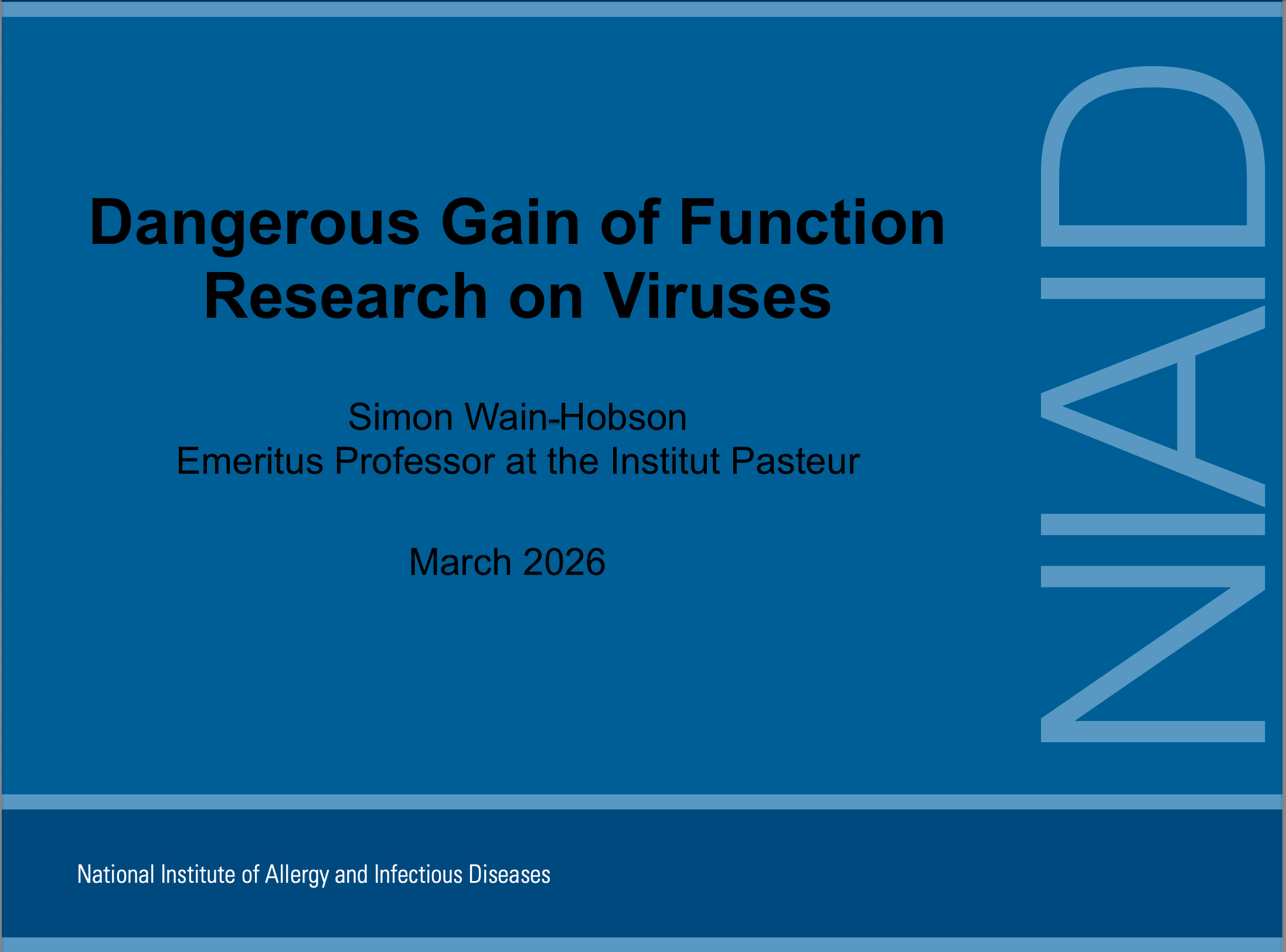
In his talk’s opening, Wain-Hobson called out the NIH and several scientists for obfuscating the meaning of gain-of-function research for well over a decade.
Around 2011, Ron Fouchier of Erasmus Medical Center and Yoshihiro Kawaoka at the University of Wisconsin conducted deadly gain-of-function research with H5N1 avian influenza virus. This research created a new and deadly virus that could spread through the air.
This was a potential biological weapon, meaning it had “dual use of concern.”
Wain-Hobson says the Fouchier/Kawaoka research was dubbed “gain-of-function” because that has a positive spin—you’re “gaining” something.
Since that time, scientists have tried to confuse and confound the difference between classical gain of function and these studies that created a deadly virus. Wain-Hobson places part of the blame for this on people at the NIH, and much of it on the American Society of Microbiology.
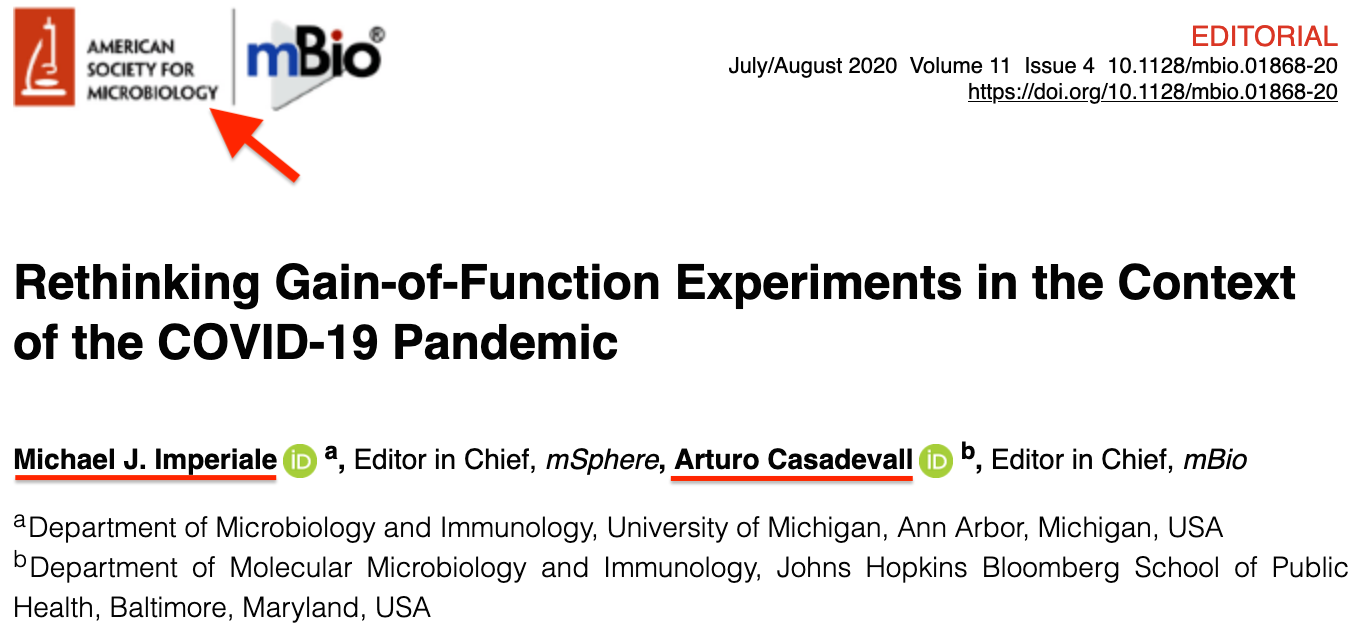
He also named professors Michael Imperiale and Arturo Casadevall as obfuscators, as well as Vincent Ranciello, who runs a Youtube channel that cheerleads for gain-of-function studies, while ignoring and downplaying the dangers.
“This has been a disservice,” Wain-Hobson said.
Wain-Hobson detailed the need for funders—meaning government agencies—and researchers to be honest about the dangers of pathogenic research.
Funders need to police research carefully, however, as scientists are too willing to ignore possible dangers to get grant money. He also warned that funders must be allowed to stop research, because they are responsible to the public.
“The ultimate in biosafety is protecting the public,” he said.
He cited the letter sent by Nobel Prize winners complaining when the NIH stopped a grant by Peter Daszak with EcoHealth Alliance. “The scientists cannot be egocentric and say, ‘We can override the safety and health of others.’”
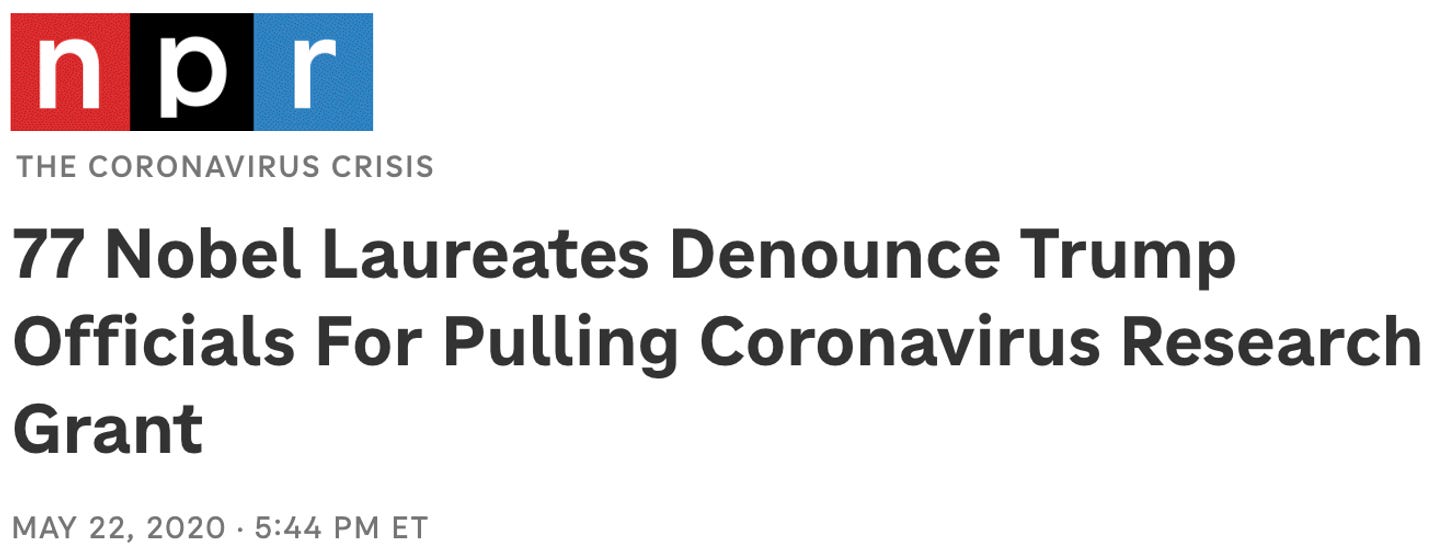
Days before Biden exited the White House, his administration formally debarred both Daszak and EcoHealth Alliance from receiving federal grants.
“Scientists are not top of the heap,” he said. “They are using taxpayer’s money.”
He then spent time explaining the difference between “gain-of-function” and “dangerous gain-of-function” which he defined as research that threatens humans, their livestock, and agriculture plants.
Wain-Hobson denigrated the “infamous Proximal Origins” paper which he called out for having “no data.” Nature Medicine published this paper in March 2020, by lead author Kristian Andersen of Scripps Research, to distract from the possibility that the COVID virus came from a lab.
House Republicans have pointed to the influence of Tony Fauci on the paper, while House Democrats released a report and supporting documents that found Wellcome Trust’s Jeremy Farrar helped “organize and facilitate” the paper and “led the drafting process of the paper.” The paper’s authors failed to note Farrar’s contributions as required by ethics disclosure rules.
In an interview on the DisInformation Chronicle Podcast, virologist and former CDC Director Robert Redfield said the paper should be retracted.
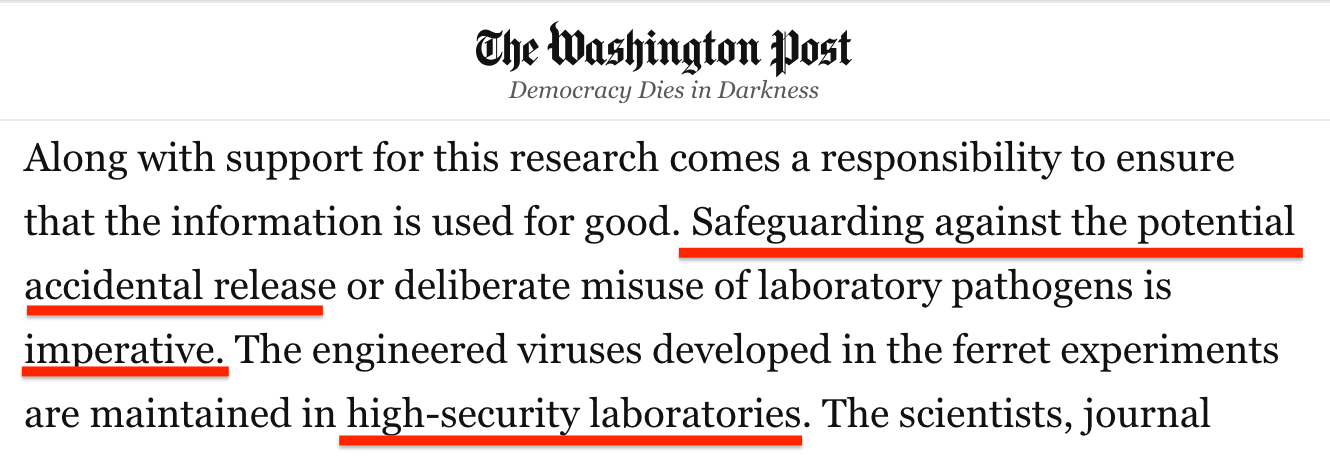
Finally, Wain-Hobson took NIH leaders to task for publishing a 2011 essay in the Washington Post titled, “A flu virus risk worth taking,” that curtailed debate around the dangers of virus research, at a time when the Fouchier/Kawaoka dangerous gain-of-function studies were being published. In their Washington Post essay, Collins, Nabel and Fauci stated that safeguarding against accidental release of dangerous viruses was “imperative” while assuring the public that these studies were taking place in “high-security laboratories.”
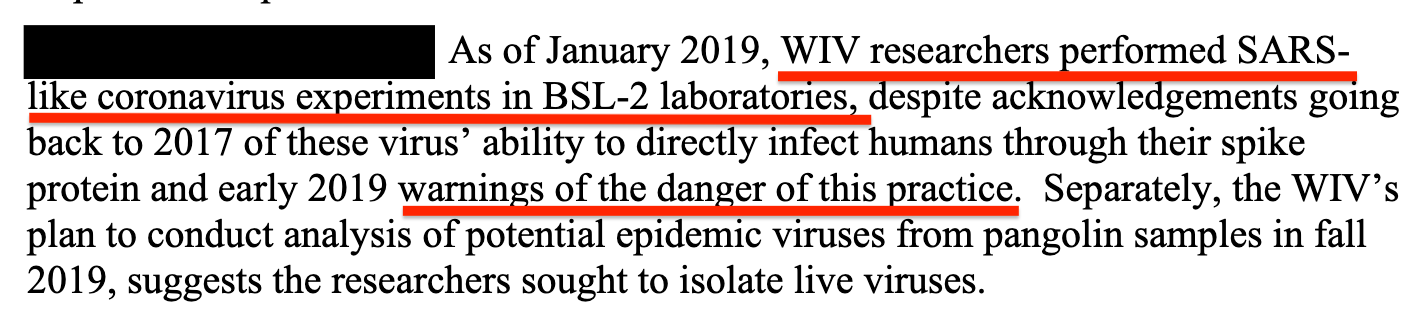
However, the Director of National Intelligence declassified a June 2023 report on the research conducted before the pandemic’s outbreak at the NIH-funded Wuhan Institute of Virology, concluding that dangerous gain-of-function studies were being conducted at BSL-2, a low level of biosafety, despite “warnings of the danger of this practice.”
“We can’t have the safety of society being dictated without discussion,” Wain-Hobson said. “I think that was a professional failure.”