

What has changed in modern warfare is not just technology. It is constraint.
The rules governing armed conflict, shaped in large part by the Geneva Conventions, place real limits on how force can be applied. These limits are not theoretical. They operate in real time, at the level of the individual soldier, the pilot, the commander, making a targeting decision. They shape what can be done, when it can be done, and often whether it can be done at all.
You cannot strike unless you can distinguish the combatant from the civilian. You cannot proceed if the anticipated civilian harm is judged disproportionate to the military objective. You are expected to accept a degree of tactical risk to reduce risk to noncombatants, ergo civilians.
In practice, this translates into hesitation, verification, legal review, and delay. It means fewer overwhelming blows and fewer moments where force is applied in a way that collapses the opponent’s system all at once.
Historically, wars were often ended by a concentration of force. Infrastructure was destroyed, supply lines were severed, and the enemy’s ability to sustain itself, both militarily and socially, was broken. That pathway has narrowed, and if the Geneva conventions are followed, it results in “forever wars.” The result is not necessarily defeat but something subtler and more corrosive. It is the erosion of the ability to end a conflict quickly and decisively. In the end, the countries at war may actually face more death and destruction, not less, as wars stretch out endlessly.
What replaces unrestricted warfare is incrementalism. Ground is taken, secured, and then contested again. Progress is measured in small gains that must be constantly defended. The same roads, the same towns, the same ground are fought over repeatedly. Control becomes temporary, conditional, and reversible. The United Nations keeps watch to ensure that the more powerful nations don’t overstep their authority. God forbid an unequal display of war power were to emerge. It is all about equity.
Into that environment steps the irregular fighter. Not a uniformed army standing in formation, but a fluid presence embedded within the civilian population. There are no fixed front lines and no clear boundary between the battlefield and daily life. Weapons are concealed, identities shift, and engagement happens on their terms. A shot, an explosion, and then a disappearance back into the fabric of the town or village.
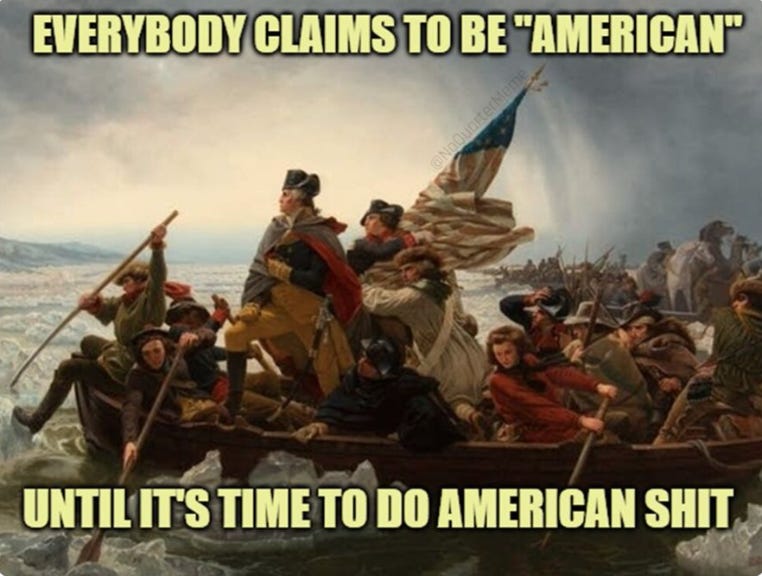
Asymmetric warfare is a type of war between nations whose relative military power, strategy, or tactics differ significantly. Before the recent amendments to the Geneva Conventions, such wars would have been finished rather quickly. Waging successful asymmetric warfare is how the United States gained independence from the most powerful war machine of the era, Great Britain.
Guerrilla tactics or warfare focus on avoiding head-on confrontations with enemy armies, typically because of reliance on inferior arms or forces, and instead engage in limited skirmishes to exhaust adversaries, wear down their political will, and force them to withdraw. Organized guerrilla groups often depend on support from either the local population or foreign backers who sympathize with their efforts.
This is not incidental. It is strategic. These tactics exploit the very protections that constrain conventional forces. If you cannot clearly distinguish a combatant, you cannot lawfully engage, because of the Geneva Convention constraints. If engagement risks civilian harm, you hesitate or accept consequences that extend far beyond the battlefield. The civilian environment becomes a form of cover, not only in the physical sense but also in the legal and political senses.
What follows is a different kind of war. Not one defined by decisive battles, but by persistence. Small-unit engagements, ambushes, improvised explosives, and raids that achieve limited objectives and then dissolve the warfighter unit. Territory is cleared and then contested again. Control is never absolute. It is negotiated, temporary, and constantly challenged.
The Geneva system, particularly the 1949 Conventions and the 1977 Additional Protocols, did not create guerrilla warfare. But they did change the incentives that shape it. Once a legal regime strongly protects civilians, hospitals, detainees, infrastructure, and prisoners, a state army that follows those rules has fewer brutal options available. It cannot level entire districts, execute captives, or treat every military-age male as a target without consequence.
An insurgent or irregular force operates under a different logic. It can blend in with civilians, use civilian infrastructure, and force the stronger army into a dilemma. Hold fire, or strike and incur political and legal costs. The humanitarian logic of the law is clear and, in many ways, necessary. But the military side effect is less often acknowledged. Some conflicts become longer, more indecisive, and more politically exhausting.
Afghanistan provides the clearest recent example. The Taliban did not present itself as a conventional army to be destroyed. It was integrated into the population, spread its forces, and relied on time, religious beliefs, and propaganda as strategic advantages. The war became one of containment rather than conclusion. Corruption, weak governance, and external sanctuary all played critical roles, but the operational environment mattered as well. The allied coalition could not apply the kind of overwhelming force that historically ends rural insurgencies quickly. The result was a long war that ended not with a decisive victory, but with exhaustion and collapse.
Iraq followed a similar trajectory, though in a more fragmented form. The initial invasion was rapid and decisive. What followed was not. The insurgency regenerated faster than it could be eliminated because it did not exist as a fixed target. Urban warfare, sectarian fragmentation, and civilian entanglement made large-scale decisive action increasingly costly. The conflict stretched, shifted, and persisted, even after formal victory was declared against ISIS.
The Geneva framework is ill-suited to the modern battlefield. It narrows the pathways to decisive victory and expands the conditions under which conflict can persist.
It is in this context that the current debates should be understood. There is a growing tendency to claim that President Donald Trump is committing war crimes in the current Iranian conflict. I disagree with this logic. What has changed is something more consequential. The way the Geneva Conventions are being interpreted, the way they are being applied, and most importantly, the willingness to subordinate them to the outcome. The Trump administration is exercising military power decisively and granting greater operational latitude to battlefield commanders to achieve military objectives more rapidly and definitively.
Over the many decades since the decisive Allied victory in WWII, American warfighting has drifted into a constrained model built on the assumption that if you fought carefully enough, precisely enough, and with sufficient regard for civilian infrastructure, you could achieve both moral legitimacy and strategic success. The protracted and ultimately failed US military adventures in Vietnam, Iraq, and Afghanistan should have challenged that assumption. What these military and diplomatic failures demonstrated instead is that when one side follows the rules rigidly, and the other side exploits them, the result is not a cleaner war. It is a longer and ultimately more destructive war. The United Nations, by reinforcing those norms, contributes to that dynamic. Despite its charter, in the many decades since its creation, the UN has completely failed to prevent war. What it has achieved is the prolongation of armed conflict and civilian suffering by facilitating asymmetric, guerrilla warfare. And this should surprise precisely no-one. By its very structure, the UN is biased towards less militarily and economically powerful nation-states. By promoting policies that favor “equity”, the UN advances the interests of less developed (often socially primitive, socialist, or communist) nation-states.
The core principle of the Geneva framework is distinction. Separate the civilian from the combatant, the hospital from the barracks, the water system from the weapons depot. That principle works when both sides operate as states with defined militaries, clear lines of demarcation, and a mutual commitment to international rules of engagement. It begins to break down during asymmetric warfare, when the adversary embeds itself within civilian systems or builds its strategy around proxies, militias, and urban cover. That is no longer an exception. Under the influence of the Geneva Conventions, asymmetric warfare has become the dominant model.
What has changed in recent strategy is not the abandonment of rules, but their reprioritization. Instead of treating them as the governing objective, they are treated as one constraint among many, and not always the top priority. That is a fundamental shift in posture.
You can see it in the willingness to target systems that were once considered politically or legally untouchable in the post WWII era of warfare. Energy infrastructure, transport networks, economic chokepoints, and other foundational systems are increasingly viewed through a different lens. If they sustain the state, they sustain the war. And if they sustain the war, they become part of the battlefield.
This reflects a rejection of the incremental model that has defined much of the last sixty years. Limited strikes, calibrated responses, and carefully managed escalation were intended to prevent wider conflict. In practice, they often prolonged or prevented conflict resolution, paradoxically increasing civilian suffering.
The emerging approach is more direct. Apply pressure across systems. Escalate earlier. Force a choice. Continue on the current path and absorb systemic damage, or step back. It is coercion, not containment. A battle strategy focused on efficiently winning once a decision to move from diplomacy to armed conflict has been made.
Critics are not wrong to be concerned. Once a major power begins to reinterpret these boundaries, others will follow. The distinction principle weakens, the core Geneva Conventions position that one must always distinguish between combatants and civilians, and only intentionally target clearly defined combatants and military objectives. Reciprocity takes hold. Protections erode at the margins.
But the counterargument is just as clear. A system that cannot produce decisive outcomes does not prevent suffering. It stretches it out. It rewards the side most willing to operate in the gray space and to hide within civilian systems. It turns war into a slow bleed rather than a sharp shock.
That is the tension at the center of modern conflict. Current international law was built for a different kind of war. What we face now is hybrid, decentralized, and embedded. The rules did not disappear. The battlefield changed around them.
Under President Trump, the Geneva Conventions have been reframed. Because wars fought by attorneys, rather than skilled armed forces focused on rapid, decisive resolution of conflict, will never provide a clean outcome. War is war; to end such a conflict cleanly and surgically, war fighters (and battlefield commanders) must be given permission to act decisively.
Remember the saying, anything is fair in love and war? After reading this very informative article, the saying seems right in the money.
Accurate analysis. One should consider who curently is behind the Geneva Convention. Perhaps, they are the ones who endorse / perpetuate continuous wars in order to contain the masses and retain control over the global economy. Who, financially, controlled the Staights or Hormuz? Lloyds of London. Where do these high ranking Iranian officials live in luxury and store their wealth? London. POTUS isn't afraid to take this on.