

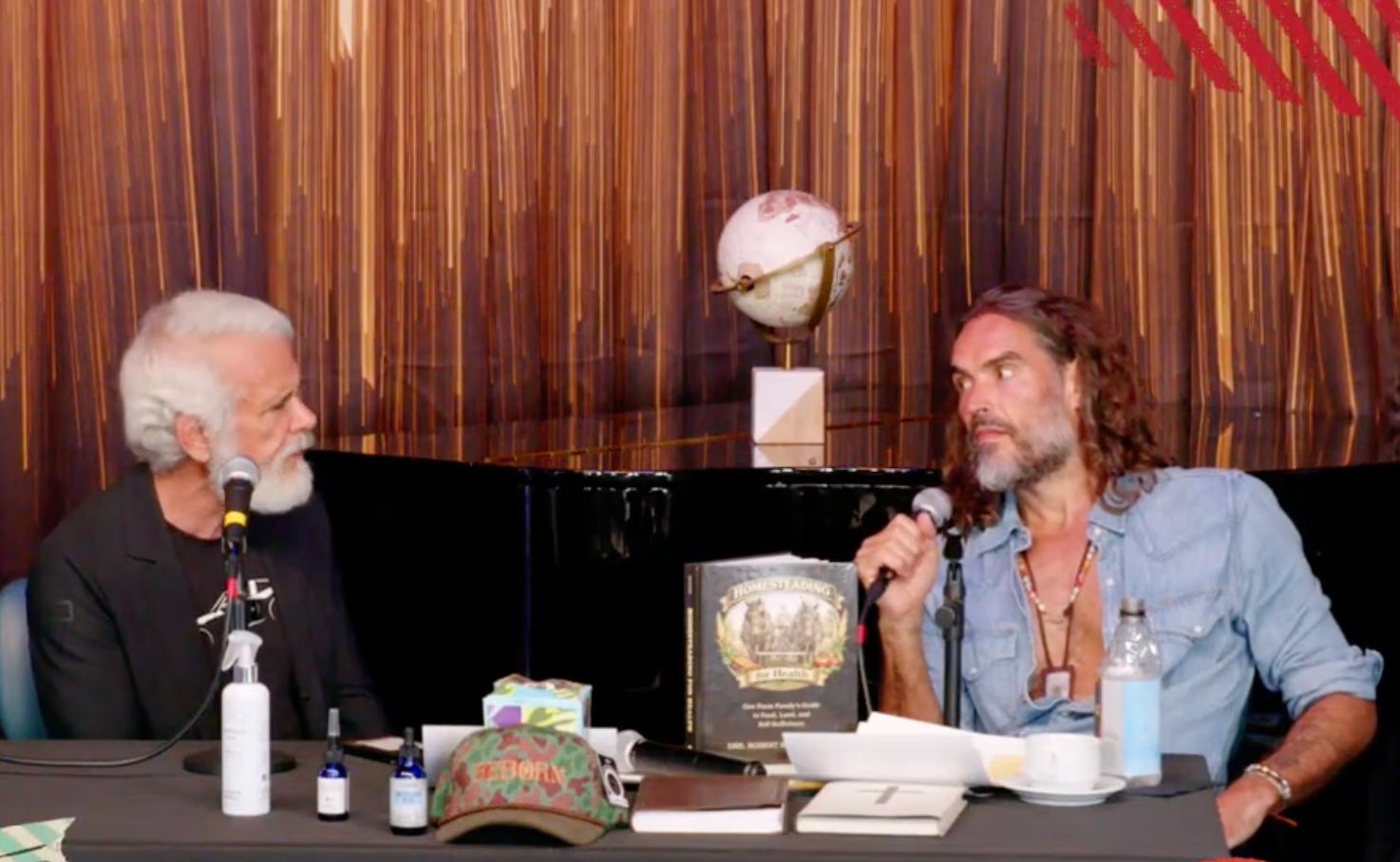
Well, two weeks ago we were in Israel, and yesterday, for just one day, we were in Florida so Robert could be on Russell Brand’s podcast, Stay Free.
Now, Russell Brand’s podcast - “Stay Free” is always fun and this was a excellent gig, as Russell had a live audience and a full studio - which Robert really responds to.
But back to the farm and our busy lives:
Last night, the Delta plane was delayed in Atlanta, so we didn’t want through the front door until 1:30 AM, after spending five hours hanging around the Atlanta airport, after a long day of being on air. The night before, flying in, our plane was also delayed for five hours - you guessed it, on another Delta flight and in Atlanta too. Not fun. Generally, we avoid the Atlanta airport - because bad stuff always happens when we fly through there.
Last week, we had a film crew of eight people at the farm for three days, all of whom needed feeding. This weekend, we have a group of UAP whistleblowers coming to the farm for a retreat. Then we have another group the following week, and finally, Robert and I will be attending the Polyface/Brownstone event at the end of August.
So yes, August is apparently our quiet month.
Meanwhile, about three weeks ago, just as we were trying to pack for Israel, lightning struck the ground near our main house and blew out the buried electrical cable. Completely. Which required a new buried line be placed in the ground from the electrical panel, about a 100 feet away from the house, to the house. This was not a cheap date… and it took time, a lot of time, with rented equipment breaking down and the electrician trying to work this huge emergency job around his already scheduled work.
We had to move up to the guest house, which immediately created a rather elaborate game of musical beds as we figured out where all the various people coming to the farm were going to sleep.
Then, since the main house was already out of commission, I started looking at the carpeting. It is about a decade old and has survived four dogs for most of that time. It has served honorably. But it was time. OK - it is past time.
So we, meaning I, decided to replace it with LVP flooring.
And, of course, if you are going to put in new flooring, you really ought to paint first.
And if you are already painting and replacing floors, well, there are a few things in the kitchen that really ought to be done....
You can see where this is going.
So, on top of having no electricity in the main house for three weeks, we now have painters, followed by flooring installers, followed by some kitchen work. Which meant that I suddenly had to pack up much of our belongings, empty rooms, move furniture, take art off the walls, and generally dismantle the house.
Basically, we are living in the guest house for the next two months.
Because apparently we didn’t have enough going on.
And yet, here we are in mid-August, and somehow the vegetable gardens are actually doing pretty well.
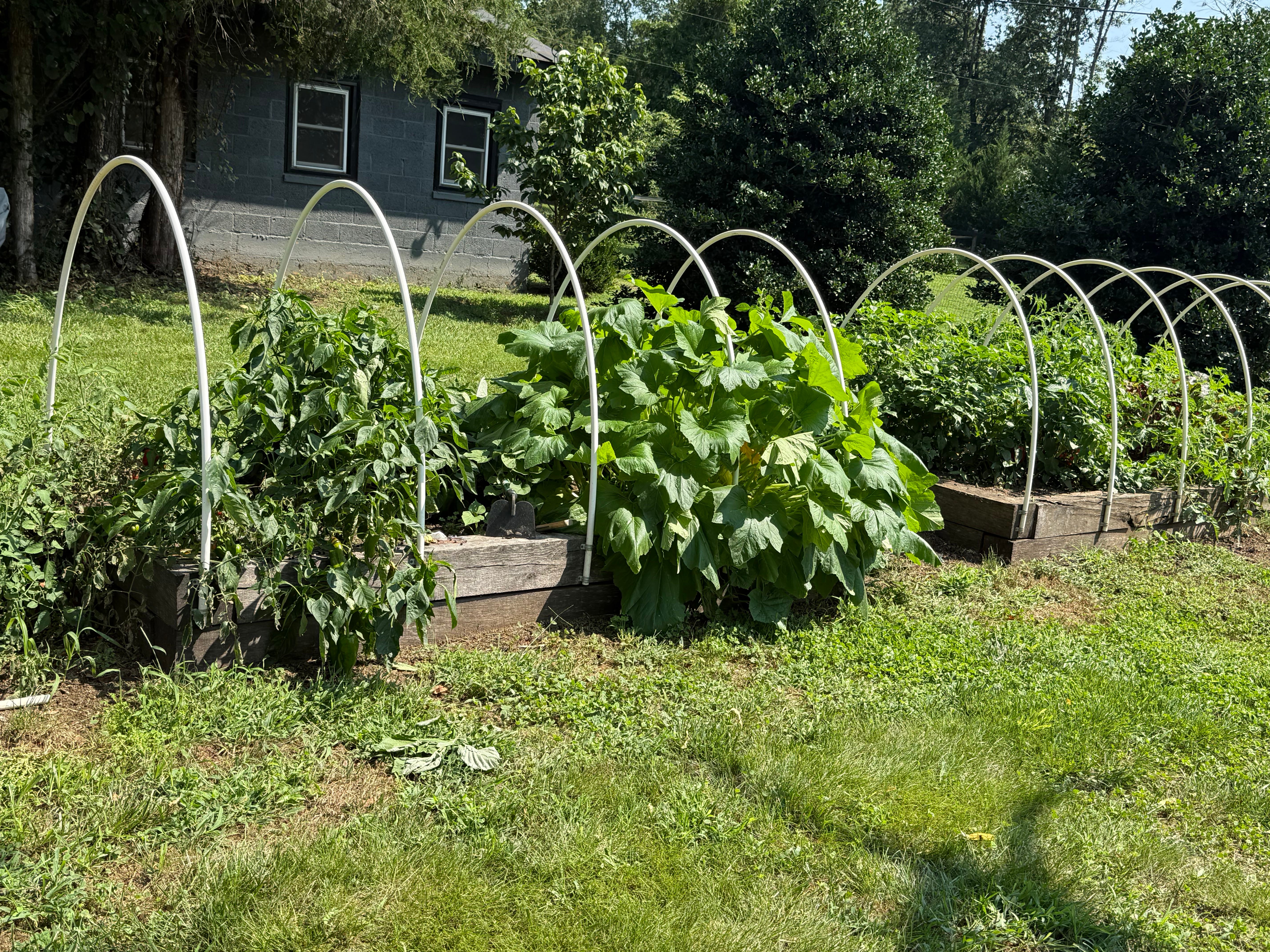
We have yellow squash and cucumbers that were planted late and are only now starting to bear fruit.
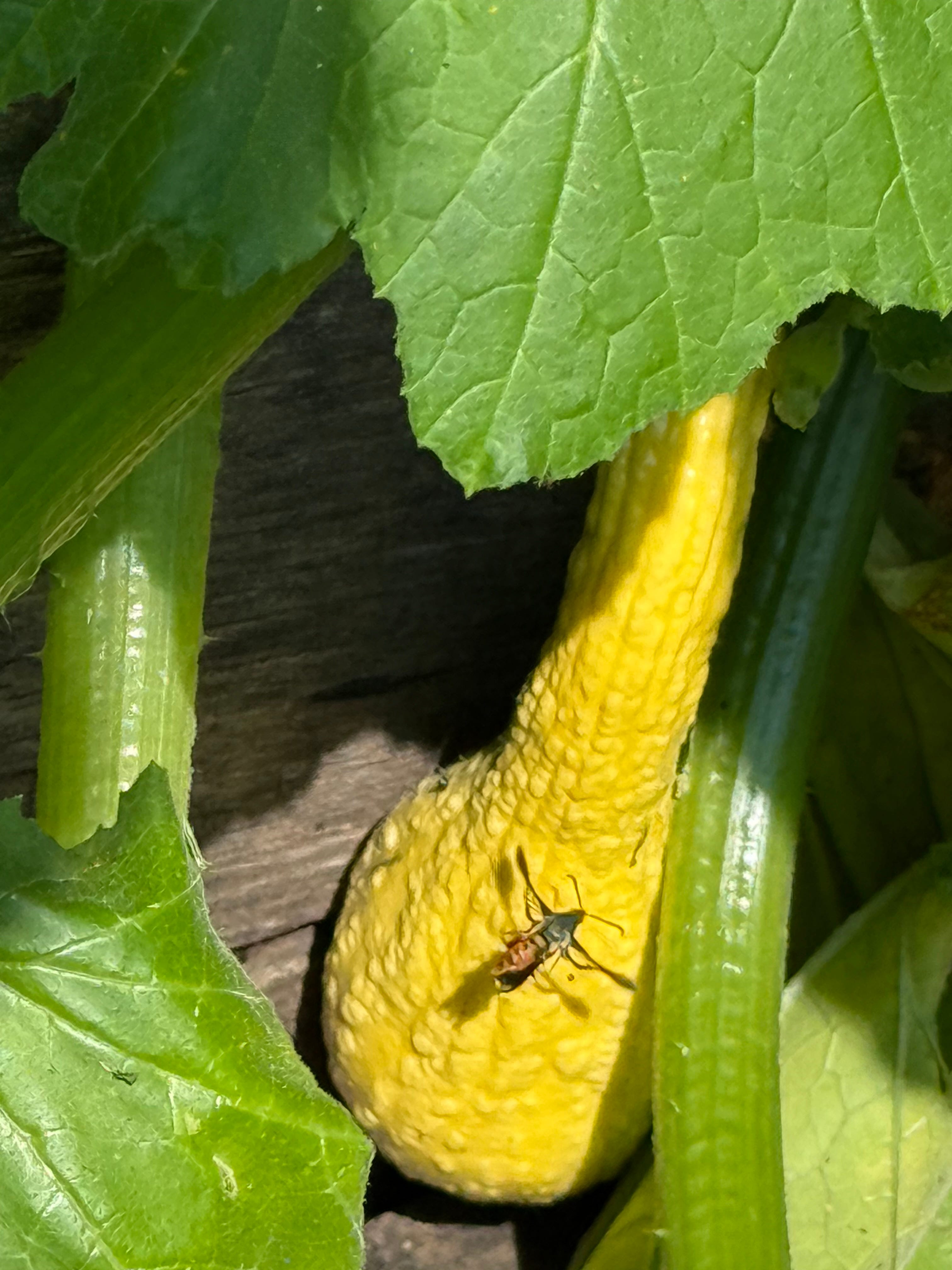
The tomatoes have finally decided to get serious about producing, which means I need to start freezing the harvest before the kitchen disappears under a mountain of tomatoes
Some of the weird varieties that self-seeded this year from last year’s plants are doing just fine and producing black tomatoes of various hues.


The peppers are coming on strong. I grew some tiny little peppers from seed this year, “tear drop peppers,” because I had some jarred ones in a salad last winter at a restaurant and loved them. I now have hundreds of the little things in three varieties: yellow orange, and red.
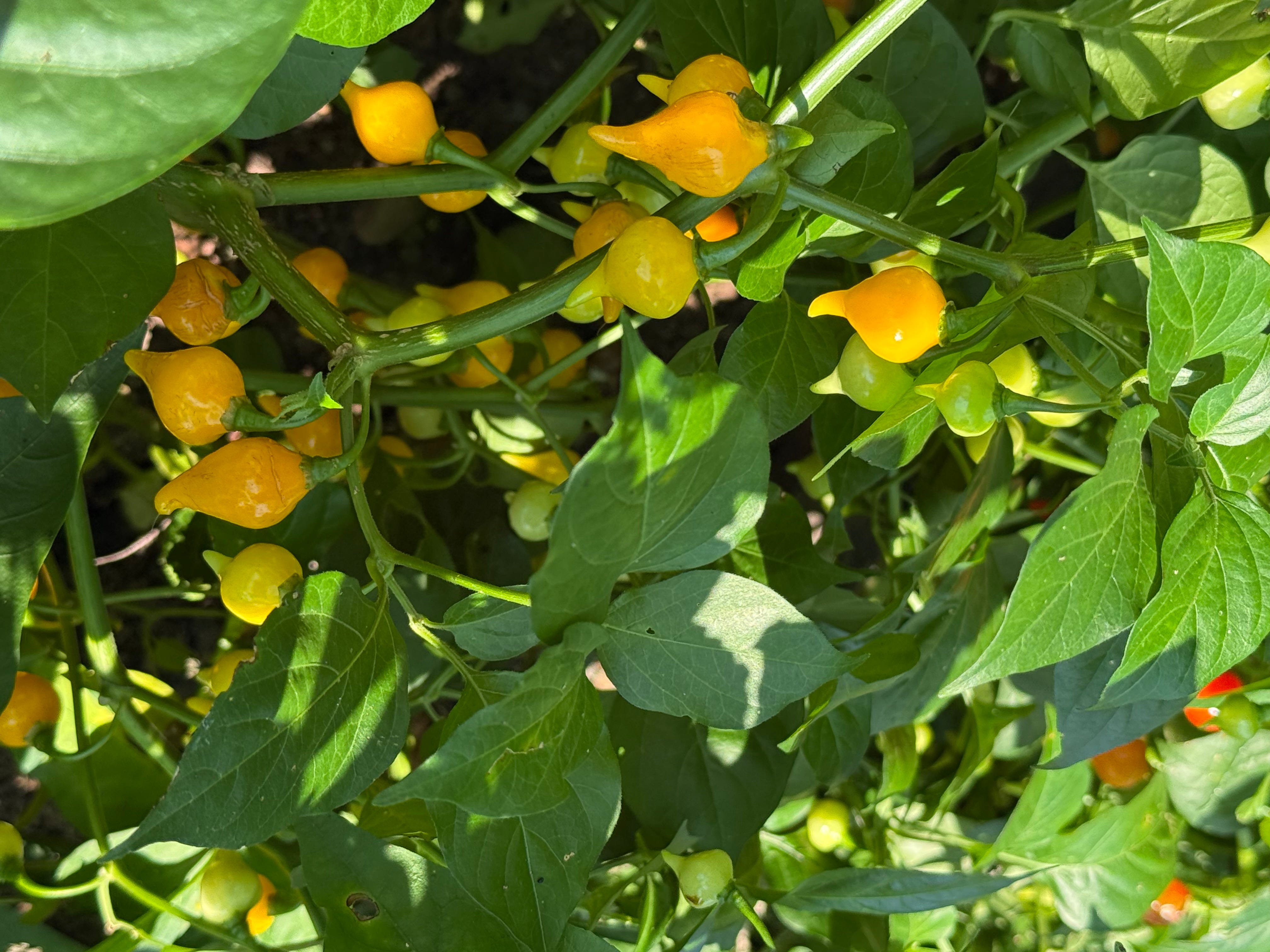
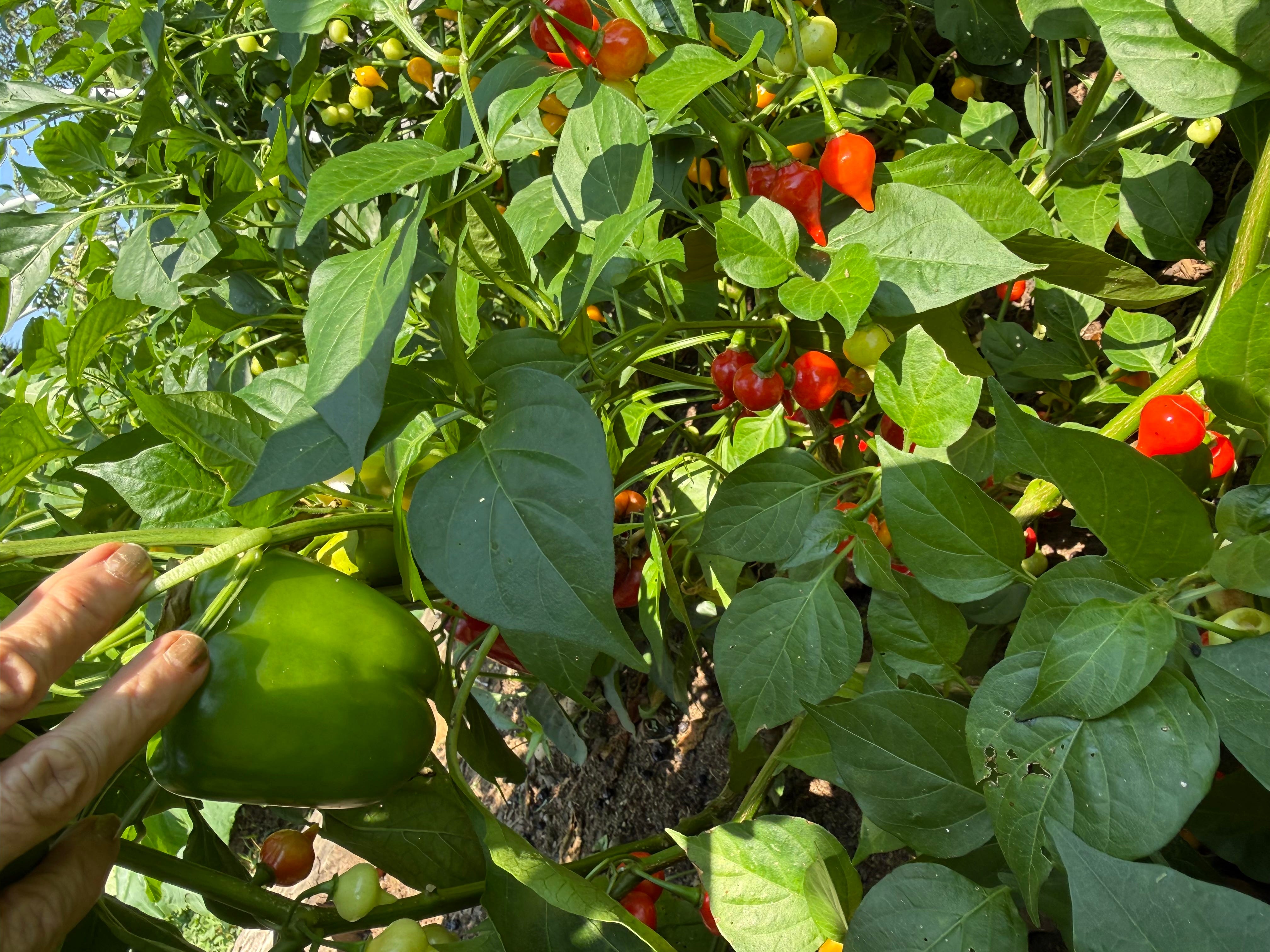
They can certainly be frozen for cooking, but if I want them for salads and want to preserve that wonderful crunch, they need to be pickled. So this week is officially micro-pepper pickling week. Since I am using a properly acidified vinegar brine, I can use a water-bath canning method rather than pressure canning for shelf-stable storage.
We also have a good crop of Anaheim peppers. Those I want to let ripen a little longer, ideally getting some more red on the fruit before harvesting. Then Robert will fire-roast them on the barbecue, before I peel chop and freeze them.
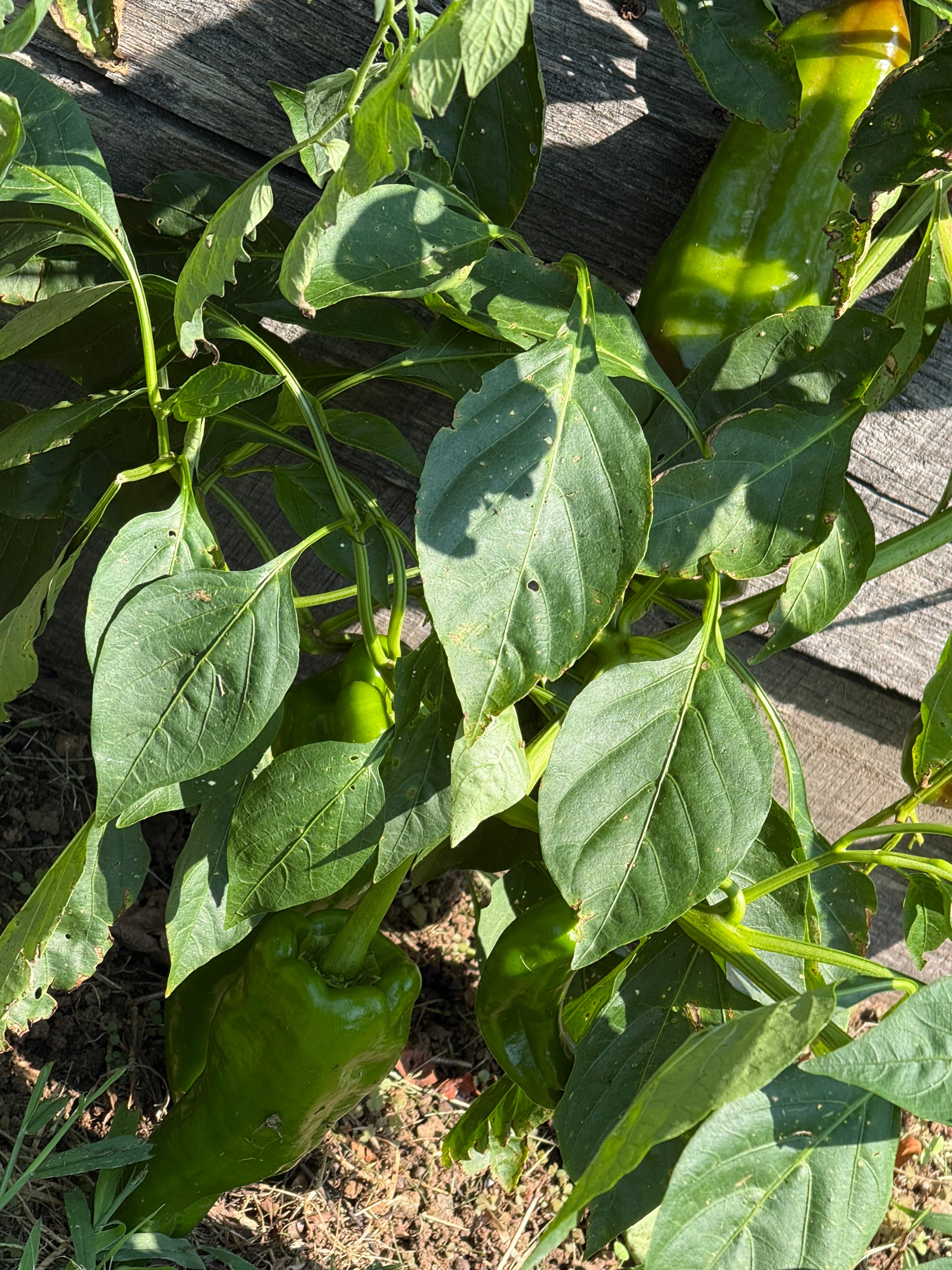
And yes, botanically speaking, peppers are fruits. I know. It still feels wrong.
The kale, meanwhile, has turned into a monster and needs to come out. Which means it is already time to start thinking about the fall garden: more kale, lettuce, greens, and other cool-weather crops. I will cover those beds with netting, both to keep the bugs out and to provide a little shade while we are still dealing with the August heat.
And of course, the citrus is citrusing. As many of you remember, I have a number of lemon and lime plants which produce copious amounts of fruit. I do have to bring them all into the greenhouse each winter. Tip: if you don’t have a greenhouse, they can be overwintered in the house.


One of my more interesting garden experiments this year, though, involves garlic.
Last month, I harvested all of our garlic, which was a huge job. I pulled it all, lightly rinsed it, even though you aren’t really supposed to wash garlic intended for long-term curing because damaging that papery outer skin can make it more vulnerable to rot and pests.
But I hate peeling garlic when everything is covered in dirt.
Since my plan was to dry it for about a month, clean it, separate the cloves, and freeze them whole anyway, I decided to live dangerously and wash the dirt off.
A month later, I put on a podcast and started peeling.
And peeling.
And peeling.
One thing you discover when processing that much garlic is that garlic juice is surprisingly hard on your skin. After enough exposure, your fingertips start cracking, and it actually becomes fairly painful.
Which reminded me of something I had seen in a documentary about garlic processing in China. China supplies a very large share of the world’s garlic, and there have been documented cases of Chinese prison labor being used to peel garlic. Former prisoners have described losing fingernails after prolonged hand-peeling and eventually resorting to their teeth when their fingers became too damaged to continue.
That image has stuck with me.
I don’t particularly want to contemplate what may be getting onto peeled garlic under those conditions. China also bleaches their garlic and farming is often done with sewer water, as clean water is in short supply.
More reasons, in my opinion, to grow your own garlic when you can, or buy American-grown garlic from a source you trust. Again, the whole cloves can just be put into jars and then taken out as needed.

But this year’s garlic produced another surprise.
When I harvested it, some of the scapes had been allowed to mature and flower. They were so pretty that I collected them, thinking the dried blossoms might make an interesting flower arrangement.
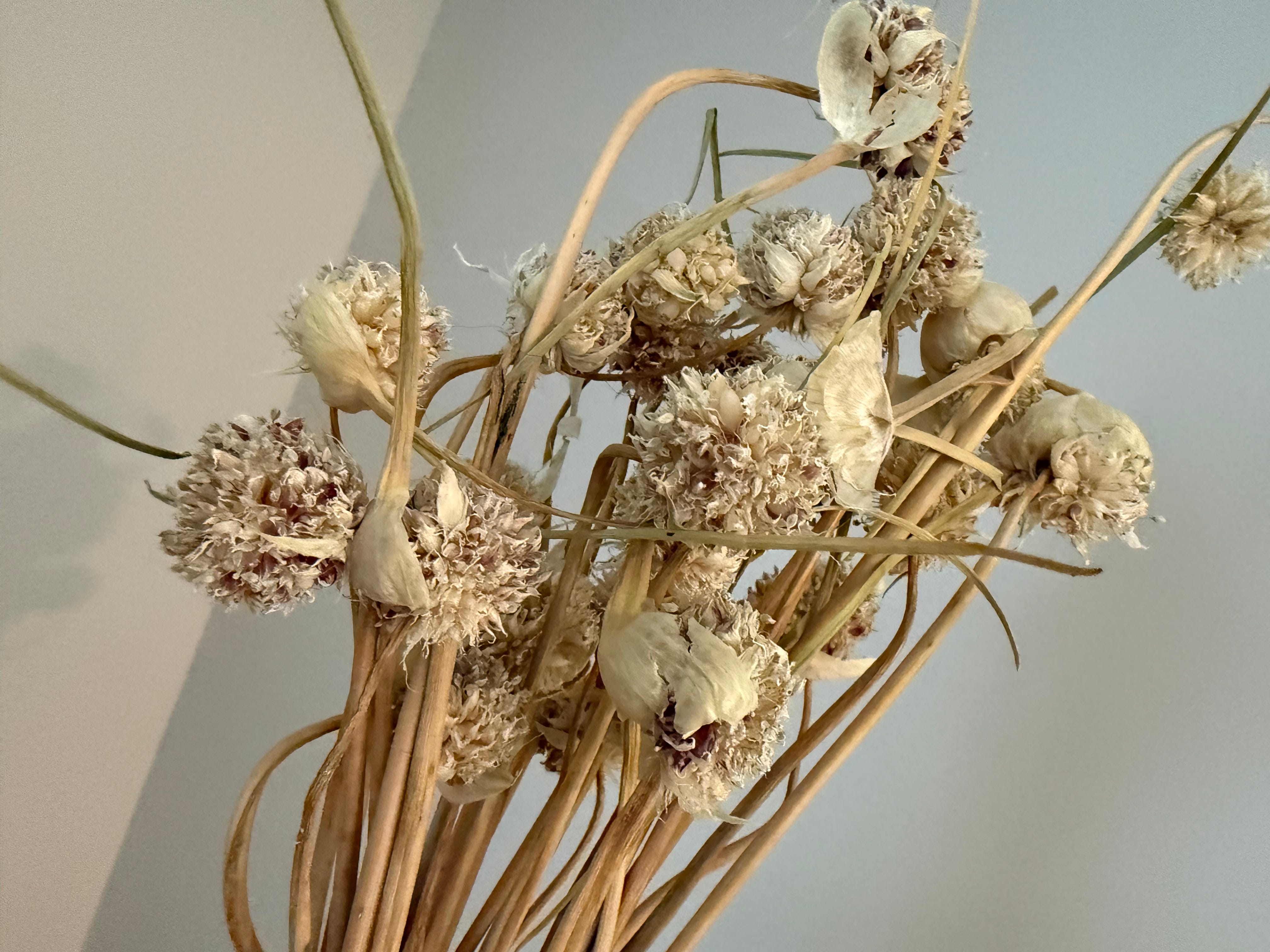
Over the next month, however, they began dropping hundreds of tiny little bulblets
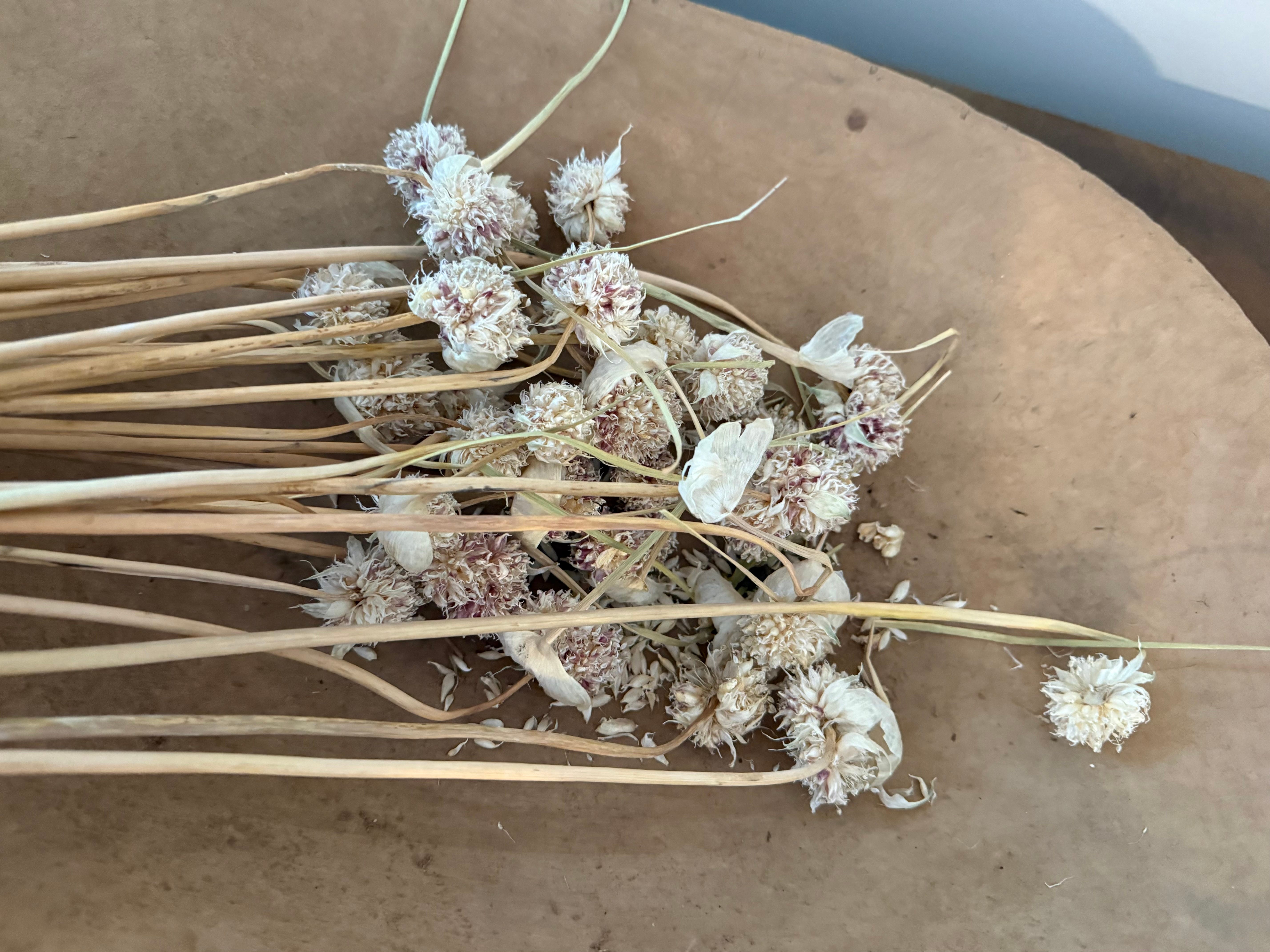
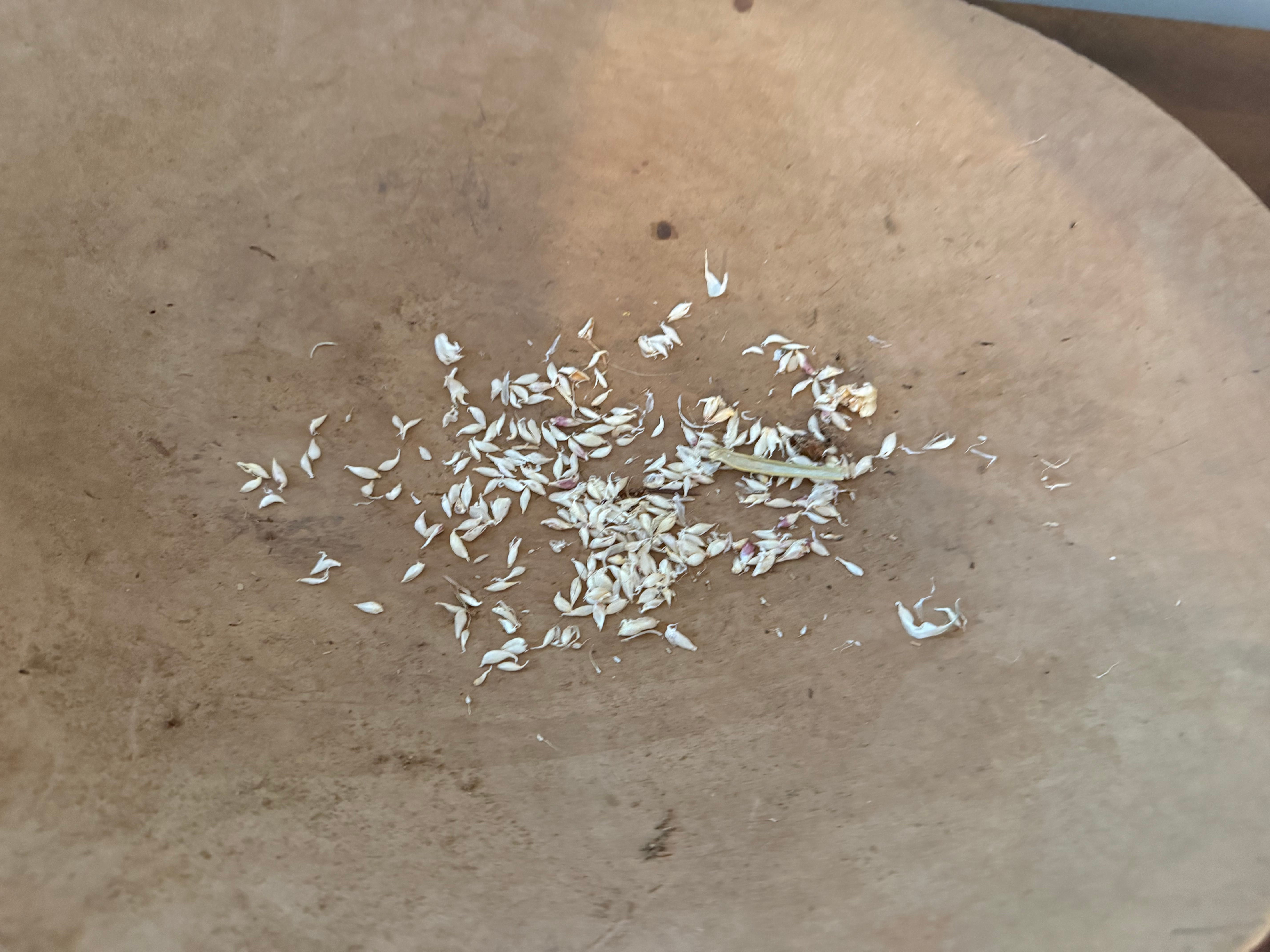
It turns out these aren’t true garlic “seeds” at all. They are bulbils, tiny vegetative clones that form in the flower head. And suddenly, as I stripped the garlic flowers of these micro-bubils, I had thousands of miniature garlic cloves.
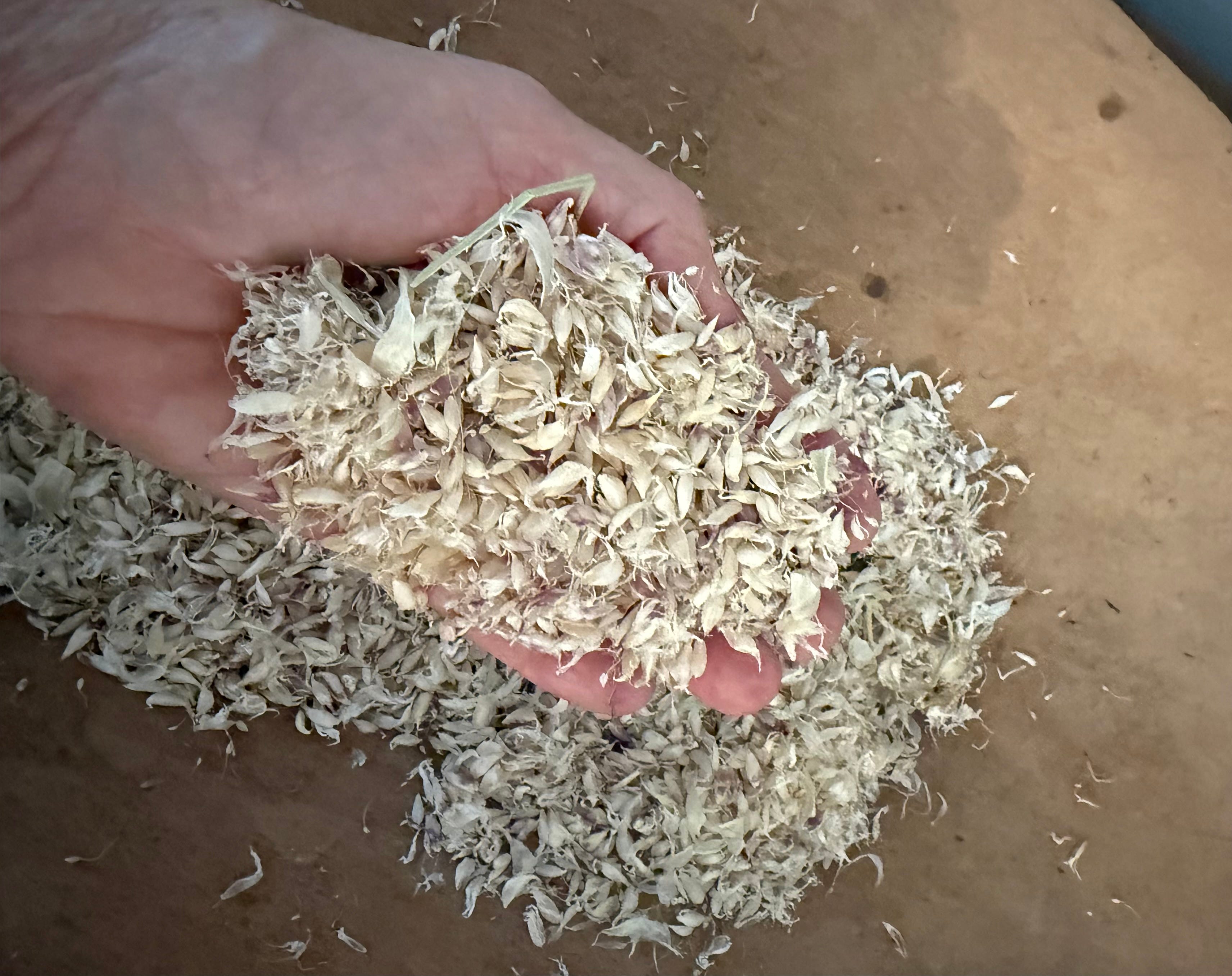
Which, naturally, meant I need another project.
Growing garlic from bulbils takes patience. Plant them in the fall, and the first year generally produces small single bulbs, or “rounds.” Those can be left or replanted, and in another growing cycle they can develop into the familiar multi-clove garlic bulbs.
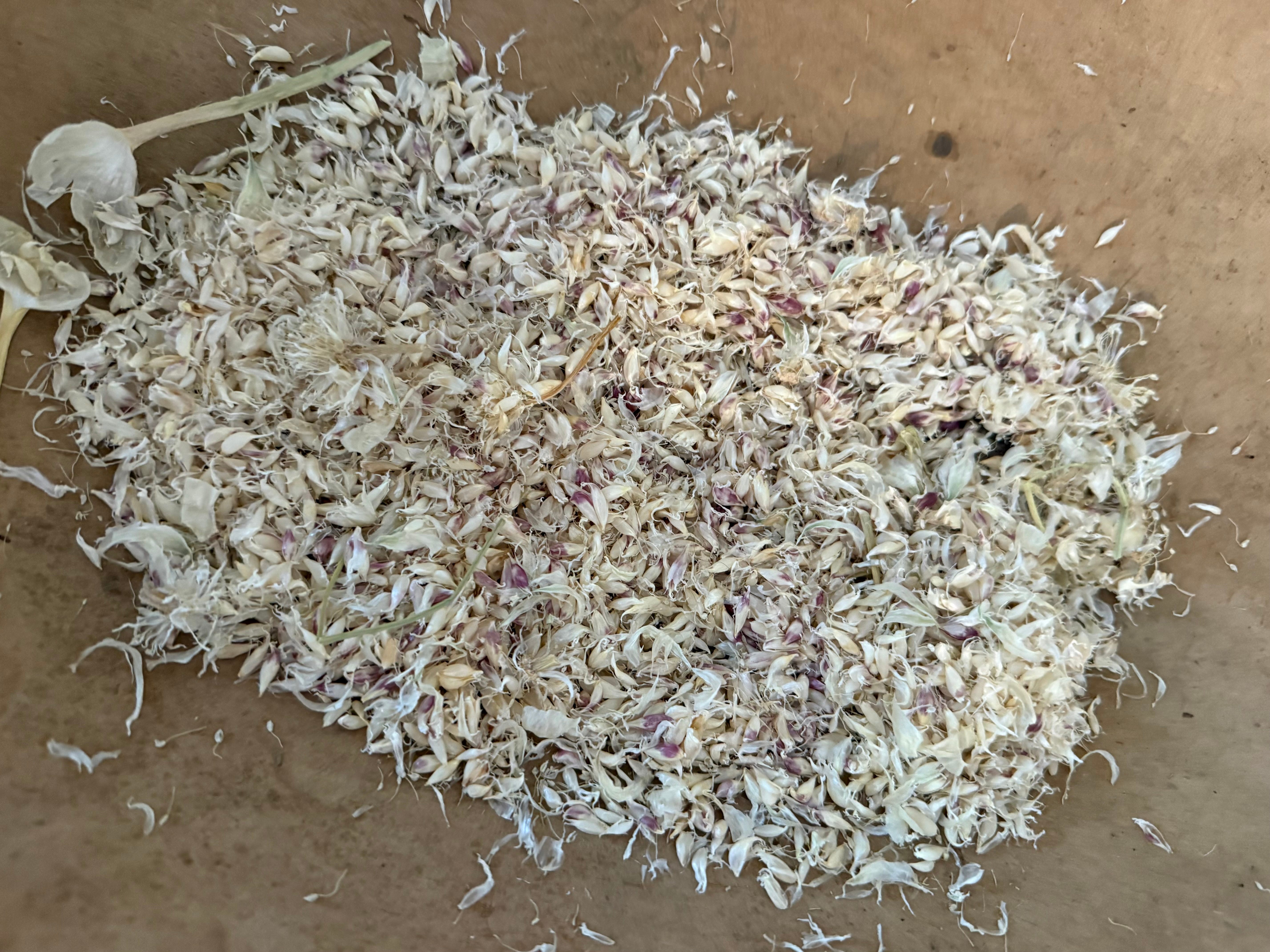
So now I know exactly what I am going to do with them.
Around our wellhead, I always plant something because I don’t want to mow too close to it. We also have rocks strategically placed around the area, which makes mowing there a nuisance anyway.
Last year, I planted pumpkins there and ended up with roughly 300 pounds of pumpkins.
This year, I planted squash and what was advertised as a “micro” marigold.
The “micro” marigold apparently did not read the seed packet.
It turned into a monster and completely outcompeted the squash. From a food-production standpoint, the bed was something of a disaster.
So this fall, I am going to scatter-plant my thousands of little garlic bulbils in that bed, as in other places on the farm that we let go wild and basically leave them alone for two years.
I am ridiculously excited to see what happens.
If this works, by 2028 I may have enough garlic not only to feed ourselves, but to donate tens of pounds to the local food bank and give garlic to virtually everyone we know for Christmas.
Friends and family, you have been warned.
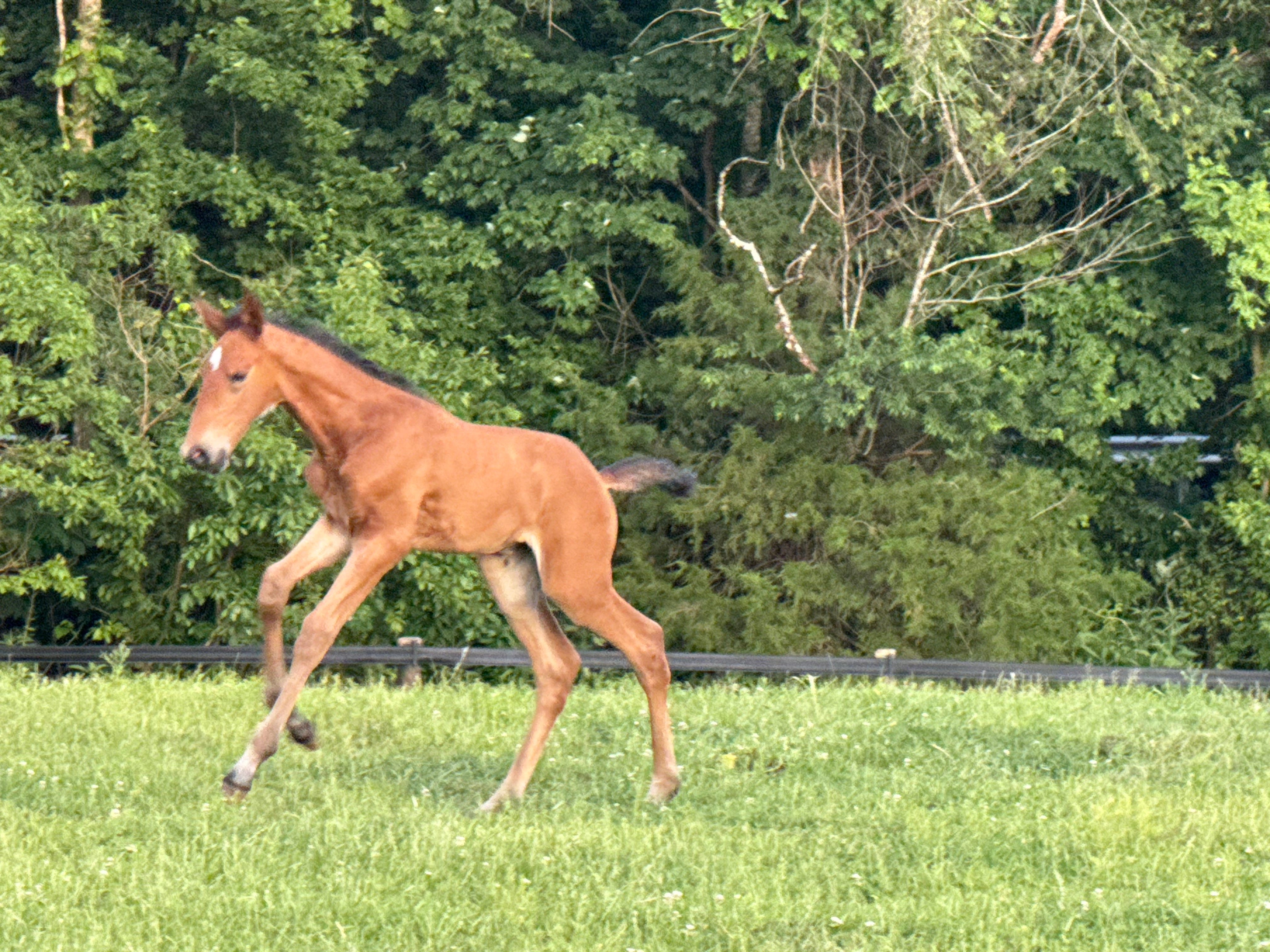
Meanwhile, the three filly foals are growing like weeds. With three of them on the ground, we finally had to make the difficult decision to sell one. We are keeping the black filly and the buckskin and will be offering the beautiful bay filly for sale. I have been so busy, that I have hardly had time to work with them, let alone take photos. In order to sell a horse in today’s market, one needs good photos and video - so I guess that is another job for another day soon.

And, of course, breeding season continues.
So far, we have one mare confirmed pregnant. Unfortunately, the first round of artificial insemination on our buckskin mare, Quieta, a repeat of last year’s breeding, did not take. We are now well into round two.
Each round costs roughly $3,500.
So, if this second attempt is successful, we will already have about $7,000 invested in that foal before it has even been conceived successfully, much less born, fed, handled, registered, trained, or done anything useful whatsoever.
People sometimes wonder why horses are so expensive.
There is a reason.
So that is August on the farm: international travel, film crews, UAP whistleblowers, lightning strikes, electrical excavation, house renovations, hundreds of tiny peppers, mountains of garlic, monster marigolds, growing foals, expensive horse reproduction, and a guest house that has unexpectedly become our permanent residence.
And it isn’t even September yet. And now, my periodic and slightly shameless plea for subscriptions.
JGM
If you enjoy these farm updates, along with the considerably more serious essays, investigations, politics, science, medicine, travel reports, and whatever rabbit hole Robert and I happen to disappear down next, please consider becoming a paid subscriber.
This publication is independent. That matters to us.
It means we can write about what we think is important, follow stories wherever they lead, ask uncomfortable questions, and occasionally spend an absurd amount of time researching something that no sensible media organization would assign a reporter to investigate.
Paid subscriptions make that possible. They support not just the writing, but the research, editing, travel, interviews, and infrastructure behind everything we publish here.
And increasingly, Malone News has become much more than Robert sitting down at a computer and writing an essay. It is becoming a small independent media operation, and we would very much like to keep building it without becoming dependent on advertisers, political organizations, pharmaceutical companies, government grants, or wealthy patrons who eventually decide they should have a say in what gets published.
So, if you read us regularly and can afford to do so, please consider upgrading to a paid subscription.
If you are already a paid subscriber, thank you. Truly. You are the reason we can keep doing this work.
And if a paid subscription isn’t in the budget, please keep reading and sharing our work. That matters too.
Homesteading for Health is now available at Amazon and other booksellers.

Lord love us, Jill, your work schedule is beyond belief! I know myself how that home improvement idea can expand beyond good sense. Take care!
I think you and Robert should volunteer to be cloned so you will have some reliable help as you get older. That would be an experiment to watch!
Whew! When Russell gets rolling hard to get a word in edge wise! The key fear factor that was pushed under Covid was that if you do not get the RNA, the risk of you being responsible for the death of a senior family member will be on you! All my children obeyed the message, and I did not! They all had Covid. I got Covid and survived without intervention and I am a true senior.