


Indiana Johannes and Raiders of the Lost ANC
The disintegrating US-South African relationship.. a tale in how not to poke the bear, or tickle the lion’s belly. Or kick elephant dung…
An investigative essay by Justine Isernhinke, Fellow and Head of Geopolitics and UAP Research, The Malone Institute
In December last year, a US Refugee Processing Center located in South Africa was raided by South African (SA) officials from Home Affairs on a public holiday under the guise of “rounding up illegals”. It took a day for mainstream news to catch up, and the ANC-led government's spin was in full force. The ANC (African National Congress) accused the US Embassy of hiring Kenyans with tourist visas to work illegally in South Africa.
However, this was actually a direct SA interference with a US government-backed humanitarian program.
The South African government compelled the Kenyans to “self-deport”. During the raid, South African officials harassed US personnel, the Kenyans, and the South Africans (hence “Johannes who wants to move to Indiana!) who were there to be processed. They intimidated the staff and the refugee applicants, taking photos and writing down car number plates. They held them all day and then confiscated the registry book and doxxed US officials’ identities publicly.
The US Embassy responded as follows:
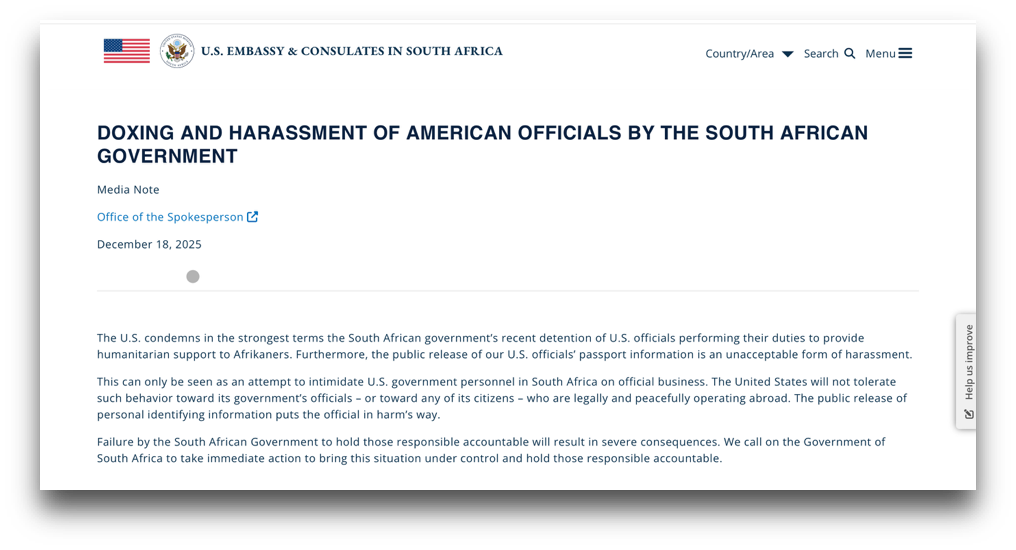
Whilst illegal immigration control is viewed rather favorably in the US following years of an open border policy, this Home Affairs immigration raid used the clampdown on illegal immigration as air cover for disrupting and “punishing” the Afrikaners and other minorities seeking refugee asylum in the US. Home Affairs even had the umbrage to state: “It showcases the commitment that South Africa shares with the United States to combating illegal immigration and visa abuse in all its forms.”
South Africa has a vast number of illegal immigrants. The exact number is not publicly known, but estimates range from several million to 30 million, which would be a third of South Africa's population. Consequently, immigration raids and crackdowns occur regularly in South Africa. They round up hundreds, sometimes thousands, of undocumented people from all over Africa and Asia in large operations that grab headlines. Yet those publicized raids never take place on a public holiday. Not on New Year’s Day, not on Christmas, and not any of the other 10 public holidays.
And then, out of nowhere, they decide to break that pattern for the very first time. They carried out the raid on a symbolically important day. December 16th is the Day of the Vow for Afrikaners, when less than 500 of their forefathers defeated an army of over 25,000-30,000 Zulus at the Battle of Blood River.
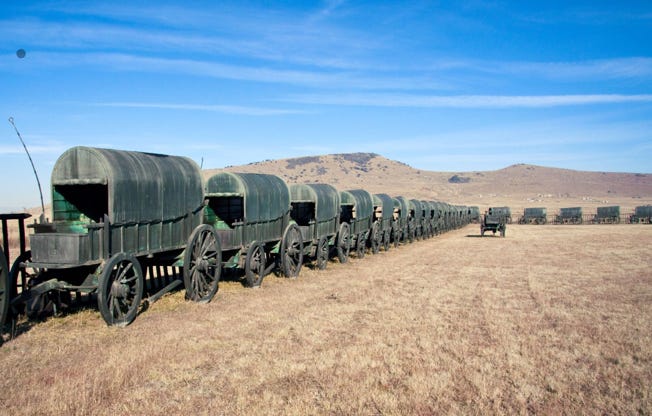
A footnote in history, but this day has massive religious significance in the Afrikaner culture. South Africa was created by the movement of the Afrikaner Boers, known as the Voortrekkers, who ventured into the heart of Africa to carve out a home for themselves. This is now called the Great Trek and is not dissimilar to American pioneers seeking out their own personal space and religious freedom out West.
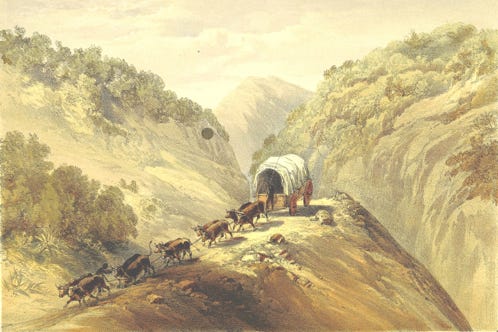
On the eve of the battle, Voortrekkers took a public vow to God, promising to build a church and forever honor the day of the battle as a holy day of God in return for God’s help in defeating the Zulus. The vow before God, taken by those Voortrekkers, has been forever commemorated by the Afrikaners as a sign of God’s protection over their people.
“Under the open sky, amidst the remnants of the battle, the Boers knelt. Sarel Cilliers stood before them, his voice clear and steady. “We vowed to the Almighty that if He delivered us, we would commemorate this day forever. A day of thanksgiving. A Sabbath of remembrance.”
All the men agreed unanimously. They held their hats respectfully in their hands, their eyes fixed on the blood-stained ground.
Cilliers raised his hands. “And so we give thanks. Not for the lives that were lost, but for the lives that were spared. For the freedom we have received today through God’s grace.” He bowed his head in prayer, and the Boers prayed gratefully with him.
The wind carried their prayers across the battlefield, past the Zulu warriors, over the blood-reddened Ncome River, and up the vast African sky.
The Battle of Blood River was over.
The Vow, a testament to faith and sacrifice, would live on forever in the hearts of generations.”
~ Wiets J Buys - 1838: Blood, Freedom and the Boer Identity
By offering refugee status in America, the Trump Administration has granted protection to the Afrikaner people, and this has infuriated the ANC. Moreover, since 1994, December 16th has been relabeled “Day of Reconciliation”. With the ANC’s tacit sponsorship of “Kill the Boer” and calling any criticism of their governing “racism”, that renaming has proven to be devoid of substance.
The target of the raid in December 2025 was the one center that was helping white Afrikaners escape to America under Trump’s refugee program - a program that the ANC has repeatedly slammed as “ludicrous” and based on “false claims” of “white genocide”.
Americans’ work ethic doesn’t lend itself to fully understanding how little gets done in South Africa on a public holiday. To get anyone in Government to do anything on a public holiday is almost unheard of. However, the Government mobilized officers on a public holiday for exactly seven clerical workers from Kenya. Seven. While millions of visa overstays and undocumented migrants operate openly across the country, they pick this tiny group tied directly to a program that embarrasses Pretoria on the world stage. Reports say officials questioned US personnel, photographed documents, and created an atmosphere of intimidation among the applicants present. The ANC regime quickly denied any harassment of Afrikaners or Americans, but the optics are terrible.
This is classic misdirection. Use an allegedly legitimate visa violation as cover to storm the place when resistance and oversight would be minimal because it’s a holiday.
The real goal? Disrupt operations, scare the applicants present and deter future applicants, and quite possibly get eyes on or copies of the list of Afrikaner families applying for refugee status and resettlement. Track them, pressure them, slow the exodus that exposes the reality of farm murders, discriminatory laws, and anti-white policies the government keeps denying.
Picking this day to raid the US refugee processing center, which has been running all year, is clearly a stab in the eye of the US and the Afrikaners.
ANC cabinet ministers perceive this US initiative on South African soil as an affront to their “moral authority” and are furious about having to tolerate this.
Every day it continues is considered a slight upon their rule. So they send in Home Affairs on a quiet holiday for a “small” bust that sends a big message to the US: we control who comes and goes, and we will make things difficult for anyone helping “undesirable” refugees leave.
The pattern is too convenient, the timing too perfect, and the scale too small for it to be innocent. This was political intimidation dressed up as law enforcement.
This was one of the many blows South Africa and the US have traded since the infamous Oval Office visit earlier this year.
G20, G19, G18, G17…
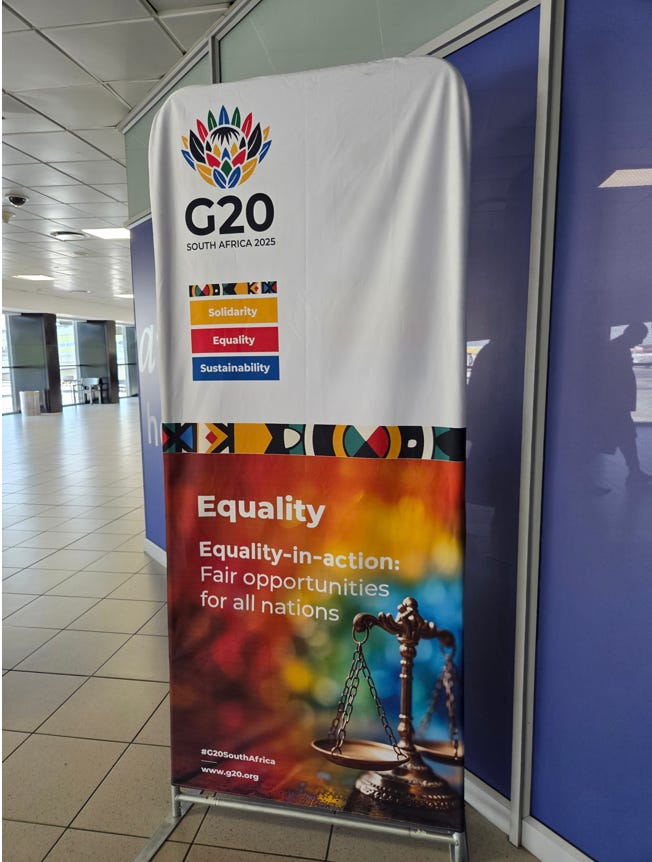
I was running around Johannesburg’s international airport in August this year when I took a second look at the numerous stands advertising the upcoming G20 summit. I snapped a photo of one poster, struck by the realization that South Africa’s G20 mission statement had nothing to do with economic growth, which is what I always thought the G20 was about. Or at least it used to be…
The US refused to attend the G20 in South Africa, and other states, reading the room, also declined to attend, so the G20 slipped down to G-something.
I wrote about my homeland, South Africa, in a Substack article earlier this year when Trump pivoted his attention to the failed state like no other Western leader before. He yanked away the veil of pretense and obsequious flattery that every other government has showered upon the African National Congress for the last 30 years, and confronted them with an unprecedented televised reality check during the Oval Office meeting.
“Snotklap” is a marvelous expression in Afrikaans. It literally means “snot” (like out of your nose) and “slap” (= klap) - when someone is slapped so hard across their cheek that the snot flies out of their nose. Trump did that to the ANC-led government in the White House. He did that again when he refused to attend the G20 summit, intimating that the ANC runs a “communist tyranny”, and Secretary of State Rubio dished out his own snotklap to the ANC in his recent State Department’s Substack:
“South Africa entered the post-Cold War era with strong institutions, excellent infrastructure, and global goodwill. It possessed many of the world’s most valuable resources, some of the best agricultural land on the planet, and was located around one of the world’s key trading routes. And in Nelson Mandela, South Africa had a leader who understood that reconciliation and private sector driven economic growth were the only path to a nation where every citizen could prosper.
Sadly, Mandela’s successors have replaced reconciliation with redistributionist policies that discouraged investment and drove South Africa’s most talented citizens abroad. Racial quotas have crippled the private sector, while corruption bankrupts the state.
The numbers speak for themselves. As South Africa’s economy has stagnated under its burdensome regulatory regime driven by racial grievance, and it falls firmly outside the group of the 20 largest industrialized economies.
Rather than take responsibility for its failings, the radical ANC-led South African government has sought to scapegoat its own citizens and the United States. As President Trump has rightly highlighted, the South African government’s appetite for racism and tolerance for violence against its Afrikaner citizens have become embedded as core domestic policies. It seems intent on enriching itself while the country’s economy limps along, all while South Africans are subject to violence, discrimination, and land confiscation without compensation. Its former Ambassador to the United States was openly hostile to America. Its relationships with Iran, its entertainment of Hamas sympathizers, and cozying to America’s greatest adversaries move it from the family of nations we once called close.
The politics of grievance carried over to South Africa’s Presidency of the G20 this month, which was an exercise in spite, division, and radical agendas that have nothing to do with economic growth. South Africa focused on climate change, diversity and inclusion, and aid dependency as central tenets of its working groups. It routinely ignored U.S. objections to consensus communiques and statements. It blocked the U.S. and other countries’ inputs into negotiations. It actively ignored our reasonable faith efforts to negotiate. It doxed U.S. officials working on these negotiations. It fundamentally tarnished the G20’s reputation.
For these reasons, President Trump and the United States will not be extending an invitation to the South African government to participate in the G20 during our presidency. There is a place for good faith disagreement, but not dishonesty or sabotage.
The United States supports the people of South Africa, but not its radical ANC-led government, and will not tolerate its continued behavior. When South Africa decides it has made the tough decisions needed to fix its broken system and is ready to rejoin the family of prosperous and free nations, the United States will have a seat for it at our table. Until then, America will be forging ahead with a new G20.”
~ Sec of State Marco Rubio
Like the drunk, raging uncle that no one wants at Christmas lunch, South Africa was officially and uncategorically disinvited to the G20 summit in the US this year in Miami and replaced with Poland.
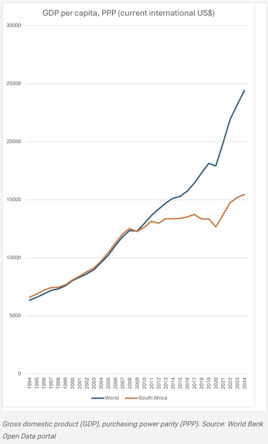
And it makes practical sense. In the wake of the 1997 Asian financial crisis, it was apparent that the G7 was inadequate to address the various crises. The top 18 economies in the world then formed the G20 in 1999 to create a forum for finance ministers and central bank governors to discuss economic issues. South Africa was a foundational member, based on its position as the most developed African nation, ranking 31st largest economy in 1999. The focus was the promotion of international financial stability. In 2008, the G20 became elevated from finance ministers to a global gathering of country leaders. But South Africa has slipped ten places to being the 41st largest economy… not so large any more. The slip was unnecessary, and in fact the result of deliberate anti-economic growth policies adopted by the ANC. In 2009, South Africa’s GDP veered off course so significantly that it’s obvious to a neutral observer that South Africa has nothing to offer when it comes to economic growth. As Economist Dawie Roodt explained to me, in 1994, South Africa’s GDP was a third of the GDP of the entire continent of Africa. By 2026, it’s down to a tenth of the continent!
The stage show of the “G20” (more like G13 after several world leaders took their cue from President Trump) ended with lots of applause but zero meaningful achievements. However, what it did show was that the US remains the most significant player in the world, and other nations are delusional to think otherwise. I liked this summary, although the end conclusions of the article are not ones I entirely agree with:
What emerged at the G20 was less an economic declaration than a COP wish list smuggled into a forum meant for international economic cooperation, an obsessive focus on tripling renewable capacity and aligning all finance with Paris Agreement goals that does nothing to address Africa’s immediate crises.
Far from a diplomatic blunder though, Trump’s decision to skip the Johannesburg gathering may prove a masterstroke because it exposed a consensus Africa can no longer afford to accept uncritically. The term “Just Energy Transition” is woven throughout the G20 declaration like a sacred incantation, a solution presented as both inevitable and universally beneficial, this allowed a Western-European vision of the future to go essentially unchallenged by declaring a climate-centric agenda at the summit that is dangerously out of touch with Africa’s urgent realities.
Hope now rests on a geopolitical reset. When the United States assumes the G20 presidency in 2026 under a Trump administration, the climate-centric consensus cemented in Johannesburg is likely to be dismantled. This is not about endorsing one leader, it is about seizing a strategic opening to reframe the global economic conversation around growth, security, and industrialisation rather than restrictive green ideology and destructive path the West has charted for Africa.
~ Phapano Phasha- Trump’s Absence at G20 Johannesburg : How the West Imposed a Green Neo-Colonial Agenda on Africa
I am continually grateful and amazed the extent to which Trump and his cabinet have refused to prop up the delusional utterances of the ANC government, in total contrast to other Western nations. Trump is like the kid that points to the emperor and shouts out “He’s not wearing clothes,” and everyone around the emperor is shocked by the fact that the kid called it out - not that the emperor actually has no clothes on!
The Oval Office meeting in April 2025 was humiliating for President Cyril Ramaphosa but, like the party he leads, he ignored reality - these days I believe the term is a “denialist” - and laughed it off.
It transpired some time thereafter that the Trump administration had given the South African delegation a list of demands. But Cyril never addressed those demands whilst in the US, nor did he report back to the South African Parliament that there were in fact demands made by the US Administration or what those demands were.
It took private citizens working for civil society organizations to learn what those demands were, and to disclose it to the media. Trump set down four pre-conditions to full engagement with the South African government:
• The classification of farm attacks as a priority crime. Farm attacks are not addressed with the same urgency and resources that other crimes are.
• A clear and unequivocal public condemnation by the ANC of “Kill the Boer, kill the Farmer” whether used in song or any other context.
• No land expropriation without fair market compensation. Expropriation should only proceed after all legal processes have been fully exhausted.
• Exemption of USA entities from all Black Economic Empowerment (BEE) requirements. Any race-based legislation that may constitute a non-tariff trade barrier should not apply to USA entities.
During the meeting in Washington, DC, US officials communicated the Trump Administration’s preconditions to President Ramaphosa for the normalization of bilateral relations between the United States and South Africa.
When President Ramaphosa and his delegation landed back in South Africa after the public flogging Trump gave them in the White House, they acted like they had triumphed and that the meeting was a success. A sober person watching the ANC wonders whether they are stupid, delusional or deliberately spinning the narrative. I’m not sure they know which one it is. However, the result is the same - inaction bordering on outright contempt for Trump and the US.
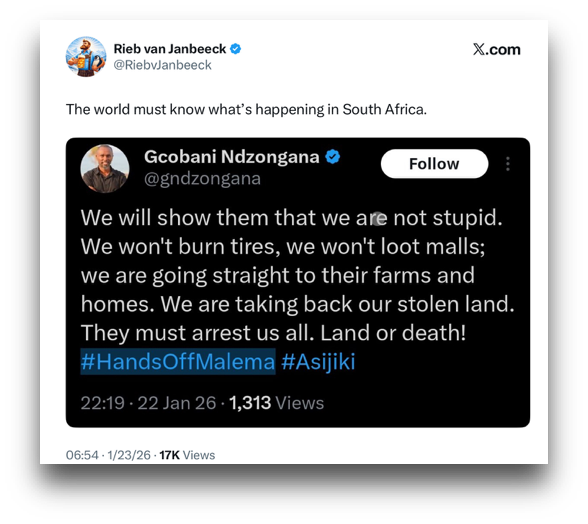
Aside from ignoring the conditions for improved bilateral relations, the South African Government fanned the flames on the fiery issues that Trump had with the Government.
Not surprisingly, the past 9 months have witnessed a worsening relationship,
Ramaphosa claims that “white supremacy” is the real threat to South Africa, yet the claims is deeply ironic. This is classic projection. Most of the country’s political leaders and most of the mayors, judges and magistrates are black. 145 race laws exist to reallocate wealth and justice away from white people to black people. The ANC is reinstating an actual Apartheid law to categorize people into different races (think of Hitler’s NAZI race laws) to ensure that white people are “defined” in order to cement the discrimination. “Broad-Based Black Economic Empowerment” (BEEE) affirmative action programs only benefit a handful of individuals. It’s a legal “smash and grab” for a power elite. Government ministers have spent over R3.7 billion in close protection, on top of half a billion on travel. Aid is not what the South African Government needs or should ever get from any other nation.
The most recent access to land the South African Government has offered to “previously disadvantaged black people” is not the ownership of private property. It is property that the Government retains ownership of and leases out. The Government has no intention of giving anyone land and makes these empty promises to its electorate. The only access one would have to expropriated land is rent-based.
Land grabs (usually initiated by individuals or the Economic Freedom Front (EEF) have been taking place and expropriation without compensation continues unchecked. The organization Sakeliga is in the midst of litigating with the Municipality of Ekhuruleni over the Farm Driefontein Portion 406. Driefontain was worth upwards of R30 million at the time of expropriation by the Municipality in 2019 and received prominence in September 2025 after Sakeliga highlighted that the ANC-controlled city expropriated it without compensation in a deliberate effort to set a precedent for land expropriation in South Africa. Since September, the city has jeopardized mediation and continued refusing to pay compensation for its expropriation of the property. It is now trying to block the matter going to trial through additional protracted lawfare, hoping to avoid a court order forcing them to compensate the former owner. If Sakeliga loses, this will open the flood gates for further government expropriations.
To give you an indication of how the mindset of expropriation can filter through society, homeowners arrived back from a holiday to find their property “expropriated” by squatters.
This documentary The Stolen Ground shows how sneaky the land grabs can be:
The devastating impact of the nationalization of mines in South Africa (which happened in 2002 via the MPRDA, the Mineral and Petroleum Resources Development Act of 2002), is now being openly acknowledged. This Act, implemented by the ANC, killed off the mining sector, discouraging investment in exploration and expansion for the past two decades. If one looks at recent Venezuelan history, it is easy to understand the reluctance of oil companies to re-start oil production in a country in which they’ve had prior operations nationalized three times. So too would they be wary of investing in South Africa’s mines, where it’s acknowledged that mining is a 100 year investment in the land.
Rampant race-based crime continues with the attack and violent death of a 77 year old grandfather who was visiting his 3 year old son’s grave (dead for 45 years). Farm murders continue unabated. Calls for the murder of white people are still chanted, and the farm murders carry on as bad as ever.
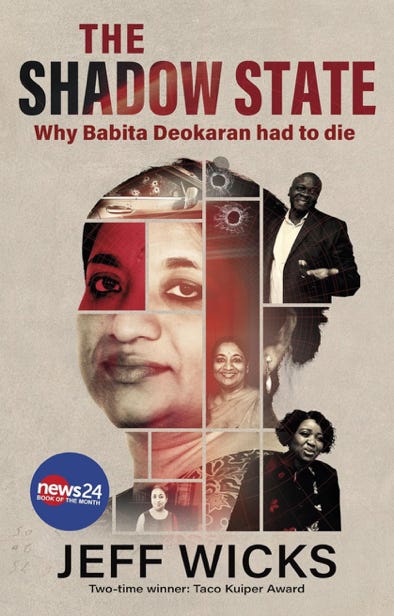
Assassinations have become common place when individuals of integrity uncover the criminal syndicates embedded in every aspect of South African life.
KwaZulu-Natal Police Commissioner Nhlanhla Mkhwanazi said at a news conference in July 2025 that some top politicians and police officials were interfering in sensitive police investigations in the interest of criminal syndicates and drug cartels. His claims caused a public outcry and led to a commission of inquiry being appointed by President Cyril Ramaphosa. Please note that this is the default action of a useless government.
More than R2 billion was looted through a public hospital called Thembisa. This hospital serves the poorest of the communities - those who depends on the government for their healthcare. When a government official, Babita Deokaran, discovered the vast fraud and reported on it, she was assassinated to protect the syndicate’s interests.
A famous podcaster and figure in the South African online landscape, DJ Warras, was assassinated in December last year. It is alleged that he was threatening the income revenue of the criminal syndicates running hijacked buildings.
Across South Africa’s major metros such as Johannesburg, Pretoria, Durban, Gqeberha, East London and parts of Cape Town, criminal syndicates have seized control of thousands of residential and commercial properties.
Estimates put the number at around 5,000 buildings nationwide, with roughly 1,100 in Johannesburg’s central business district alone, including both government and privately owned properties.
These are not spontaneous occupations driven by desperation. They are coordinated takeovers run like shadow property companies: rent is collected in cash, enforced through intimidation; utilities are illegally connected; and anyone who resists is threatened into silence.
Once control is established, the syndicate extracts value relentlessly.
Dozens, sometimes hundreds, of people are crammed into buildings never designed for such density. Rooms are subdivided with plywood; fire escapes are blocked; water and sanitation systems collapse under the strain. Maintenance stops entirely.
Along with this criminal cancer that has riddled the country, the ANC in its inability - or unwillingness - to address the crime and corruption, the ANC is trying to disarm legally armed citizens through a revised piece of legislation initially pushed by George Soros through the Gun Free Association.
When the head of AfriForum Kallie Kriel mentioned journalists being paid by the State Security Agency and the Department of International Relations, these journalists went rabid. A nerve was struck.
Almost every aspect of state failure has been monetized and criminalized. The Taxi Mafia regularly shoot people that they believe are Uber drivers. They recently sent a warning to their “competition” to cease or “we will cease you”. Across the country, criminal syndicates and gangs are far too powerful for the South African police to deal with.
Indiana Johannes and Raiders of the Lost ANC PART II - Iran, China, Russia, SA, and USA Policy

Indiana Johannes and Raiders of the Lost African National Congress party
Disclaimer: All opinions in this article are my own and all errors in judgment are mine alone. I do not represent any organization or company and my views are my own.
It’s amazing how just the idea of America threatens murderous dictatorships to the core. Whenever there’s an uprising in these tyrannical states you may see American flags. Even to this day, even when I myself see the American flag at an anti communist rally I feel a sense of liberty and freedom somewhat greater than I know the reality of what America is today. Foreigners from all around the world would do anything to live here while many Americans are completely ungrateful for what they have been handed.
God I wish we could really get back to the founding principles, and the founding ideas of individual freedom and real liberty. I want that feeling of the idea of America when I see our flag at rallies in places like Iran, as when I see our flag here at home.
I was never so proud of Trump as I was that day of their oval office visit. Most white world leaders these days are so terrified of being labeled racist that they sell their souls and their countries just to appear to be non-racist. Trump is not racist and not ashamed of being white.