


Massachusetts has eliminated its statutory gestational limit on abortion and removed the specific conditions previously required for abortions at or after 24 weeks. Under the new law, an abortion may be performed at any gestational age based on the professional judgment of the physician.
For purposes of this discussion, a late abortion means an abortion performed after fetal viability. In the case of a healthy mother carrying a healthy, viable fetus, the procedure is not simply a means of ending the pregnancy: delivery would also end the life of the unborn child. The distinguishing feature of abortion in that circumstance is that it is intended to end the pregnancy without a live birth.
A labor and delivery nurse for over 30 years described it to me this way:
After 24 weeks, it’s not an abortion. It’s a delivery. At that point, the safest option for the mother is delivery, not an abortion, and many OB/GYNs have said that. An abortion up to 40 weeks is not about the woman’s health or saving her life.
After 24 weeks, they can deliver the baby, and that is the safest way to protect the mom. If she doesn’t want the baby, she can always give it up for adoption. You must have a lot of hate in you to do this. This isn’t about our president or women’s rights. This is about people trying to kill children.
Another part of this story deserves considerably more attention.
Supporters of the new Massachusetts law have emphasized the heartbreaking cases: a wanted pregnancy in which a catastrophic fetal abnormality is discovered late, or a woman who develops a serious medical complication after 24 weeks. These cases certainly exist. They are real, and they deserve compassionate discussion. But Massachusetts already had that law - this was amended to expand access to anyone who can get to the right clinic willing to perform the killing of a viable fetus.
Massachusetts did not amend its statute merely to create a broader exception for catastrophic fetal abnormalities or serious threats to the mother’s health. It removed the statutory conditions governing abortion after 24 weeks altogether. The new standard is the “professional judgment of the physician.”
That is a much larger change.
And here we encounter a remarkably inconvenient problem: we do not actually have good statistics telling us what percentage of abortions performed after 24 weeks are performed because the mother’s life or physical health is threatened, because of a serious fetal abnormality, or for social, economic, or personal reasons.
The CDC cannot answer that question. Its abortion surveillance system reports gestational age, but it does not provide a national breakdown of why abortions are performed at advanced gestational ages. The most recent CDC surveillance data report that 1.1 percent of abortions for which gestational age was known occurred at 21 weeks or later. But “21 weeks or later” is one enormous bucket. It tells us neither whether an abortion occurred at 22 weeks or 32 weeks, nor why it was performed.
The national figure also obscures an important distinction: the CDC aggregates data from states with very different abortion laws, including states where abortion after viability is generally prohibited and states where there is no statutory gestational limit.
Consequently, the national percentage tells us very little about the frequency of abortions after 21 or 24 weeks in the states where they can legally be performed. And in some of those jurisdictions, the underlying data are particularly difficult to obtain. Colorado, for example, does not impose a gestational limit on abortion, yet its publicly reported abortion statistics do not provide the kind of detailed, procedure-by-procedure accounting of later abortions and their indications that would allow the public to determine how many were performed after viability or why. The result is a rather remarkable information gap: the states with some of the most permissive laws are not providing the data needed to determine how those laws are actually being used. Which raises the issue of willful ignorance in data collection.
That absence of data becomes particularly important when legislators justify eliminating a gestational restriction by invoking medical emergencies.
I wrote about this issue in 2024, in an essay titled Human Development and Abortion.
Human Development and Abortion.

Human development and abortion. These are probably the most controversial and divisive current topics in the domains of health, medicine, medical freedom, and American politics. Which means that we should discuss them openly rather than avoiding them, hoping to at least better understand the merits and limitations of each others’ points of view.
At the time, I noted how extraordinarily difficult it was to determine how many later abortions were actually performed for medical reasons rather than social or economic ones. That remains true today.
But absence of comprehensive statistics does not mean absence of evidence.
One particularly interesting source comes from researchers who strongly support abortion access.
In 2013, Diana Greene Foster and Katrina Kimport published a peer-reviewed study examining 272 women who obtained abortions at or after 20 weeks at 16 facilities around the country.
Here is the important part: the study was specifically examining women obtaining later abortions for reasons other than fetal anomaly or life endangerment.
These women were numerous enough to allow the researchers to recruit hundreds of case studies.
The researchers found that women obtaining later abortions frequently experienced delays associated with discovering the pregnancy late, difficulty deciding whether to have an abortion, difficulty finding a provider, raising money for the procedure and travel, relationship problems, and other circumstances. The authors identified several common profiles, including women raising children alone, women experiencing conflict with a male partner or domestic violence, women who had difficulty deciding and subsequently encountered access problems, and young women who had never given birth.
Put more plainly, these were not all cases involving a dying mother or a fetus with a lethal abnormality. The researchers documented later abortions sought for reasons involving money, transportation, relationships, delayed recognition of pregnancy, difficulty deciding whether to keep the child, and difficulty obtaining the procedure earlier. By 24 weeks, we are talking about a fetus that is most likely viable; later still, the probability of survival outside the womb rises dramatically. The truth is that at this age, these are people who feel pain, cry, are conscious, can smile, and, in every aspect we consider human, are human beings. Premature infants born at this same gestational age are treated as patients in neonatal intensive-care units, where medical teams may fight desperately to keep them alive. In these cases, therefore, a medical team intentionally ended the life of a viable human for reasons that had nothing to do with the fetus being unable to survive or the mother’s life being in danger.
A viable fetus is a child with an independent right to life; there is a much less clinical way to describe that. A living, viable child was killed because the mother discovered the pregnancy late, had difficulty making a decision, could not raise the money sooner, could not find a provider, or could not arrange transportation.
Then came an even more directly relevant study.
In 2022, Kimport published Is third-trimester abortion exceptional? Two pathways to abortion after 24 weeks of pregnancy in the United States.
This time the threshold was not 20 weeks.
It was after 24 weeks, precisely the gestational boundary Massachusetts has now removed.
Kimport interviewed 28 women who had abortions between 24 and 35 weeks of pregnancy. She identified two principal pathways to third-trimester abortion.
The first was receiving “new information.” Sometimes that meant discovering a serious fetal abnormality. But new information could also mean something much simpler: the woman had only recently discovered that she was pregnant.
The second pathway was encountering barriers that prevented an abortion from occurring earlier. These included the cost of the procedure, difficulty finding a provider, and stigmatization. Some women had wanted abortions earlier but did not obtain them until the pregnancy had progressed into the third trimester.
This distinction matters enormously.
A third-trimester abortion performed because a woman will otherwise die is one ethical and medical question.
An abortion at 30 weeks because a lethal fetal abnormality was discovered at 29 weeks presents another terribly difficult question.
But an abortion at 30 weeks because the pregnancy was discovered late, because money could not be raised earlier, or because the woman had difficulty finding an abortion provider presents an entirely different ethical question.
Yet the Massachusetts statute does not distinguish among them by enumerating specific post-24-week conditions.
This is precisely the uncomfortable issue I raised two years ago. The mainstream (liberal) rhetoric surrounding late abortion frequently creates the impression that these procedures overwhelmingly involve catastrophic medical circumstances. But the research literature itself documents third-trimester abortions occurring for reasons that are not maternal medical emergencies or lethal fetal abnormalities. What we cannot responsibly say, because the necessary reporting does not exist, is what percentage each category represents.
That uncertainty should argue for better data, not for pretending that the inconvenient cases do not exist.
There is another biological reality that makes the Massachusetts decision different from an argument about abortion at six or twelve weeks.
At 24 weeks, we are no longer discussing an embryo or an early fetus.
We are discussing a living human organism approaching, and in some circumstances already possessing, the capacity to survive outside the uterus.
Neonatal medicine routinely attempts to save infants born around this stage of development. With every additional week, survival generally improves substantially. By the late second and third trimester, the central and peripheral nervous systems are extensively developed, the fetus responds to sensory stimuli, and the ethical questions become correspondingly harder.
This is one of the points I tried to make in 2024. Whatever one’s position on abortion, human development does not stop because the subject makes us uncomfortable.
Colorado has one of the broadest abortion laws in the United States. Under the state’s Reproductive Health Equity Act (RHEA), enacted in 2022, abortion is a legally protected right, and Colorado imposes no statutory gestational-age limit on when an abortion may be performed.
That means Colorado law does not establish a cutoff at 20, 24, 28, or even 36 weeks, nor does it impose a separate post-viability requirement that the mother’s life or health be threatened or that the fetus have a serious or lethal abnormality. The decision is left to the pregnant woman and her healthcare provider, subject to ordinary medical regulation. Colorado voters strengthened this protection in 2024 by placing a right to abortion in the state constitution.
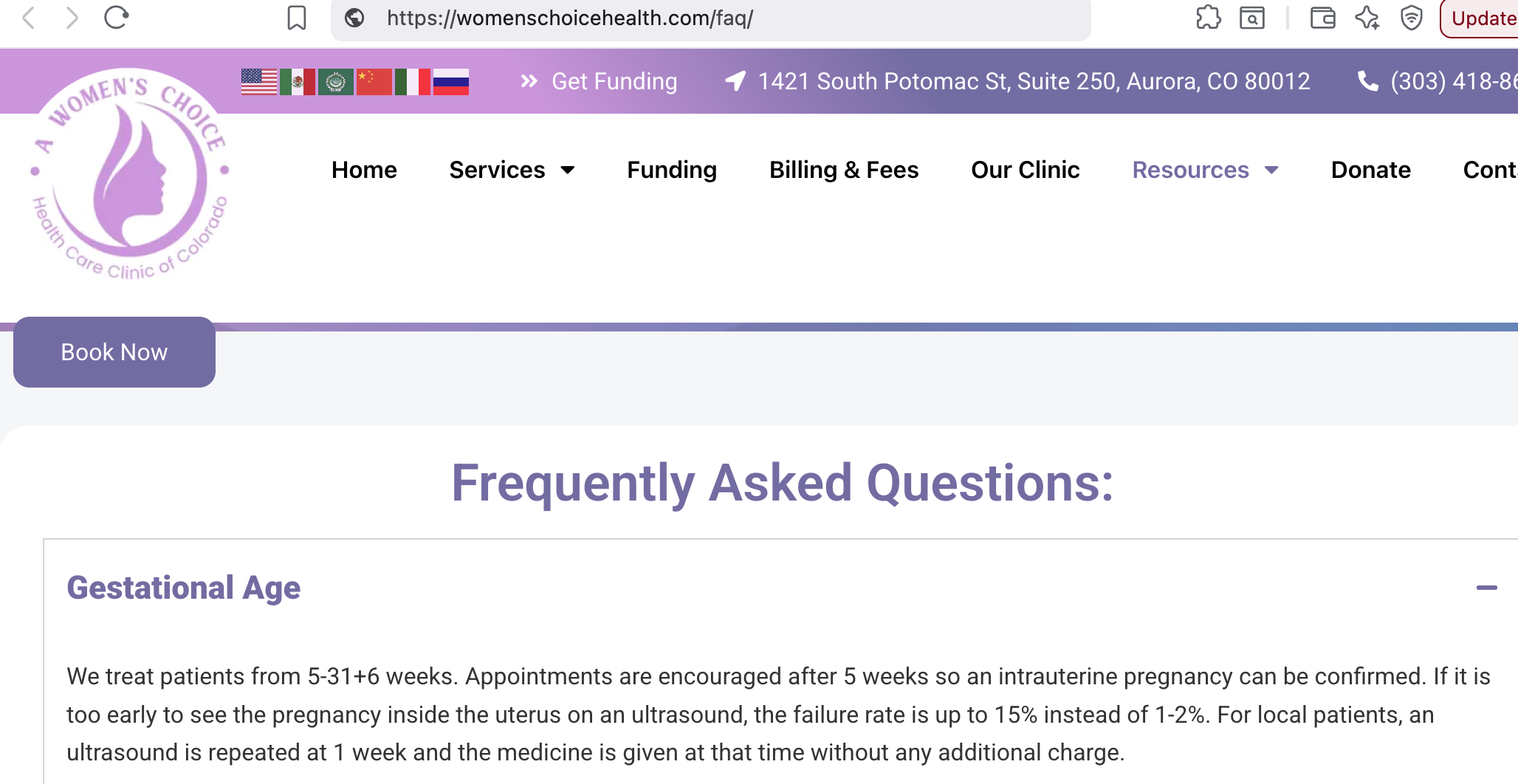
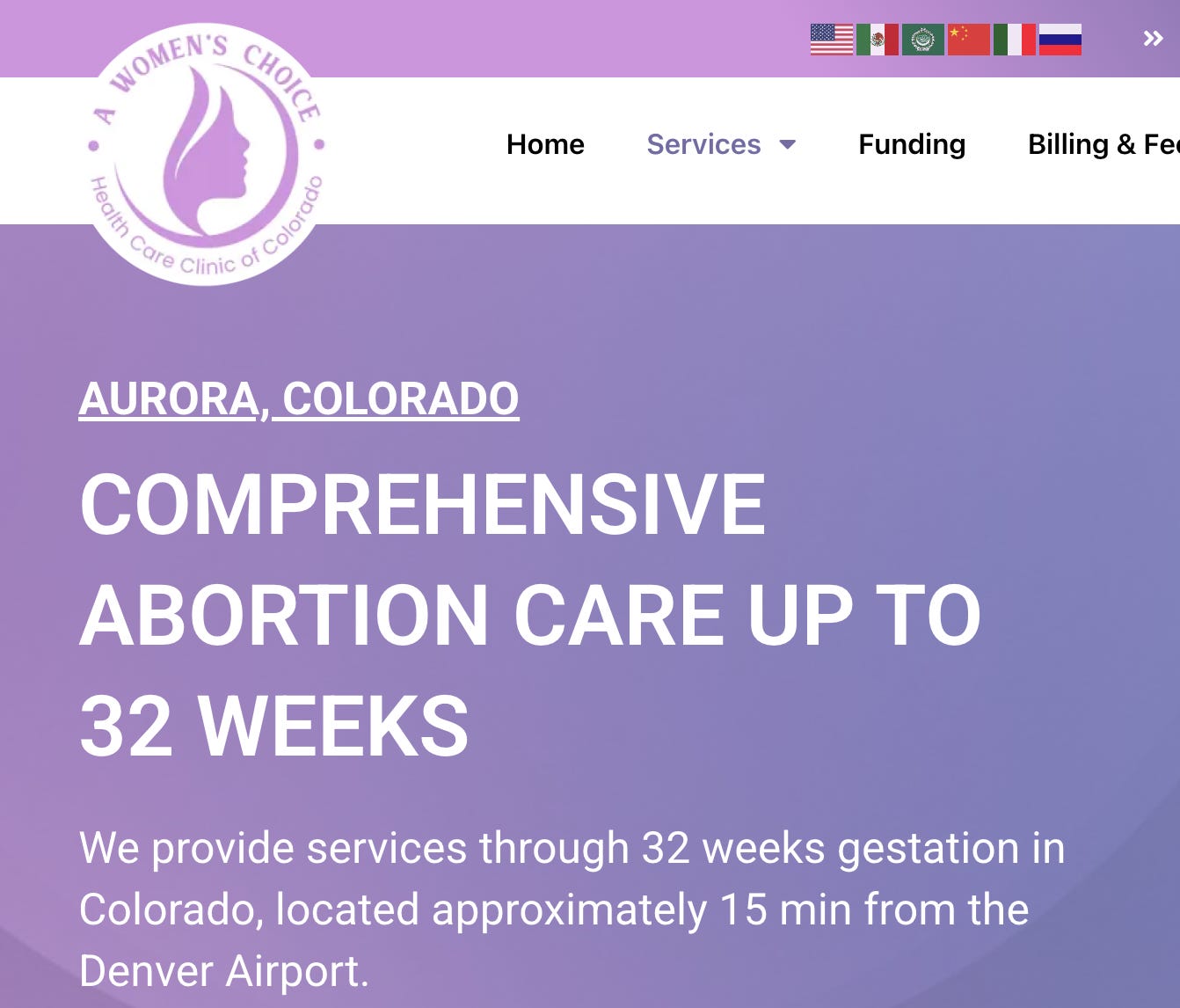
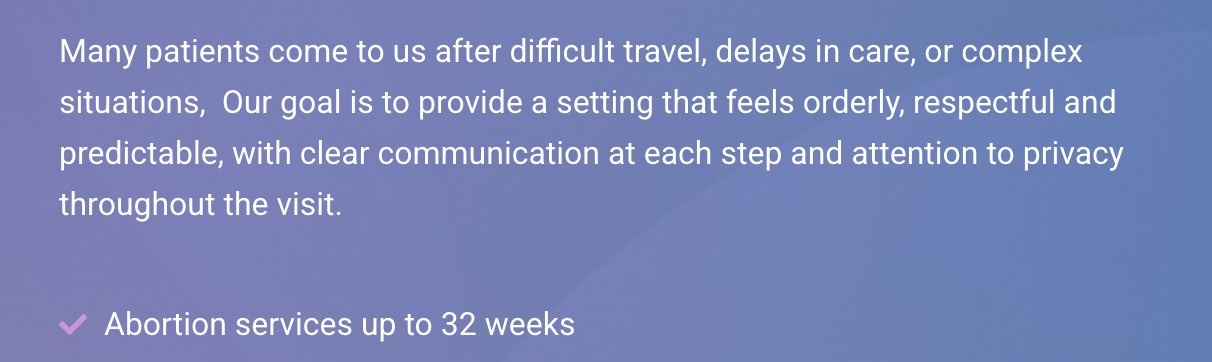
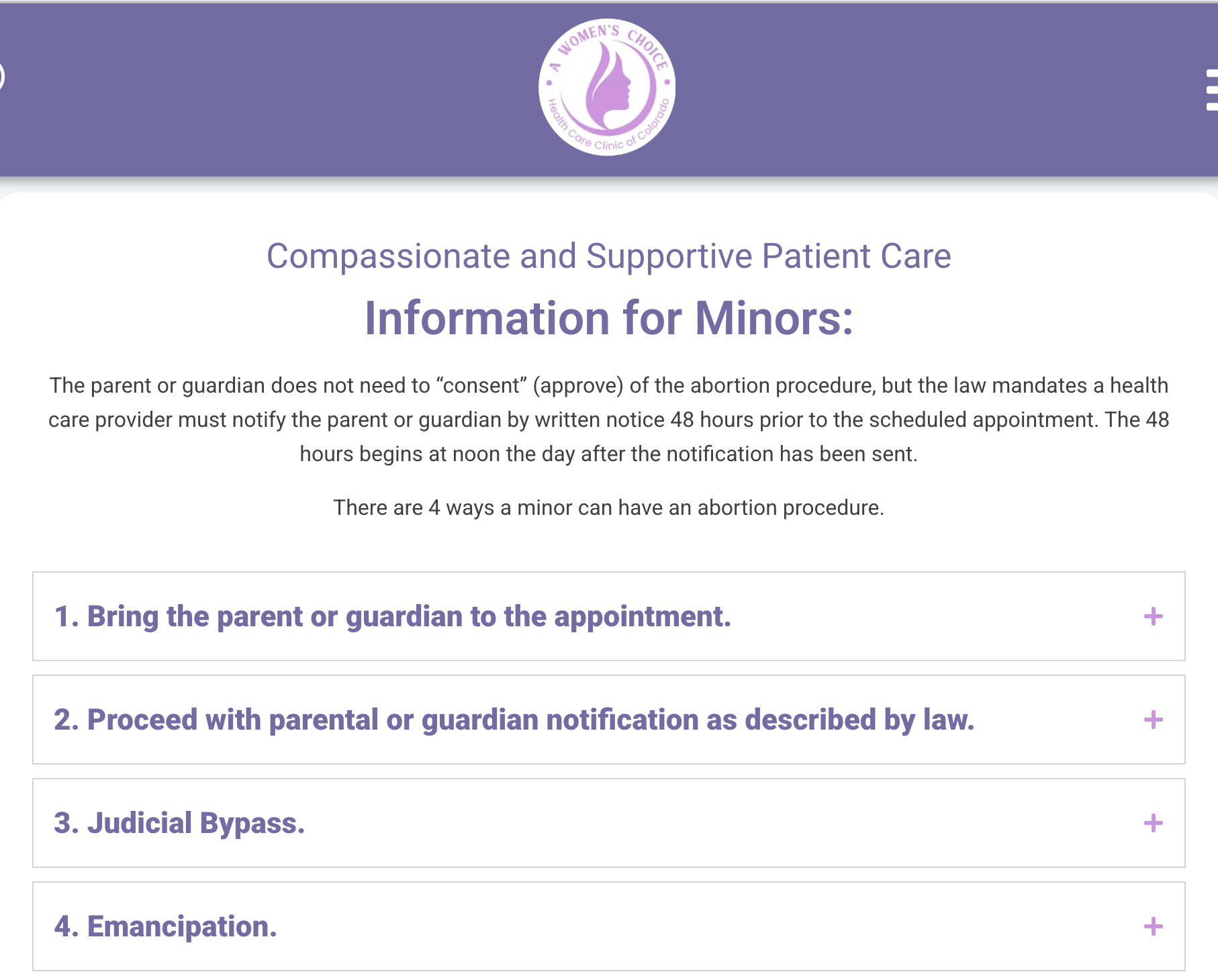
So what does that mean? Below are screenshots from just one Colorado clinic that appears to specialize in late-term abortions. Note that there is absolutely no mention of these abortions being needed for the health of the mother, and in Colorado, minors do not need the consent of a parent, even in the case of a late-term abortion, where the killing of a grandchild is involved.
As of 2026, KFF counted nine states plus Washington, D.C. with no gestational limit.
Those states are:
Alaska
Colorado
Maryland
Michigan
Minnesota
New Jersey
New Mexico
Oregon
Vermont
Washington, D.C. (not a state)
And Massachusetts is now effectively joining this group:
There are over 54 million people living in these states. Using ChatGPT, we have dug into the actual numbers of late-term abortions in those states, but the states and the CDC have relentlessly hidden those statistics. After many attempts to locate the data, this is what Chat could come up with:
“Extrapolating cautiously across the jurisdictions without statutory gestational limits suggests that several thousand abortions may occur after 21 weeks each year, perhaps roughly 1,500–3,000 after 24 weeks, and potentially several hundred after 28 weeks. These are estimates, not reported national totals, for the simple reason that the government does not collect or publish sufficient data to calculate the actual numbers.
And that is itself extraordinary. We are debating laws explicitly permitting abortion after fetal viability while lacking a national surveillance system capable of telling us how many such abortions occur, at what gestational age, and why they are performed.” - Chat-GPT
And that leads directly back to Massachusetts.
If the purpose of changing the law was simply to protect physicians treating catastrophic maternal emergencies or pregnancies involving lethal fetal abnormalities, the legislature could have written those protections into the statute precisely. It could have broadened the medical exceptions. It could have defined circumstances in which a physician could act without fear of prosecution.
Instead, Massachusetts removed the statutory post-24-week conditions and replaced them with the physician's professional judgment.
It is entirely possible to believe that women facing catastrophic pregnancies deserve compassion, privacy and excellent medical care while simultaneously asking whether a viable fetus has any independent moral interest that the law should recognize.
Those are not mutually exclusive positions.
And perhaps the most revealing fact surrounding this debate is how little information government actually collects about the very abortions being used to justify the change.
If abortions after 24 weeks are overwhelmingly performed because of catastrophic fetal abnormalities and genuine threats to maternal health, then collect the data and demonstrate it.
If they are not, then the public deserves to know that too.
Because once the legislature removes the gestational boundary altogether, the question is no longer merely whether a tragic medical exception should exist.
The question becomes whether there should be a boundary at all.
There is one final aspect of this story that I find difficult to get past.
They celebrated.
Look at the photographs from the bill signing.
Governor Maura Healey sits at her desk surrounded by legislators, physicians and abortion-rights advocates. They are smiling. They are applauding. They pose together for photographs commemorating the occasion.
Massachusetts had not just increased funding for prenatal care. It had not expanded neonatal intensive-care units or created additional support for women facing catastrophic pregnancies.
It had removed the state’s existing legal restrictions on abortion after 24 weeks.
The previous law said that after 24 weeks an abortion could be performed when necessary to preserve the life or physical or mental health of the mother, or because of a lethal or grave fetal diagnosis incompatible with sustained life outside the uterus without extraordinary medical intervention.
The new law deletes those requirements.
In their place are twelve words:
“an abortion may be performed when based upon the professional judgment of the physician.”
That is what was signed.
Healey herself described the cases used to justify the legislation as involving “devastating, heartbreaking” diagnoses. Advocates repeatedly presented the legislation through stories of parents discovering catastrophic abnormalities in desperately wanted pregnancies.
If that were all this law did, perhaps the celebration could be understood as relief that families experiencing terrible medical tragedies would no longer have to leave Massachusetts for treatment.
But that is not what the legislature wrote.
It did not add another exception for fetal abnormalities.
It did not broaden the definition of a maternal medical emergency.
It did not create an expedited process for physicians confronted with catastrophic pregnancies.
It removed the conditions.
The organization that championed the legislation, Reproductive Equity Now, did not hide this. Its campaign was explicitly titled “Expanding Abortion Access Throughout Pregnancy.” It argued that Massachusetts should remove restrictions on abortion after 24 weeks and reported polling asking voters whether they supported abortion access “throughout pregnancy” based upon physician judgment.
Those words matter.
Because at 24 weeks we are no longer discussing an abstract possibility of human life sometime in the distant future. We are discussing a living, viable baby. At the gestational ages permitted by this law, premature infants are simultaneously being treated in neonatal intensive-care units, where physicians and nurses employ extraordinary skill and enormous resources trying to keep them alive.
That is what makes the photographs so unsettling.
There is no requirement in the new statutory language that the fetus have a lethal abnormality. There is no requirement that the mother’s life be endangered. There is no statutory gestational ceiling at 28 weeks, 32 weeks or 36 weeks.
And, as we have discovered while trying to answer the most basic questions for this article, Massachusetts cannot tell us how often abortions after viability involve healthy fetuses, because the surveillance data necessary to answer that question simply do not exist in adequate detail.
Colorado offers some indication of why the question matters. In that state, where abortion likewise has no statutory gestational limit, 137 abortions were reported at 28 weeks or later in 2023 alone. Clinics there openly advertise abortion well into the third trimester. And those clinics make it plain: no reason need be given.
The government has removed the boundary of killing an innocent life - a person who feels pain, who can smile, who is fully human.
And then there are those videos and photographs of Governor Healey signing the legislation. The ghoulish nature is chilling. These women look like they are having the best day of their lives.
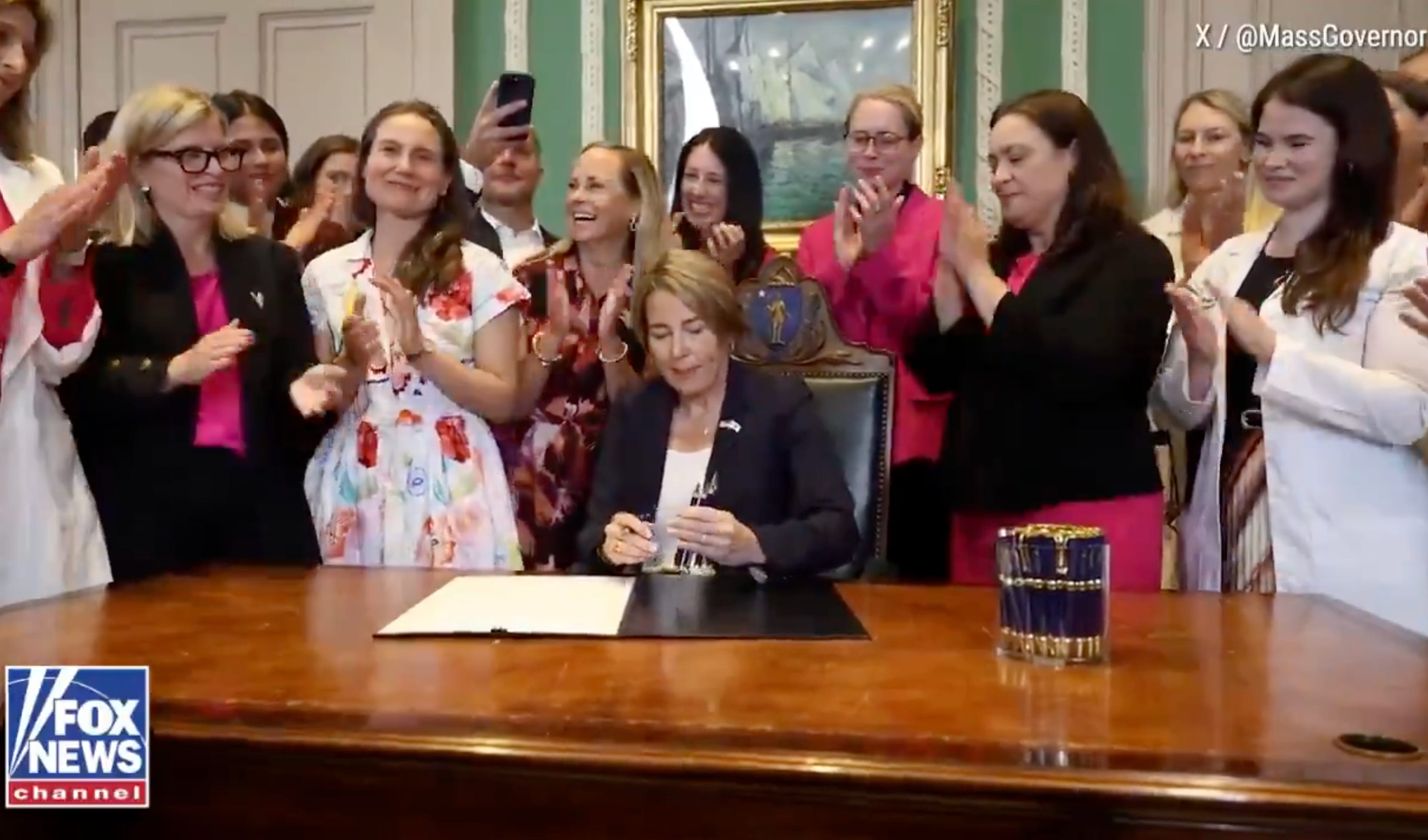
The smiles bother me.
Where is the acknowledgment that at 28 or 30 weeks there may be a perfectly recognizable, potentially viable human being involved?
None of that is in these photographs.
There are politicians and activists grinning around a desk because Massachusetts has eliminated one of the last statutory boundaries regarding the termination of a human life, late in pregnancy.
And this was no narrow, reluctant decision. The Massachusetts House voted 119–33 for the legislation, with roughly 78 percent of those voting supporting it; the Senate subsequently passed it without a recorded roll-call vote. Massachusetts legislators overwhelmingly chose to remove the specific statutory protections that had restricted abortion after 24 weeks, including the requirements involving maternal health and grave fetal diagnoses, and replace them with the professional judgment of the physician.
Whatever euphemisms one prefers, the legislature knowingly voted for a legal framework that can permit the intentional killing of a viable, living fetus without a statutory requirement that the mother's life be endangered or the fetus be fatally impaired. That this passed overwhelmingly, rather than at the margins after anguished debate, says something deeply unsettling about how far Massachusetts politics has moved on the question of human life after viability.
A civilized society might sometimes conclude that a terrible thing has just happened.
What troubles me is not only the killing of a conscious human being, but the fact that the left actually celebrates that loss.
JGM/RWM
How many abortions actually occur after viability? How many occur at 28 weeks or later? How many involve a serious threat to the mother’s health or a lethal fetal abnormality, and how many do not? These seem like rather basic questions to ask before eliminating the legal boundaries governing abortion late in pregnancy.
Instead, we had to dig through CDC surveillance reports, individual state databases, medical literature, provider websites and abortion statistics just to begin assembling an answer.
That is what independent journalism is supposed to do.
If you value this kind of work, please consider becoming a paid subscriber. Your subscriptions allow us to spend the time following the data wherever they lead, asking questions that increasingly seem to make polite society uncomfortable, and publishing what we find without waiting for permission from an editor, advertiser or political party.
And, as always, thank you to those of you who already support our work. You make it possible.
Please consider signing LifeSite’s petition urging Archbishop Richard Henning to formally declare Gov. Healey of Massachusetts excommunicated for her signing of this bill into law:
We must urge Archbishop Richard Henning to formally declare Gov. Healey excommunicated following her scandalous betrayal of God's law and His Church, knowing that such penalties exist to prompt the repentance of sinners and the salvation of souls who would otherwise partake in these crimes against God.
Did anyone else catch that the abortion clinic actually states that it offers abortions from 5-31 + 6 weeks (that equals 37 weeks)...
It was in the fine print - under FAQs (I took a screenshot and that is in the essay)
My youngest nephew was born 3 months premature in 2008, and spent months in the NICU of our local children's hospital. His parents had two other children, and the commitments that accompany. My wife and I have no children, and she, overwhelmed with grief, went to the hospital every day to watch over him. In those first days, I sympathized with her grief, but thought of the situation as just a sad fact of life.
Well, a week or so in, I started going to the NICU with her. And something profound happened to me. I saw that baby struggle with breath, a distended belly, red skin, heart issues, retinal issues, the possibility of brain damage, and a hovering question of whether he'd survive. Wires and tubes and monitors and beeps and machines all around him. And next thing I know, there was nothing more important to me in life than seeing him make it.
To this day, we consider ourselves a second set of parents for him. He sends me Father's Day wishes every year, and Saturday has been his day at our house for many years now, if his schedule permits.
He starts university today. I couldn't be prouder of him.