

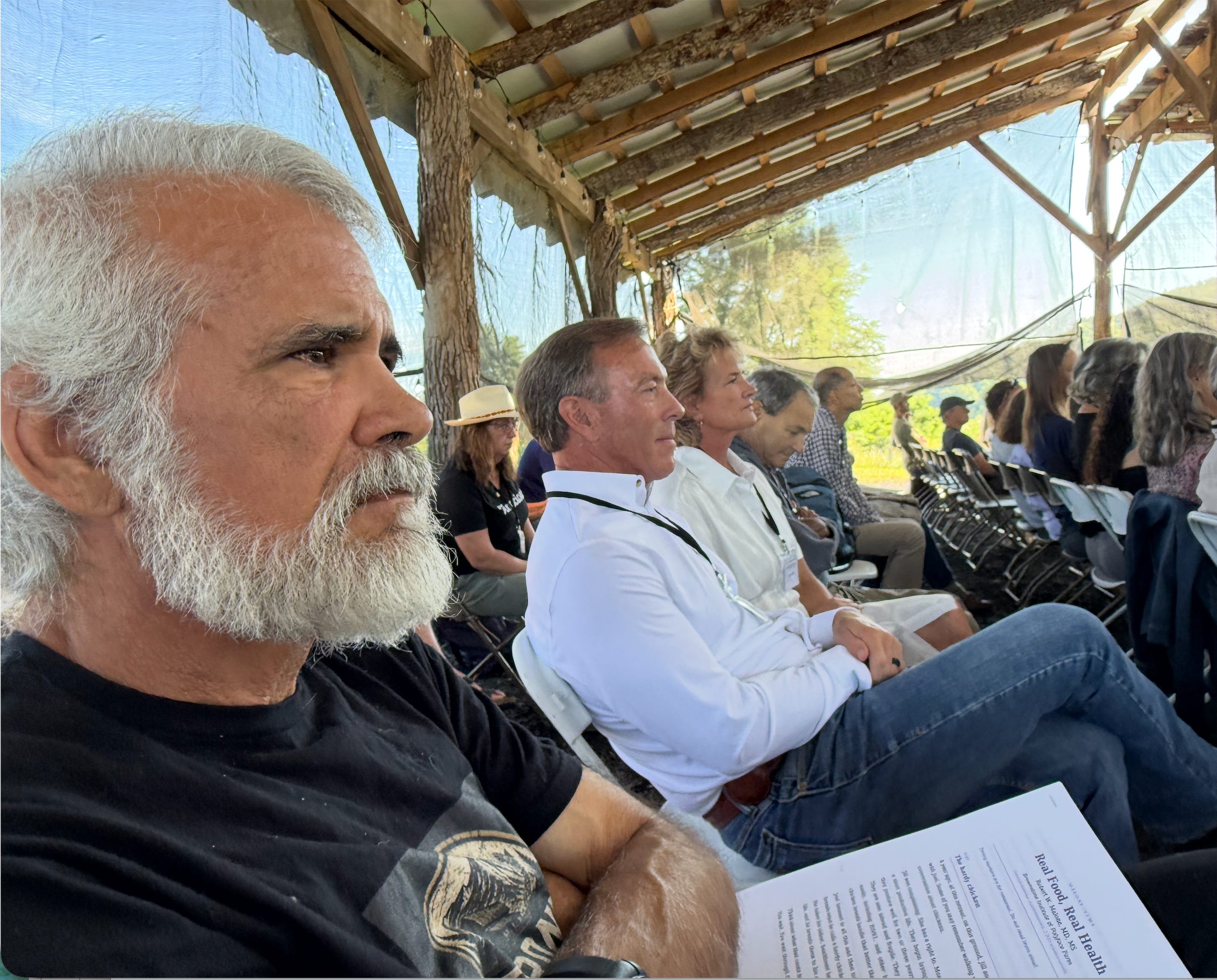
Robert Malone, sitting next to his friends Brooke and Ann Miller at Polyface Farms.
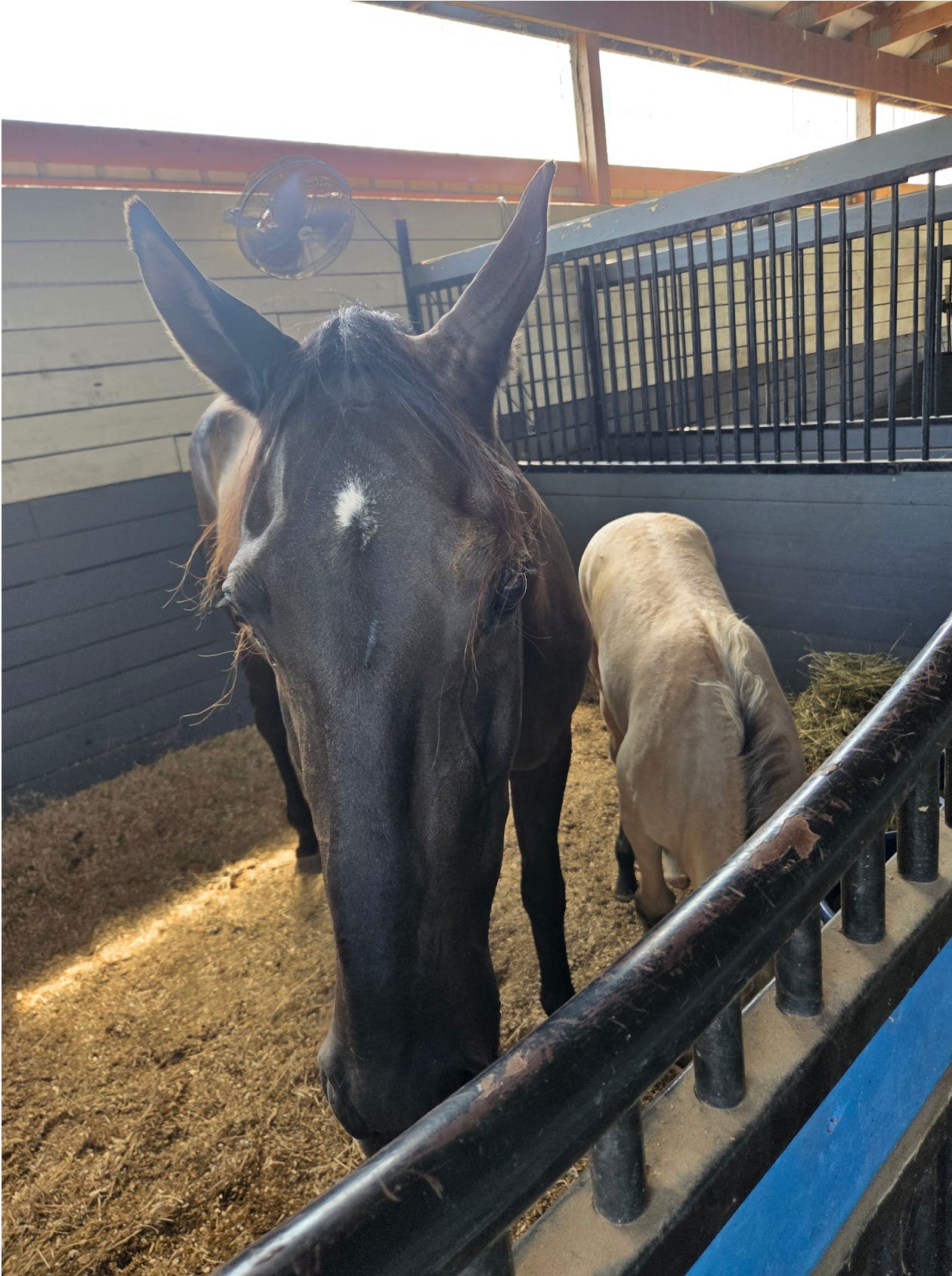
Note to Readers: Our foundation brood mare “Caranja” and her filly foal are back from the hospital and at stall rest with occasional pasture walkabouts. Thanks to all concerned for your prayers and good wishes.
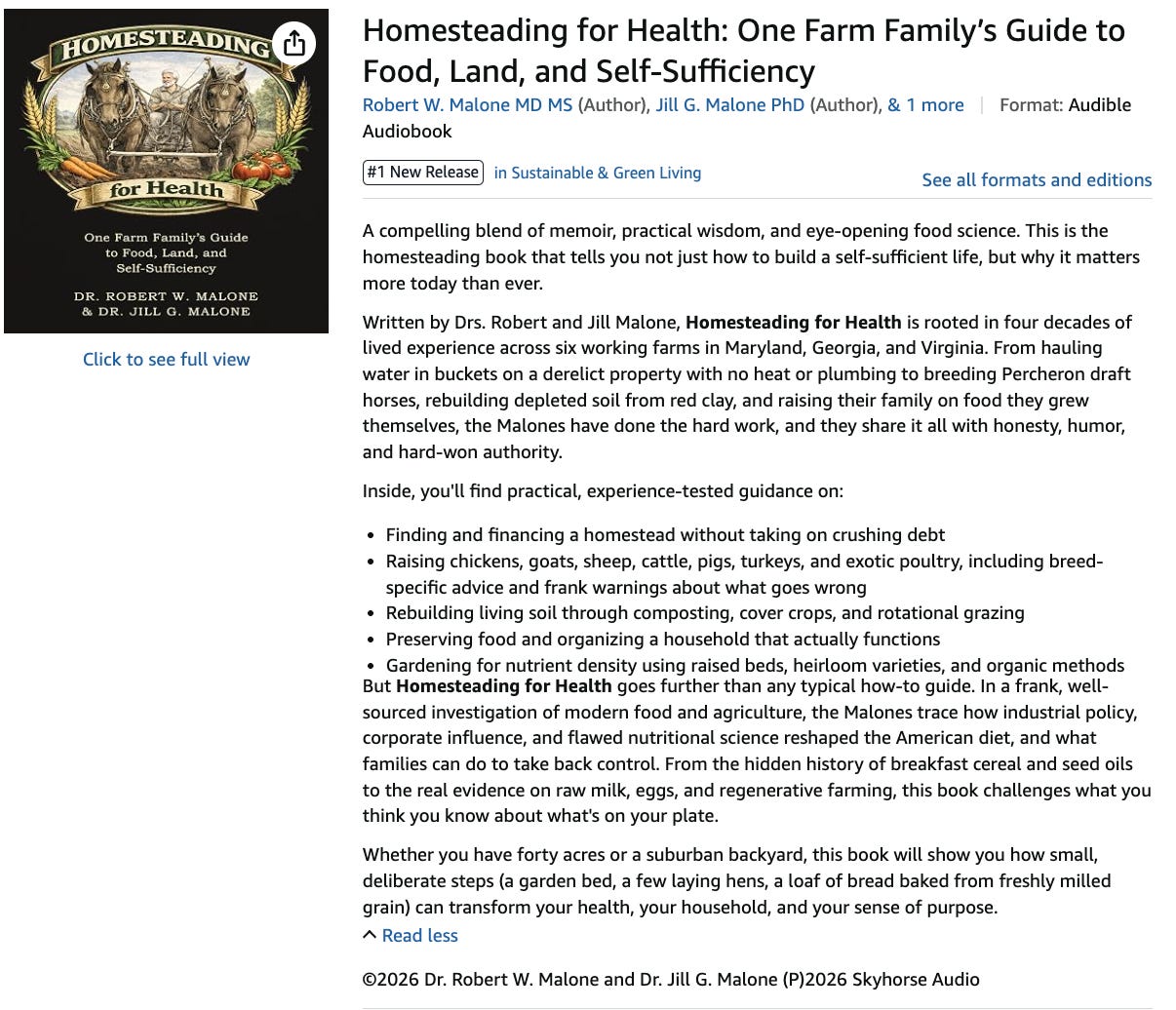
Due to popular demand, I have deferred today’s essay to post the text of the speech that I gave yesterday at the Brownstone/Polyface retreat. The speech covered ideas developed more completely in our new book, “Homesteading for Health”, available on Amazon and wherever good books are sold.
Real Food, Real Health
Robert W. Malone, MD, MS
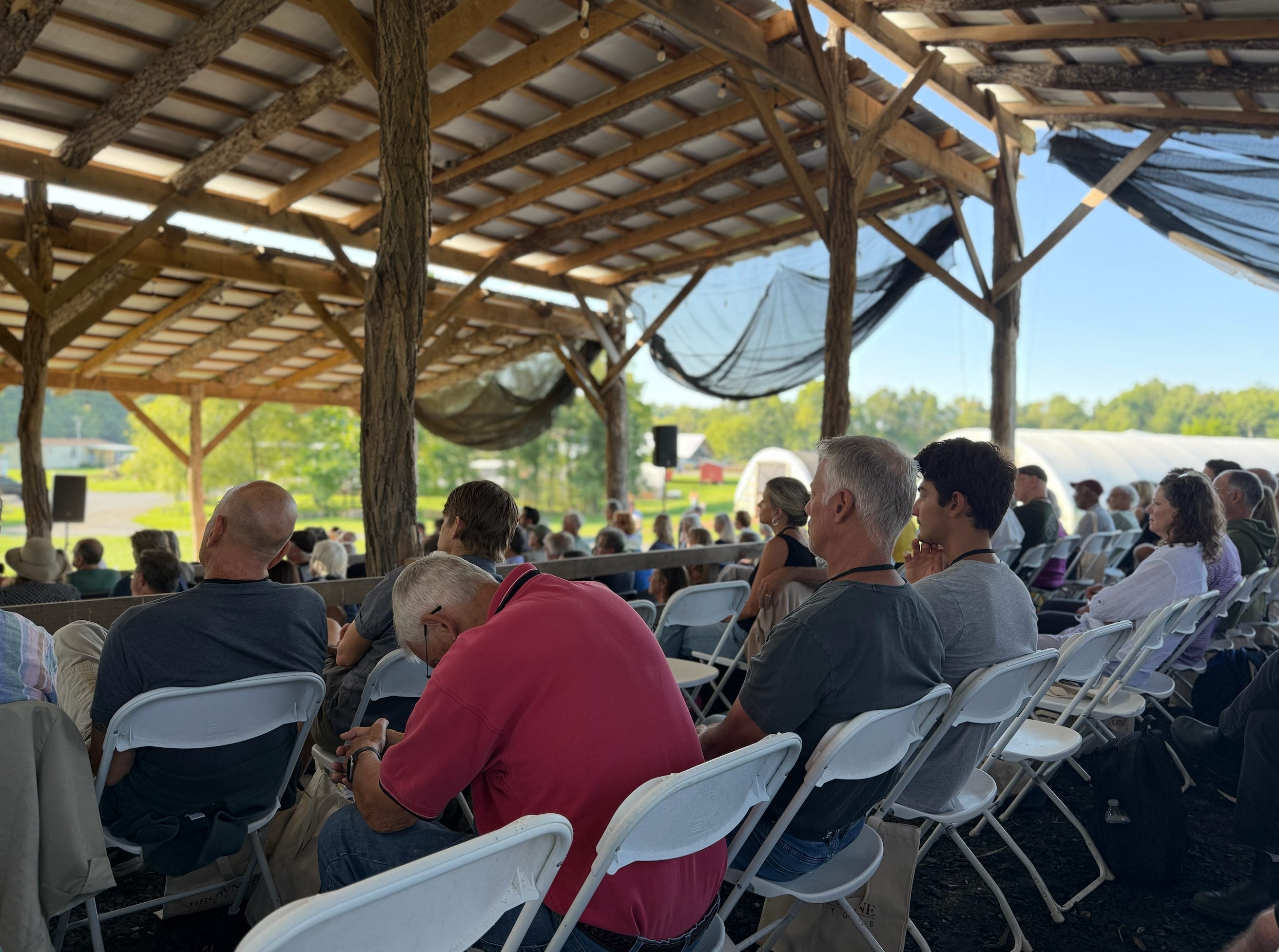
Brownstone Institute at Polyface Farm
The hardy chicken
A year ago, at this retreat, on this ground, Jill and I walked this farm with Joel. Some of you may remember walking with us. We got into a conversation about chickens.
Jill was complaining. She has a right to. Most laying hens today have a short productive life. They being laying at about twenty weeks, they produce well for two or three years, and then they are done. They are also inbred and fragile. They pick up respiratory disease easily, including H5N1, and other bird species and even some chicken breeds handle that better than our commercial layers do.
Joel listened to all this and then told us what he does about it. He breeds what he calls a hardy chicken. The method is not complicated. He takes his oldest, healthiest hens, the ones still laying well late in life, and he breeds them to his oldest, healthiest roosters.
Think about what that costs him. You cannot breed at twenty weeks. You wait. You wait through the whole productive life of the bird, and only then do you find out which ones deserve to be parents. Years of waiting for one generation of selection.
What he gets on the other end is a bird a homesteader can keep for five or six productive years instead of three. That is not just a better chicken. That is a more resilient farm.
I have thought about that conversation for a year, because it is the whole argument I want to make to you this morning in one anecdote. Industrial agriculture spent seventy years optimizing for the wrong variable. The correction is patience and biology. And it is available to you now, on your ground, without asking anyone’s permission.
The argument
Here is what I want to walk through.
Depleted soil produces less nutritious food. Less nutritious food, run through industrial processing, produces inflammatory disease in the people who eat it. Both ends of that chain can be repaired by your household, and faster than most people believe.
I will take that in three pieces. What happened to the soil. What that does to a body. And what your family can actually do about it.
What happened to the soil
Start with a study that nobody in the nutrition establishment wanted.
In 2004 Donald Davis and his colleagues at the University of Texas compared the mineral and vitamin content of forty-three garden crops. Broccoli, spinach, carrots, ordinary things. They used USDA’s own data from 1950 and USDA’s own data from 1999. Same crops, same agency, fifty years apart.
Nearly every nutrient they examined had declined. Calcium, phosphorus, iron, riboflavin, vitamin C. The drops ran from 6 to 38 percent depending on the crop.
Consider the spinach number for a second. A 38 percent reduction in iron means your grandmother got more nutrients out of one serving than you get out of two.
Rattan Lal put a number on the global scale of it in 2005. Potassium deficits across 90 percent of the world’s harvested area. Phosphorus across 85 percent. Nitrogen across 59 percent. More than half the cropland on this planet is mining its own fertility, taking more out each season than goes back in.
Now, although I was originally a carpenter and a farm hand, I am now a scientist and a physician, and I want to be fair to the other side, because there is a real objection here.
A Canadian researcher named Robin Marles published a systematic review in 2017 arguing that these historical comparisons are unreliable. Analytical methods changed between 1950 and 1999. Crop varieties changed. Samples came from different regions and different laboratories. His conclusion was that claims of soil depletion driving nutritional decline are unfounded.
He is right about the methods. Comparing a 1950 assay to a 1999 assay is not clean science.
But he is measuring the wrong thing. Total mineral content in soil is not the same as biological availability to a plant. A field can test perfectly adequate for zinc on paper and still fail to deliver zinc, because the fungal networks that shuttle micronutrients into roots have been suppressed.
That is not a hypothesis. Arbuscular mycorrhizal fungi have partnered with plant roots for more than four hundred million years. They colonize the root and extend hyphae out into the soil, sometimes multiplying a plant’s effective root area by a hundred. In exchange for sugars from the plant, they deliver phosphorus, zinc, selenium, and iodine that the roots could never reach on their own.
Deep tillage shreds those networks. Heavy phosphorus fertilization suppresses them. Pesticides reduce microbial diversity. Monoculture starves the whole community of the botanical diversity it feeds on.
So as a consequence, you end up with soil that still grows a crop but has lost its biological intelligence.
The evidence that fixing it works
The strongest evidence comes from David Montgomery and colleagues at the University of Washington, published in PeerJ in 2022.
They found paired farms across this country. Same crops. Same soil type. Fields side by side. One managed conventionally, one managed regeneratively for five to ten years with no till, cover crops, and diverse rotation.
In one wheat comparison in Oregon, the cover cropped grain came in with 41 percent more boron, 48 percent more calcium, 56 percent more zinc, and four times the molybdenum of the conventional field immediately next door.
Here is the part that matters most. Those nutrient differences did not track with total soil mineral levels. They tracked with soil health scores. Organic matter, microbial activity, aggregate structure. The regenerative soils were not chemically richer at a gross level. The fungi and the microbes had gone back to work making them richer at a micro and nano level.
How long it takes
Every farmer asks me the same question, and most speakers dodge it. So here is the honest answer.
In the first six to twelve months, microbial activity rebounds and earthworm populations climb. Your soil smells earthier. It crumbles instead of clodding. Those are not cosmetic changes.
Over one to three years, labile carbon builds and early mycorrhizal networks establish. Water infiltration improves, and your cover crops come up more vigorously each season.
The five-to-ten-year window is where the payoff shows up in the food. That is the range where Montgomery documented measurable improvement in crop micronutrient density.
Past ten to twenty years, topsoil deepens. The University of Washington farm study measured topsoil thickness increasing fourfold over twenty years on ground that had been a garbage dump.
I owe you the bad news with it. Yields dip in the transition, usually for one to three years, while soil biology reorganizes and weed pressure rises. Rodale’s Farming Systems Trial found organic yields back to conventional levels within three to five years. Insect pressure also goes up, and you (or your chickens) will manage that issue for as long as you farm.
The asymmetry is what should motivate you. Degradation under intensive conventional management runs somewhere between a hundred and a thousand times faster than passive recovery. Land does not heal on its own at any speed worth waiting for. It heals when somebody decides to heal it.
What that food does inside a body
Now let me put on the other hat. My medical doctor side.
We talk about obesity as a weight problem. It is more accurate to call it a chronic low grade inflammatory disease.
White adipose tissue is not inert storage. It is an active endocrine and immune organ. It responds to hormonal signals, and it manufactures cytokines that reach every system in your body. As that tissue expands it becomes dysregulated and inflamed, and that inflammation drives insulin resistance and impaired glucose metabolism.
The relationship runs both directions. Metabolic dysfunction promotes inflammation, and inflammation further wrecks metabolic control. Patients get caught in that loop and are then told to eat less and move more.
Adipose tissue also produces leptin, which is supposed to tell your brain you have enough stored energy and can stop eating. In obesity many people become leptin resistant. Levels are high and the brain no longer listens. Hunger persists. Then we call this signaling biochemistry a failure of willpower.
There is more. Visceral fat drives testosterone down in men, partly through inflammatory signaling and partly through increased conversion of testosterone to estrogen. It is often reversible with abdominal fat loss.
And this compounds with age. The literature calls it inflammaging. Low grade systemic inflammation climbing year over year, associated with cardiovascular disease, neurodegeneration, frailty, and joint degeneration.
Walk through any airport and you can watch it. Altered gait, visible discomfort, limited mobility. Pain limits movement, less movement raises inflammation, and inflammation worsens the pain.
The food that feeds it
The observational literature linking ultra-processed food to bad outcomes is large, and I will not rely on it, because you can always argue confounding.
The controlled feeding trials are harder to dismiss. Match the macronutrients. Vary only the degree of processing. The people on the ultra-processed diet eat more calories and gain more weight. The structure of the food, not just its nutrient composition, is changing appetite regulation.
Take breakfast cereal, since it sits in most American kitchens.
Children’s cereals average about 34 percent sugar by weight. Some run 50 to 56 percent. A child eating one bowl a day consumes roughly ten pounds of sugar a year from that one habit.
Much of it arrives as high fructose corn syrup, enzymatically converted to be sweeter and more palatable. The oils are extracted with high heat and hexane, then degummed, bleached, and deodorized. The preservatives include BHT, which the International Agency for Research on Cancer classifies as a possible human carcinogen. The dyes include Red 40 and Yellow 5, restricted or warning labeled in parts of Europe over behavioral effects in children.
Americans bought thirteen billion dollars of that in 2024.
We took the bran and germ out of the grain, then fortified the starch with synthetic vitamins and printed heart healthy on the box.
Why this happened
This was not an accident of the market. It was policy.
Earl Butz ran USDA under Nixon and Ford. His key policy phrase was get big or get out. Federal policy restructured around scale, specialization, and volume. Price supports gave way to payments tied to production, and those payments favored large operations.
It worked exactly as designed. Production rose, food got cheap, and the diversified family farm lost the economic ground it needed to survive.
When Jill and I bought our place in Madison County, we bought the end of that story. Productive farm land used for dairy and hogs, then monoculture hay, then depletion, then abandonment. Collapsed buildings and compacted clay.
The people before us did not fail for lack of effort or skill. They failed because the economics of twentieth century farm policy left an operation that size no room to stand. I did not fully understand that when I signed. I understand it now.
2022
I want to tell you what changed for us, and I want to be careful about what it proves.
In 2022 Jill and I were both in poor metabolic health. Technically obese. I was dealing with cardiac arrhythmia, chronic digestive problems, and the aftermath of COVID illness and vaccine injury. Jill was managing nerve damage from a trimalleolar fracture and recovering from facial reconstruction after a horse injury.
We had been vegetarians for more than thirty years. We were certain we ate well. Our blood work said otherwise.
My physician, Brooke Miller, looked at those numbers and was blunt with me. Eat meat. Prioritize protein. Get rid of the processed carbohydrate that had colonized our diet over three decades.
We spent a month reading before we changed anything. Then we changed everything. Our own eggs, grass fed meat, raw milk from our Jersey herd, garden vegetables, organic grain we mill ourselves. No seed oils, no added sugar, no refined flour, no processed food. We added intermittent fasting and cut total calories.
We each lost fifty pounds inside a year. Years later, neither of us has put it back. The arthritic symptoms that had been closing in on both of us largely resolved. My digestive trouble is gone.
Two people is not a study. Our experience proves nothing at a population level, and I will not pretend otherwise.
I tell you because I want to be concrete about what it feels like when the food comes off your own ground. The farm did not just supply ingredients. It supplied the framework. You stop eating passively.
What this does not fix
I also want to be honest about the limits, because overclaiming is how movements lose credibility.
Homesteading does not fix the subsidy structures that reward commodity monoculture. It does not compel EPA to finish a glyphosate risk assessment that takes independent science seriously. It does not reduce the political weight of agribusiness lobbying in Washington. It does not rebuild the large animal veterinary infrastructure we let collapse over fifty years, and it does not undo the regulatory capture that makes it harder every year for a small farm to sell directly to its neighbors.
Those are political problems. They need political work, and anyone who tells you a garden solves them is grifting, and you are the mark.
What it does resolve
What homesteading resolves is your household’s exposure to the worst of what that system produces.
Grow vegetables in living soil without chemical inputs and you are eating measurably more nutrient dense food than the supermarket sells. Keep your own hens and your eggs are nutritionally superior to anything in a grocery case. Keep a dairy animal on good pasture and what you drink is a biologically different product than the commodity that has been homogenized, pasteurized, and hauled across a continent.
It resolves one more thing that does not appear in any assay. Agency.
The modern food system runs on consumer ignorance. It works best when nobody asks what is in the bag or what was sprayed on it. The morning you start growing your own food, that ignorance stops being available to you. You know what went into your soil. You know what your animals ate.
And every version of this counts. The person in an apartment who trades cereal for eggs and grows herbs on a windowsill has moved the needle. The suburban family with a raised bed and three chickens has moved it further. The family that finds five acres and builds living soil has moved it further still. None of them had to wait for anyone else, or for Washington DC, to solve the larger problem first.
Jill and I started with working her father’s lemon and avocado farm, and then two chickens named Henny and Penny in married student housing in La Jolla. Our son Zach is forty-two now and he still remembers those hens. Every farm since grew out of that.
Close
Health is not merely biochemical. It is cultural. Food is not merely fuel. It is sovereignty. Farming is not merely an industry. It is an inheritance.
Freedom is not secured in distant institutions. It is practiced at home.
Plant something. Raise something. Cook something. Know where it came from.
Cultivate your garden. The rest will follow.
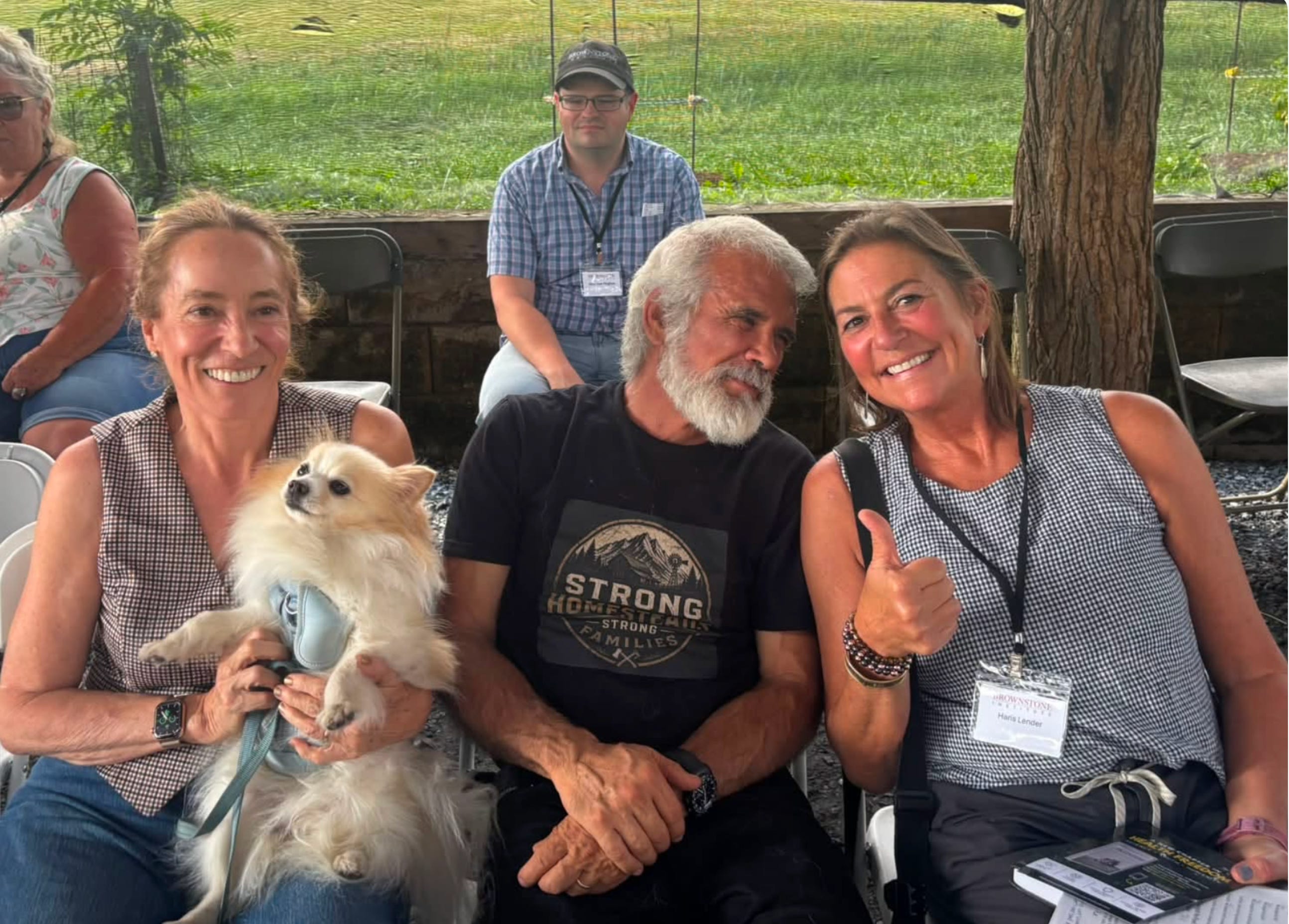
Jill received this Facebook DM from Haris Lender, one of the many friends we met at this year’s Polyface retreat.
“On December 31, 2021, Dr. Robert Malone appeared on the Joe Rogan experience. For those of you that don’t know, he helped to develop the MRNA platform and DOESN’T support the Cvid vax. Let that sink in.
Immediately afterwards Neil (f**k the man/gov) Young decided that he was sticking with the Gov and if Joe Rogan wasn’t taken off Spotify for having Dr. Robert Malone on his show for speaking the truth about the Cvd Quacksenes… he would leave.
So much for free speech eh?
Spotify stuck with Joe. Good choice IMHO.
Right afterwards I made a post. I mocked Neil who I have always loved… but was disappointed in his behavior.
My post:
“Hey hey … my my… Neil Young’s off Spotify!”
That was the beginning of the cancellation of ME.
I got a lot of flack for that.
Lost a lot of friends and FB followers and my life has never quite been the same.
Of course not nearly as bad as for Dr. Robert Malone, who I still stand by, for speaking the truth. Six years later, I finally feel it has all been a blessing for waking me up and making me a stronger person.
He is one of my many heros in the long battle for Cvd truthers. Dr. Malone’s wife Jill is also quite the force to be reckoned with and somehow we have become FB friendly. Thanks for your support Jill!
Being here in Staunton, VA at the Brownstone organization medical freedom conference with all of these phenomenal Doctors, Scientists and medical freedom fighters is incredibly exciting. Our Government should never have the right to mandate an experimental Quacksene. Period!
Thank you Dr. Malone for fighting for us and even though it has been a challenging journey
… the future sure does look bright!
So here we are almost six years after the post that ended my life as I know it and this time I’m gonna say:
“Hey hey my my… it’s Robert and Jill Malone… and me oh my!”
Today was a good day.”
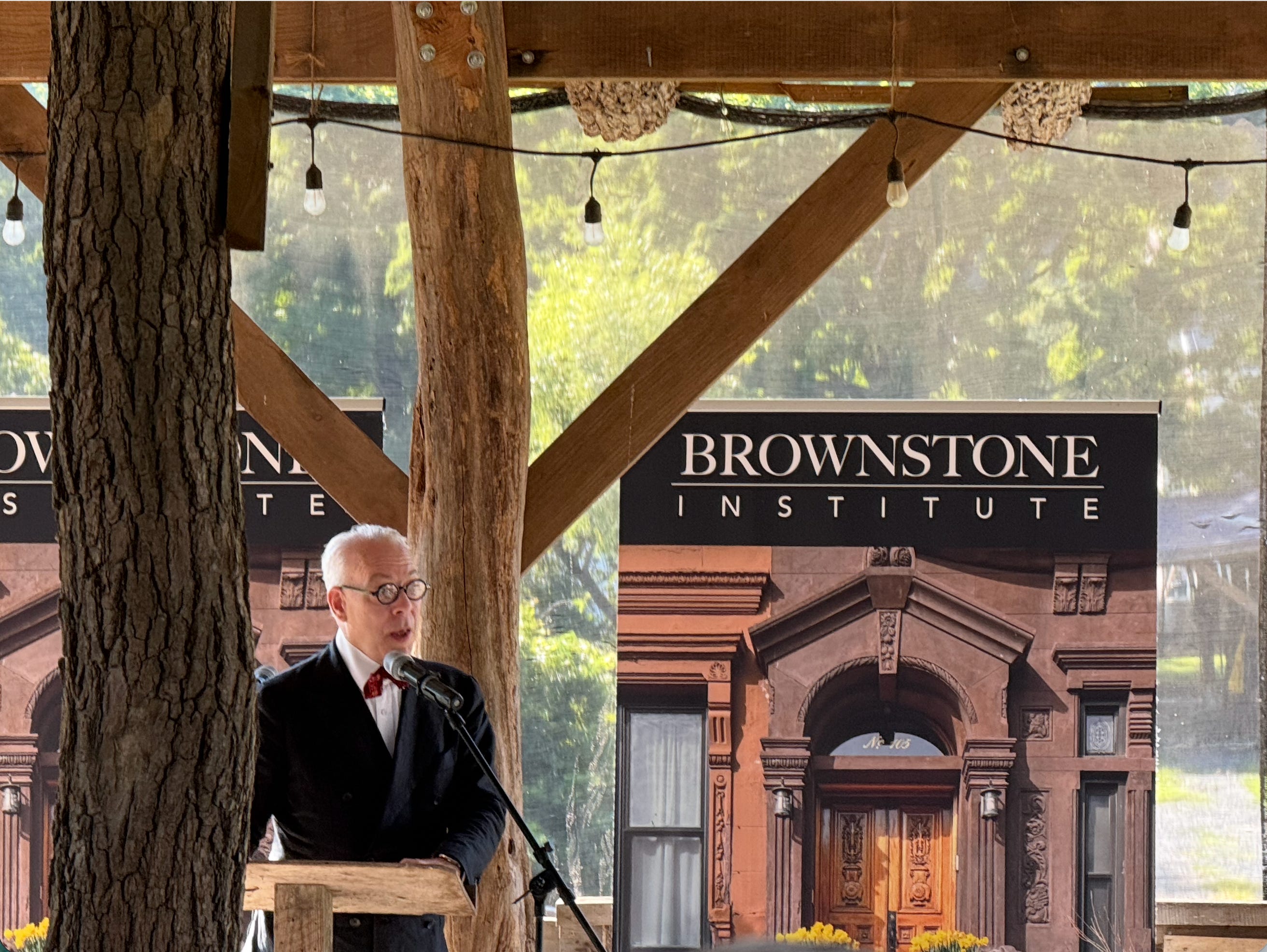
Jeffrey Tucker
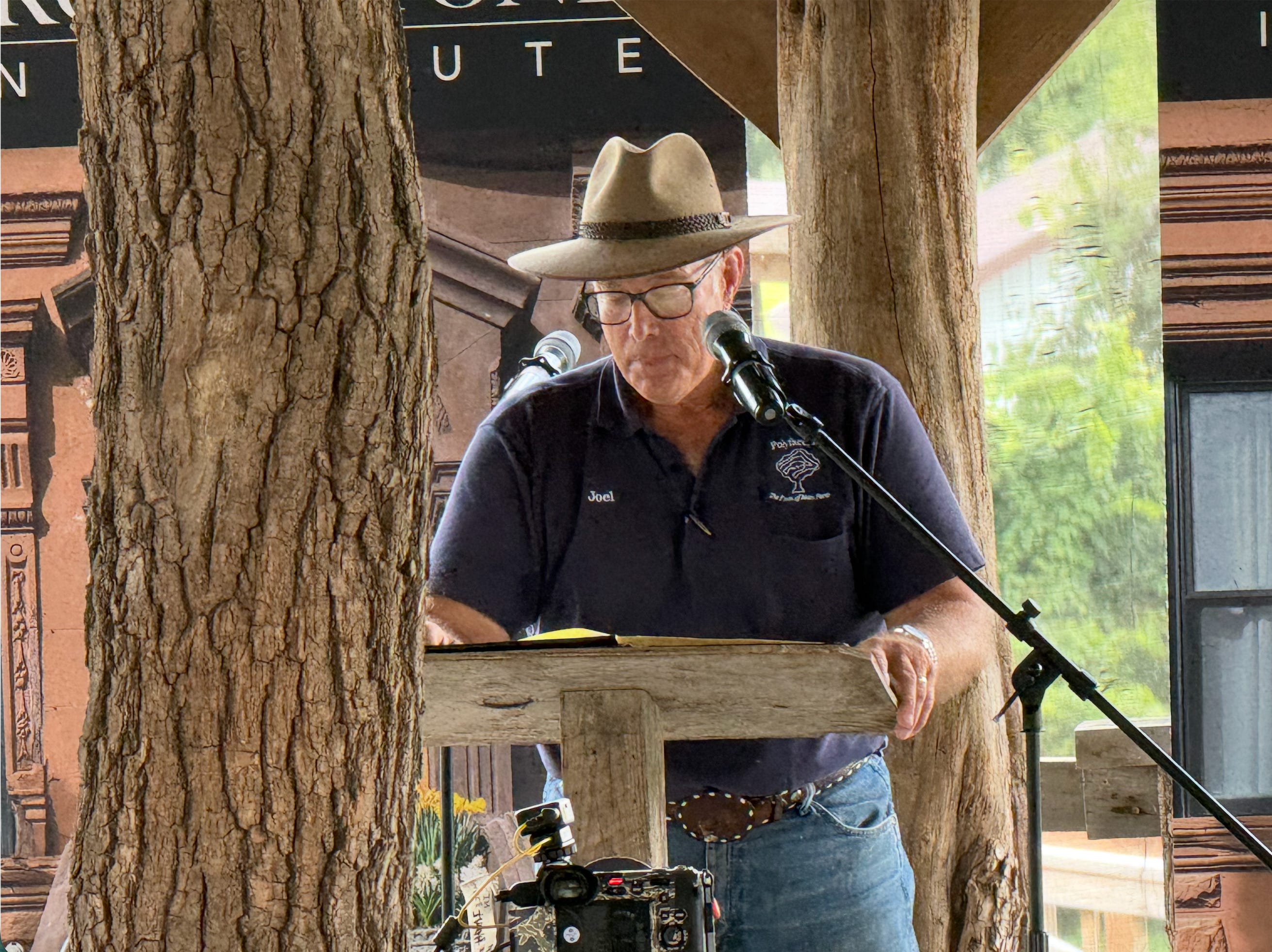
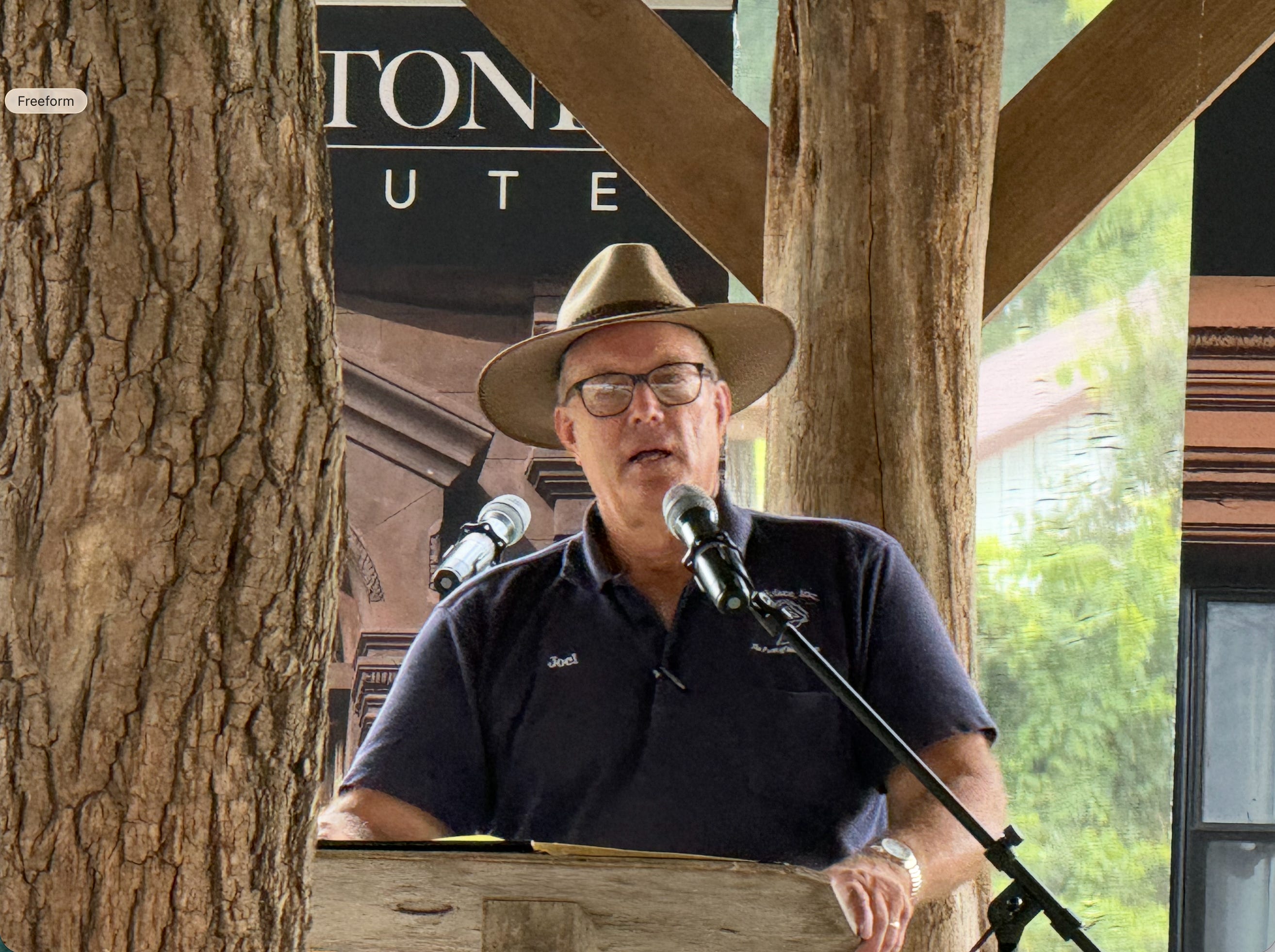
Joel Salatin, a national treasure
Note to Readers: Our foundation brood mare “Caranja” and her filly foal are back from the hospital and at stall rest with occasional pasture walkabouts. Thanks to all concerned for your prayers and good wishes.
Best...news...ever! Thank you for letting us know.
So happy to hear good news about your mare and foal praying for continued health and love your article today thank you again .