


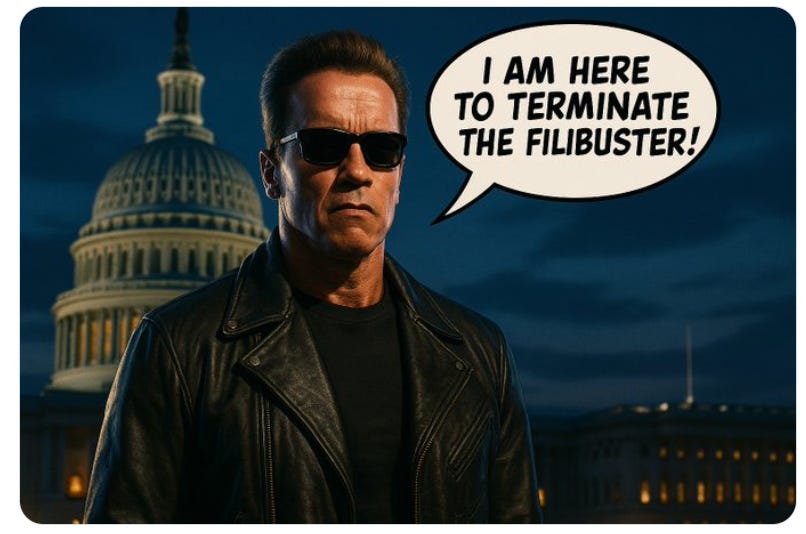
The SAVE America Act, formally known as the Safeguard American Voter Eligibility Act, is a Republican-led election integrity bill designed to do something that sounds almost boringly obvious. It would require proof of United States citizenship to register to vote in federal elections, mandate photo identification for voting, and direct states to take additional steps to remove noncitizens from voter rolls.
In other words, it proposes that to vote in American elections, one should be an American citizen and be able to prove it.
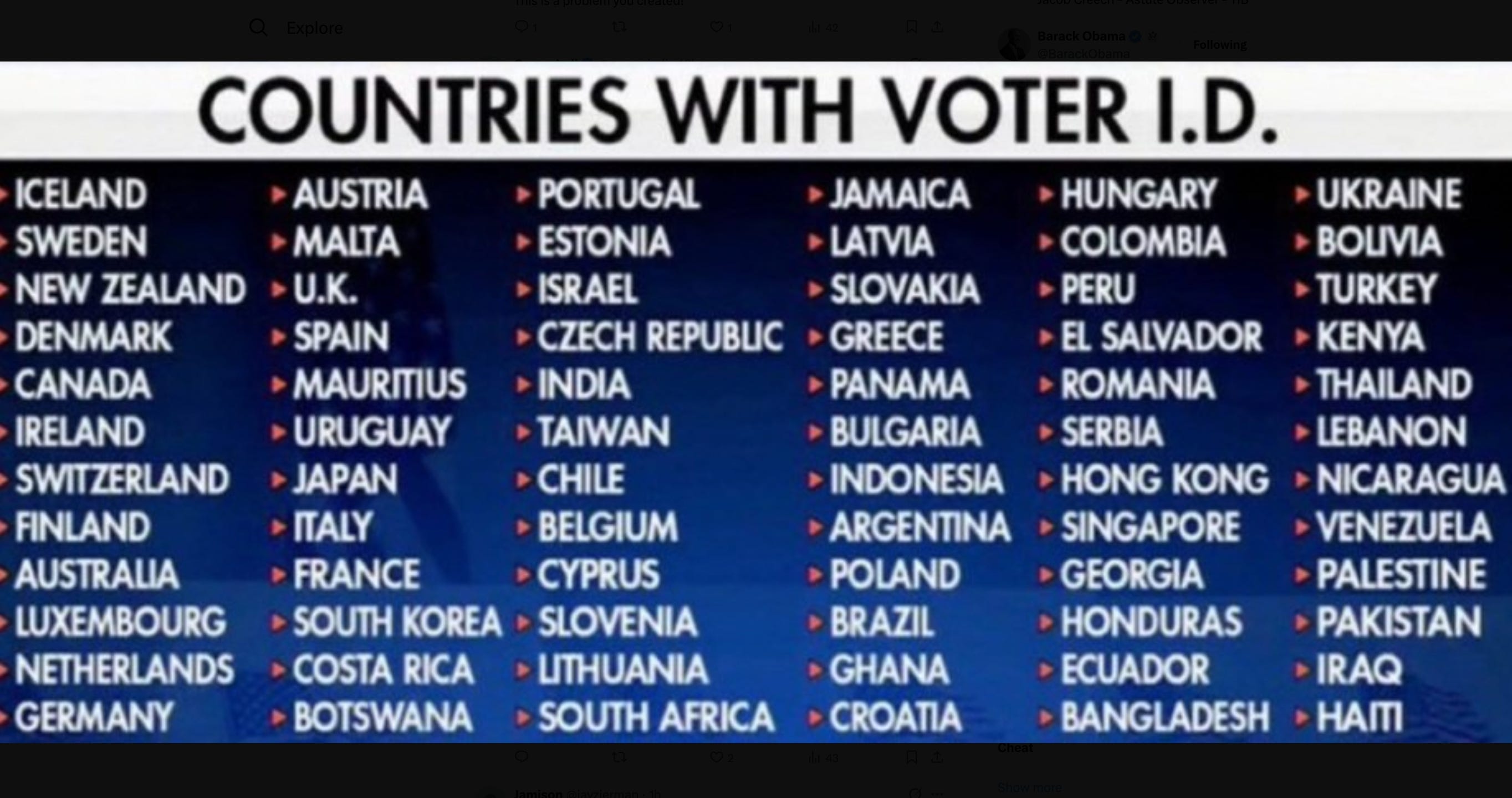
Obviously, this is all common sense. You need identification to board a plane, open a bank account, buy certain cold medicines, or pick up concert tickets. Participating in the most powerful civic act in the country should not be held a lower standard than renting a car.
Democrats in Congress oppose the bill, arguing that the requirements could create administrative burdens or complicate registration for some voters. Many progressive activists insist that requiring proof of citizenship is discriminatory. Advocates of the legislation counter that citizenship is already a legal requirement to vote in federal elections. The bill does not invent a new qualification. It simply asks that the existing rule be verified. That debate, as you might imagine, is less about paperwork and more about tribalism within the hallowed halls of Congress:
The House of Representatives passed the bill on February 11, 2026, by a narrow 218 to 213 vote. Only one Democrat crossed party lines, and that was Rep. Henry Cuellar of Texas. It now sits in the United States Senate, which is where legislation often goes to contemplate its life choices.
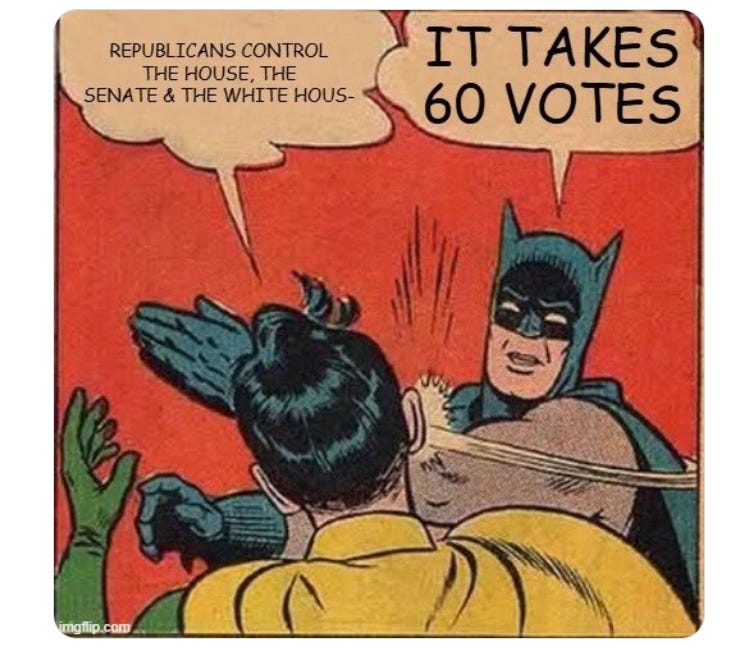
The obstacle in the Senate is not necessarily majority support. It is procedural. Rules and regulations that were passed long ago to ensure that nothing ever gets through the Senate that could actually influence America.
Under current Senate rules, most legislation requires 60 votes to invoke cloture and end debate. Cloture is the formal process that stops debate and allows a final vote. The Senate historically prides itself on extended debate. This tradition is what makes the filibuster possible. That was then, this is now.
In modern practice, a Senator does not have to stand on the floor reading from the phone book for hours. A simple signal of intent to filibuster is enough. Unless 60 senators vote to end debate, the bill effectively freezes. Yep, somehow the Senate went from extended debates to the very act of crying wolf that a debate might be held, is enough to shut down pending legislation. That means a measure supported by 51 senators can still stall indefinitely.
To begin cloture, 16 senators must sign a motion. After a waiting period, the Senate votes. If 60 senators agree, debate is limited to roughly 30 more hours and then the chamber proceeds to a final vote. If fewer than 60 agree, the bill stays in limbo. In today’s Senate, 16 Democrats can substitute procedure for policy and call it principle.
This 60 vote threshold has become the Senate’s most reliable speed bump. A bill can have majority support and still go nowhere.
The world’s most powerful nation, sidelined by 16 Democrat senators who would rather obstruct than vote.
There are exceptions. Budget reconciliation bills dealing with taxes and spending can pass with a simple majority. Judicial and executive nominations also now require only a simple majority due to previous rule changes. Ordinary legislation, however, still faces the 60 vote hurdle.
Republicans hold a narrow majority, but not 60 seats. That means at least several Democrats would have to vote to end debate on the SAVE America Act. At the moment, that seems unlikely.
This leaves Senate Republican leadership, including Majority Leader John Thune, who seems to have been born without a backbone, with some strategic decisions.
One option is to revive a true talking filibuster. Under current practice, senators do not need to continuously hold the floor to block a bill. They can signal intent to filibuster, and the burden shifts to the majority to find 60 votes for cloture. Restoring a traditional talking filibuster would reverse that dynamic. Senators who wish to block legislation would be required to physically hold the floor and continue speaking. Once they yield or can no longer sustain debate, the majority could move toward a final vote. Importantly, this approach would not necessarily eliminate the 60 vote cloture threshold. Instead, it would reattach a real physical and political cost to extended debate. To implement this, the Senate would likely need to establish a new procedural precedent by majority vote, reinterpreting how debate and recognition operate under existing rules.
A more sweeping step would be the so-called nuclear option. Under that approach, a simple majority would directly reinterpret Senate rules to reduce the cloture threshold on legislation from 60 votes to 51. This would not merely change how debate is conducted. It would change the number of votes required to end debate altogether. The Senate has previously used this method to lower the threshold for executive and judicial nominations. Extending it to ordinary legislation would fundamentally alter the balance between majority rule and minority rights in the chamber.
Many RINO Republicans are cautious. Senators such as John Cornyn and Susan Collins have warned that changing the rules for short-term advantage can produce long-term consequences. The rule you create today will be used by the other party tomorrow. A future Democratic majority could pass sweeping legislation with 51 votes under the same precedent.
Democrats defended the filibuster for years. When it stood in the way of Obamacare, they sidestepped it through reconciliation. When Trump took office, it became a handy shield again. Under Biden, many Democrats tried to eliminate it outright, but Joe Manchin and Kyrsten Sinema blocked the move.
In Washington, the filibuster is less a sacred principle and more a power tool.
Republicans may want to keep that in mind. Playing nice in the sandbox only works if everyone agrees not to throw sand.
Other Republicans, including Senator Mike Lee, have argued that major legislation deserves an up-or-down vote rather than procedural burial. The internal debate is real. It pits institutional caution against policy urgency.
For now, the SAVE America Act has cleared the House but remains parked in the Senate. Without a rule change, its path forward is uncertain.
As for President Donald Trump, he cannot personally rewrite Senate rules. The Senate guards its procedures carefully, and presidents do not get a remote control.
That said, a president is never powerless.
First, he can apply political pressure. He can publicly urge Majority Leader John Thune to bring the bill forward. He can campaign in key states and make the vote a litmus test for election integrity. Presidents have microphones that most senators do not.
Second, he can influence the party's internal strategy. Private meetings, public endorsements, and clear signals about priorities all matter. While he cannot order a rule change, he can make it politically easier for senators to consider one.
Third, he can elevate the issue nationally. When a president frames something as central to his agenda, it changes the conversation and raises the political stakes.
Fourth, he can ensure existing federal election laws are enforced vigorously within current statutory limits. Executive action cannot replace legislation, but enforcement priorities can still send a message.
Finally, the long game matters. Presidents shape the Senate by supporting candidates who share their priorities. Over time, elections determine whether a party can clear the 60 vote hurdle without procedural reform.
In short, President Trump cannot unilaterally force the SAVE America Act into law. What he can do is rally voters, pressure senators, and influence the strategic choices before Senate Republicans.
Whether the bill advances will depend on whether they decide to protect Senate tradition, alter it, or dare their opponents to stand on the floor and talk until they run out of breath.

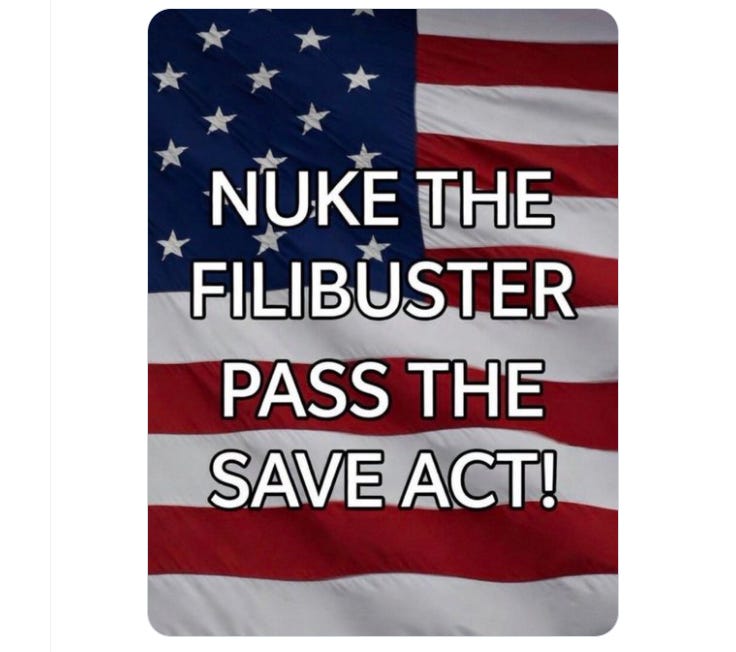
Understanding how voting is controlled in the Senate is a must read for all new Senators running for office. Over 50 are not going to run for re-election.
My food doc, my dermo doc and my primary physician all insist on having a copy of my driver's license. This also includes the SS office that wants a facial scan to compare to the driver's license. So do all the financial companies including my CPA. They don't want to be SCAMMED.
I guess scamming the voting system is a god given right in the eyes of the democrats.
Never fear when the Demtoids get back in power they will do away with both the silent and the talking filibuster. Then we get two new States (at least) and an infinite number of SCOTUS justices.