

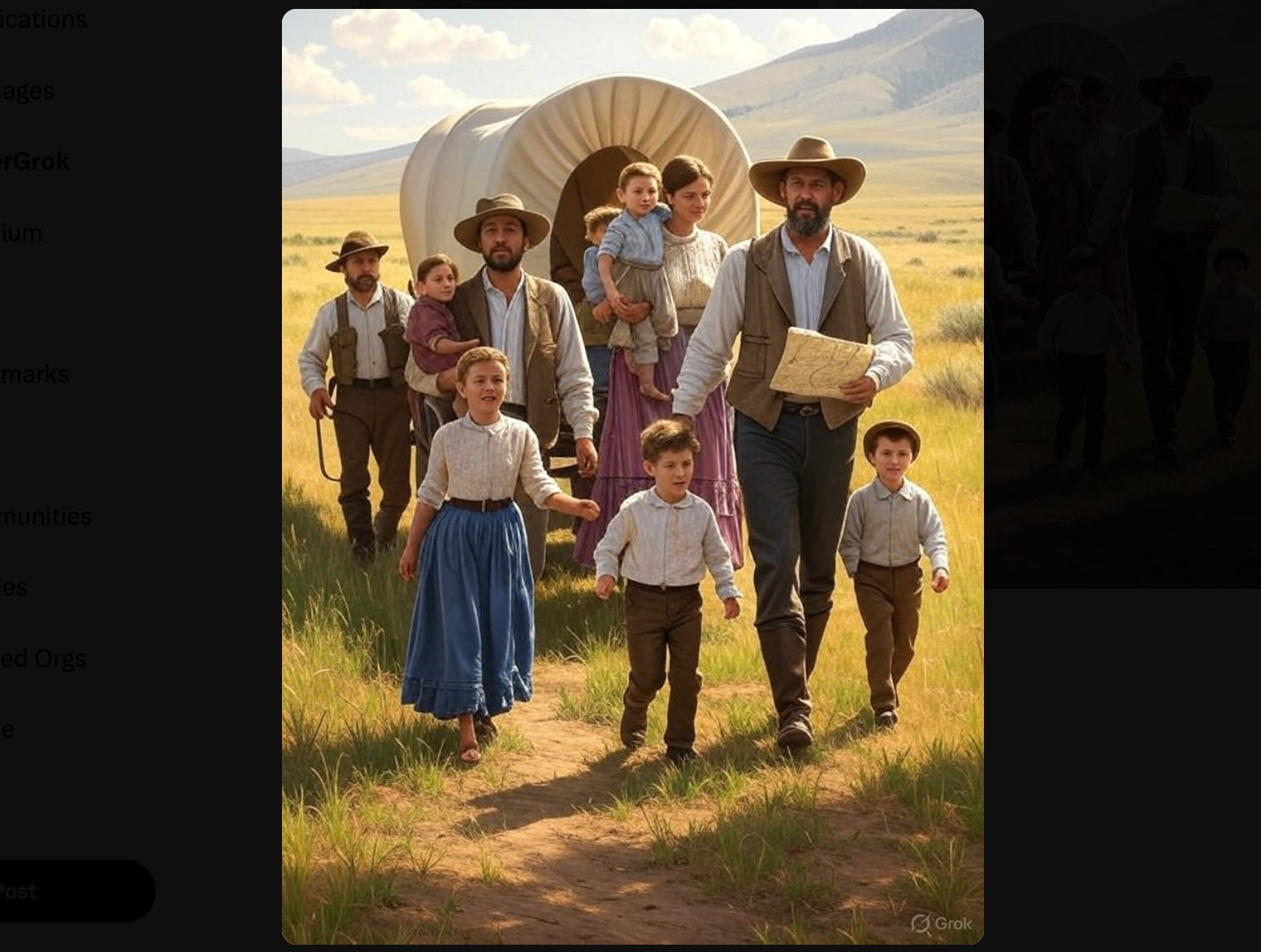
“Women have always been the primary victims of war.”
-Hillary Clinton
An excerpt from an article published at the Brownstone Institute follows:
…
“I should underscore at the outset that I harbor no desire to tell anyone, never mind any woman, how he or she should live their life. And as part of that, I am, needless to say, against all institutional practices that prevent women from acceding to any job they want to do and are capable of doing. People should always be free to choose the life path they feel most suits their personal needs and desires.
Rather, I am interested in exploring the seldom mentioned cultural presumptions at work in what might be termed the dominant, or perhaps better, “mass media” version of the discourse of feminism.
To liberate someone is to release them from undue or unfair restrictions on their natural rights. It is also to point them implicitly toward situations and social spaces where those restrictions are relatively absent and where they thus live in a state of much greater freedom.
From what I see and read, our media feminism presents the domestic realm, and especially the tasks related to childbearing, child-raising, and what used to be called homemaking, as a prime locus of female oppression.
And what, again, according to the most widespread strains of feminism, are the spaces where women can most fulfill themselves and be “free?”
It’s in the labor market where they can become “equal” to men by appearing smart, commanding, and, of course, earning a salary.
Assuming that what I’ve said is more or less accurate, what are some of the hidden presumptions buried in this line of thinking?
One is that the commercial marketplace is the supreme arbiter of the value of a human being, something that is quite a departure from centuries of Christian thinking that has held quite the opposite view; that, in fact, human value is intrinsic and if indeed it can be enhanced in any way during the course of our lives, it is through good works and charity, and by providing life-enhancing support to the sick, our wise elderly, and our life-brimming children.
Another is that while domestic work and raising children are tedious and boring, life in the labor market is much more soul-nurturing and fulfilling.
A corollary to this belief is that men have long been fulfilling themselves in wildly wonderful ways every time they leave the home to toil.
Drudgery? Bodily injury? Boredom? Harassment by stupid bosses? Heck no! Just week after 50-hour masculine week of deep personal growth and enhanced dignity.
And this is where we see the ridiculous class bias built into this popular feminism, one that imagines the male work world of Don Draper in Mad Men is more representative of reality than the many, many more lives of men like sanitation workers, miners, and commercial fishermen who engage daily with grueling and dangerous work.
It is precisely this line of “feminist” thinking that absurdly and paradoxically holds up traditionally male workspaces as places of great personal liberation that can lead Hillary Clinton to make the ridiculous statement quoted at the outset of this piece, which presumes that men being mutilated and killed in industrial numbers on the battlefield is somehow less awful that the admittedly terrible privations that women have traditionally suffered on the home front.
But Tom, we live in a commercial world. What would you have people do?
The first thing is to remember that financialization of the type that we are currently living through is a relatively recent phenomenon and not inherent in markets. Now wholly separated from any vestiges of the religiously-rooted ethical postulates that once held it somewhat in check, it is a system that cares nothing for your soul, your personal growth, or your family’s well-being. Indeed, through its ever more frenzied and scattered pace, it makes it increasingly impossible for workers to even meditate on these goals day-to-day, never mind moving toward achieving them. It is thus pure folly to make this unhinged system the vehicle or guarantor of one’s value pursuits, or to donate to it hours that could be spent fortifying affective ties to your loved ones.
Sure, we all need to work. But before sending ourselves or our children into the work force shouldn’t we perhaps all stop and seek to establish, through dialogue, a set of life-giving practices having nothing whatsoever to do with workplace achievement so that when the financialized and corporatized marketplace does what it inevitably does and deems us disposable, we will have skills that will hopefully allow us to lead our lives with purpose and a modicum of joy?
Sound overly idealistic?
It shouldn’t, as this is what most people did as a matter of course before heading into the workforce in previous generations. Back then, everyone knew that work was work and only quite rarely and secondarily a place where one could expect spiritual enrichment. It was understood that this much more important thing could only really be fully developed outside the often-alienating parameters of the workplace.
But thanks in no small part to the constant messaging of media feminism, this realistic view of work was replaced by a class-deformed understanding of the workplace, in which working like a man for the man was portrayed as glamorous and the key to self-actualization.
And thanks in part to this sacralized vision of work, a reshaped economic system arose premised on the necessity of every family having two earners, with the “second” of those earners, most often a woman, often taking a job with few benefits and little stability.
These are, of course, the very type of cheap jobs corporations love for their “flexibility,” which is just another way of speaking about jobs that can be minimized or disposed of easily when the company’s bottom line is threatened.
Funny how I’ve never seen a poll asking women with children who work in low-wage, no benefits, come-in-or-not-when-the-boss-tell-you, chain-owned convenience stores and fast-food restaurants—a human cohort that outnumbers that of female executives, doctors, and lawyers by several orders of magnitude—how “fulfilled” they feel with their work. Or whether they’d prefer to live in an economy in which staying home to raise their children and keep house was a more realistic option.
And I don’t expect to see one anytime soon, as it would most likely give lie to the oft-repeated idea that the workplace, as opposed to, say, the home, the church, or the community, is the best place for someone to realize their deepest dreams and desires.
As I said above, I hold no brief for anyone who would bar a woman from working a certain job or who harasses her on the basis of her gender. But ensuring that discrimination of this type does not occur is, in my view, quite different than erecting a corporate-friendly mythology that assiduously portrays the workplace as a, if not the, principal site of spiritual growth and fulfillment for women.
Work is work. And for most people in an increasingly depersonalized society and economy, it is (in this if nothing else, Marx seems to have been right) as often as not a source of alienation that numbs them and drains energy needed for engaging in arguably more important life pursuits.
Isn’t it time we admit these realities more frontally and stop enticing our young females into the workplace on the idea that is the prime space of personal growth and fulfillment before they’ve even been meaningfully exposed to the ideas and traditions—which, of course have been cartoonishly portrayed to them in recent years as seamlessly oppressive—that have animated female power, purposefulness, and joy throughout the ages?
With this countervailing information on the table, they would, it seems, at least be in a better position to mindfully decide how they really want to spend the precious hours allotted to them in this thing we call life.”
Postscript <RWM/JGM>
“Career first”
Manifesting destiny means consciously working to create or achieve the future you believe you are meant for; using your intentions, thoughts, beliefs, and actions to shape your own fate. It's the belief that you can actively participate in determining your life's path, not just passively waiting for fate to unfold.
Feminist theory has been integrated into our school systems. Girls are now taught from an early age that they should expect to be single for much of their life, go through a divorce, have their incomes stolen by that nasty divorce and so need to set up an independent life and achieve financial independence.. That independence from traditional family values is portrayed as freedom. That having multiple sexual partners has been normalized and celebrated. That their girl friends will be lifelong, but their boy friends (and spouses) will pass in and out of their life - and so they need to plan for that. This message has been crafted in such a way - from mainstream media, to the messaging of gender equity, that this has becomes the manifest destiny of many.
Of course, what this reflects is that this is the typical set of lifestyle choices selected by those who enter journalism. The biases of corporate media reflects the biases of those employed in generating and managing corporate media. And the bicoastal geographic bias in corporate media locations also plays a substantial role in the biases of the work product of these companies.
There is little focus in our educational system on protecting and elevating the traditional family, respecting women's right to choose homemaking roles, and questioning the feminists’ focus on paid work as the main path to empowerment and a fulfilling life. There is no focus on the value of the nuclear and extended family and how to maintain those familiar ties to benefit future generations of children. That children are important.
This “manifest destiny” has resulted in approximately 25% of children in the United States being raised in a single-parent household and most of these children are raised by their mother. We argue that this is not progress for women or men or their children, but is just the opposite.
“Wage-and-Tax Slavery as Emancipation?”
-Thomas Harrington

Bravo! I have have written about this diabolical societal decline many times. I could still write another 5000 words but I will truncate it down to this: I was a stay-at-home mom raising my three kids in the 70s/80s. I saw this coming as the Women's mags all started pushing the idea that women could be more than just home slaves. I believe this ideology began with the book The Feminine Mystique by Betty Friedan published in 1963. Took a decade for the virus to catch hold. The result was like dominoes falling. My contemporaries felt empowered to go get jobs which left the rest of us to fill in at the school for volunteering. Then two salaries meant need for daycare and more cars and bigger houses leading to more debt and need for more income. But now, five decades later, the generations raised in daycare are conditioned to this normality. Over time, the concept of feminism being a crusade for equal rights for women has become toxic and thus not only doing the opposite, it is destroying the foundation upon which civilization is built. And the devil laughs.
Excellent essay on society today.
The basic message here is that men are men and women are women but corporate/government interests don't care as long as they both keep their neck in the wage/tax-slave yoke.