


Back in 2023, I wrote about berberine after hearing my friend and colleague Dr. Paul Marik discuss repurposed therapies. At the time, berberine was still relatively unknown outside of integrative medicine circles. Today, it has become one of the most talked-about supplements in the world.
In typical fashion, the conversation has become polarized. Some social media influencers now market berberine as “Nature’s Ozempic.” Others dismiss it as little more than internet hype. As is often the case, the truth lies somewhere between those extremes.
The comparison to Ozempic is understandable. We are living through a period in which GLP-1 agonists such as semaglutide and tirzepatide have become some of the most profitable pharmaceutical products ever developed. Weight loss has become a national obsession. Every new compound that appears to influence body weight is immediately compared to these drugs.
Of course, the real culprits are a sedentary lifestyle and a culture that disdains physical labor, along with an abundance of highly addictive, ultraprocessed foods - full of carbs and sugar. But there it is. GLP-1 agonists are here to stay and are one way to combat the epidemic of metabolic disease that has overtaken America.
But I digress. Back to berberine as a “natural” Ozempic. The comparison is misleading.
Berberine is not Ozempic. It does not produce the dramatic appetite suppression or rapid weight loss associated with modern GLP-1 therapies. It is not a pharmaceutical agent designed to target a specific receptor. Rather, it is a naturally occurring plant alkaloid with a remarkably broad range of biological effects that influence metabolism through multiple pathways.
Berberine is found in several plants, including barberry, goldenseal, and Oregon grape. Traditional Chinese and Ayurvedic medicine have used it for centuries, primarily for gastrointestinal infections and digestive disorders. Modern research, however, has revealed a much broader range of biological activity for this natural product.
One reason berberine has attracted so much attention is that it appears to activate one of the body’s central metabolic control systems: AMP-activated protein kinase, or AMPK.
AMPK functions as a cellular energy sensor. When activated, it promotes glucose uptake, improves insulin sensitivity, enhances fat metabolism, reduces hepatic glucose production, and helps regulate energy balance throughout the body. These effects have obvious implications for many of the chronic diseases that now dominate modern medicine.
Since my original article, multiple reviews and meta-analyses have continued to support berberine’s role in improving metabolic health. The evidence suggests that berberine can modestly reduce fasting blood glucose, improve insulin sensitivity, lower LDL cholesterol and triglycerides, and support modest weight loss in some individuals.
The effects are not dramatic.
They are also remarkably consistent.
This distinction matters.
Medicine often falls into the trap of assuming that bigger effects are always better effects. Sometimes they are. Sometimes they are not. Metabolic health is not simply a matter of losing weight. It involves a complex interplay between insulin sensitivity, inflammation, mitochondrial function, lipid metabolism, gut health, physical activity, and nutrition.
Berberine appears to touch many of these systems simultaneously.
In many respects, it behaves more like a naturally derived cousin of metformin than a GLP-1 agonist.
Metformin is a prescription drug, best known as a first-line treatment for type 2 diabetes. It lowers blood sugar by reducing glucose production in the liver, decreasing absorption of sugar from food, and improving the body's response to insulin.
This is one reason researchers continue to investigate berberine’s potential role in prediabetes, type 2 diabetes, metabolic syndrome, metabolic dysfunction-associated steatotic liver disease (MASLD), and polycystic ovarian syndrome.
But let me digress (again):
As someone who has spent much of a career evaluating therapeutics, I find compounds such as berberine particularly interesting because they remind us that biology rarely operates through a single pathway. This is also true of ivermectin, which is the primary reason the FDA has had such a hard time approving it for various infectious disease indications.
It is the reason given by the FDA to stop my team and me from conducting clinical trials on the use of ivermectin for COVID. We were told that, first, we would have to prove the mechanism of action of ivermectin against COVID in tissue culture. A truly impossible task and a completely absurd FDA edict. Ivermectin was already an approved drug. Furthermore, we have extensively documented that ivermectin acts through multiple pathways to reduce disease symptoms.
Below was the FDA’s response to us and highlights why it takes so long to get anything through the FDA. BTW- we actually did not need the FDA’s approval for this clinical trial, but the US military, which was funding this work, had it as a requirement for continued funding.
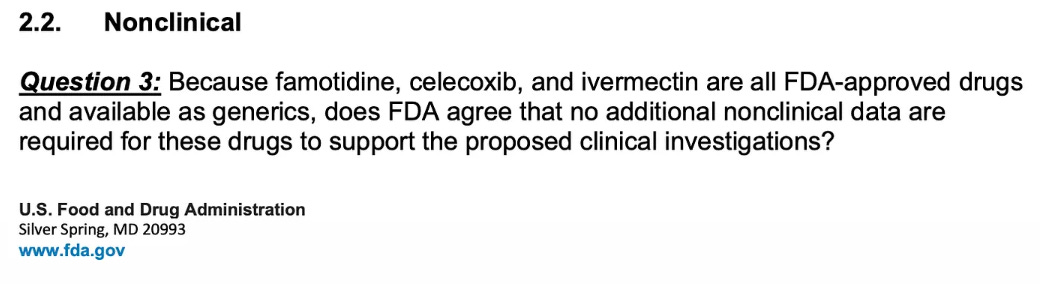

The FDA official in charge of writing this response in April of 2021 was Dr. Sumathi Nambiar. Guess where she went once she left the FDA, somewhere around 2024?

And so it goes. If you don’t upset the apple cart and piss off big pharma while at the FDA, you will be blessed with a high-paying second career soon after departure.
We were also told that to conduct clinical trials using already-licensed drugs (repurposed drugs), we would have to include remdesivir as the standard of care. And that means we would have to conduct toxicology studies on the combination of remdesivir and ivermectin. This demand, despite the fact that remdesivir was already known by the FDA’s own reporting not to have any mortality benefit. In fact, in late 2020, the WHO's large multinational Solidarity Trial determined that remdesivir had little or no effect on overall mortality, initiation of ventilation, or duration of hospital stay.
Again, the FDA imposed an impossible standard during a fast-moving pandemic for drugs that are already licensed, safe, and effective.
In retrospect, it was clear that the FDA’s decision to block, in a timely manner, the main clinical trials for the use of ivermectin and other repurposed drugs in the USA was about stopping any treatment that would conflict with the economic drivers behind the vaccines that came at us like a freight train.
However, this example shows just how impossibly complex these issues are.
The reductionist mindset that dominates modern drug development seeks highly specific targets. Block one receptor. Activate one enzyme. Modify one signaling pathway. If you can’t prove that, the FDA will not allow a clinical trial to proceed.
Human physiology is rarely that simple.
Berberine appears to influence metabolic regulation, inflammatory signaling, oxidative stress, mitochondrial function, and the gut microbiome. Those systems interact continuously. The result may be a series of individually modest effects that collectively become clinically meaningful.
The Microbiome Connection
One of the most fascinating developments since I first wrote about berberine involves its interaction with the gut microbiome.
Over the last several years, evidence has continued to accumulate suggesting that berberine alters microbial populations within the gastrointestinal tract. Some investigators now believe that a substantial portion of its metabolic effects may be mediated through changes in gut ecology rather than through direct systemic absorption.
This hypothesis makes sense. Berberine has notoriously poor oral bioavailability. Yet despite limited absorption, it consistently produces metabolic effects in both animal and human studies.
The gut microbiome may help explain that apparent paradox.
Increasingly, researchers are recognizing that metabolism, immunity, inflammation, and the microbiome operate as an interconnected system rather than as isolated biological compartments. Berberine appears to function within that interconnected network.
The more we learn about the microbiome, the more we appreciate how many chronic diseases may be linked to disturbances in this ecosystem. Obesity, diabetes, inflammatory bowel disease, autoimmune disorders, neurodegenerative disease, and even some cancers have all been associated with alterations in gut microbial communities.
Whether berberine’s primary mechanism ultimately proves to be direct metabolic regulation, microbiome modulation, a combination of both, or another mechanism of action remains uncertain.
What is becoming increasingly clear is that the microbiome cannot be ignored.
Berberine and Cancer
One of the more intriguing developments since my original article involves the growing body of research examining berberine and cancer biology.
Whenever discussing cancer research, it is important to separate laboratory findings, animal studies, cancer prevention, and treatment of established disease. These categories are often blurred together in popular reporting, creating unrealistic expectations and unnecessary confusion.
The strongest human evidence involving berberine and cancer does not concern treatment.
It concerns prevention.
In 2020, investigators published a multicenter, randomized, double-blind, placebo-controlled study involving more than 1,100 patients who had recently undergone removal of colorectal adenomas. These adenomas are precancerous lesions that can progress to colorectal cancer over time.
Patients receiving berberine experienced significantly fewer recurrent adenomas than those receiving a placebo.
The recurrence rate was approximately 36 percent in the berberine group versus 47 percent in the placebo group. In the world of cancer research, this is a very big deal.
That does not prove berberine prevents colorectal cancer. It does, however, represent one of the stronger human studies demonstrating that a relatively inexpensive natural compound can favorably influence a clinically relevant cancer-related endpoint.
Beyond colorectal adenomas, the cancer literature remains largely preclinical.
Researchers have reported that berberine influences numerous biological pathways associated with tumor growth and progression, including apoptosis, cell-cycle regulation, angiogenesis, inflammatory signaling, oxidative stress, cellular metabolism, and mitochondrial function.
Laboratory studies have demonstrated activity in models of breast cancer, lung cancer, liver cancer, pancreatic cancer, ovarian cancer, gastric cancer, and colorectal cancer.
A systematic review and meta-analysis of animal studies published in 2019 concluded that berberine consistently reduced tumor volume and tumor weight across multiple experimental models.
That finding is encouraging.
Cell cultures are not people. Mice are not people. Something the FDA still fails to understand. Many compounds that appear promising in preclinical cancer research ultimately fail in human trials.
The purpose of preclinical research is to identify signals worth pursuing. Berberine continues to generate those signals.
There is also growing interest in its potential role as an adjunctive therapy. Experimental studies suggest that berberine may increase sensitivity to certain chemotherapeutic agents and may help overcome mechanisms of drug resistance that frequently emerge during cancer treatment.
Whether those observations ultimately translate into meaningful clinical benefits remains to be determined.
For now, the most scientifically defensible conclusion is that berberine demonstrates credible anticancer activity deserving further investigation, while remaining far from a proven cancer therapy.
That said, taking berberine as an adjunctive therapy to other cancer treatments seems like a no-brainer. This is not medical advice, just an observation.
The Economics of Medical Research
The story of berberine also illustrates a larger problem within modern medicine.
At the same time that governments, insurers, and healthcare systems are spending tens of billions of dollars annually on GLP-1 agonists, relatively little funding is available to rigorously study inexpensive natural compounds such as berberine.
This is not because berberine lacks biological activity.
It is because berberine lacks patent protection.
Modern biomedical research is largely financed through a system built around intellectual property. Pharmaceutical companies can justify investing hundreds of millions of dollars in clinical trials when exclusive rights offer the potential for billions in future revenue.
The scientific consequences are significant.
A naturally occurring compound may demonstrate therapeutic promise across multiple disease categories and yet struggle to attract the funding necessary for definitive Phase III trials. The result is a peculiar form of scientific limbo. Evidence accumulates slowly. Small studies show benefit. Mechanistic studies identify plausible biological pathways. Researchers continue reporting encouraging findings. Yet the large-scale clinical trials required to change guidelines never materialize. Of course, the National Cancer Institute at NIH, as usual, appears to be asleep at the wheel. They have little interest in funding products without economic sponsors.
Then critics point to the absence of those trials as evidence that the therapy lacks merit.
This creates a self-reinforcing cycle.
Compounds with commercial potential attract funding, generate evidence, receive regulatory support, gain physician acceptance, and become standard of care. Compounds without commercial potential often remain trapped in a perpetual state of scientific uncertainty regardless of their biological promise.
To be clear, this is not an argument against GLP-1 drugs.
Semaglutide and tirzepatide represent important therapeutic advances. For many patients, these medications are genuinely life-changing. The clinical data supporting their effectiveness are impressive. Yes, there can be severe side-effects for some, but for others, these drugs are life-saving. Living with severe metabolic disease is eventually a death sentence and greatly affects quality of life. These drugs are giving many a new lease on life.
The question is whether our research priorities have become too narrowly focused on what can be monetized.
Obesity, diabetes, cardiovascular disease, fatty liver disease, neurodegenerative disorders, and even many forms of cancer share common metabolic roots. If an inexpensive natural compound demonstrates evidence of improving insulin sensitivity, reducing inflammation, altering the microbiome, improving lipid metabolism, and potentially reducing recurrence of precancerous lesions, should society not invest serious resources into determining its true clinical value?
One cannot help but wonder what the evidence base for berberine would look like if it carried a patent and a multibillion-dollar marketing budget?
Would there now be dozens of large multicenter trials?
Would physicians routinely prescribe it?
Would treatment guidelines mention it?
Would insurers reimburse it?
We cannot know the answers.
What we do know is that the amount of evidence available for a therapy often reflects the economic incentives behind studying it as much as the biological potential of the therapy itself.
That reality should make all of us a bit more cautious when equating “lack of evidence” with “lack of efficacy.”
Sometimes the missing evidence reflects not scientific failure, but market failure.
Berberine may ultimately prove to be modestly useful, highly useful, or only useful in select circumstances. The honest answer is that we still do not know. But we do know that it has already proven itself to be useful.
What we can say with confidence is that the question deserves far more investigation than it has received.
Safety and Quality Matter
Of course, berberine is not risk-free.
The most common adverse effects remain gastrointestinal. Constipation, diarrhea, bloating, and abdominal discomfort are all reported.
Berberine can also interact with prescription medications used to treat diabetes, hypertension, anticoagulation disorders, and other chronic conditions. Individuals taking prescription drugs should discuss supplementation with their healthcare provider before beginning use.
Quality control is another concern.
Unlike pharmaceuticals, dietary supplements are not subject to the same manufacturing standards. Independent testing has repeatedly demonstrated variability among commercial products. Choosing reputable manufacturers remains important.
Final Thoughts
Berberine is not a miracle drug.
It is not a substitute for proper nutrition, physical activity, restorative sleep, sunlight, social connection, and maintaining a healthy body composition.
It is not a replacement for good medical care.
However, the accumulated evidence suggests that it remains one of the more promising natural compounds available for supporting metabolic health. Its effects are biologically plausible, clinically relevant, and increasingly supported by a growing body of research.
The emerging data involving the microbiome, metabolic disease, and even cancer prevention only strengthen the case for continued investigation and use.
In an era when obesity, diabetes, fatty liver disease, and metabolic dysfunction have become defining public health challenges, therapies that safely improve metabolic resilience deserve serious attention.
Sometimes the most interesting therapies are not the newest, the most expensive, or the most heavily marketed.
Sometimes they have been sitting quietly in nature all along.
RWM/JGM
References
Cicero, Arrigo F. G., and Alessandro Colletti. “Berberine for the Treatment of Metabolic Disorders: A Comprehensive Review.” Nutrients 16, no. 2 (2024): 201–216.
Feng, Rui, Yao Shou, Jian Li, et al. “Efficacy and Safety of Berberine Alone for Several Metabolic Disorders: A Systematic Review and Meta-Analysis of Randomized Clinical Trials.” Frontiers in Pharmacology 14 (2023): 1198476.
Li, Yong, Jie Wang, Xin Zhang, et al. “Effect of Berberine on the Recurrence of Colorectal Adenomas: A Multicentre, Double-Blind, Randomised, Placebo-Controlled Study.” The Lancet Gastroenterology & Hepatology 5, no. 3 (2020): 267–275.
Liu, Chao, Xiaoqing Zheng, and Yanfang Wang. “Berberine as a Potential Anticancer Agent: A Review of Molecular Mechanisms and Clinical Prospects.” Cancer Cell International 24, no. 1 (2024): 112.
Sun, Yan, Jing Li, et al. “The Antitumor Effect of Berberine in Animal Models: A Systematic Review and Meta-Analysis.” BMC Cancer 19 (2019): 589.
Wang, Yujie, Lin Zhao, and Rui Chen. “Berberine Modulates the Gut Microbiota and Improves Metabolic Homeostasis: Current Evidence and Future Perspectives.” Frontiers in Microbiology 15 (2024): 1364582.
Yu, Yan, and Xiaohua Zhang. “Berberine and Metabolic Syndrome: Molecular Mechanisms and Clinical Evidence.” Pharmacological Research 203 (2025): 107143.
Beberine is one of 17 supplements that increase the amount of vitamin D that actually gets to the cells by increasing the activation of the Vitamin D Receptor. Here is one of the 20 Berberine pages on VitaminDwiki. https://vitamindwiki.com/pages/berberine-an-antioxidant-that-activates-the-vitamin-d-receptor-many-studies/. There are links to all 20 at the bottom of the page
Years ago, I remember being convinced that drug prices were justified because of the billions spent on R&D.
My naive assumption was that these drugs were developed to be curative, or at least palliative. Knowing that they exist only to enrich their developers, makers, marketers, dispensers, medical journals and portfolio managers is a sickening betrayal. But I'm glad that I know, and can now take responsibility for my own choices, soberly made. As always, thanks for the information. It matters.