

As Pride month draws to a close, it is time to reflect on just where that movement has taken America over the last decade. Because it has strayed far from acceptance and equality.
Gallop put out a poll in February on “gay identification.” Gallup estimates that 9% of U.S. adults now identify as lesbian, gay, bisexual, transgender or something other than heterosexual, which is almost triple that of 2012.
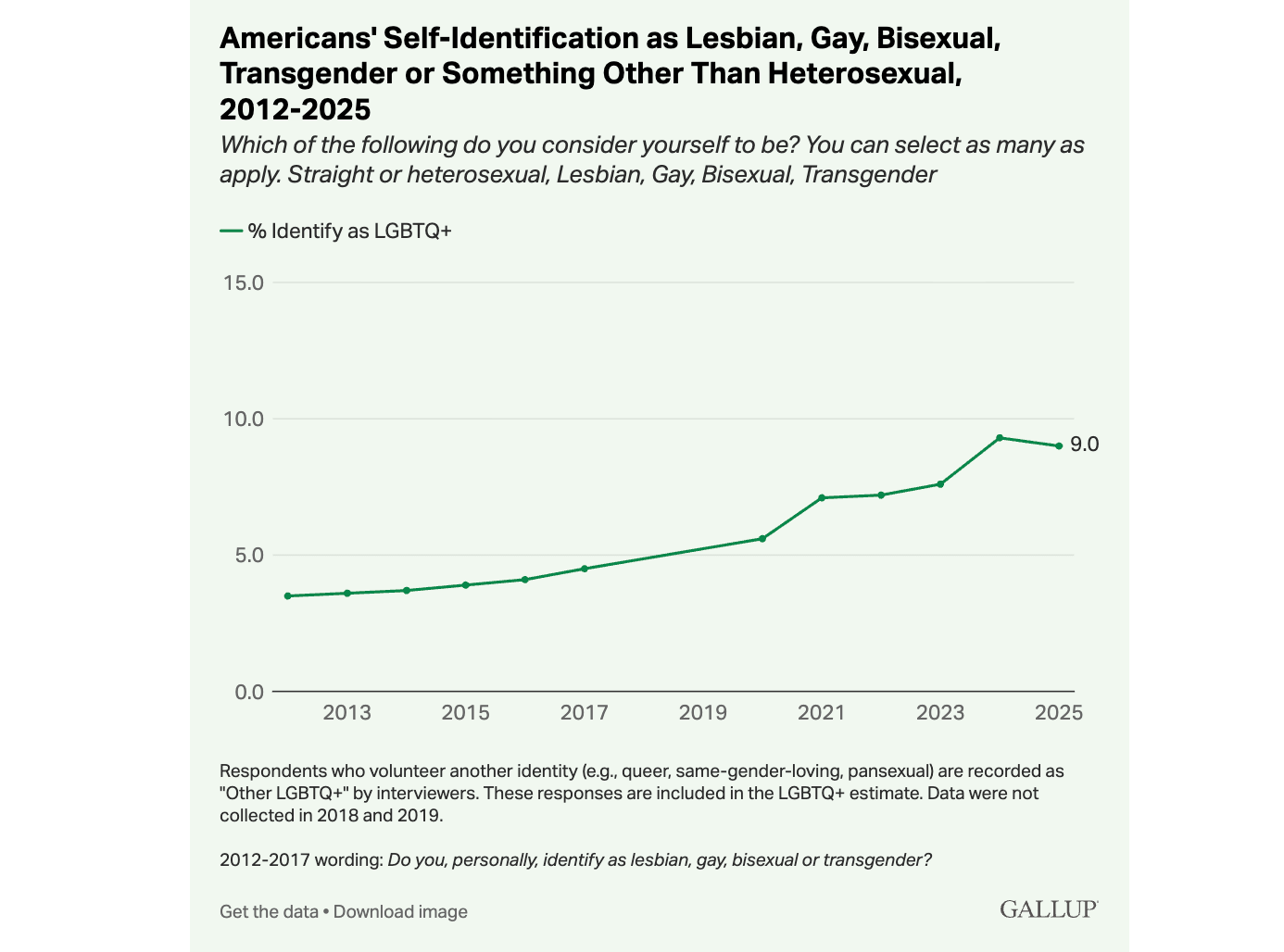
What is kind of creepy is that the rise of identification is primarily in younger cohorts, with 23% of people between the ages of 18 and 29 now identifying as LGBTQ+.
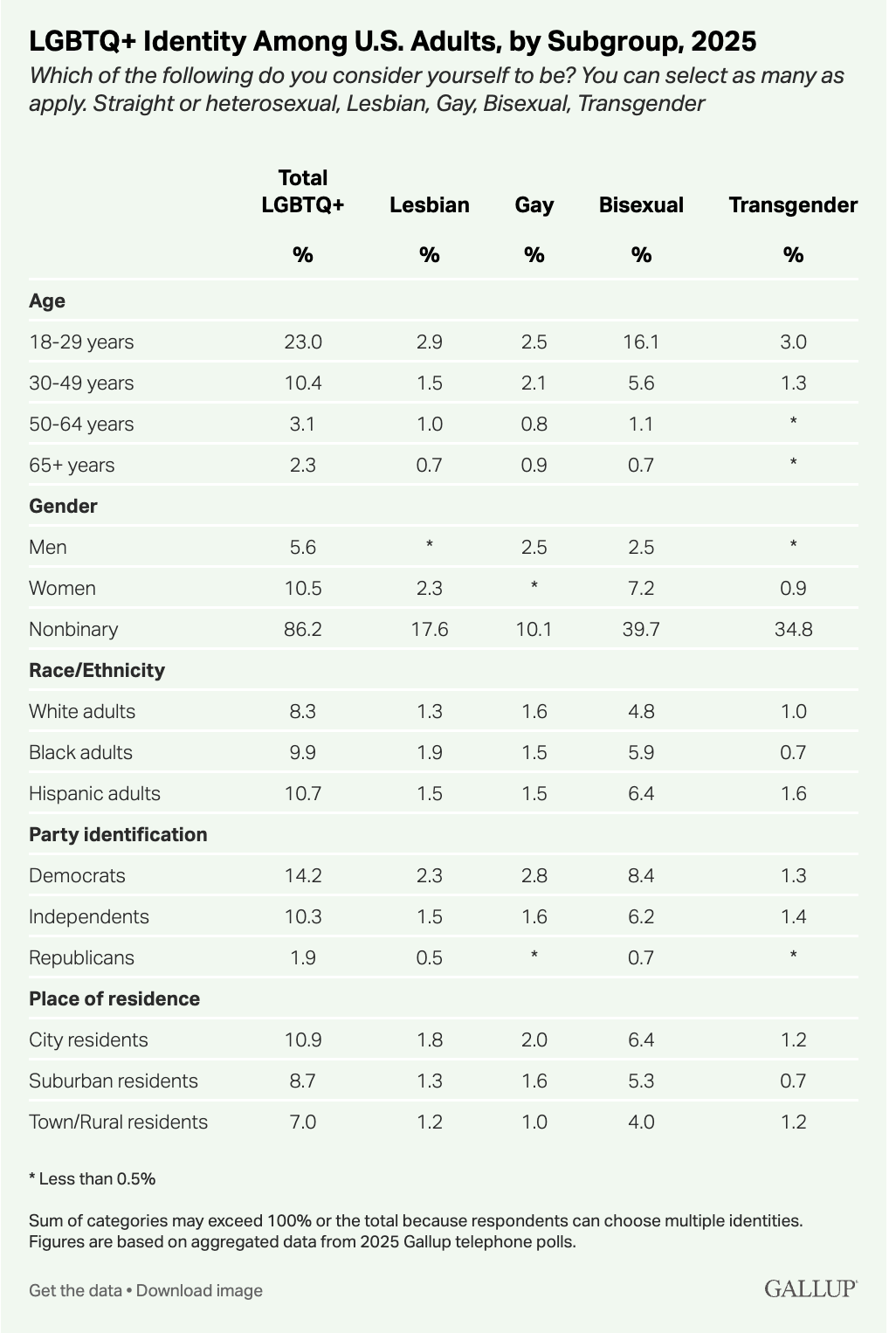
Democrats are much more inclined than Republicans to have an LGBTQ+ identity, with 14% of Democrats, compared to 1.9% of Republicans, considering themselves LGBTQ+. Gallop attributes this trend to likely being from LGBTQ+ individuals aligning with the Democratic Party, given the two parties’ stances toward same-sex marriage and other gay rights issues.
City residents are more likely than those living in suburban or rural areas to identify as LGBTQ+.
Grooming 101
An alternative explanation for the rise in self-identification as LGBTQ+ among young people is that advertising and content on TV, streaming, music, social media, and in corporate messaging are promoting a gay lifestyle as superior and being pushed on children. That campaign is working. Children are drawn to bright, rainbow colors; the pride flag is designed to be attractive to kids. They are exposed to attractive TV characters who have gay relationships and lots of friends, cartoons promoting gay characters, toys, and then there are the gay movie stars as well as musicians. This is all about the marketing. These advertising campaigns aim to capture children early. And it is working.
Hence, a huge rise in LGBTQ+ individuals in such a short time frame supports the thesis that this increase is cultural, due to a national campaign to encourage kids to become gay and transgender. This was and is a grooming campaign.
More evidence of cultural conditioning:
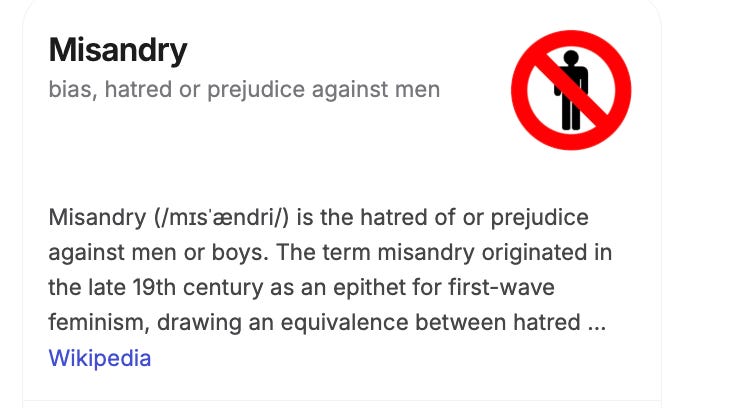
Misandry (cultural lesbianism)
The Reddit thread below cannot establish the prevalence of misandry among the young women - particularly lesbians, but it can provide insight into how members of a community debate these issues among themselves:
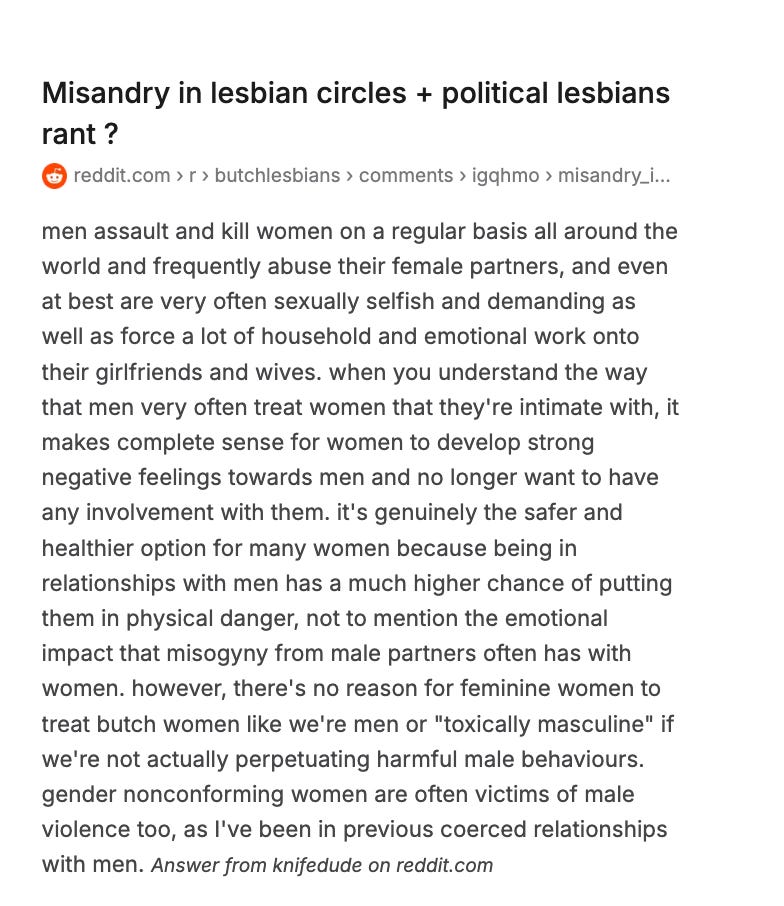
So, for some - and the percent is unknown- being LGBTQ+ is clearly cultural and has much to do with a hatred or fear of men rather than anything involving genetics. Unfortunately, although this is often debated in lesbian and gay communities, it has not been studied much. "Situational lesbians" is a term used to describe women who, due to traumatic experiences with men, reject heterosexual relationships and may express animosity toward men. Unfortunately, there has been little scientific study of this type of psychological response. In fact, it is considered one of those taboo subjects in the social sciences.
Yet, within certain communities, it is acknowledged openly that for many, that being a lesbian is a choice.
"Feminism is the theory; lesbianism is the practice."
“Lesbianism as a Political Strategy”
From GenderWatch
Krebs, Paula M. Off Our Backs; Washington Vol. 17, Iss. 6, (Jun 30, 1987): 17.
Lesbianism is essential as a political strategy of the women’s movement. It’s time to remind ourselves of that. When we recognize what Adrienne Rich and others have pointed out, that heterosexuality in our society is compulsory, necessary to maintain the hierarchies that oppress women, peoples of color, those of different physical abilities, and other people who are not heterosexual white men, we understand that resistance to heterosexuality brings liberation from that aspect of institutional sexism.
We can never remind ourselves enough that lesbianism is a political choice; it is never enough that lesbianism be seen as a “lifestyle.”
What about grooming for transgender transitions?
Annotated Bibliography
Littman, L. (2018; corrected 2019). Parent reports of adolescents and young adults perceived to show signs of a rapid onset of gender dysphoria. PLOS ONE, 13(8): e0202330. https://doi.org/10.1371/journal.pone.0202330
This paper introduced the hypothesis of Rapid-Onset Gender Dysphoria (ROGD) based on survey responses from 256 parents who believed their adolescent or young adult child had developed gender dysphoria suddenly during or after puberty.
The parents were recruited primarily from websites for families concerned about youth gender transition.
Littman observed recurring parental reports of several features: an apparent absence of childhood gender dysphoria, increased identification with transgender peers, extensive use of social media, and a high prevalence of pre-existing mental health conditions. She proposed that, for some adolescents, peer influence, online communities, parent-child conflict, and maladaptive coping mechanisms might contribute to the emergence or expression of gender dysphoria.
Although many major corporations have reduced the scale of their Pride marketing since the backlash to the 2023 Bud Light campaign featuring transgender influencer Dylan Mulvaney, transgender-themed advertising has by no means disappeared. In 2025 and 2026, companies including Levi's, Converse, Adidas, Abercrombie & Fitch, Old Navy, and other consumer brands continued Pride campaigns featuring transgender models, influencers, and messaging centered on gender identity.
Outside traditional corporate advertising, the ACLU launched its national "More Than A Game" campaign in 2026, purchasing television advertising around women's sports broadcasts to advocate for transgender youth participation in girls' sports and featuring athletes, celebrities, and transgender youth. The result is that, while corporate America has become more cautious, prominent advertising campaigns that normalize and affirm transgender identity continue to appear in both commercial marketing and advocacy campaigns.
Pride Month is no longer simply a grassroots or private-sector observance. Over the past two decades, it has become an institutional project actively promoted by local, state, and, until recently, federal governments. Through official proclamations, taxpayer-funded events, educational initiatives, public displays, and partnerships with advocacy organizations, government at multiple levels has played a significant role in normalizing and celebrating LGBTQ+ identities. The extent of that promotion has varied by jurisdiction and political leadership, but the overall trend has been toward greater official involvement.
At the local and state level, governments frequently organize community Pride celebrations, issue formal proclamations, fund educational programming, and display Pride flags and banners on public property. The Village of Wilmette, Illinois, for example, sponsors Pride booths at community markets, hosts library events, installs Progress Pride banners throughout its business district, and issues annual proclamations recognizing Pride Month. Illinois Governor J.B. Pritzker has likewise issued annual Pride Month proclamations since 2020. Or there is the advertising campaign by Colorado:
Federal policy has been more dependent on the administration in power. Beginning with President Bill Clinton’s proclamation in 1999, successive Democratic and Republican presidents generally recognized Pride Month in some form, although the scope of federal engagement expanded considerably during the Obama and Biden administrations. President Biden issued annual Pride Month proclamations, illuminated federal buildings in rainbow colors, hosted White House Pride events, and signed the Respect for Marriage Act.


That changed following the beginning of President Trump’s second term. Federal agencies largely ceased official Pride Month observances after executive orders dismantled diversity, equity, and inclusion programs and dissolved many employee affinity groups. While members of Congress, including the Congressional Equality Caucus, continue to recognize and celebrate Pride Month, the executive branch has largely withdrawn from the extensive federal sponsorship and promotion that characterized previous administrations.
Many of us intuitively knew these campaigns were wrong. When Target put out an advertising campaign for transgender baby clothes, I never went back to shop there. Then it turns out that Target released a line of queer and trans-inclusive undergarments, including chest binders, with what appeared to be teenage models.
So, where am I going with all of this?
Sexual Fetishes
Human sexual development is neither completely innate nor entirely learned. Like many aspects of human behavior, it appears to emerge through an interaction between biology, temperament, hormones, experience, and learning. One area where there is substantial evidence is that sexual interests can, in some cases, be shaped through conditioning.
Classical conditioning is the best-established learning mechanism. A neutral object, behavior, or circumstance that repeatedly becomes associated with sexual arousal may itself eventually become sexually arousing. This process is believed to contribute to the development of at least some sexual fetishes. Most experts, however, do not believe conditioning alone explains all fetishes. Genetic predisposition, personality, novelty seeking, and other developmental factors almost certainly also play important roles.
Childhood and adolescence appear to be particularly important periods in the formation of adult sexual interests. Researchers generally agree that experiences during puberty and the years surrounding it can influence later patterns of attraction and arousal.
This is sometimes described as “sexual imprinting,” although that term comes largely from animal behavior research and is not considered an established model for human sexual development. Human sexuality is considerably more flexible and complex than the fixed imprinting observed in some animal species.
This raises an uncomfortable but important question. Can children be groomed toward particular sexual interests or fetishes?
The answer is yes. The clinical literature on child sexual abuse and grooming documents that repeated sexual exposure, reinforcement, normalization, and manipulation during childhood can alter aspects of later sexual development. Offenders often deliberately pair affection, approval, secrecy, or rewards with sexual behaviors. Those learned associations can persist long after the abuse has ended.
When one views these advertising campaigns through the lens of sexual imprinting, there is no question that their sexual orientation and preferences can be manipulated.
So, what happens when little boys are taken to drag queen story hour, with an attractive young trans reading his favorite children’s books, at the library each week, with a great big rainbow flag proudly displayed on the wall? Certainly, routinely going to a drag queen story hour each week might include repeated sexual exposure (provocative clothing and behavior), reinforcement, normalization, and manipulation. Could that not trigger a sexual fetish among some children?
That does not mean grooming reliably creates a specific lifelong fetish. Human outcomes are remarkably variable. Some victims later develop atypical patterns of arousal, compulsive sexual behavior, or trauma-related sexual responses. Others develop sexual avoidance or experience no obvious alteration in adult sexual interests. Biology, resilience, subsequent life experiences, and psychological recovery all influence the eventual outcome.
Sexual interests develop through an interaction of biology and experience. Conditioning can contribute to the formation of some fetishes and preferences. Childhood and adolescence are important developmental windows during which lasting associations may form. Grooming and sexual abuse have the potential to alter aspects of sexual development, although they do not produce predictable or uniform outcomes.
And certainly, there are people who biologically are on one end of the spectrum - who were “born that way”, and all the endocrine disrupting chemicals floating through our environment and our food may also influence sexual orientation. I don’t dispute that.
I am not someone who condemns anyone for identifying as LGBTQ+, but I just don’t believe that having 23% of young adults identifying as such is healthy for our nation. The historically low birth rates are just one reason.
There are longterm health issues. Compared with heterosexual populations, LGBTQ+ individuals, particularly bisexual and transgender people, have substantially higher rates of depression, anxiety, substance use disorders, and suicidal behavior. Physical health differences are generally smaller but include higher rates of certain chronic diseases and health-risk behaviors. Mortality also appears to be higher overall, with particular adverse health signals including elevated deaths from suicide, overdose, and alcohol-related disease.
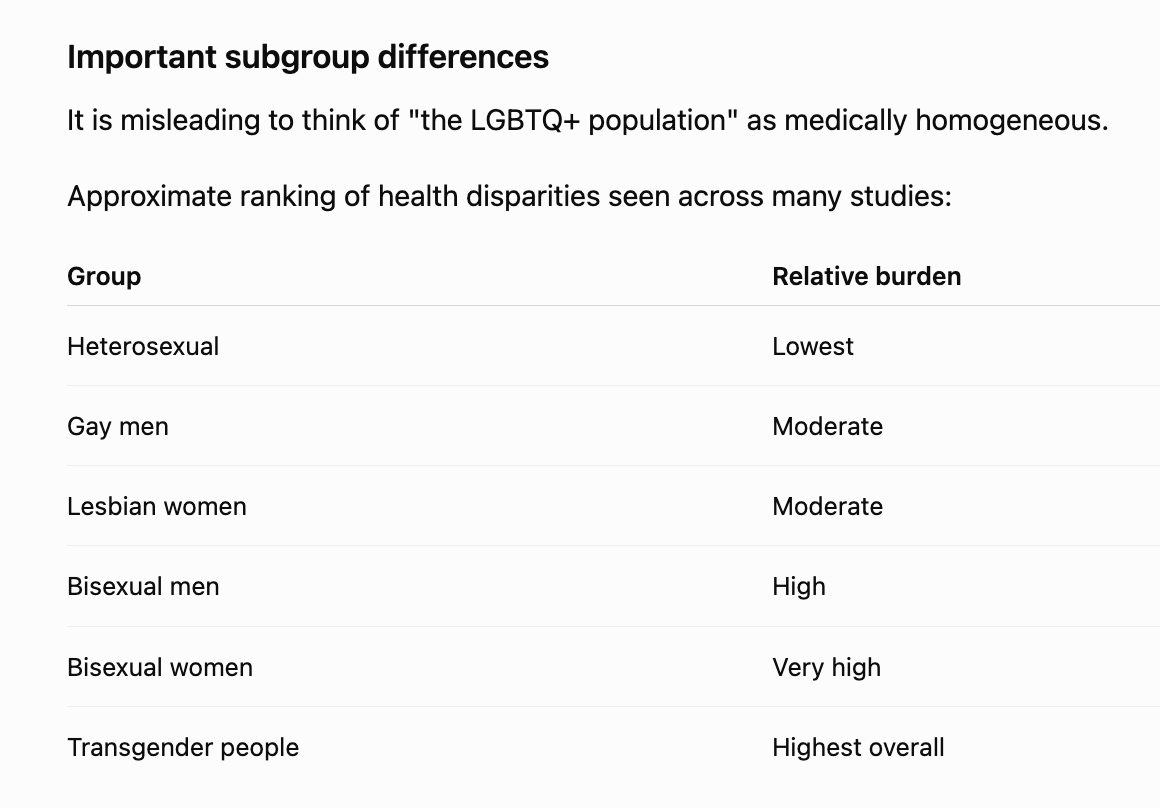
For transgender people, the rates climb exponentially. These disparities are well documented across many countries.
No parent in their right mind would encourage, even push their child into adopting a lifestyle that is so unhealthy. Likewise, corporations, governments, NGOs, medical professionals, schools, teachers, etc. should not be in the business of encouraging children to self-identify as such. What the Gallop polling teaches us, as well as the medical literature on fetishes, is that for most young adults, identifying as LGBTQ+ isn’t just about biology, it is about grooming. Early childhood experiences matter.
So, as parents and grandparents, it is our job to protect our youth. Particular the most vulnerable, the very young. So, let’s all work to keep the Pride Month messaging as far away from our families as possible.
By: JGM
These are examples of what our kids are watching on mainstream media:
From CBS Kids:
“Nickelodeon is the number-one brand for kids with original cartoons, sitcoms, movies, award shows, products, and more!”
CBC Life:
Skirted around the role of public education in influencing these perversions including the hiring of pedophiles at all levels of the educational ladder. Not only are gay teachers now out of the closet and presenting themselves as role models but administrations are moving heaven and earth to convince very little tykes that they are gender confused. So...
I, too, stopped shopping at Target and let them know I did not appreciate walking into a rainbow display of transgender/gay products for children. I used to enjoy the rainbow as a symbol of God's promise. Now it's not so appealing in such garish representation of the alpabet group. The percentages you mention are far out of whack. Can't help but blame the woke administrations of the Democrats helping to boost such.