


Series Introduction
This three-part series examines two concurrent failures of American pandemic governance (one of overreach, one of abandonment) and argues that a principled analysis requires taking both with equal seriousness. The first failure was the Biden administration’s documented campaign to pressure the largest social media platforms in the United States into suppressing speech that its political operatives found inconvenient. The second is the Trump administration’s effective dismantling, through administrative attrition, of the Office of Pandemic Preparedness and Response Policy, a statutory institution created by a bipartisan act of Congress in direct response to the coordination catastrophes of COVID-19. The series draws on court documents, congressional records, federal agency testimony, White House archives, and contemporaneous reporting to establish both failures in their factual specificity and then situates them within two analytical frameworks: the federalism architecture clarified by Dobbs v. Jackson and NFIB v. OSHA, and Murray Rothbard’s account of how states insulate their conduct from accountability.
Part One documents the Biden White House speech suppression campaign. Beginning on the administration’s third day, White House digital operatives, most of them in their late twenties with backgrounds in Democratic Party fundraising and campaign communications rather than medicine or public health, conducted a sustained pressure campaign against Twitter, Facebook, YouTube, Google, and Amazon to remove or demote content the administration disfavored. The targets included the lab-leak theory of COVID-19’s origins (later assessed by the FBI as the most credible explanation), the scientific arguments of Stanford epidemiologist Jay Bhattacharya and Harvard’s Martin Kulldorff, the work of Dr. Robert Malone (a co-inventor of the mRNA lipid nanoparticle transfection technology whose Twitter account was permanently suspended three weeks after his Joe Rogan appearance), and a range of conservative commentators. The campaign was partially outsourced to the Center for Countering Digital Hate, a British nonprofit co-founded by Morgan McSweeney, who would later serve as Downing Street Chief of Staff under Keir Starmer, making this the documented case of a foreign partisan organization providing censorship target lists against American citizens to a White House that acted on them. When the resulting legal challenge, Missouri v. Biden, reached the Supreme Court as Murthy v. Missouri, the Court dismissed it 6-3 on standing grounds, leaving the constitutional merits unaddressed. Justice Alito’s dissent characterized the underlying conduct as presumptively unconstitutional.
Part Two examines Congress’s response through the PREVENT Pandemics Act (Pub. L. 117-328), passed in December 2022, which mandated the creation of OPPR within the Executive Office of the President, with a presidentially appointed director, interagency coordination authority, and statutory reporting obligations to Congress. The Act placed OPPR on the permissible side of the constitutional line Dobbs drew: federal preparedness coordination, surveillance, countermeasure development, and supply chain resilience are legitimate federal functions; direct operational control of medical practice in the states is not. Part Two also examines the NSC predecessor role played by Dr. Raj Panjabi, whose work on the WHO Pandemic Accord and International Health Regulations raises distinct sovereignty concerns addressed in full, and documents OPPR’s operational record: the H5N1 response coordination across seven agencies, the $766 million Moderna vaccine program (subsequently cancelled), the Bio-5 Biopharmaceutical Alliance, and the Biological Incident Response Playbook.
Part Three examines what the Trump administration has done with the institution Congress built. The administration never appointed an OPPR director. It never submitted a budget. Gerald Parker, placed at the NSC rather than OPPR, resigned in July 2025 after six months. All six inherited OPPR staff had departed by the end of June 2025. The interagency H5N1 coordination calls were discontinued. The Moderna contract was cancelled. The series concludes with a double indictment that a conservative analytical framework requires: the Biden administration’s censorship campaign was a genuine abuse of executive power, and the Trump administration’s treatment of a congressionally mandated statutory institution as a discretionary program it can quietly defund is not conservatism. Both things are true. Sorting them out requires taking both seriously.
Summary
The foundational question raised by the Biden administration’s COVID-19 social media campaign is not about social media. It is about the proper role of the executive branch in shaping the information environment that citizens use to make decisions about their own lives and health. This installment documents that campaign in full: who ran it, what credentials they had, what they demanded, what the platforms did, which voices were suppressed, the role of a foreign-connected nonprofit in generating target lists, the suppression of the one credentialed scientist most directly implicated by the technology at issue, and the Supreme Court decision that laundered the entire episode into procedural non-accountability.
The campaign was run day-to-day by political digital operatives in their late twenties whose professional backgrounds were in Democratic Party fundraising, not infectious disease. Their demands to Twitter and Facebook included removing content the administration classified as misinformation, suppressing posts that were, in Facebook’s own internal characterization, ‘often true,’ and targeting specific conservative commentators by name. The evidence for all of this comes from the discovery process in a federal lawsuit, not from leaks or speculation. The White House emails are in the record. The platforms’ capitulation is documented. The list of suppressed content is specific.
The foreign dimension of the campaign is among its most constitutionally troubling features. The Center for Countering Digital Hate, a British nonprofit whose co-founder Morgan McSweeney would later serve as Downing Street Chief of Staff under Keir Starmer, provided the Biden White House with its ‘Disinformation Dozen’ report, which Jen Psaki cited from the podium and which Rob Flaherty used in his pressure emails to Facebook. A foreign partisan organization with direct connections to a foreign head of government’s political operation was providing the inputs that shaped a U.S. government censorship campaign against American citizens. The Supreme Court’s standing dismissal in Murthy v. Missouri means this conduct was neither condemned nor authorized. It was processed out of the legal system. Murray Rothbard would have recognized the mechanism.
PART ONE
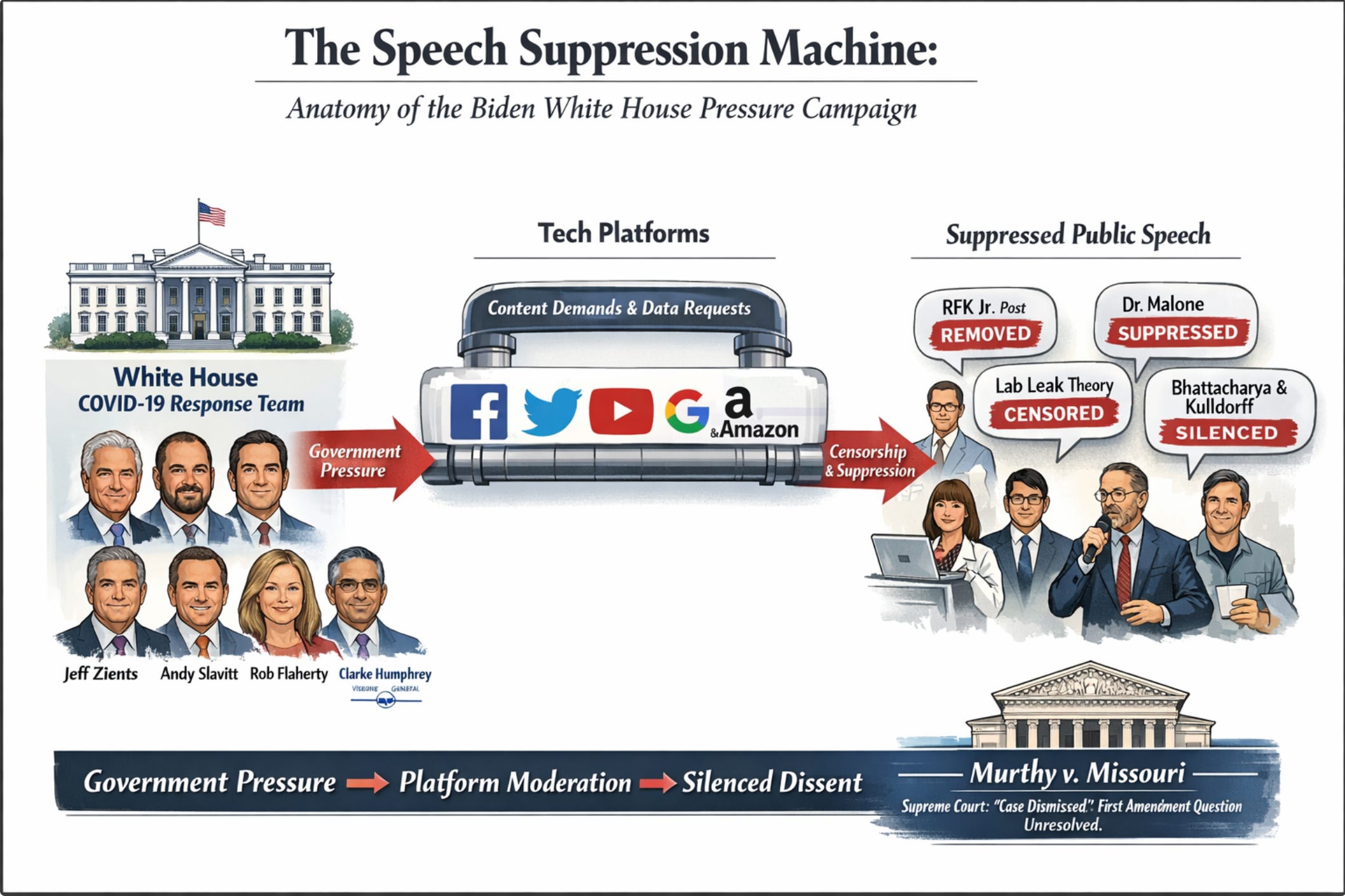
The Speech Suppression Machine: Anatomy of the Biden White House Pressure Campaign
A Government That Decides What Is True
The foundational question raised by the Biden administration’s COVID-19 social media campaign is not really about social media at all. It is about the proper role of the executive branch in shaping the information environment that citizens use to make decisions about their own lives and health.
The First Amendment represents a foundational American Constitutional commitment: government does not get to decide which ideas are acceptable. That principle exists not because false ideas are harmless but because the alternative, a government empowered to suppress speech it classifies as false or dangerous, inevitably becomes a government that suppresses speech it finds politically inconvenient. The Biden administration’s COVID-19 information campaign is the most thoroughly documented recent example of precisely that trajectory.
What is remarkable about this episode is not that it happened, but that we know it happened in such granular detail. The evidence comes not from leaked documents or anonymous whistleblowers but from the discovery process in a federal lawsuit, Missouri v. Biden, which compelled the production of thousands of internal emails between White House officials and the country’s largest technology platforms. Those emails reveal a sustained, aggressive, and at times contemptuous campaign by senior administration officials to bend private companies to the government’s informational preferences.
The White House Political Structure Behind the Campaign
Understanding the pressure campaign requires understanding the specific institutional machinery the Biden administration created to manage it. The COVID-19 Response Team was not a statutory creation but a creature of executive discretion, stood up by Biden’s first executive orders and staffed with political appointees who reported directly to the White House chief of staff’s orbit. It was, in structure, a political operation clothed in the authority of public health.
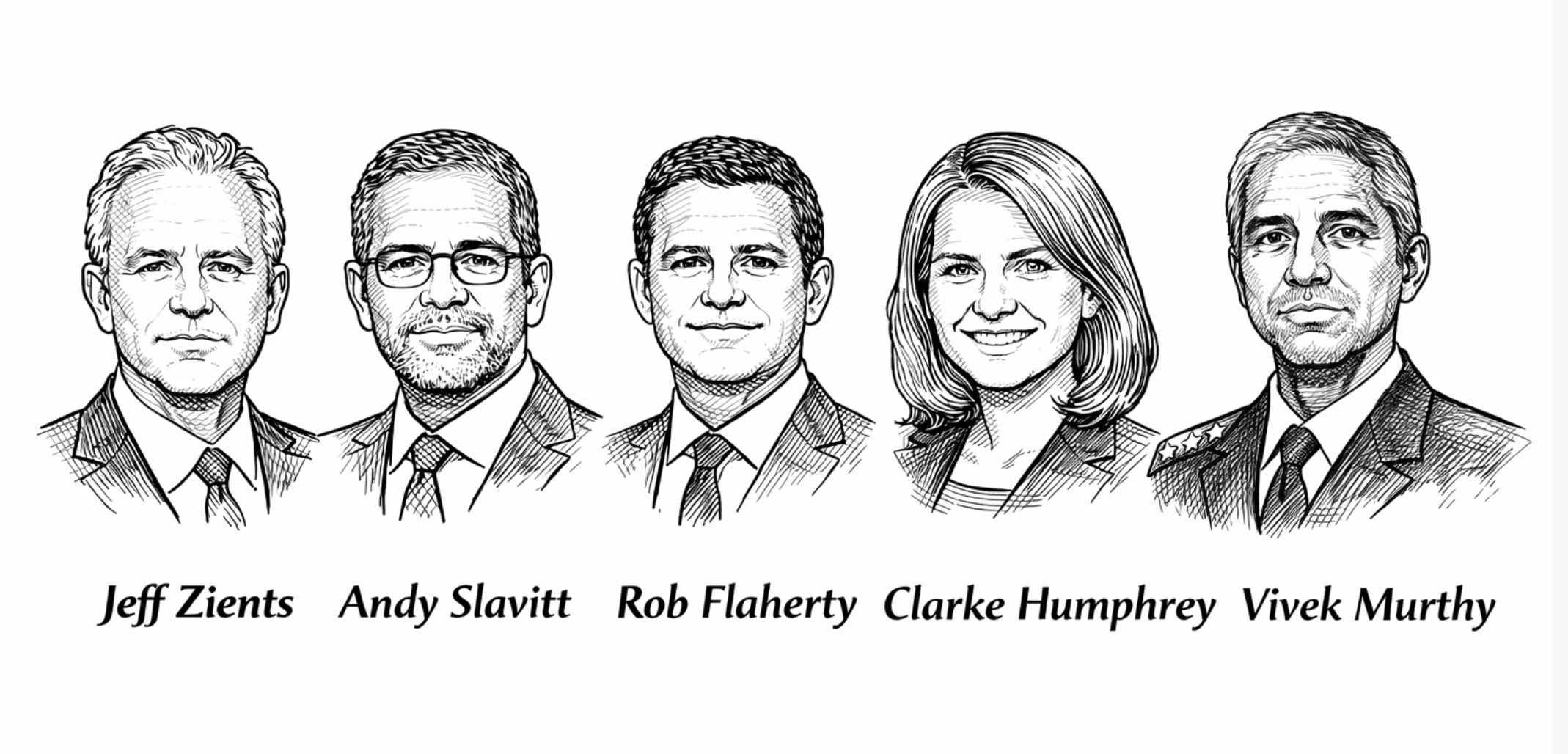
That characterization is not merely rhetorical. It follows directly from the professional backgrounds of the people who ran it. With one partial exception, none of the principal officials who designed and executed the COVID-19 information pressure campaign had any prior experience in pandemic response, infectious disease, or public health emergency management. They were management consultants, healthcare administrators, and political digital operatives who, by a combination of election outcomes and appointment decisions, found themselves holding authority over the federal government’s posture toward an active pandemic. The question of what they did with that authority cannot be separated from the question of what kind of experience shaped their instincts.
Jeff Zients: The Manager Without a Map
The team’s most senior official was Jeff Zients, who served as Coordinator of the COVID-19 Response and Counselor to the President. Zients’s entire professional background was in management consulting and private equity. After graduating from Duke University in 1988, he spent years at Bain & Company and Mercer Management Consulting before building a series of corporate advisory firms. He served as chairman, CEO, and COO of the Advisory Board Company, taking it public in a transaction that made him a multimillionaire. He founded Portfolio Logic, an investment firm focused on healthcare services. He was a member of Facebook’s board of directors from 2018 to 2020.
His government experience was limited to the Obama administration, where he served as the country’s first chief performance officer, the acting director of the Office of Management and Budget on two occasions, and the director of the National Economic Council. His one notable public health-adjacent achievement was leading the technical rescue of the HealthCare.gov website after its catastrophic launch failure in October 2013. That was a software procurement and project management crisis, not a disease response. ABC News noted at the time of his appointment as COVID coordinator that Zients would face the pandemic’s logistical challenges with ‘no direct experience in public health.’ He was chosen for his reputation as a ‘master implementor,’ in the words of Biden advisers, not for any expertise in infectious disease, virology, epidemiology, or emergency public health operations.
ABC News noted at the time of Zients’s appointment that he would face the pandemic with ‘no direct experience in public health.’ He was a management consultant and investment executive, chosen as a logistics fixer.
Andy Slavitt: Healthcare Administration, Not Pandemic Response
Andy Slavitt, who served as Senior Adviser to the COVID-19 Response Team from January through June 2021 and was the primary point of contact with the social media companies during the pressure campaign’s most aggressive early phase, had a more substantive health-sector background than Zients, but it was in healthcare administration, not pandemic preparedness. Slavitt held an MBA from Harvard and had spent a decade as an executive at UnitedHealth Group, where he led a unit that advised on the HealthCare.gov rescue alongside Zients. He then served as acting Administrator of the Centers for Medicare and Medicaid Services under Obama from 2015 to 2017, overseeing the Medicare and Medicaid programs and the ongoing implementation of the Affordable Care Act. He also served on the Obama administration’s Heroin Task Force and on Vice President Biden’s Cancer Moonshot task force.
Slavitt’s qualifications for managing a pandemic response were therefore the same as Zients’s, one level down: substantial healthcare policy and administration experience, no pandemic response experience, no infectious disease expertise, and no public health emergency background. He understood how the federal healthcare financing architecture worked. He did not have training in how pathogens spread, how vaccines work, or how public health emergencies are managed at the operational level. His primary role in the pressure campaign appears to have been as the senior political official whose stature gave the demands institutional weight.
Rob Flaherty and Clarke Humphrey: Political Operatives at the Controls
The officials who actually executed the day-to-day pressure campaign were even further removed from any public health background. Rob Flaherty, who served as White House Director of Digital Strategy, had graduated from Ithaca College and worked his way up through Democratic Party digital operations. He was the Biden campaign’s digital director in 2020, having previously worked in digital communications for Hillary Clinton’s 2016 campaign. He was 30 years old at the time of the Biden inauguration. His entire professional identity was in political digital communications, full stop.
Clarke Humphrey was Flaherty’s deputy, a Northwestern University journalism graduate who had worked in DNC digital fundraising before becoming Biden’s deputy digital director on the campaign. She was 28 years old on January 23, 2021, the third day of the Biden administration, when she sent a one o’clock in the morning email to Twitter demanding the removal of a tweet by a private citizen about vaccines and the death of Hank Aaron. The email that launched the most documented government censorship campaign in American history was written by a 28-year-old whose deepest prior professional experience was writing DNC fundraising copy.
Humphrey was 28 years old with a background entirely in Democratic digital fundraising when she sent a 1 a.m. email on Day Three of the administration demanding Twitter remove a citizen’s post about vaccines.
Vivek Murthy: The Credentialed Exception
The partial exception to the pattern was Vivek Murthy, who served as Surgeon General of the United States. Murthy had genuine medical credentials: a BA from Harvard, an MD from Yale School of Medicine, a combined Harvard/Yale MBA, clinical training at Brigham and Women’s Hospital and Harvard Medical School, and an academic appointment at Harvard Medical School in internal medicine. He had served as Surgeon General under Obama from 2014 to 2017, worked in HIV prevention and global health, and co-founded VISIONS, a nonprofit focused on HIV/AIDS education. He was a credentialed physician with genuine public health experience.
What makes Murthy’s role in the censorship campaign analytically significant is precisely his credentials. He was used, in effect, as a legitimizing mechanism. The Surgeon General’s office issued the advisory on health misinformation that provided the nominally public-health rationale for the pressure campaign. Murthy’s credentials gave the operation a doctor’s imprimatur that Zients, Slavitt, Flaherty, and Humphrey could not provide. The specific irony is that the administration’s response to Robert Malone, one of the most credentialed scientists in the mRNA field, was to invoke Murthy’s credentials to justify suppressing Malone’s. One physician’s titles were deployed to silence another physician’s published scientific concerns. The Surgeon General’s office became, in this episode, a laundering mechanism for what was at its operational core a political communications operation.
The Campaign Begins: Day Three
The documentary record begins on January 23, 2021, three days after the inauguration. At 1:00 a.m., Clarke Humphrey emailed Twitter to flag a tweet by Robert F. Kennedy Jr. connecting the death of Hank Aaron, who had died four days earlier at age 86, to his recent vaccination. The tweet was controversial and the claim unverified although plausible. But the mechanism Humphrey used to address it was not a public rebuttal or a media correction. It was a direct communication from a White House official to a private company demanding the removal of a citizen’s speech. Twitter complied.
This first interaction established the template that would be used for two years. The White House identifies content it disfavors. A White House official contacts a platform representative, either directly by email or through a dedicated portal that the administration subsequently pressured platforms to create. The platform removes or suppresses the content. The White House notes the compliance and, if it does not come quickly enough, escalates. The escalation emails are in the record. They use phrases like ‘we want to know that we are being heard’ and, in Flaherty’s case, the characterization that Facebook was ‘hiding the ball’ when the platform provided what the White House considered insufficient compliance data.
The Facebook Campaign: Coercion by Email
The campaign against Facebook was the most extensively documented and the most aggressive. Andy Slavitt’s early 2021 emails to Facebook demanded that the platform share data on which health content was performing well enough to be boosted. The implied threat was regulatory: a company that cooperated with the White House’s informational preferences would not need to worry about the other kinds of attention the White House could direct at it.
The most significant single document from the Facebook campaign is the internal Facebook communication, produced in discovery, in which a Facebook employee acknowledged that the company had capitulated to White House pressure to suppress content that was ‘often true.’ The platform’s own assessment was that the content was factually accurate. It suppressed the content anyway because the White House wanted it suppressed. This is censorship. It is the suppression of true speech at the government's direction. It is precisely what the First Amendment was designed to prevent, and the mechanism of routing the demand through a private company does not change the constitutional character of the act.
Flaherty’s July 2021 email, in which he expressed frustration with Facebook’s pace of compliance by asking ‘Are you guys fucking serious?’ in response to a data report the White House found inadequate, captures the tone of the campaign’s escalation phase. This was not a government agency sharing concerns with a platform and leaving the decision to the platform’s editorial judgment. This was a government official expressing contemptuous impatience at a private company that was not complying fast enough with a government demand. The email is in the record.
The Scope: YouTube, Google, and Amazon
The campaign extended well beyond Facebook and Twitter. White House officials pressured YouTube to remove content that violated what they described as COVID-19 misinformation policies, specifically directing the platform’s attention to content by conservative commentators Tucker Carlson and Tomi Lahren. They pressured Google over its search results, requesting that COVID-19 content that the administration disfavored not be surfaced in search results. They pressured Amazon to remove books from its platform that contained vaccine skepticism.
The breadth of the campaign is significant because it demonstrates that this was not a targeted effort to address a specific, acute misinformation problem. It was a systematic effort to shape the information environment across every major platform through which Americans access information. The administration wanted a different information landscape, and it used the institutional weight of the White House to create one. The digital operatives who executed the campaign were doing what digital operatives do: they were running a communications operation. The difference was that they had the federal government behind them rather than a list of campaign donors.
What Was Suppressed: The Targets
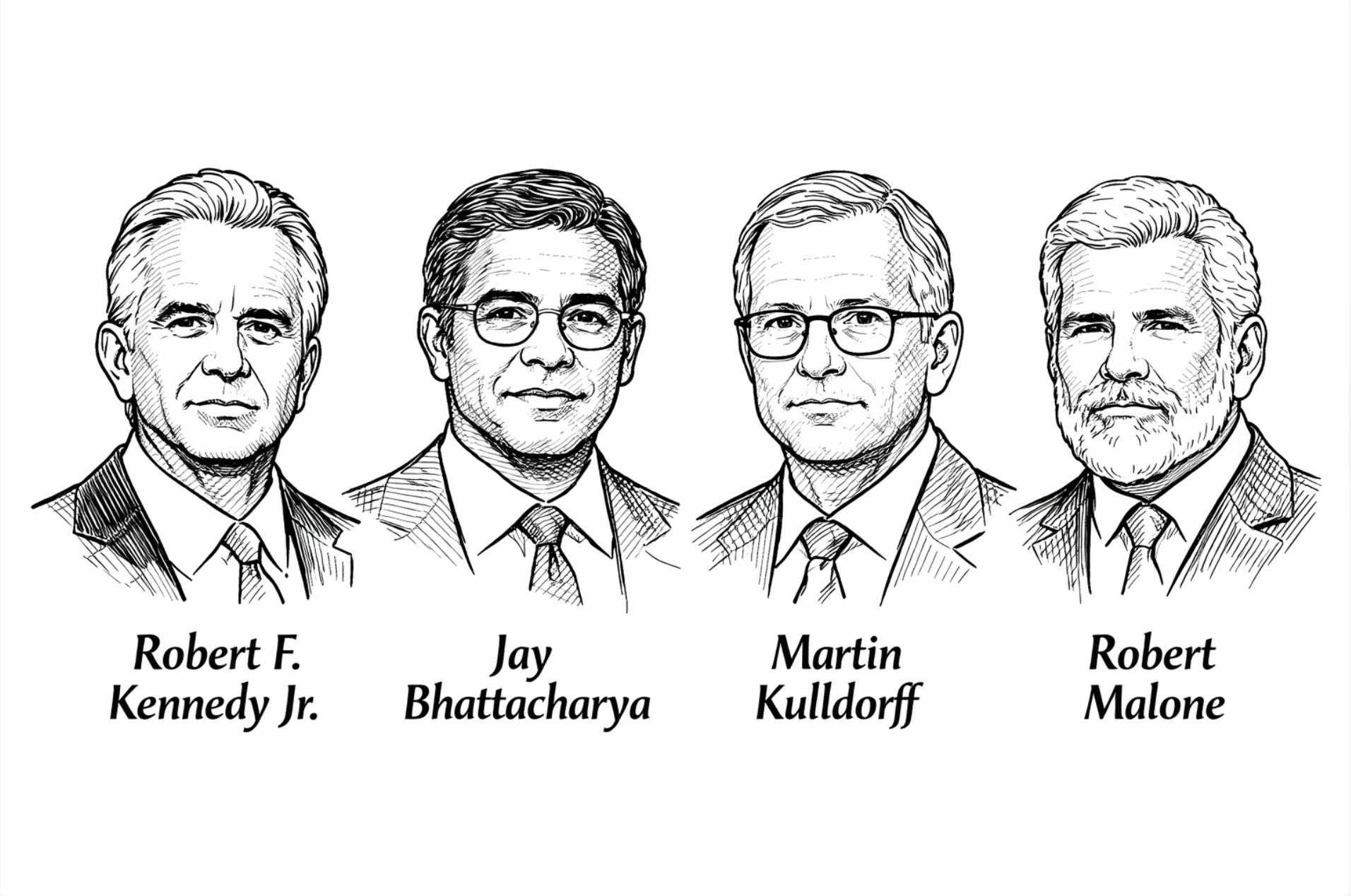
The documentary record of what the administration sought to suppress is damning precisely because it demonstrates that the campaign’s targets were political as often as they were medical. The district court in Missouri v. Biden catalogued the suppressed speech with notable specificity: opposition to COVID-19 vaccines; opposition to mask mandates and lockdowns; the lab-leak theory of COVID-19’s origin; true information about vaccine side effects; satirical memes; content by specific conservative commentators including Tucker Carlson and Tomi Lahren; and the accounts and publications of epidemiologists Jay Bhattacharya and Martin Kulldorff.
Bhattacharya and Kulldorff are not fringe figures. Bhattacharya was a professor of health policy at Stanford University’s School of Medicine and a senior fellow at the Stanford Institute for Economic Policy Research. Kulldorff was a professor of medicine at Harvard Medical School and a biostatistician who helped develop methods for detecting disease clusters. Both were co-authors of the Great Barrington Declaration, an October 2020 document signed by tens of thousands of medical professionals that argued for focused protection of the most vulnerable rather than broad societal lockdowns. The declaration was a legitimate scientific and policy position, but it was seriously contested by other scientists. It was not misinformation. It was a dissent from the administration’s preferred approach.
The lab-leak theory occupies a particularly notable position in this catalogue. Facebook removed posts supporting the lab-leak hypothesis in February 2021, following what internal documents describe as ‘tense conversations with the new administration.’ The theory was classified as misinformation and suppressed. In June 2023, the FBI’s director publicly stated that the FBI had assessed the lab-leak theory as the most credible explanation for COVID-19’s origins. In February 2023, the Department of Energy reached the same conclusion. The hypothesis that the government suppressed as dangerous misinformation in 2021 is now treated by multiple federal intelligence and scientific agencies as most probably correct.
Facebook began removing the lab-leak theory in February 2021 following ‘tense conversations with the new administration.’ Months later, the FBI assessed the lab-leak theory as the most credible explanation for COVID-19’s origins.
The Foreign Hand: CCDH, the Disinformation Dozen, and the UK Labour Connection
Among the most constitutionally significant elements of the Biden censorship campaign is the role played by the Center for Countering Digital Hate, a British nonprofit that served as a critical input provider for the White House’s target selection. CCDH was incorporated in 2018 as Brixton Endeavours Limited, co-founded by Imran Ahmed and Morgan McSweeney. McSweeney was at the time a Labour Party strategist who had worked as an advisor to two Labour shadow cabinet ministers. Ahmed had previously served as an advisor to Labour politicians, including the shadow Home Secretary
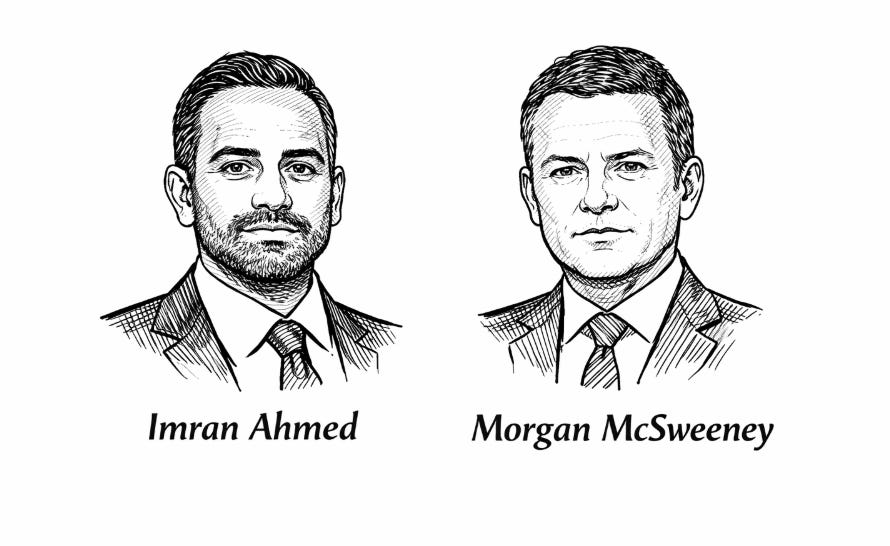
.In April 2020, two days after Keir Starmer was elected Leader of the Labour Party, McSweeney departed the CCDH board and became Starmer’s chief of staff. He would eventually serve as Downing Street Chief of Staff following Labour’s 2024 general election victory, a position he held until his resignation in February 2026. The organization he co-founded, whose stated mission was to counter digital hate and disinformation, maintained direct relationships with U.S. government agencies. CCDH’s head of policy held documented meetings with the Department of Homeland Security, the White House, the National Safety Council, and the State Department Bureau of Counterterrorism.
In March 2021, CCDH published a report titled ‘The Disinformation Dozen,’ claiming that twelve named American citizens were responsible for approximately 65 percent of vaccine misinformation on social media. The report reached Twitter’s trust and safety team within days of publication and was cited by White House Press Secretary Jen Psaki from the podium in July 2021. Rob Flaherty used it directly in his pressure emails to Facebook, citing the Disinformation Dozen framing to justify demands for specific account removals. Facebook’s vice president for global affairs, Monika Bickert, publicly criticized the report’s methodology as ‘free of evidence,’ noting that the claimed attribution figure was off by approximately a factor of three hundred.
CCDH was co-founded by Morgan McSweeney, who would become Downing Street Chief of Staff under Keir Starmer. A British partisan operation was providing the Biden White House with its censorship target lists for American citizens.
Whistleblower testimony before Congress in 2022 alleged that CCDH had provided Twitter with word lists for content censorship and that the CDC had played a role in compiling those lists. The House Judiciary Committee subpoenaed CCDH in August 2023. America First Legal filed a Foreign Agents Registration Act complaint. As of early 2026, Imran Ahmed was facing potential deportation proceedings. The constitutional dimension is worth stating with precision: a British nonprofit co-founded by the man who would become the British Prime Minister’s chief of staff provided hit lists that a U.S. administration used to suppress the speech of American citizens on American platforms. The First Amendment question this raises is not a hypothetical. It is a documented fact pattern that the Supreme Court declined to adjudicate on the merits.
Dr. Robert Malone and the Suppression of Scientific Dissent
The suppression of Dr. Robert Malone warrants specific examination because it illustrates the campaign’s willingness to target credentialed scientists whose dissent was rooted in genuine expertise rather than political motivation. Malone’s scientific background is a relevant context that the campaign’s characterization of him systematically obscured.
From 1987 through 1989, working at the Salk Institute for Biological Studies, Malone conducted experiments that Nature would later describe as landmark: he demonstrated that lipid nanoparticles could be used to transfect cells with messenger RNA, meaning that synthetic RNA encased in fat particles could enter cells and cause those cells to produce specified proteins. His work with Philip Felgner and colleagues at Vical, documented in a 1989 PNAS paper, a 1990 Science paper, and in patent filings from the same period, established the foundational proof-of-concept (including reduction to practice in mice) for what would eventually become the mRNA vaccine platform. He holds an MD from Northwestern University’s Feinberg School of Medicine and completed postdoctoral training at both UC Davis and Harvard Medical School. He has published approximately 100 peer-reviewed papers, with more than 15,000 citations.
It is important to be precise about what Malone actually claimed, because the mischaracterization of his claim became a weapon used against him. Malone did not claim to be the sole inventor of mRNA vaccines. He consistently and specifically claimed to be an original inventor, one of the founding contributors to the technology, whose 1988-89 experiments at the Salk Institute and Vical established the proof-of-concept on which all subsequent mRNA vaccine development rested. That claim is fully consistent with the historical record. Credit for the technology, as deployed in the Pfizer and Moderna vaccines, also goes to Verma, Felgner, Jon Wolff, and, Katalin Karikó and Drew Weissman, whose work a decade later on modified nucleosides to prevent the immune system from rejecting synthetic mRNA contributed to clinical viability. Malone has never disputed those contributions. The question of who deserves how much credit for a decades-long chain of scientific development is a legitimate conversation within the field. What it is not is a basis for characterizing Malone as a fraud, a grifter, or a spreader of misinformation about his own biography.
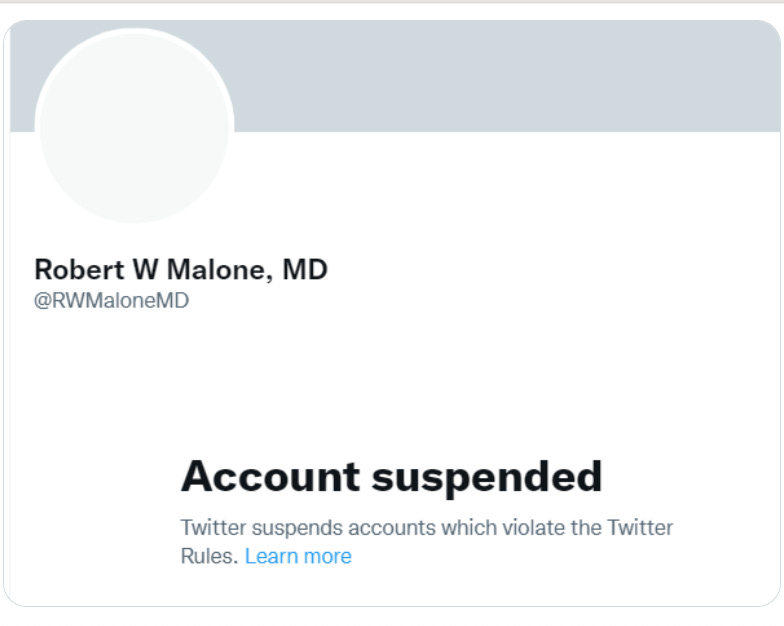
On December 29, 2021, Twitter permanently suspended Malone’s account, citing ‘repeated violations of COVID-19 misinformation policy.’ The platform declined to specify which posts had violated the policy. LinkedIn permanently banned Dr. Malone on the same day, December 29, 2021. Clearly these coordinated bans were directed by the government. The permanent bans came approximately two days before Malone’s December 31 appearance on Joe Rogan’s podcast, which drew tens of millions of viewers and in which Malone raised questions about the safety and necessity of mRNA vaccine mandates, particularly for populations at low risk from COVID-19 itself. Many believe that the government had become aware of the upcoming Rogan podcast and was acting to kill Malone’s accounts before the Rogan interview went public.
In February 2022, White House Press Secretary Jen Psaki called on Spotify from the podium to take action against the Rogan interview. YouTube subsequently removed the interview. The administration was not suppressing a conspiracy theorist when it moved against Malone. It was suppressing one of the founding scientists of the technology, whose safety and necessity he was questioning.
The administration was not suppressing a conspiracy theorist when it moved against Malone. It was suppressing one of the founding scientists of the technology whose safety and necessity he was questioning.
The subsequent scientific record bears noting. Concerns about myocarditis risk in young males following mRNA vaccination, which Malone raised and which were among the bases for his Twitter ban, were subsequently validated by the CDC itself. Sweden, Denmark, Finland, and Norway all restricted or recommended against mRNA vaccination in younger males on this basis. These restrictions did not represent the kind of sweeping skepticism Malone’s critics attributed to him. They represented precisely the kind of population-specific, risk-stratified analysis that serious scientists engage in. The administration suppressed that analysis and then watched the CDC and multiple allied health authorities reach conclusions consistent with it.
The Legal Resolution: Standing Without Accountability
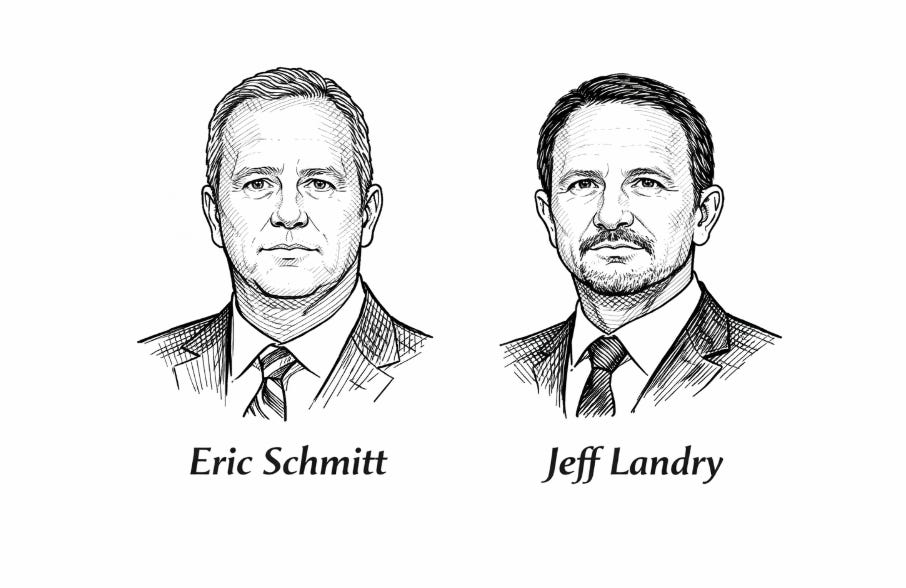
Missouri Attorney General Eric Schmitt and Louisiana Attorney General Jeff Landry filed suit in May 2022 against the Biden administration, alleging that the White House and multiple federal agencies had violated the First Amendment by coercing private platforms to suppress speech. The case, Missouri v. Biden, proceeded through discovery that produced the email record described above. District Judge Terry Doughty issued a preliminary injunction in July 2023, cataloguing the suppressed speech and finding that the plaintiffs had shown a substantial likelihood of success on the merits. The Fifth Circuit Court of Appeals, reviewing the record, agreed that the government’s communications with the platforms constituted unconstitutional coercion on multiple specific points
.The Supreme Court granted certiorari, heard argument in Murthy v. Missouri, and issued its decision in June 2024. Six justices, in an opinion by Justice Amy Coney Barrett, dismissed the case on standing grounds. The majority held that the plaintiffs had not adequately demonstrated that their specific speech injuries were traceable to specific government actions rather than to the platforms’ independent editorial decisions. The constitutional question of whether the government’s conduct violated the First Amendment was left formally unresolved.
Justice Samuel Alito, joined by Justices Thomas and Gorsuch, dissented pointedly. Alito argued that efforts by the government to dictate or suppress speech are ‘presumptively unconstitutional’ and that the majority’s standing analysis failed to grapple with the reality that the government’s campaign had produced concrete, lasting effects on real people’s ability to speak. Alito characterized government censorship of private speech as antithetical to the country’s democratic form of government. The three conservative dissenters understood what the majority’s procedural dodge obscured: this case was about whether the executive branch can use its regulatory and political power to outsource censorship to private companies. The answer, as a constitutional matter, remains unresolved.
Rothbard’s Prediction: The Judiciary as Legitimizing Institution
The outcome in Murthy v. Missouri would not have surprised Murray Rothbard. In The Anatomy of the State, first published in 1974 and drawing on his earlier work in Man, Economy, and State, Rothbard advanced an analysis of the state’s institutional structure that reads, fifty years later, as an uncomfortable gloss on the Supreme Court’s handling of the censorship case. Rothbard’s central argument was that the state cannot survive by force alone. A government that operated openly as a coercive apparatus, with no claim to legitimacy beyond its monopoly on violence, would eventually face resistance and revolt. The state, therefore, requires an intellectual class whose function is to provide the ideological covering fire that transforms raw power into apparent authority.
The judiciary occupies a specific and critical role in Rothbard’s analysis. The constitutional design, Rothbard argued, contains a fatal structural flaw: it asks the state to be the final arbiter of its own power. The Supreme Court is a government institution, staffed by government appointees, funded by government appropriation, and operating within the interpretive framework the government itself has constructed over centuries of precedent. Asking such an institution to consistently rule against the state’s expansion of power is, in Rothbard’s analysis, asking it to act against its own nature and interests. The judiciary does not limit the state; it legitimizes the state by translating governmental power into the language of constitutional principle, making what is essentially political authority appear to flow from neutral legal reasoning.
Rothbard argued that asking the state to be the final arbiter of its own power is a fatal structural flaw. The judiciary translates political authority into constitutional principle making coercion appear to follow from neutral law.
Rothbard drew explicitly on John C. Calhoun’s earlier critique in A Disquisition on Government, where Calhoun argued that any government empowered to interpret the limits of its own authority will inevitably interpret those limits in its own favor. The remedy Calhoun proposed (concurrent majority and nullification) is not one most conservatives would embrace today, but the diagnostic observation is harder to dismiss. The Supreme Court’s record since the New Deal is, on Rothbard’s reading, precisely what structural theory predicts: a pattern of rulings that, with occasional corrections at the margins, has consistently expanded the scope of federal authority and provided constitutional legitimacy to programs and powers that the founding generation would not have recognized as constitutionally grounded.
Murthy v. Missouri fits this pattern with uncomfortable precision. The factual record before the Court was uncontested: senior White House officials had engaged in a sustained, documented campaign to pressure private companies to suppress citizen speech. The First Amendment question this raised was, as Alito’s dissent argued, both serious and clearly presented. The majority’s resolution, dismissing on standing grounds, leaving the constitutional question formally open, and effectively allowing the documented conduct to go unaddressed, is precisely the kind of outcome Rothbard’s framework predicts. The Court did not rule that the government’s censorship campaign was constitutional. It ruled, in effect, that the plaintiffs could not prove the right kind of injury in the right way to answer the question. The state’s conduct was neither condemned nor authorized. It was laundered through procedural doctrine into a form of legal non-accountability.
The Alito dissent is worth reading in Rothbardian terms as well. Alito, Thomas, and Gorsuch represent the internal critics within the institution: the justices who are attempting to use the court’s own tools to check rather than legitimize state power. Rothbard would have predicted their marginalization. A three-justice dissent in a six-three ruling does not constrain the executive branch’s future conduct; it produces a law review article. The dissent names the problem with analytical precision and has no operative effect on the government’s capacity to engage in the same conduct in the next crisis with a different cast of officials and a different platform as the vehicle. The constitutional question Alito identified as urgently requiring resolution will not be resolved unless the Court’s composition or its institutional incentives change sufficiently to produce a different majority.
The conservative reckoning with Murthy requires taking both the specific outcome and the structural lesson seriously. The specific outcome was the Court's failure to discharge its most basic function in a case where the factual record was unusually complete and the constitutional principle unusually clear. The structural lesson is Rothbard’s: judicial review is a necessary but radically insufficient constraint on executive power. A government that is sufficiently patient, sufficiently willing to use procedural doctrine as a shield, and sufficiently confident of a sympathetic appointment structure can engage in conduct that would be clearly unconstitutional on the merits and face no legal accountability whatever. The First Amendment did not prevent the Biden administration’s censorship campaign. It did not prevent it because the enforcement mechanism the judiciary is, as Rothbard argued, part of the same institutional structure it is supposedly constraining.
None of this is an argument for abandoning constitutional litigation as a check on executive power. The Alito dissent matters. The Fifth Circuit’s earlier ruling mattered. District Judge Doughty’s preliminary injunction mattered. Legal accountability, imperfect and incomplete as Rothbard would insist it must be, is better than no legal accountability. But the conservative lesson of Murthy v. Missouri is not that the system worked. It is that the system requires supplements: a Congress willing to use appropriations and oversight power to address what the courts decline to reach, a press willing to report without editorial capture, and a citizenry that understands that the First Amendment is only as strong as the institutions willing to enforce it against the people who control those same institutions.
Sources and Notes
This series draws on: court filings and discovery documents in Missouri v. Biden / Murthy v. Missouri (W.D. La. 2022, 5th Cir. 2023, S. Ct. 2024); the House Judiciary Committee’s report “The Censorship-Industrial Complex” (2024); Missouri Attorney General’s litigation documents and press releases; reporting by the Wall Street Journal, CNN, STAT News, the Washington Times, and National Review; testimony before the House Select Subcommittee on the Coronavirus Pandemic (March 2024) and the House Weaponization of the Federal Government Subcommittee (May 2024); official White House fact sheets and archived Biden White House pages; the Supreme Court’s opinion in Murthy v. Missouri, 603 U.S. 43 (2024); the AEI op-ed co-authored by former OPPR staff (August 2025); and Think Global Health analysis of OPPR’s demise (2025). Direct quotations from emails are drawn from court documents and congressional records.
"Rothbard argued that asking the state to be the final arbiter of its own power is a fatal structural flaw." This principle is visible in education. Ask yourself: What are government schools likely to teach about government? What are elite ruling class schools likely to teach about government? Rinse and repeat.
Education is the only way out IMO and unfortunately it will take time. I pray we have enough of it.
I will read and re-read this. Disgraceful. Shameful. Have we all become such spineless cowards? Especially given these comical stooges. To lie down supinely as they shat upon our Constitution? Where are the trials? The retribution? And we didn't need to grab a gun and storm DC. All we needed to do was quietly to call "bullshit" on the lies. The idiocy. The crazed, warbling Czarinas of disinformation It wasn't that hard. I recalled on these pages that I sued CT Gov. Lamont to reverse his lunatic edict against a gathering of 5 or more people. I did this on my own dime, by myself. Did I get a murmur of support from the pathetic "Republican" Party in my state? No, I did not. And when Lamont reversed course as a result did I get a word of thanks from my fellow Nutty Nutmeggers? You know the answer to that, too.
All of these clowns in the Biden cabal should be in jail or swinging from lamp posts. Are they? And the snotty little pukes who censored for them? Not one punished. Yet someone poor schmuck who dared tell a joke about Hillary languished in a federal pen. I cannot be more disgusted. And, btw, China still has gotten away with the crime of the century and laughs at us. Maybe because much of our political class is in their pocket?